
Book 001 · Krautrock & German Experimental Music
Future Days: Krautrock and the Building of Modern Germany
A history of krautrock that refuses to separate the records from the country that produced them
Enter the Reading Room →
Step inside a shelf-lined archive of progressive rock, psychedelia, krautrock, electronic music, album art and the culture surrounding the records.
Browse all 100 books ↓One hundred editorial guides, arranged as a compact private-library catalogue.
A history of krautrock that refuses to separate the records from the country that produced them
Enter the Reading Room →
The Can book that is part biography, part archive and part continuation of the band's own method
Enter the Reading Room →
The tiny book that became part of krautrock history itself
Enter the Reading Room →
Not a starter book: a tunnel system
Enter the Reading Room →
A broad, generous history of British prog that remembers the genre was bigger than four stadium bands
Enter the Reading Room →
Prog history for readers who want to see the spectacle as well as read about it
Enter the Reading Room →
A compact narrative of how prog became enormous, ridiculous to its enemies, and impossible to kill
Enter the Reading Room →
The prog book for readers who want to argue about what "progressive" actually means
Enter the Reading Room →
The King Crimson biography that had to grow with the band
Enter the Reading Room →
A Yes biography written by a journalist who watched the band become Yes
Enter the Reading Room →
Genesis tell their own story, which is both the attraction and the caveat
Enter the Reading Room →
Steve Hackett's Genesis story is quieter than rock mythology, and that is precisely its value
Enter the Reading Room →
Peter Gabriel after Genesis is not an epilogue
Enter the Reading Room →
Brian Eno is less a conventional career than a network of connected methods
Enter the Reading Room →
Roxy Music proposed a different idea of what a rock band could contain
Enter the Reading Room →
Pink Floyd from the drum stool, with fewer thunderbolts than the mythology suggests
Enter the Reading Room →
The Pink Floyd biography to read when one band member's memory is not enough
Enter the Reading Room →
A Pink Floyd biography whose age is part of its value
Enter the Reading Room →
Recovering Syd Barrett from the cautionary tale built around him
Enter the Reading Room →
Psychedelia is a cultural environment, not a checklist of effects
Enter the Reading Room →
The 1960s occult underground, where flower power meets much stranger weather
Enter the Reading Room →
LSD history before it became part of the psychedelic-rock scenery
Enter the Reading Room →
The psychedelic revolution as an American collision between science, mysticism and mass culture
Enter the Reading Room →
The Summer of Love makes more sense when the neighbourhood becomes a place again
Enter the Reading Room →
The psychedelic 1960s written before anybody knew how the decade would end
Enter the Reading Room →
Seven hundred pages is not excessive when the band became its own ecosystem
Enter the Reading Room →
The biography that helped turn Jim Morrison from dead singer into permanent rock myth
Enter the Reading Room →
The Doors story told by the man at the organ and one of Morrison's most committed believers
Enter the Reading Room →
The Doors memoir least interested in pretending the ride was harmless
Enter the Reading Room →
Arthur Lee's life is far messier than the perfection attached to *Forever Changes*
Enter the Reading Room →
Hendrix as a human being before he became the electric-guitar logo
Enter the Reading Room →
A Hendrix book interested less in the itinerary than in the consequences
Enter the Reading Room →
A Hendrix biography with a publishing history almost as important as its argument
Enter the Reading Room →
One producer walking through an implausible number of 1960s crossroads
Enter the Reading Room →
British folk music treated as a machine for inventing the past and imagining the future
Enter the Reading Room →
Folk-rock leaves the coffeehouse and becomes several different futures at once
Enter the Reading Room →
How folk musicians plugged in and accidentally rearranged popular music
Enter the Reading Room →
The dream turns into a very profitable corporation
Enter the Reading Room →
A rock history where the main character is a neighbourhood
Enter the Reading Room →
Laurel Canyon in voices, photographs and physical memory
Enter the Reading Room →
The Beatles catalogue turned into a map of the 1960s
Enter the Reading Room →
The Beatles biography that spends nearly a thousand pages reaching 1962, and makes the decision feel rational
Enter the Reading Room →
The Beatles book you open because somebody asks what happened at EMI on a particular Tuesday
Enter the Reading Room →
The Beatles tell the Beatles story, including the Beatle who could no longer be interviewed
Enter the Reading Room →
Paul McCartney's version of the 1960s, shaped through hundreds of hours of conversation
Enter the Reading Room →
Abbey Road remembered from behind the console, with one enormous caveat: memory is not a tape log
Enter the Reading Room →
George Martin before he became a synonym for "the fifth Beatle"
Enter the Reading Room →
Keith Richards writes the Keith Richards story, then spends hundreds of pages complicating the cartoon
Enter the Reading Room →
The quiet Rolling Stone had been keeping receipts
Enter the Reading Room →
The Stones answer back collectively
Enter the Reading Room →
Pete Townshend turns the identity question back on himself
Enter the Reading Room →
The Who from the man whose job was to make Townshend's ideas physical
Enter the Reading Room →
Ten years inside Keith Moon's orbit, where the anecdote stops being harmless
Enter the Reading Room →
Ray Davies makes himself an unreliable character in his own autobiography
Enter the Reading Room →
The Kinks biography built from people who rarely agree on the same Kinks
Enter the Reading Room →
Bowie biography before Bowie's final act
Enter the Reading Room →
Bowie reconstructed as a room full of people who cannot agree about him
Enter the Reading Room →
The Bowie book you do not finish so much as install
Enter the Reading Room →
The closest thing Bowie published to an autobiography is a giant book about Ziggy
Enter the Reading Room →
Glam's artificiality is not an escape from meaning; it is the argument
Enter the Reading Room →
The Ziggy Stardust book that asks where the alien came from before he landed
Enter the Reading Room →
A Roxy Music history that reaches its destination almost exactly when the band begins
Enter the Reading Room →
The Bowie biography that had to keep changing because Bowie did
Enter the Reading Room →
Lou Reed's biography keeps changing shape because Lou Reed kept resisting the shape audiences preferred
Enter the Reading Room →
Punk history told by a room full of people who rarely agree about who invented anything
Enter the Reading Room →
The Beatles studio book that rebuilds the laboratory instead of retelling the legend
Enter the Reading Room →
Fifteen American studios treated as instruments with addresses
Enter the Reading Room →
Thirty-seven producers explain why "producer" is not one job
Enter the Reading Room →
Abbey Road is only the front door to British recording history
Enter the Reading Room →
The synthesizer was not invented once; people negotiated what the instrument would become
Enter the Reading Room →
The synth book from the moment when "vintage" still meant somebody might remember buying it new
Enter the Reading Room →
A synthesizer history that eventually expects you to stop reading and make a patch
Enter the Reading Room →
A church-organ alternative becomes one of jazz, soul and rock's most physical instruments
Enter the Reading Room →
Beatles history retold through the objects they actually held
Enter the Reading Room →
Six hundred and seventy-two pages proving that "Keith Richards plays a Telecaster" explains almost nothing
Enter the Reading Room →
Twelve landmark guitars, one century of people discovering that electricity makes excellent trouble
Enter the Reading Room →
Two very different men become shorthand for two guitar families rock never stops comparing
Enter the Reading Room →
A broken guitar turns one musician into an accidental historian
Enter the Reading Room →
A coffee-table book from the era when a record sleeve was nearly the size of the coffee table
Enter the Reading Room →
Roger Dean's first major monograph proves that album covers were only one part of the world he was designing
Enter the Reading Room →
Hipgnosis finally gets the kind of catalogue normally reserved for museums
Enter the Reading Room →
The Hipgnosis book that shows how an impossible-looking image was made before it became inevitable
Enter the Reading Room →
Pink Floyd's visual history from the designer who repeatedly turned abstract ideas into physical problems
Enter the Reading Room →
The book had to change title because Barney Bubbles became larger than the first edition could contain
Enter the Reading Room →
An album-cover history organised by what images do rather than when designers did them
Enter the Reading Room →
A top-hundred list that is useful precisely because nobody can prove it is right
Enter the Reading Room →
Punk becomes more interesting when somebody explains the country that needed it
Enter the Reading Room →
Punk's most radical consequence was that musicians stopped obeying punk
Enter the Reading Room →
Thirteen bands explain how "alternative rock" existed for a decade before the mainstream discovered the label
Enter the Reading Room →
Lester Bangs is useful because he reminds music writing that a mind should be visible behind the information
Enter the Reading Room →
A rock book that asks what kind of country can be heard inside a record
Enter the Reading Room →
Rock history written while the canon was still molten
Enter the Reading Room →
Eight hundred pages devoted to the cultural machinery behind a three-minute single
Enter the Reading Room →
Bill Graham's instrument was the event
Enter the Reading Room →
Woodstock becomes more interesting when the symbol is unfolded back into a timetable
Enter the Reading Room →
The festival book for readers who have moved past the lineup poster
Enter the Reading Room →
The Led Zeppelin biography that became part of Led Zeppelin mythology
Enter the Reading Room →
The Led Zeppelin biography to read after *Hammer of the Gods* when you want the case reopened
Enter the Reading Room →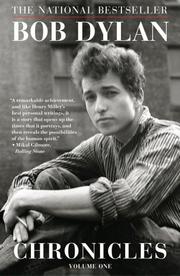
Bob Dylan writes a memoir and declines the obvious route through his own monuments
Enter the Reading Room →
Eight hundred pages devoted to a musician whose method depends on refusing to stay pinned down
Enter the Reading Room →Keep exploring
Move sideways into another part of RetroForge. Every route is a different way back into the same music archive.