
1958Rock'n'roll's golden age peaks
Full StoryRead the full story →
Chuck Berry defines the guitar riff
Rock & RollSweet Little Sixteen and Johnny B. Goode combine Berry's double-string attack with narrative lyrics. That vocabulary becomes a central reference for the Rolling Stones, the Beatles and many other British groups of the following decade.
Buddy Holly and the Crickets establish a powerful band model
Rock & RollBuddy Holly and the Crickets popularise an influential self-contained rock-band model: guitars, bass and drums, with the musicians writing and performing much of their own material. Their example becomes especially important to the British groups that follow.
45s, LPs and the decline of the 78
Rock & RollBy 1958, the 78rpm disc was being phased out. Popular singles were increasingly issued on 45s, while 33⅓rpm LPs were established for longer programmes and albums. Stereo records were beginning to appear, but the album had not yet displaced the single at the centre of popular music.
1959The Day the Music Died
The Day the Music Died and the End of Rock’s First Era
HistoryFebruary 3 — Buddy Holly, Ritchie Valens and The Big Bopper die in a plane crash
Rock & RollDon McLean later memorialises the crash as 'the day the music died.' Holly, Valens and Richardson leave very different bodies of work, and their recordings continue to influence later songwriters and bands.
Miles Davis records Kind of Blue
Jazz / Modal JazzIts modal frameworks and reduced harmonic movement give the soloists more space than conventional bebop chord sequences.
Ray Charles — What'd I Say
Rock & RollWhat'd I Say combines gospel-derived call and response with secular rhythm and blues. Some broadcasters object to its suggestive performance, while the record becomes a major pop and R&B hit for Charles.
1960New voices, new continents
Hamburg: How the Beatles Became a Real Band
HistoryThe Beatles form in Liverpool
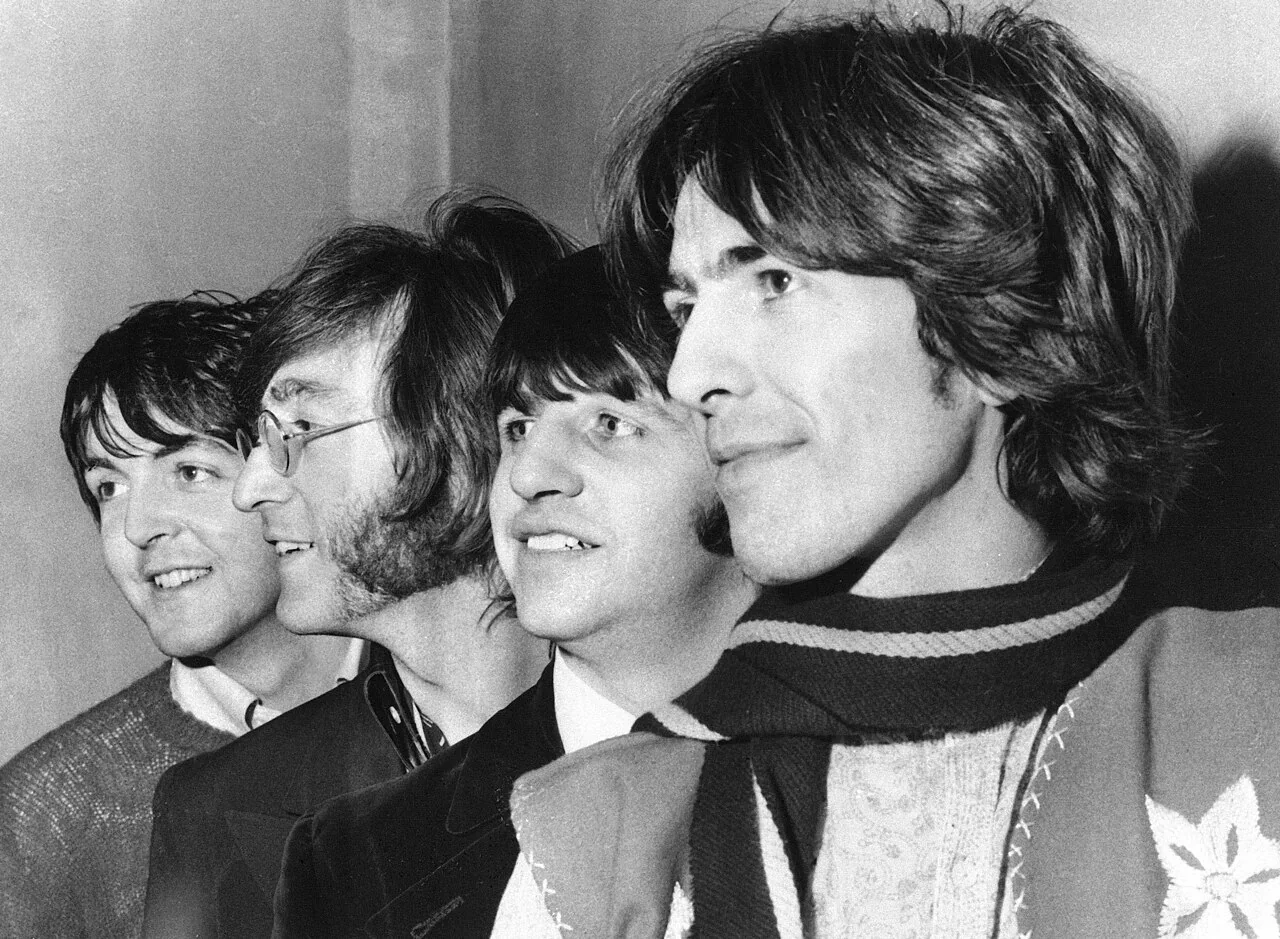
Rock & RollJohn Lennon, Paul McCartney, George Harrison, Stuart Sutcliffe and drummer Pete Best begin the Beatles’ first Hamburg residency. Their contracts vary by club and visit, but the long, multi-set nights force them to build a huge repertoire and sharpen their stagecraft.
Motown Record Corporation is incorporated
Rock & RollBerry Gordy had launched Tamla in 1959. On 14 April 1960, he incorporated Motown Record Corporation, bringing Tamla and related labels beneath the Motown umbrella. Motown develops an exceptionally effective crossover strategy, helping Black artists reach enormous multiracial pop audiences while building on earlier rhythm-and-blues and rock-and-roll breakthroughs.
The Everly Brothers define vocal harmony
Folk RockCathy's Clown brings the Everlys' close-harmony singing into a distinctive guitar-pop arrangement. Their vocal approach becomes an important reference for the early Beatles, Simon & Garfunkel and many later rock duos.
1961Protest, poetry, and the Village
Greenwich Village and the Rise of the Singer-Songwriter
HistoryBob Dylan arrives in New York City
Folk RockA nineteen-year-old from Minnesota arrives in New York in January and enters the Greenwich Village folk scene. Within a few years, he will become one of the writers who dramatically expand what mainstream audiences expect from popular-song lyrics, drawing on folk, blues, poetry and topical-song traditions.
The Beach Boys form in Hawthorne, California
Rock & RollBrian Wilson, his brothers Carl and Dennis, their cousin Mike Love and friend Al Jardine begin developing a California sound around vocal harmony, surf imagery, cars and teenage life. Brian Wilson's writing and studio ambitions later expand far beyond that early image.
The Marvelettes hit Number One for Motown
Rock & RollPlease Mr. Postman becomes Motown's first number one on the US pop chart. Its concise arrangement and call-and-response vocals help define the label's early crossover sound; British groups later record numerous Motown songs.
National Jazz & Blues Festival 1961–1970: The Road to Reading
Live CultureBefore Reading Festival became a rock institution, Harold Pendleton’s wandering National Jazz and Blues Festival spent a decade absorbing rhythm and blues, beat, psychedelia and hard rock while repeatedly searching for a site capable of containing its changing audience.
Read the festival history →1962The Beatles sign. The Stones form.
The Beatles, the Stones and the Birth of the British Rock Band
HistoryThe Beatles sign to EMI/Parlophone under George Martin
Rock & RollAfter Decca declines the group, manager Brian Epstein secures an EMI contract. George Martin auditions the Beatles at Abbey Road on 6 June, beginning the partnership that will shape their recordings.
The Rolling Stones play their first gig
Rock & RollBoth groups draw deeply from Black American rhythm and blues and rock and roll. The early Stones foreground Chicago blues and R&B, while also building a substantial part of their repertoire around Chuck Berry.
James Brown records Live at the Apollo
Rock & RollThe label refuses to fund the recording. Brown pays for it himself. The resulting album — raw, ecstatic, the crowd audibly losing their minds — becomes one of the best-selling records of 1963 and introduces America to the Hardest Working Man in Show Business.
1963Beatlemania. Dylan turns political.
How Beatlemania Took Over Britain
HistoryThe Beatles record most of Please Please Me in one day
Rock & RollMost of Please Please Me is recorded in one marathon day. On 11 February 1963, the Beatles record ten of its fourteen tracks; four previously recorded single sides complete the album.
Bob Dylan — The Freewheelin' Bob Dylan
Folk RockBlowin' in the Wind and A Hard Rain's A-Gonna Fall establish that popular song can carry the full weight of political conscience. Joan Baez sings Dylan's songs at civil rights marches. Popular music and public life have never been more intertwined.
The Beatles appear on Sunday Night at the London Palladium
Rock & RollThe Palladium appearance, watched by roughly fifteen million people, helps push the frenzy into national consciousness. The term “Beatlemania” enters widespread British press use that autumn.
1964The British Invasion hits America
The British Invasion Changes American Music
HistoryThe Beatles on The Ed Sullivan Show — 73 million viewers
Rock & RollFebruary 9, 1964. America, still raw from the Kennedy assassination, watches four young men from Liverpool play I Want to Hold Your Hand on primetime television. Youth culture is never the same again.
The Kinks make distortion the hook
Hard RockDave Davies’ slashed-speaker distortion and Ray Davies’ compact riff make “You Really Got Me” an early landmark of heavy guitar rock. Its power-chord attack becomes an important reference point for later hard rock, metal and punk, alongside other distorted-guitar and garage-rock precedents.
The Animals — House of the Rising Sun
Folk RockEric Burdon's forceful vocal and Alan Price's organ lead a minor-key arrangement of a traditional song whose earlier versions had circulated widely in American folk music. The recording becomes an international hit and a landmark of the British Invasion.
Big Sur Folk Festival 1964–1971: The Intimate Alternative to the Mega-Festival
Live CultureAt Esalen and later Monterey, Big Sur deliberately resisted the logic of mass spectacle, bringing Joan Baez, Joni Mitchell, Crosby Stills Nash & Young and other artists into a festival culture built around intimacy, landscape and performer community.
Read the festival history →Burg Waldeck 1964–1969: The German Festival Before German Rock
Live CultureOn a Hunsrück hillside, songwriters, folk musicians, cabaret artists and political thinkers created a festival culture that helped rebuild critical German-language song before rock took over the youth underground.
Read the festival history →1965Dylan goes electric. Folk rock is born.
Dylan Goes Electric: The Birth of Folk Rock
HistoryBob Dylan plugs in at Newport Folk Festival
Folk RockDylan performs three electric songs with a band, drawing a mixture of cheers, boos and confusion before returning for two acoustic numbers. Pete Seeger later said his objection concerned the distorted sound, not electricity itself; the famous axe story grew from a remark rather than an attempt to cut the cables. The set becomes a lasting symbol of folk and rock colliding.
The Byrds — Mr. Tambourine Man
Folk RockRoger McGuinn’s twelve-string Rickenbacker, the group’s harmonies and Dylan’s song create one of folk rock’s decisive commercial breakthroughs. The style was already forming on both sides of the Atlantic, but this recording gives it an instantly recognisable electric-jangle vocabulary.
The Beatles — Rubber Soul
Folk RockRubber Soul presents a more unified, introspective Beatles album, with sitar on “Norwegian Wood,” fuzz bass on “Think for Yourself” and increasingly ambiguous lyrics. Brian Wilson later said its cohesion challenged him and made him want to create Pet Sounds; the famous tale of an immediate drive home is not needed to establish the connection.
Bob Dylan — Highway 61 Revisited / Bringing It All Back Home
Folk RockBringing It All Back Home and Highway 61 Revisited place surreal, literary writing inside increasingly electric arrangements. Despite its unusual six-minute length, Like a Rolling Stone receives substantial radio play and becomes a major hit.
Dylan goes electric at Newport
Live CultureA brief amplified set exposed arguments about tradition, ownership and artistic change that were already reshaping the folk revival.
Read the festival history →Jazz Bilzen 1965–1981: Belgium’s Festival Laboratory
Live CultureLong before Rock Werchter and Pukkelpop, a volunteer-built festival in Bilzen learned in public how jazz, beat, psychedelia, progressive rock, heavy music and eventually punk could occupy the same evolving institution.
Read the festival history →1966Psychedelia begins. The album becomes art.
The Beatles — Revolver
Psychedelic RockTomorrow Never Knows builds on drone, tape loops, reversed guitar and compressed drums. Eleanor Rigby replaces the band's usual instrumentation with a double string quartet. Across fourteen sharply different songs, recording technique becomes part of the writing.
Full Story Read the full story →The Beach Boys — Pet Sounds
Psychedelic RockBrian Wilson builds the instrumental tracks with leading Los Angeles session musicians while the other Beach Boys tour, then brings the group back to record the intricate vocal arrangements. Months of composition, tracking and editing produce a record unlike the band’s earlier surf-and-car image. Pet Sounds was conceived as Brian Wilson’s response to the American Rubber Soul. Its reception in Britain, in turn, encouraged the Beatles and George Martin as they moved toward the studio-scale ambitions of Sgt. Pepper.
The 13th Floor Elevators explicitly identify as psychedelic rock
Psychedelic RockThe 13th Floor Elevators are among the first bands to describe their music explicitly as psychedelic rock. Their 1966 debut places “psychedelic” in the album title and uses Tommy Hall’s electric jug, garage-rock force and drug-centred philosophy to create an early landmark of Texas psychedelia and acid rock.
Cream form in London
Hard RockEric Clapton, Jack Bruce and Ginger Baker build a power trio around blues material, instrumental virtuosity and extended concert improvisation. Their scale and interplay become influential reference points for later hard rock, progressive rock and jazz-rock.
Pori Jazz 1966–1984: Finland’s Jazz Island Becomes a European Institution
Live CultureFrom a 600-person main concert on Kirjurinluoto to an increasingly international rhythm-music gathering, Pori Jazz grew with unusual continuity while documenting its own history year by year.
Read the festival history →1967Summer of Love. The year everything changed.
The Beatles — Sgt. Pepper's Lonely Hearts Club Band
Psychedelic RockThirteen tracks framed by an imaginary concert, with orchestral arrangements, tape manipulation, Indian instrumentation and elaborate packaging created by a team led by Peter Blake and Jann Haworth. Music, sequence and sleeve are presented as one complete event.
Full Story Read the full story →Jimi Hendrix — Are You Experienced
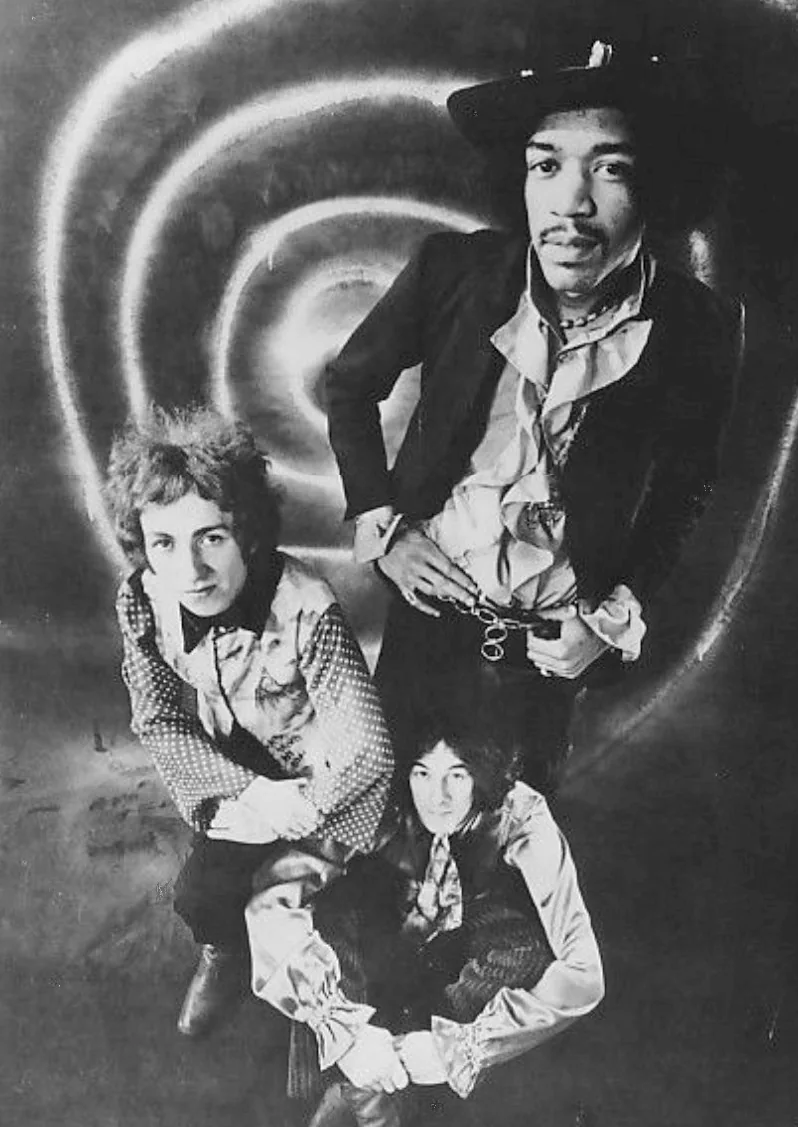
Psychedelic RockThe original British album opens with “Foxy Lady” and includes “Manic Depression”; the later American edition adds the hit single “Purple Haze.” Across both configurations, Hendrix treats the guitar as an orchestral instrument, noise source and conversational voice.
The Doors — debut album
Psychedelic RockThe Doors have no permanent bass guitarist in their four-piece lineup. Ray Manzarek covers bass lines on keyboard in performance and on early recordings, while studio musicians including Larry Knechtel add bass guitar where needed on the debut. The unusual arrangement helps give the group its open, organ-led identity.
Pink Floyd — The Piper at the Gates of Dawn
Psychedelic RockSyd Barrett's songs combine nursery-rhyme imagery, pop concision and free-form improvisation. Pink Floyd record the album at EMI Studios in Abbey Road during a period that overlaps with the Beatles' work there on Sgt. Pepper.
The Velvet Underground & Nico
Psychedelic RockLou Reed, John Cale and their bandmates combine songs about drugs and sexual subculture with drone, noise and concise pop. Andy Warhol is credited as producer and supplies the banana artwork; the album's initial commercial reach is limited, but its influence grows substantially in later years.
Monterey Pop Festival
Live CultureCalifornia pop, San Francisco psychedelia, British rock, soul and Indian classical music met on one deliberately international stage.
Festival Archive Read the festival history →Fantasy Fair transforms Mount Tamalpais
Live CultureOne week before Monterey Pop, music, landscape and participatory design converged in a mountain amphitheatre.
Read the festival history →Montreux begins recording a living festival archive
Live CultureA lakeside jazz festival opened toward blues, fusion and progressive rock while preserving thousands of live performances.
Read the festival history →Schaefer Music Festival 1967–1976: Cheap Tickets, Central Park and a Decade of Change
Live CultureAt Wollman Rink in Central Park, a low-cost summer concert series quietly became one of New York’s most democratic windows onto rock, jazz, soul and folk during a decade of musical upheaval.
Read the festival history →The 14 Hour Technicolor Dream 1967: London’s Underground Stays Awake
Live CultureAt Alexandra Palace, Pink Floyd, Soft Machine, poets, light artists, films and thousands of night-time revellers turned a benefit for International Times into one of British psychedelia’s defining total-environment events.
Read the festival history →Christmas on Earth Continued 1967: Psychedelia at Kensington Olympia
Live CultureIn the final days of 1967, London’s underground compressed Hendrix, Pink Floyd, Soft Machine, Arthur Brown, projections and all-night sensory overload into one cavernous Olympia event.
Read the festival history →Flight to Lowlands Paradise 1967–1968: Utrecht Invents a Total Festival
Live CultureInside the Jaarbeurs, Utrecht’s counterculture built a sprawling overnight world of rock, art and spectacle that anticipated both Holland Pop and the later Lowlands idea.
Read the festival history →1968The dream sours. Music gets heavier.
Electric Ladyland and the Heavier Edge of Psychedelia
HistoryThe Beatles — The White Album
Rock & RollThirty songs across two LPs, created during increasingly fragmented sessions in which the Beatles sometimes worked separately and sometimes played together as a band. “Revolution 9” is an extended tape collage; “Helter Skelter” pushes toward heavier rock; “Blackbird” is essentially a solo McCartney performance. The album exposes both their collective range and growing separation.
Jimi Hendrix — Electric Ladyland
Psychedelic RockThe double album expands the Experience with numerous guests and extensive studio construction. The long Voodoo Chile develops from blues improvisation, while All Along the Watchtower radically rearranges Dylan's song through layered electric guitars.
Van Morrison — Astral Weeks
Folk RockEight songs were assembled from three New York studio dates, with the released album drawing mainly from the first and third sessions. Morrison worked with jazz-rooted players including bassist Richard Davis, guitarist Jay Berliner and Modern Jazz Quartet drummer Connie Kay. The predominantly acoustic instrumentation and Kay’s restrained, non-rock approach give the record its suspended pulse.
Hyde Park makes British underground rock public
Live CultureFree concerts placed Pink Floyd, Jethro Tull and their peers in a Royal Park and began four summers of negotiation over music in common space.
Read the festival history →Internationale Essener Songtage 1968: Before Krautrock Had a Name
Live CultureAcross five days and multiple venues, Essen placed German underground groups beside international rock, folk, chanson, free jazz, political song, cabaret and multimedia, creating one of the decisive meeting points of postwar German popular culture.
Read the festival history →Miami Pop and Underground Festival 1968: Where Woodstock’s Seeds Were Sown
Live CultureAt Gulfstream Park in May 1968, Michael Lang and Ric O’Barry assembled a hurried two-day experiment around Jimi Hendrix, only for tropical weather to interrupt the plan and leave behind a blueprint, recordings and lessons that would travel into festival history.
Read the festival history →Miami Pop Festival 1968: Two Stages at Gulfstream Park
Live CultureSeven months after a different festival had tested the same racetrack, a new production brought dozens of rock, soul, folk, blues and jazz performers to two simultaneous stages and showed how quickly the American festival model was becoming an industry.
Read the festival history →Isle of Wight Festival 1968–1969: Before the Half-Million Crowd
Live CultureBefore the monumental 1970 edition, two rapidly expanding Isle of Wight festivals turned a local experiment into one of Europe’s central counterculture stages—and brought Bob Dylan back for his first full concert in three years.
Read the festival history →Northern California Folk-Rock Festival 1968–1969: San Jose’s Troubled Festival Experiment
Live CultureTwo ambitious San Jose festivals brought the Doors, Jefferson Airplane, Janis Joplin, Jimi Hendrix and a fast-rising Santana to the fairgrounds—but disputed billing, bad drugs and a rival free festival turned the series into a case study in trust and counterculture economics.
Read the festival history →Newport Pop Festival 1968–1969: Southern California Before Woodstock
Live CultureAt Costa Mesa and later Devonshire Downs, Newport Pop showed how quickly the West Coast festival model could outgrow its infrastructure—and how the mass rock audience was already arriving before Woodstock fixed the template in popular memory.
Read the festival history →Sky River 1968–1970: The Pacific Northwest Builds Its Own Festival World
Live CultureBorn from Seattle’s underground press and the absurdist Piano Drop, Sky River turned rural Washington into a temporary counterculture experiment before the national festival boom had fully arrived.
Read the festival history →Lochem Popmeeting 1968–1986: The Dutch Festival That Learned by Doing
Live CultureWhat began as a tiny Ascension Day pop meeting in an open-air theatre became one of the Netherlands’ longest-running rock traditions and a training ground for the logistics behind later Dutch megafestivals.
Read the festival history →1969Woodstock. Moon landing. The peak of the 1960s.
King Crimson begin rehearsing
Progressive RockKing Crimson begin rehearsing in January and give their first public performance at London’s Speakeasy on 9 April. Their breakthrough comes on 5 July, supporting the Rolling Stones at Hyde Park before an audience DGM Live reports as roughly 650,000.
King Crimson — In the Court of the Crimson King
Progressive Rock21st Century Schizoid Man opens with distorted force; I Talk to the Wind answers with flute and restraint. Mellotron, improvisation, jazz precision and composed drama give progressive rock one of its clearest early album statements.
Full Story Read the full story →Led Zeppelin I and II
Hard RockTwo albums in one year establish Led Zeppelin as one of heavy rock's defining new forces. They combine amplified blues, British folk, acoustic texture, studio layering and extreme dynamic contrast. The records help consolidate hard rock and become a major influence on the emerging language of heavy metal, alongside several other late-1960s groups.
Woodstock Music Festival
Psychedelic RockA planned commercial festival became a vast temporary settlement at Bethel. Film and recorded sound later turned four difficult days into a lasting countercultural symbol.
Festival ArchiveRead the festival history →The Rolling Stones — Let It Bleed
Hard RockGimme Shelter opens with Merry Clayton's apocalyptic scream and never lets up. You Can't Always Get What You Want closes it with a gospel choir and the sound of hope deferred. Let It Bleed is the sound of the 1960s ending badly.
Altamont exposes the cost of failed festival planning
Live CultureA free Rolling Stones concert assembled at dangerous speed became a case study in unmanaged force, unclear responsibility and preventable risk.
Read the festival history →Amougies brings free jazz and progressive rock beneath one tent
Live CultureForced out of France, Festival Actuel rebuilt in a Belgian village and placed Soft Machine, Pink Floyd, Frank Zappa and major free-jazz voices inside one programme.
Read the festival history →Toronto’s Rock and Roll Revival becomes Lennon’s departure point
Live CultureA revival bill at Varsity Stadium became the first public performance by John Lennon’s hastily assembled Plastic Ono Band.
Read the festival history →Denver Pop Festival 1969: Hendrix’s Final Experience
Live CultureTwo months before Woodstock, Barry Fey filled Mile High Stadium with a major three-day rock bill, experienced festival production and a fight over paid admission that ended in tear gas and the final concert of the original Jimi Hendrix Experience.
Read the festival history →Atlanta International Pop Festival 1969: The Deep South Meets the Festival Era
Live CultureSix weeks before Woodstock became a global symbol, Atlanta staged a huge Southern rock gathering that proved the counterculture festival boom had already reached the American South.
Read the festival history →Atlantic City Pop Festival 1969: The Great Lost Rock Festival
Live CultureTwo weeks before Woodstock, Electric Factory Concerts brought a remarkably deep three-day bill to a racecourse in Mays Landing—professionally run, widely attended and later eclipsed because no official film or soundtrack fixed it in public memory.
Read the festival history →Texas International Pop Festival 1969: Labor Day at the Speedway
Live CultureHeld two weeks after Woodstock, Texas International Pop translated the festival boom into a sprawling, heat-soaked Southern plain where blues, soul, psychedelia and hard rock shared one immense weekend.
Read the festival history →Newport Jazz Festival 1969: When Jazz Opened the Gates to Rock
Live CultureIn 1969 Newport pushed jazz festival culture into unstable new territory, mixing Miles Davis and Dave Brubeck with Led Zeppelin, James Brown, Sly & the Family Stone and a younger, far less predictable crowd.
Read the festival history →Essen Pop & Blues Festivals 1969–1970: From Underground to Grugahalle
Live CultureAfter the radical Essener Songtage of 1968, the Grugahalle became a pressure chamber for British blues, progressive rock and a German underground about to acquire a name of its own.
Read the festival history →Seattle Pop Festival 1969: The Northwest’s Forgotten Giant
Live CultureThree weeks before Woodstock, more than fifty thousand people gathered at Gold Creek Park for a remarkably broad, smoothly run festival where the Doors, Santana, Chicago Transit Authority and Led Zeppelin shared a Northwest stage.
Read the festival history →New Orleans Pop Festival 1969: A Speedway Festival That Planned for the Crowd
Live CultureOn Labor Day weekend in Louisiana, promoters turned a speedway into a three-day rock camp with dual sound systems, abundant supplies and a surprisingly cooperative relationship with local authorities—while racial tension and curfews shaped the world just beyond the gates.
Read the festival history →Palm Beach Pop 1969: Cold Rain at “Woodstock South”
Live CultureThanksgiving weekend in Florida brought King Crimson, Janis Joplin, Jefferson Airplane and the Rolling Stones to a rain-soaked raceway where official hostility, bad weather and logistical strain turned the promise of “Woodstock South” into a harsher festival story.
Read the festival history →Palm Springs Pop Festival 1969: Desert Rock and the Backlash Arrives Early
Live CultureA two-day Southern California pop festival brought major rock acts into the Coachella Valley—and left Palm Springs grappling with crowd control, violence and the politics of youth culture before the summer festival boom peaked.
Read the festival history →Laurel Pop Festival 1969: Maryland’s Woodstock Before Woodstock
Live CultureA month before Woodstock, Laurel Race Course hosted a compact but extraordinary two-night bill that exposed both the possibilities and the fragility of the new festival economy.
Read the festival history →Mississippi River Festival 1969–1980: The University Festival That Became an Institution
Live CultureOn the SIU Edwardsville campus, a tented summer series blurred the line between university cultural programming and major rock promotion for more than a decade.
Read the festival history →Ann Arbor Blues & Jazz 1969–1974: Rebuilding Festival History Around Black Music
Live CultureAnn Arbor created an unusually serious platform for blues in 1969, then expanded into jazz and R&B—making the series a corrective to rock festivals that borrowed from Black music while pushing its originators to the margins.
Read the festival history →Cambridge Free Festival 1969–1971: Free Music on the Commons
Live CultureAcross three loosely documented Cambridge gatherings, free admission, improvised stages and early appearances by artists such as David Bowie and King Crimson helped turn civic green space into a laboratory for British free-festival culture.
Read the festival history →Nakatsugawa Folk Jamboree 1969–1971: Japan’s Folk Generation Finds a Field
Live CultureIn rural Gifu, the Nakatsugawa Folk Jamboree gave Japan’s emerging folk and singer-songwriter movement an outdoor gathering place at the moment youth politics and popular music were being renegotiated.
Read the festival history →1970Beatles split. Prog and metal are born.
Black Sabbath, ELP and the Year Rock Split Open
HistoryBlack Sabbath — debut album
Hard RockRecorded largely live during a twelve-hour session for about £800, the album opens with rain, a church bell and Tony Iommi's slow guitar riff, built around a tritone. The tritone had long been treated as a sharply unstable interval in Western harmony, although the familiar story that medieval authorities banned it as “the devil's interval” is exaggerated. Sabbath turn that instability into the centre of a foundational heavy-metal album.
Emerson, Lake & Palmer form
Progressive RockKeith Emerson, Greg Lake and Carl Palmer unite as a supergroup dedicated to bringing classical music into rock. Emerson had already demolished a Hammond organ on stage with the Nice. ELP will go further — staging full classical adaptations for stadium audiences.
The Beatles' breakup becomes public
Rock & RollThe breakup becomes public in April 1970 when Paul McCartney says he has no plans to work with the group again. John Lennon had privately announced his departure the previous September, while all four members were moving toward separate careers amid deep business and personal disputes. The legal dissolution would take several more years.
Bath Festival expands the British rock gathering
Live CultureBlues-festival tradition opened into progressive, heavy, psychedelic and jazz-rock at the Royal Bath and West Showground.
Read the festival history →Holland Pop Festival at Kralingen
Live CultureRotterdam placed an international three-day rock gathering inside the Kralingse Bos and created a defining document of Dutch counterculture.
Read the festival history →Isle of Wight reaches colossal scale
Live CultureFive days at Afton Down brought Hendrix, The Who, Miles Davis, Joni Mitchell and a mass audience into the unresolved politics of festival access.
Read the festival history →Worthy Farm hosts the first Glastonbury
Live CultureA small paid pop, blues and folk festival began a discontinuous history that the free 1971 Glastonbury Fayre would transform.
Read the festival history →Pinkpop begins in Geleen
Live CultureA one-day Pentecost festival in Limburg established the annual rhythm from which a lasting Dutch institution grew.
Read the festival history →Festival Express carries the festival between cities
Live CultureJanis Joplin, the Grateful Dead, The Band and fellow travellers turned a Canadian rail journey into an informal musical community.
Read the festival history →Powder Ridge becomes a festival without a programme
Live CultureA court injunction kept the advertised artists away, yet about 30,000 people still formed a mass encampment on the Connecticut ski slope.
Read the festival history →Goose Lake tries to engineer the post-Woodstock festival
Live CulturePermanent infrastructure, admission tokens and a rotating stage met a 200,000-strong audience and political backlash in Michigan.
Read the festival history →Second Atlanta International Pop Festival 1970: Georgia’s Giant Counterculture City
Live CultureAt Byron in July 1970, Atlanta’s festival experiment became a temporary city—larger, looser and more mythic than the first edition, with Hendrix and the Allman Brothers at its centre.
Read the festival history →Love and Peace Festival Fehmarn 1970: Hendrix at the Edge of the Storm
Live CultureGermany’s attempted answer to Woodstock arrived on a Baltic island in cold rain, organisational chaos and financial collapse—and became remembered above all for Jimi Hendrix’s final festival performance.
Read the festival history →Aachen Open Air Pop Festival 1970: Three Days at the Soers
Live CultureAt Aachen’s Soers stadium in July 1970, British progressive rock, German experimental music and blues-heavy festival culture converged before tens of thousands in one of West Germany’s strongest outdoor bills.
Read the festival history →Ruisrock in the 1970s: Finland Builds a Festival Tradition
Live CultureFinland’s first great rock festival grew from a student-backed experiment into a 100,000-person crisis, then survived political backlash by shrinking, learning and becoming an enduring institution on Ruissalo island.
Read the festival history →Ourimbah 1970: Australia’s First Rock Festival
Live CultureOn the New South Wales Central Coast, an all-Australian programme drew roughly ten thousand people into an outdoor experiment whose surviving film and audio document the moment a local scene tested the festival form for itself.
Read the festival history →Vortex I 1970: The State-Sponsored Festival Built to Prevent a Riot
Live CultureOregon’s government did something almost unimaginable in 1970: it helped enable a free counterculture festival in a state park because officials believed music, camping and tolerated rule-breaking might prevent a violent confrontation in Portland.
Read the festival history →Man-Pop 1970: The Winnipeg Festival That Moved Indoors Mid-Show
Live CultureA violent summer storm turned Manitoba’s centennial rock festival into a logistical improvisation, forcing organisers to abandon Winnipeg Stadium, move thousands into the nearby arena and persuade Led Zeppelin to play deep into the night.
Read the festival history →The European Free-Festival Movement 1970–1984: A British Core, European Parallels
Live CultureFrom improvised British gatherings such as Phun City and Windsor to Watchfield, Deeply Vale and Stonehenge—and alongside free-concert experiments in the Netherlands—a loose culture emerged in which the festival was less a product than a temporary way of living.
Read the festival history →Cincinnati Summer Pop Festival 1970: Crosley Field, Proto-Punk and Television
Live CultureCincinnati’s summer festival became more than a stadium concert when national television preserved Alice Cooper, the Stooges, Mountain, Grand Funk Railroad and Traffic as a snapshot of rock mutating into something heavier and stranger.
Read the festival history →Incident at Kickapoo Creek 1970: Sixty Thousand Descend on Rural Illinois
Live CultureOver Memorial Day weekend, a rural Illinois site became a temporary city of tens of thousands, leaving behind not just festival lore but legal records, photographs and a unusually rich local archive.
Read the festival history →Wadena Rock Festival 1970: Iowa’s Festival Weekend in the Mud
Live CultureFar from the coastal centres of the counterculture, Wadena became one more proof that the American festival boom had become national, messy and nearly impossible for local infrastructure to absorb.
Read the festival history →Sound Storm 1970: Wisconsin’s Overlooked Festival City
Live CultureIn rural Wisconsin, Sound Storm joined the extraordinary 1970 wave of temporary rock cities, drawing a mass audience into a landscape that had never been designed for the social experiment it suddenly hosted.
Read the festival history →Strawberry Fields 1970: The Festival That Hid Behind a Motorcycle Race
Live CultureBlocked repeatedly by local politics, John Brower’s festival finally reached Mosport Park under the camouflage of a motorcycle event—and became one of Canada’s largest rock gatherings of the era.
Read the festival history →Hollywood Music Festival 1970: Britain’s Festival Season Opens in Staffordshire
Live CultureOn a Staffordshire farm in May 1970, an ambitious two-day festival brought the Grateful Dead to Britain for the first time and previewed the huge outdoor season that was about to engulf the country.
Read the festival history →Phun City 1970: When the Underground Lost Its Funding and Became Free
Live CultureMick Farren’s Sussex gathering was supposed to be a ticketed underground festival; when backing collapsed days before the event, it mutated into a rough, improvised free festival with lasting influence.
Read the festival history →Krumlin 1970: The Yorkshire Festival the Weather Destroyed
Live CultureAt Banquet House Farm, an ambitious folk, blues and rock weekend met a Pennine storm so severe that tents collapsed, the site flooded and Sunday’s programme effectively disappeared.
Read the festival history →Zaječar Gitarijada to 1984: Competition, Local Bands and Yugoslav Rock Continuity
Live CultureA long-running eastern-Serbian rock competition became a crucial stage for emerging Yugoslav bands—but even its exact starting year is disputed in the surviving record.
Read the festival history →Piedra Roja 1970: Chile’s Chaotic Counterculture Festival
Live CultureIn the eastern outskirts of Santiago, Piedra Roja became less a smoothly staged concert than a sudden public revelation that Chile had a visible hippie and rock youth culture of its own.
Read the festival history →1971The golden year of progressive rock.
Yes — The Yes Album
Progressive RockWith Steve Howe fully established in the lineup, Yes turn Yours Is No Disgrace, Starship Trooper and Perpetual Change into a clear blueprint for their long-form progressive sound. Close to the Edge belongs to 1972 and appears in its own year below.
Led Zeppelin IV — Stairway to Heaven
Hard Rock“Stairway to Heaven” becomes one of album-oriented FM radio's most enduring staples. By 1977, the band's own press material described it as the selection then played most often on FM radio. The band releases the album without a conventional title and without its name printed on the outer sleeve. Four symbols chosen by the members appear inside and on the record label, giving the untitled album its enduring visual identity.
Jethro Tull — Aqualung
Progressive RockIan Anderson has repeatedly said the album was not conceived as a formal concept record. Its recurring concerns with homelessness, organised religion, faith and social judgement nevertheless give it strong thematic cohesion.
Can — Tago Mago
KrautrockA double album built from collective improvisation, Damo Suzuki's spontaneous vocals, Jaki Liebezeit's disciplined drumming and Holger Czukay's tape editing. Halleluhwah sustains one pulse for eighteen minutes; Aumgn moves into electroacoustic collage.
Full Story Read the full story →Genesis — Nursery Cryme
Progressive RockPeter Gabriel's theatrical storytelling and Phil Collins' newly energised, jazz-influenced drumming drive “The Musical Box” and “The Return of the Giant Hogweed.”
ELP — Tarkus
Progressive RockSide one is the twenty-minute “Tarkus” suite, a seven-part work built from recurring material, shifting metres and the interplay of Keith Emerson's keyboards, Greg Lake's voice, bass and guitar, and Carl Palmer's drums. William Neal's armadillo-tank cover image gives the music an equally hybrid visual identity.
The National Jazz, Blues and Rock Festival settles in Reading
Live CultureAn itinerant festival found a durable home and entered a decade shaped by progressive scale, hard-rock authority and the arrival of punk.
Read the festival history →Roskilde Festival in the 1970s: From Student Experiment to Nordic Institution
Live CultureRoskilde began in 1971 as a chaotic student-built Sound Festival; by decade’s end it had become a non-profit institution with volunteers, international stars and an orange stage destined to become a European festival symbol.
Read the festival history →Weeley Festival 1971: The Charity Event That Became a Giant
Live CulturePlanned by Clacton Round Table as a modest charity fundraiser, Weeley exploded into a six-figure Bank Holiday gathering when Britain’s festival circuit suddenly needed somewhere else to go.
Read the festival history →Celebration of Life 1971: The Eight-Day Festival That Fell Apart in Louisiana
Live CultureAdvertised as an eight-day gathering with a spectacular bill, Celebration of Life opened late beside the Atchafalaya River, lost much of its promised programme and became a brutal lesson in what happened when festival ambition outran permits, water, shade, security and truth in advertising.
Read the festival history →Amsterdamse Bos 1971–1972: Free Music in the Rain
Live CultureIn 1971 tens of thousands converged on the Amsterdamse Bos for a free bill including Pink Floyd, Humble Pie, Focus and CCC Inc.; a year later the park became the “Vietnamweide” for a 24-hour political-cultural gathering that mixed rock, jazz, classical experiment, writers and filmmakers.
Read the festival history →Ilosaarirock 1971–1984: Independent Since the Back Room
Live CultureBorn when Joensuu musicians decided they needed more places to play, Ilosaarirock grew from the 1971 Rockrieha into one of Finland’s enduring independent festival institutions.
Read the festival history →Kalvøya 1971–1984: Norway’s Island Festival Meets the International Circuit
Live CultureOn a small island west of Oslo, Kalvøya became a recurring meeting point between Norwegian artists and the international rock circuit, shifting from folk and local counterculture toward major touring acts.
Read the festival history →Vilar de Mouros 1971 & 1982: Portugal’s Festival of Freedom Before and After Revolution
Live CultureA village folk event became Portugal’s great rock experiment in 1971 under dictatorship, then returned in 1982 to a country transformed by revolution and democracy.
Read the festival history →BOOM 1971–1978: Yugoslav Rock on a Moving National Stage
Live CultureTravelling from Maribor to Ljubljana, Zagreb, Belgrade and Novi Sad, BOOM created a rare all-Yugoslav platform where progressive and hard-rock bands could compete, collaborate and be preserved on live records.
Read the festival history →Myponga 1971: Progressive Music in the South Australian Heat
Live CultureOn a farm south of Adelaide, Myponga paired Black Sabbath with a strong Australian bill and announced itself as a festival of progressive music rather than a simple copy of Woodstock.
Read the festival history →Avándaro 1971: Mexico’s Rock Festival and the Backlash That Followed
Live CultureWhat began around plans for motor racing became a mass rock gathering near Valle de Bravo whose cultural shockwave helped define both La Onda and the years of restriction that followed Mexican rock.
Read the festival history →Festival de Ancón 1971: Colombia’s Hippie Gathering in the Aburrá Valley
Live CultureNear Medellín, Ancón gathered Colombia’s young rock scene into a three-day outdoor event that newspapers quickly turned into a national argument about hippies, morality and modern youth culture.
Read the festival history →1972Peak prog. Krautrock hits its stride.
Yes — Close to the Edge
Progressive RockThree tracks across two sides. The eighteen-minute title suite moves through recurring themes, contrasting sections and a carefully planned return. Close to the Edge is a defining statement of symphonic progressive rock.
Full Story Read the full story →Genesis — Foxtrot / Supper's Ready
Progressive RockOn later Foxtrot-era stages, Gabriel turns the suite into theatre, using a flower mask during “Willow Farm” and the black, geometric Magog costume during “Apocalypse in 9/8.” His fox head and red dress belong to performances of “The Musical Box,” not “Supper's Ready.”
Neu! debut album
KrautrockKlaus Dinger's relentless “Apache beat” and Michael Rother's layered guitar make “Hallogallo” one of the defining recordings of the pulse later labelled motorik. Neu! do not create the idea in isolation, but their debut gives it an especially clear and influential form that later echoes through post-punk, indie rock and electronic music.
The Rolling Stones — Exile on Main St.
Hard RockBuilt across several phases, the album combines earlier London recordings, famously loose basic tracks cut with the Rolling Stones Mobile Studio at Keith Richards' rented villa Nellcôte, and major overdub and vocal sessions at Sunset Sound in Los Angeles. Contemporary reviews are divided: some hear an unfocused, murky double album, while others immediately recognise one of the Stones' strongest records. Its reputation grows further through the 1970s, and it eventually becomes one of the most frequently celebrated albums in the rock canon.
Mar y Sol brings progressive rock and fusion to Puerto Rico
Live CultureA broad international programme met Holy Week opposition, difficult weather and coastal production on Puerto Rico’s north shore.
Read the festival history →Bickershaw Festival 1972: Mud, Marathon Sets and the Grateful Dead
Live CultureIn a rain-soaked Lancashire field, Bickershaw combined ambitious American bookings, British underground culture and near-comic logistical strain into one of the strangest major festivals of the early 1970s.
Read the festival history →Windsor Free Festival 1972–1974: The People’s Festival in the Queen’s Back Garden
Live CultureBuilt from squatting, commune and free-festival politics, Windsor grew from a few hundred people into a direct confrontation over who had the right to gather, camp and make music on Crown-associated land.
Read the festival history →Sunbury 1972–1975: Australia Finds Its Own Festival Sound
Live CultureAcross four Australia Day weekends outside Melbourne, Sunbury moved beyond imported Woodstock imagery and became a showcase for a louder, more self-confident Australian rock culture—before its finances and international ambitions finally broke the model.
Read the festival history →Bull Island 1972: The Erie Canal Soda Pop Festival and the End of Festival Innocence
Live CultureDriven across state lines by injunctions, the Erie Canal Soda Pop Festival finally landed on Bull Island beside the Wabash River, where an audience vastly beyond the site’s capacity overwhelmed water, food, security and scheduling before the abandoned stage itself was burned.
Read the festival history →Great Western Express 1972: Four Cold Days at Bardney
Live CultureOn the grounds beside Tupholme Abbey, one of Britain’s largest 1972 rock gatherings mixed major acts, punishing weather and an increasingly professional festival machine that still could not guarantee financial survival.
Read the festival history →1973The Dark Side of the Moon changes everything.
The Dark Side of the Moon and the Global Prog Album
HistoryFaust — Faust IV
KrautrockFaust IV brings the band's collage, noise and repetition into a comparatively accessible album without losing its disruptive edge. “Krautrock” opens with a twelve-minute wall of drones and guitar, while “Jennifer” and “The Sad Skinhead” show how strangely melodic Faust could become.
Pink Floyd — The Dark Side of the Moon
Progressive RockAlan Parsons engineers a record that stays on the Billboard 200 for over 900 weeks. Time, Money and The Great Gig in the Sky are radio staples. The album uses tape loops, synthesizers and spoken word to make an argument about the human condition that holds up in every decade since.
Genesis — Selling England by the Pound
Progressive Rock“I Know What I Like (In Your Wardrobe)” becomes Genesis's first UK chart hit, reaching number 21 in 1974. “Firth of Fifth” and “The Cinema Show” place extended keyboard, guitar and rhythmic development inside two of the Gabriel-era lineup's most celebrated compositions, while Peter Gabriel's theatrical stage identity remains central to the group.
ELP — Brain Salad Surgery
Progressive RockThe nearly thirty-minute “Karn Evil 9” crosses the vinyl break: the First Impression begins at the end of side one and continues on side two, followed by the Second and Third Impressions. H.R. Giger designs the biomechanical sleeve in 1973, six years before the release of Alien brings his visual language to a worldwide film audience.
Mike Oldfield — Tubular Bells
Progressive RockStill a teenager during much of the recording, Mike Oldfield composes the two-part debut and plays almost all of its instruments, supported by a small group of guest performers. It becomes the first album released by Virgin Records and eventually sells an estimated sixteen million copies.
Summer Jam at Watkins Glen 1973: Three Bands, Half a Million People
Live CultureWith only the Grateful Dead, the Allman Brothers Band and The Band on the formal bill, Watkins Glen proved that by 1973 the audience itself had become the scale story.
Read the festival history →Day on the Green 1973–1984: Bill Graham’s Stadium Summer
Live CultureAt the Oakland Coliseum, Bill Graham turned the all-day stadium rock show into a repeatable Bay Area ritual—less utopian commune than expertly managed mass entertainment.
Read the festival history →Great Ngāruawāhia Music Festival 1973: New Zealand Goes Large
Live CultureOn a Waikato farm in January 1973, international headliners and a deep domestic bill gave New Zealand its first truly large-scale outdoor rock gathering.
Read the festival history →1974Kraftwerk, Crimson and the Berlin School
Kraftwerk — Autobahn
ElectronicA twenty-two-minute composition built around motorway travel, combining synthesizers, electronic percussion, processed voice, flute, guitar and road sounds. Its international success carries a distinctly German electronic identity into mainstream listening.
Full Story Read the full story →King Crimson — Red
Progressive RockThe studio core of Robert Fripp, John Wetton and Bill Bruford records King Crimson's final album of the 1970s, joined by guests from several earlier lineups. David Cross appears on the live improvisation “Providence,” recorded shortly before his departure.
Tangerine Dream — Phaedra
ElectronicEdgar Froese, Christopher Franke and Peter Baumann turn unstable analogue sequencing, Mellotron and slowly changing texture into a defining international statement of the approach later called the Berlin School. Phaedra does not create the scene alone, but it gives its sequencer-led language an enduring form.
Can — Soon Over Babaluma
KrautrockAfter Damo Suzuki's departure, Can continue without a dedicated lead singer: Michael Karoli and Irmin Schmidt share the vocals. The album keeps the rhythmic discipline of the earlier lineup while moving toward a more spacious, jazz-inflected and electronic sound. Rosko Gee would not join Can until 1977.
Knebworth begins its estate-concert history
Live CultureThe Bucolic Frolic established a recurring outdoor site that would host progressive spectacle, hard rock and jazz across the following decade.
Read the festival history →California Jam joins rock scale to network television
Live CultureABC Entertainment and Ontario Motor Speedway built a one-day mass event for both a vast paying crowd and broadcast cameras.
Read the festival history →Ozark turns the Missouri State Fairgrounds into a rock city
Live CultureAn uncounted mass audience overwhelmed Sedalia’s fairground systems and prompted a Missouri Senate investigation.
Read the festival history →Stonehenge Free Festival 1974–1984: Solstice, Sound Systems and the Free-Festival Nation
Live CultureFor a decade around the summer solstice, fields beside Stonehenge became the centre of a sprawling British free-festival culture where bands, travellers, communes, sound systems and political arguments built a temporary world beside an ancient monument.
Read the festival history →World Series of Rock 1974–1980: Cleveland Turns the Stadium into a Festival Machine
Live CultureBelkin Productions transformed Cleveland Municipal Stadium into a recurring all-day rock machine where arena-era scale, FM radio culture and crowd risk became inseparable.
Read the festival history →One Step Festival 1974: Japan Builds a Five-Day Rock City
Live CultureIn Kōriyama, One Step assembled around forty acts and more than seventy thousand visits across five major concert days, becoming one of Japan’s largest outdoor rock events of the 1970s.
Read the festival history →1975Wish You Were Here. Born to Run. Rubycon.
Wish You Were Here, Rubycon and the Sound of Absence
HistoryPink Floyd — Wish You Were Here
Progressive RockWritten by Roger Waters and sung by guest vocalist Roy Harper, “Have a Cigar” turns music-industry flattery and ignorance into a bitterly comic performance.
Tangerine Dream — Rubycon
ElectronicTwo side-long synthesizer works that sound like drifting through deep water. Rubycon refines the Phaedra blueprint into something more organic, more flowing, less mechanistic. Edgar Froese's guitar appears as texture, not melody. It is the Berlin School at its most complete.
Bruce Springsteen — Born to Run
Hard RockTwo months after Born to Run's August release, Springsteen appears simultaneously on the 27 October covers of Time and Newsweek, making the scale of the publicity campaign part of the album's story.
Queen — A Night at the Opera / Bohemian Rhapsody
Hard RockSome industry figures doubted that a nearly six-minute single with no conventional chorus would receive radio play. Capital Radio DJ Kenny Everett teased an advance tape and played it fourteen times within two days, helping create demand before release. The single then spends nine weeks at UK number one.
Watchfield 1975: When the British Government Gave the Free Festival a Field
Live CultureAfter the violent ending of Windsor in 1974, Britain tried an extraordinary compromise: an abandoned military airfield, basic public services and official tolerance for a free festival culture that had spent years refusing conventional gates.
Read the festival history →The People’s Free Festival 1975–1978: A Festival Without a Permanent Home
Live CultureAfter Windsor was broken up, the People’s Free Festival did not disappear so much as become mobile—shifting through Watchfield, Kent and later Berkshire sites while a wider traveller circuit learned how to build culture without owning a permanent venue. The exact 1977 route remains too uncertain to force into the dek.
Read the festival history →Umsonst & Draußen 1975–1979: Free Music as a German Principle
Live CultureIn East Westphalia, 'free and outdoors' became more than a ticket policy: it became a durable phrase for non-commercial festival culture and a German answer to the commercialisation of rock.
Read the festival history →Rock Werchter 1975–1984: From Village Festival to Belgian Institution
Live CultureWhat began as a small Rock & Blues Festival in Werchter grew into the twin-site Torhout/Werchter machine, transforming Belgian festival culture through repetition, scale and increasingly international programming.
Read the festival history →Canet Rock 1975–1978: Catalonia’s Counterculture at the End of Francoism
Live CultureOn the Maresme coast, Canet Rock fused Catalan music, progressive rock, political expectation and youth counterculture during the final months of dictatorship and the uncertain transition that followed.
Read the festival history →Águas Claras 1975–1984: Brazil’s Farm Festival Under Dictatorship
Live CultureOn Fazenda Santa Virgínia in rural São Paulo state, Águas Claras mixed rock, MPB, jazz, theatre and improvised communal life into a recurring festival that survived the cultural constraints of Brazil’s military dictatorship.
Read the festival history →1976Punk arrives. Prog splinters.
Punk Versus Prog: What Actually Happened?
HistoryThe Ramones — debut album
PunkFourteen songs in roughly twenty-nine minutes strip rock back to downstrokes, hooks, deadpan humour and speed. The Ramones draw on early rock and roll, girl-group pop, surf music and garage rock, creating a compact alternative to the increasingly expensive and elaborate mainstream without existing only as an anti-prog manifesto.
Sex Pistols release Anarchy in the UK
PunkJohnny Rotten's sneer and Steve Jones' overdriven guitar become the sound of a generation that has no interest in 20-minute keyboard suites. Punk is less a musical movement than a cultural argument: rock had become the establishment it was supposed to oppose.
Rush — 2112
Progressive RockSide one is a 20-minute dystopian suite in which an individual's discovery of a guitar is suppressed by a totalitarian state. Rush refuse their label's demand for a commercial album and release it anyway. It becomes their commercial breakthrough.
David Bowie — Station to Station
ElectronicThe ten-minute title track links the soul-influenced Young Americans period to the motorik and electronic approaches Bowie develops further on Low. “Golden Years,” “TVC 15” and the Thin White Duke persona make Station to Station a pivotal work between those phases.
Deeply Vale 1976–1979: Punk Enters the Free-Festival World
Live CultureIn a Pennine valley near Rochdale, a gathering of a few hundred grew into a free festival of many thousands where space rock, communes, punk and volunteer infrastructure learned to coexist.
Read the festival history →Macroom Mountain Dew 1976–1982: Ireland Finds Its Outdoor Rock Festival
Live CultureBuilt by local organisers in County Cork, Macroom grew from a town-boosting experiment into a seven-year gathering that connected Irish rock, folk and international touring culture.
Read the festival history →Nyon Folk to Paléo 1976–1984: How a Swiss Folk Gathering Learned to Grow
Live CultureStarting indoors with 1,800 people, Nyon’s folk festival moved to the lakeside, added stages and broadened its musical world without losing the volunteer-driven culture that became Paléo.
Read the festival history →1977Punk peaks. Berlin Bowie. Rumours.
Bowie, Kraftwerk and the Electronic Reinvention of Rock
HistoryDavid Bowie — Low and Heroes
ElectronicDavid Bowie and Tony Visconti produce both albums, with Brian Eno contributing instruments, systems and co-writing. Most of Low is recorded at the Château d'Hérouville in France and completed or mixed at Hansa in West Berlin; “Heroes” is the album recorded fully at Hansa. Side two is predominantly instrumental, with broad electronic pieces and sparse, non-narrative vocal passages on “Warszawa” and “Subterraneans.”
Kraftwerk — Trans-Europe Express
ElectronicKraftwerk's influence reaches early electro and hip-hop most famously in 1982, when Afrika Bambaataa & the Soulsonic Force's “Planet Rock” combines the melody of “Trans-Europe Express” with the rhythm of “Numbers” from Computer World. The record becomes a major bridge between Bronx DJ culture and electronic dance music.
Sex Pistols — Never Mind the Bollocks
PunkThe only Sex Pistols studio album released during the band's original 1970s run combines Steve Jones's densely layered guitar with a compact, confrontational set of songs. The record arrives after a turbulent sequence of label deals involving EMI, A&M and Virgin and becomes a defining document of British punk.
Fleetwood Mac — Rumours
Rock & RollThe album is recorded as John and Christine McVie separate, Lindsey Buckingham and Stevie Nicks end their relationship, and Mick Fleetwood's marriage also collapses. The songs turn those overlapping fractures into a group performance. Its catalogue life remains extraordinary: in the UK chart week of 17–23 July 2026, Rumours reached 1,158 total weeks on the albums chart.
Pink Floyd — Animals
Progressive RockInspired by George Orwell's Animal Farm rather than adapting its plot, Roger Waters recasts dogs, pigs and sheep as social types in 1970s Britain. The two short “Pigs on the Wing” parts bookend the album, enclosing “Dogs,” “Pigs (Three Different Ones)” and “Sheep.”
Rockpalast Nights 1977–1984: Europe Stayed Up to Watch Essen
Live CultureFrom the Grugahalle in Essen, WDR turned an all-night rock concert into a live trans-European broadcast with unedited changeovers, radio stereo sound and a camera archive preserving an extraordinary cross-section of music across two decades.
Read the festival history →1978Post-punk begins. Kraftwerk goes pop.
The Man-Machine and the Moment Electronic Music Became Pop
HistoryKraftwerk — The Man-Machine
ElectronicThe Robots and The Model reduce Kraftwerk's electronic vision to its simplest, most radio-friendly form without losing anything essential. The Man-Machine is the album where electronic music becomes accessible without becoming trivial.
Van Halen — debut album
Hard Rock“Eruption” condenses Eddie Van Halen's speed, control, harmonics and two-handed tapping into less than two minutes. He did not invent tapping, but the recording popularises the technique on a mass scale and resets expectations for the next generation of rock guitarists.
Wire — Pink Flag
PunkTwenty-one tracks in roughly thirty-five minutes push punk's compression toward a new formal language. Several songs end almost as soon as their idea has arrived; “Field Day for the Sundays” lasts under thirty seconds. The album becomes an important bridge from punk minimalism into post-punk and American hardcore.
Pere Ubu — The Modern Dance
PunkPere Ubu's debut combines abrasive guitar, Allen Ravenstine's electronic textures and David Thomas's unstable vocal delivery. Emerging from Cleveland's experimental scene, the album becomes an important early reference point for post-punk and art rock.
California Jam II 1978: The Stadium Festival Becomes a Machine
Live CultureFour years after the first California Jam, Ontario Motor Speedway returned as a television-minded temporary city where late-1970s arena rock, professional logistics and an immense one-day audience became a reproducible industry package.
Read the festival history →Rock Against Racism Carnival 1978: Punk, Reggae and 80,000 People in Victoria Park
Live CultureOn 30 April 1978, a march from central London ended in Victoria Park with The Clash, Steel Pulse, X-Ray Spex and Tom Robinson Band—turning anti-racist organising into one of the defining public music events of late-1970s Britain.
Read the festival history →Canada Jam 1978: California-Scale Rock Comes to Mosport
Live CultureAt Mosport Park in August 1978, the production team behind the California Jam model brought an all-day stadium-age spectacle north, drawing over 110,000 people in contemporary Canadian trade reporting for a bill that stretched from Kansas and Triumph to the Commodores and Village People.
Read the festival history →Texxas Jam 1978–1984: Stadium Rock Under the Texas Sun
Live CultureBeginning at the Cotton Bowl in 1978, Texxas Jam turned the summer festival into an annual stadium endurance test—hours of hard rock, black tarps, extreme heat and line-ups built for the age of arena-scale guitar music.
Read the festival history →Rockpalast Dortmund 1978–1980: The Westfalenhalle Sessions
Live CultureWhile Essen’s Grugahalle hosted the famous all-night Rocknächte, WDR also turned Dortmund’s Westfalenhalle into a live-television laboratory for German progressive rock, punk, Dutch rock and international hard rock at the end of the decade.
Read the festival history →Nambassa 1978–1981: New Zealand’s Counterculture Village
Live CultureBuilt from the 1977 Waikino precursor, Nambassa grew through formal festivals in 1978, 1979 and 1981 into an ambitious experiment in music, crafts, spirituality, alternative technology and temporary community.
Read the festival history →1979Post-punk, The Wall, London Calling.
The Wall, Unknown Pleasures and the End of the Seventies
HistoryPink Floyd — The Wall
Progressive RockRoger Waters writes a double album about a rock star constructing a psychological wall between himself and the world. “Another Brick in the Wall, Part 2” reaches number one in both the UK and the US. The subsequent live production constructs a literal wall across the stage and then brings it down.
Joy Division — Unknown Pleasures
PunkIan Curtis's baritone, Bernard Sumner's spare guitar, Peter Hook's melodic bass and Stephen Morris's precise drums are separated by Martin Hannett's spacious production. The result becomes one of the defining studio statements of post-punk.
The Clash — London Calling
PunkIssued in the UK as a double album for the price of a single LP, London Calling stretches the Clash's punk foundation into ska, rockabilly, reggae, soul and jazz. The broader arrangements preserve the band's urgency while greatly expanding its musical range.
Public Image Ltd — Metal Box
PunkPiL issue twelve tracks across three 12-inch records playing at 45rpm, housed in a limited-edition metal canister. Jah Wobble's dub-rooted bass and Keith Levene's processed guitar create one of post-punk's most uncompromising studio statements. A later cardboard reissue, Second Edition, fits the music onto two LPs.
Havana Jam 1979: Three Nights Across the Cold War Divide
Live CultureIn March 1979, CBS Records brought a large American delegation to Havana to share the Karl Marx Theatre with Cuban musicians, creating a rare late-Cold-War encounter between jazz fusion, salsa, rock, nueva trova and Cuban popular music.
Read the festival history →Futurama 1979–1983: The Northern Anti-Festival
Live CultureIn disused halls and sports centres, Futurama gathered the raw post-punk micro-scenes of Leeds, Manchester, Sheffield and Liverpool into a deliberately harsh alternative to the established outdoor rock festival.
Read the festival history →1980Joy Division becomes New Order. Bowie's Scary Monsters.
Remain in Light and the Reinvention of Art Rock
HistoryJoy Division — Closer / Ian Curtis dies
PunkThe remaining members regroup as New Order. Over the next several years, they combine their post-punk inheritance with drum machines, sequencers and influences from European electronics and New York club culture, becoming one of the era's most important bridges between independent rock and dance music.
AC/DC — Back in Black
Hard RockBack in Black becomes one of the best-selling albums ever made. AC/DC currently describes it as the best-selling album by a band and the third best-selling album by any artist, with estimated global sales of fifty million.
Talking Heads — Remain in Light
Rock & RollTalking Heads and producer Brian Eno build the album from interlocking performances by David Byrne, Chris Frantz, Tina Weymouth and Jerry Harrison, then expand those loops with additional musicians, vocals and studio processing. Funk, Afrobeat influence, post-punk repetition and collective rhythm become the organising principles.
David Bowie — Scary Monsters
ElectronicThe Berlin Trilogy had concluded with Lodger in 1979. Scary Monsters brings Bowie back toward sharper rock songs while carrying forward the electronic texture, fractured structure and Tony Visconti production methods of the preceding period.
Monsters of Rock 1980–1984: Donington Builds the Metal Megafestival
Live CultureAt Donington Park, the festival form was stripped down to a one-day hard-rock and heavy-metal spectacle, helping establish the template for the enormous metal gatherings of the 1980s.
Read the festival history →Jarocin 1980–1984: An Oasis of Noise Inside Socialist Poland
Live CultureJarocin gave Polish punk, metal, reggae and new wave a semi-official space to exist in public—watched by the state, constrained by censorship, yet remembered as an extraordinary pocket of cultural freedom.
Read the festival history →Spring Rhythms: Tbilisi-80: Soviet Rock Steps Into the Official Light
Live CultureFor nine days in Tbilisi, amateur and professional bands from across the Soviet Union were brought onto a sanctioned competitive stage—creating a landmark moment in the uneasy relationship between rock and the Soviet cultural system.
Read the festival history →1981New Romantics. MTV launches. Rush at the peak.
Moving Pictures: How Rush Brought Prog into the Eighties
HistoryRush — Moving Pictures
Progressive RockGeddy Lee's expanding synthesizer palette supplements the trio's bass, guitar and drums, while Alex Lifeson keeps the arrangements anchored in sharply defined electric and acoustic guitar parts.
MTV launches on August 1
Rock & RollThe first video is the Buggles' “Video Killed the Radio Star,” selected as a knowingly symbolic opening for a channel built around music television. MTV gradually changes how labels promote artists and gives visual identity far greater commercial weight, although its reach is limited at launch and expands over time.
New Order — Everything's Gone Green
ElectronicFollowing their debut single “Ceremony,” New Order push further into drum machines and sequenced synthesizers on “Everything's Gone Green.” Its electronic bassline and programmed pulse point toward the dance records that would define the band's next phase.
Human League — Dare
ElectronicDare reaches UK number one, while “Don't You Want Me” becomes the 1981 Christmas number one and the year's biggest-selling UK single. Its mixture of affordable synthesizers, precise pop songwriting and contrasting male-female vocals becomes one of the decade's most influential synth-pop models.
Parkpop 1981–1984: The Hague Makes the City Park Free
Live CultureCreated by merging two failed local festival ideas, Parkpop turned the Zuiderpark into a free civic music institution just as post-punk and new wave were reshaping the European live circuit.
Read the festival history →1982Thriller. Iron Maiden. Post-punk fractures.
Prog, Metal and Post-Punk in the Age of MTV
HistoryMichael Jackson — Thriller
Rock & RollThe nine-song album combines pop, funk and R&B with rock guitar, including Eddie Van Halen's solo on “Beat It.” “Billie Jean,” “Beat It” and the long-form “Thriller” video help carry the album to an extraordinary worldwide audience; it is widely recognised as the best-selling album of all time.
Iron Maiden — The Number of the Beast
Hard RockIron Maiden's third album and Bruce Dickinson's first with the band becomes a chart-topping international breakthrough. Steve Harris's galloping bass, twin-guitar writing and Dickinson's range make it a defining New Wave of British Heavy Metal record and a major influence on later traditional, power and melodic metal.
The Cure — Pornography
PunkPornography pushes the Cure's early post-punk into an especially dense, depressive and confrontational form. Alongside records by Bauhaus, Siouxsie and the Banshees and other emerging acts, it becomes one of the foundational albums around which goth rock's identity solidifies.
Bruce Springsteen — Nebraska
Folk RockThe released performances are Springsteen alone on a four-track cassette recorder, with acoustic and electric instruments, harmonica and a stark layer of room and tape noise. Full-band versions were attempted, but the rough home recordings carried an atmosphere the studio could not reproduce.
US Festival 1982–1983: Silicon Valley Builds a Rock Utopia
Live CultureSteve Wozniak’s two immense Southern California experiments combined music, technology, video and idealism at a purpose-built site—demonstrating that spectacular technical ambition and financial sustainability were not the same thing.
Read the festival history →1983New Order, R.E.M., synth-pop saturates the charts.
Blue Monday and the Mechanical Pulse of the Eighties
HistoryNew Order — Blue Monday
ElectronicNew Order describes “Blue Monday” as the best-selling 12-inch single of all time. The elaborate first pressing, with costly die-cut holes in Peter Saville's floppy-disc sleeve, reportedly lost money; later simplified pressings were profitable.
R.E.M. — Murmur
Folk RockEmerging from Athens, Georgia, R.E.M. record Murmur at Reflection Sound Studios in Charlotte, North Carolina. Michael Stipe's partially obscured vocals and Peter Buck's chiming guitar help define a new American college-rock language. Rolling Stone names it its 1983 Album of the Year ahead of Thriller.
The Police — Synchronicity
Rock & RollBMI announced in 2019 that “Every Breath You Take” had become the most-performed song in its radio catalogue, with more than fifteen million plays. Its wedding-standard reputation remains striking because the lyric describes obsessive surveillance rather than mutual devotion. Synchronicity becomes the Police's commercial peak and final studio album. Internal tension contributes to the end of their original run, although the trio later reunites for a major 2007–2008 tour.
Talking Heads — Speaking in Tongues
Rock & Roll“Burning Down the House” becomes Talking Heads' first US top-ten single. The album retains the interlocking rhythms of Remain in Light in more compact song forms, and the subsequent tour is filmed by Jonathan Demme for Stop Making Sense.
1984Prince. Springsteen. The end of the era.
1984: The Last Year of the Classic Rock Era
HistoryPrince — Purple Rain
Hard RockAlbum, soundtrack and film reinforce one another while Prince and the Revolution combine rock guitar, funk, soul and synthesised pop. “When Doves Cry” famously omits a bass part, while the title track develops from a live performance at First Avenue. Purple Rain becomes Prince's international commercial breakthrough.
Bruce Springsteen — Born in the USA
Rock & RollDuring a September 1984 campaign speech in New Jersey, Ronald Reagan invokes the “message of hope” in Springsteen's songs while attempting to associate himself with the singer's popularity. He does not quote the title track, whose verses describe a Vietnam veteran abandoned amid economic hardship. The episode becomes a famous example of political imagery colliding with a song's actual narrative.
U2 — The Unforgettable Fire
Rock & RollBrian Eno and Daniel Lanois produce an album that replaces U2's post-punk directness with atmosphere and ambiguity. Pride (In the Name of Love) makes U2 stadium-sized. The sound they develop here — cinematic, spatial, searching — carries them to The Joshua Tree.
Metallica — Ride the Lightning
Hard RockThe nearly seven-minute “Fade to Black” begins with acoustic guitar and restrained vocals before building toward a heavy, extended closing solo. “For Whom the Bell Tolls” and “Creeping Death” broaden thrash metal's sense of weight, pacing and narrative scale.
Keep exploring
Connect this collection
Move sideways into another part of RetroForge. Every route is a different way back into the same music archive.