
Bu sayfada
Bu albüm hakkında
The Price of Light sudan önce başlar. Britanya'nın yüksek kesimlerindeki isimsiz, kurgusal vadide hâlâ çalışan çiftlikler, taş evler, dar bir yol, kilise ve mezarlık vardır. Dört ölçüm kazığı, tanıdık toprağı kalabilecekler ve gitmek zorunda olanlar diye ayırmaya yeter.
Hidroelektrik proje başarılı olur. Ürettiği elektrik gerçek ihtiyaçları karşılar; yapıyı inşa edenler kötü adamlara indirgenmez. Albüm bu başarının gerektirdiklerini izler: değer biçmeler, bölünmüş toplantılar, evlerden ayrılışlar, beton işleri ve çevresi kurtarılamayan eşyaların özenle taşınması.
İlk yarı sakinlere yakın durur. Sonra çalışma ritimleri ve hidrolik sistemler öne çıkar; “Sluice”ta insan sözü iyice seyrekleşir. Son şarkı vadiden ayrılıp onun elektriğiyle aydınlanan odalara gider. Ne yarar yıkımı ne de yıkım yararı ortadan kaldırır.
1977, tarihsel bir kayıt tarihini değil, kurgusal arşiv çerçevesini ve ses estetiğini belirtir. Bu bağımsız kurgu albümü, belgelenmiş bir rezervuar felaketinin anlatısı değildir.
Parça listesi
- 1Pegs in the Lower Field05:02
- 2Compensation Day04:42
- 3Against the Motion05:17
- 4Rooms Without Curtains03:52
- 5Aggregate04:09
- 6Below the Red Line05:19
- 7Sluice05:04
- 8Lights Beyond the Ridge04:48
Toplam müzik süresi: 38:13. Sekiz parçanın hepsinde vokal vardır; “Sluice” ağırlıklı olarak enstrümantaldir.
Parça parça
1. Pegs in the Lower Field
Dört kırmızı ölçüm kazığı, manzarayı henüz değiştirmemiş bir dönüşümü haber verir. Daktiloyla yazılmış bildirim sakinin adını doğru verirken tarlayı yalnızca sayılarla tarif eder. Kazıklara dokunmama talimatı, bilgi beklemekten bilginin ne anlama geldiğini kavramaya dönüşür.
2. Compensation Day
Bürokratik dil kolayca yanıtlayamadığı sorularla karşılaşır: meyve bahçesi sayılacak mı, yirmi yıllık kira ne ifade eder, piyanoyu kim taşıyacak? Odadaki huzursuzluk artarken formlar soğukkanlı kalır. Para gereklidir ama bir değerleme, vazgeçilen her şeyi anlatamaz.
3. Against the Motion
Halk toplantısı birlik çağrısının altındaki farklı çıkarları açığa çıkarır. Planlanan su çizgisinin üstünde yaşayanlar, çoktan eşyalarını toplayanların göze alamayacağı bir direnişi sürdürebilir. Mezarlar sorusu tartışmayı kısaca durdurur; oylama sonucu kaydeder ama anlaşmazlığı çözmez.
4. Rooms Without Curtains
Bakış neredeyse boş bir eve daralır. Çıplak duvarlar, tanıdık sesler ve kenarı kırık bir fincan, tazminat çizelgelerine sığmayan kederi taşır. Uzun, konuşma dilindeki cümleler ayrılığı geciktirir; anahtarın son dönüşü karar kadar alışkanlıktır.
5. Aggregate
Albümün fiziksel olarak en ağır anı inşaata kendi çalışma dilini verir. Hazneler, kalıplar, betoniyerler ve el işaretleri toplantının dilinin yerini alır. İşçiler gerçek malzemelerle uğraşan becerikli insanlardır; huzursuzluk, etkili emeklerinin mümkün kıldığı şeyden doğar.
6. Below the Red Line
Tahliye hayvanlardan aletlere, kilise eşyalarından mezar taşlarına uzanır. Geri döndürülemez kararın içinde pratik özen sürer: çatlak taş, adı hâlâ okunabildiği için saklanır. Çan kaldırılabilir; ona bağlam veren topluluk bir kamyona yüklenemez.
7. Sluice
Seyrek, belgesel nitelikli vokaller büyük mimari doruğa alan bırakır. Su yolu, duvarı ve bahçeyi alırken kapaklar, basınç ve göstergeler sırayı belirler. Yapı arızalanmaz: son kırmızı işaret, sistem tam da yapması için inşa edildiği şeyi yaptığı için kaybolur.
8. Lights Beyond the Ridge
Son şarkı elektrik alan mutfaklara, atölyelere ve sıradan sokaklara geçer. Buralarda yaşayanlar suçlanmaz; hiç bilmedikleri bir vadinin tanığına da dönüştürülmezler. Bir lamba birinin işini bitirmesine yardım eder; sırtın ardında kayıp sürer. Akımın yararlı olması bedelini açıklığa kavuşturmaz.
Ses paleti
Pastoral progresif rock kırsal yakınlığı kurarken senfonik prog inşaata ve su altında kalışa ölçek kazandırır. Aksak ölçüler ve tempo değişimleri sürekli teknik gösteri yapmak yerine eylemi izler.
Piyano tekrar eden bağlayıcı enstrümandır. Hammond orgu ölçülü vurgulardan geniş mimari pasajlara uzanır; Mellotron dikkatle dozlanan girişlerle daha soğuk bir renk getirir. Analog sentezleyici tutumlu kullanılır. Çello ve sınırlı klarnet ya da saksofon renkleri klavye paletine başka bir insani ses katmanı ekler.
Parmakla çalınan akustik ve on iki telli gitarlar; temiz elektrik gitar figürleri, köşeli kontrpuan, uzayan notalar ve seçici doygunlukla ağırlaşan pasajlarla yan yana durur. Bas melodik kalır, orta bölgede duyulur ve lirik hareketten inşaatın çalışma ritimlerine geçer. Doğal akustik davullar dinamiği ve oda karakterini korur.
Ana erkek vokal koşullara göre değişir: gözlem, kısa prosedür cümleleri, tartışan toplu sesler, konuşmaya yaklaşan anlatım ve kararlı inşaat şarkısı. 1970'lerin sonundan esinlenen analog sıcaklık, doygunluk, seçici gecikme ve plaka ya da oda tipi yankı, enstrüman ayrımını silmeden bu yaklaşımları bağlar.
Arşiv notları
Çizgi önce ölçüm kazıkları arasındaki şerit olarak görünür. İdari sınıra, tahliye talimatına ve sonunda suyun örttüğü işarete dönüşür. Manzara ilk kez sayılarla anlatıldığında henüz değişmemiştir; sonunda o sayılar neyin görünür kalacağını belirlemeye yardım eder.
Taş da işlev değiştirir. Duvarlar ve evler değer biçilen mülke dönüşürken agrega ve beton nehri tutacak güce kavuşur. Mezar taşları özel bir özenle taşınır. Çevrelerindeki yer yaşayamayacak olsa da okunabilir adlar belirli bir şeyi korur.
“Rooms Without Curtains”, “Aggregate” öncesindeki mahrem daralmadır. Fincan değerli olduğu için değil, geride kaldığı için önemlidir. “Aggregate” fiziksel ağırlığı getirir; “Sluice” bu ağırlığı mimariye dönüştürür. Su ancak bu geç aşamada baskın imge olur; ışık da finale saklanır.
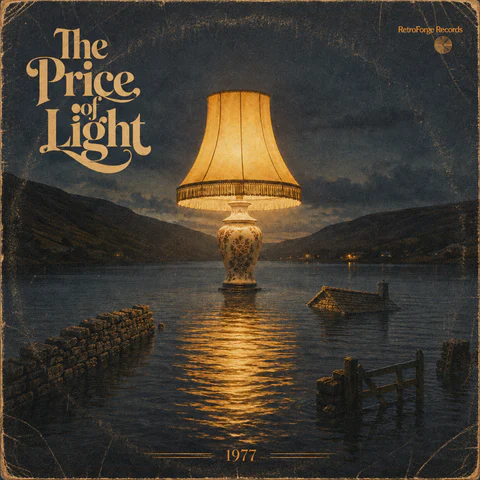
Kapak bu ilişkiyi rezervuarın içinde duran, ışık saçan dev bir ev lambasında yoğunlaştırır. Ön planda su altındaki duvarlar, kapı ve çatı çizgisi; sırtların ardında uzak ışıklar vardır. Eskimiş mat kaplama hayal edilen 1970'ler sunumuna aittir; dev lamba kapak simgesidir, anlatıda doğaüstü bir olay değildir.
Şarkı sözleri
Özgün İngilizce sözler, ek kıta veya icra açıklaması konmadan sunulmuştur.
01 · Pegs in the Lower Field
There are four red pegs in the lower field,
two by the ditch and two beyond the gate.
I nearly pulled the first one with my boot
before I saw the tape stretched through the grass
and the tripod standing where the cattle turn.

They have chalk on their sleeves and mud on their knees.
One of them asks which fence is ours.
I point to the wall, then farther down
where the hedge has grown through the wire,
and he writes something without looking up.

Leave them where they stand.
Leave them there until we know.

By dinner the men have crossed to the far side.
A white card is tied beneath the gate latch.
My name is typed correctly.
The field is described in numbers,
though nothing in it has moved.

I walk the line again before dark,
past the patch where the ground stays wet,
past the broken post we keep meaning to mend,
past the place the river shows between the alders.

Leave them where they stand.
Now we know enough.
02 · Compensation Day
Property to be acquired.
Access to be retained.
Fixtures by separate schedule.
Outbuildings subject to inspection.

A hand turns the page.
From the second row: does the orchard count?
At the back, twenty years of rent
is placed on the table as if it ought to count for something.

Reasonable costs of removal.
Alternative accommodation where applicable.
Livestock transport to be assessed.
Existing rights to be extinguished.

A chair scrapes back.
A man beside the window says,
“If you mean the house, say house.”
Nobody writes that sentence down.

Sign here.
Initial there.
Take a copy home.

Market value at the appointed date.
No allowance for attachment.
No allowance for expectation.
No allowance for inconvenience beyond the terms stated.

One family whispers over debts.
Another folds the paper twice.
Across the aisle comes the remark
that accepting early makes it easier for them.

Property to be acquired.
Access to be retained.
The same words return,
but the room has changed around them.

A woman asks who moves the piano.
Laughter breaks too loudly near the door.
Another form slides across the table.

Sign here.
Keep your copy.

Next.
03 · Against the Motion
Put it to the room, then.
Put the paper down where everyone can see it.
You say refusal keeps the road open.
He says refusal only changes the date.
From the back comes: the churchyard first,
and three people answer before the chair can call order.

We came here together.
That lasted ten minutes.

You call it surrender.
I call it knowing what comes next.
You have land above the line.
We do not.
You can wait another winter.
We have already packed the upstairs rooms.

No, that is not what I said.
No, don't tidy it for me.
If the offer stands, I take it.
If you want to hate me for that,
use my name when you do it.

The chairman asks for order.
The chairman asks again.

A hand rises slowly near the wall:
What happens to the graves?

For once,
nobody answers at once.

Against the motion.
For the motion.
Abstain if you must.

A vote is a useful thing
when the question fits inside it.

This one does not.

From the left: we should stand as one.
From the doorway: we stopped doing that
the moment the first figure arrived.

Count the hands.
Count them twice.
Record the result.

Then meet your neighbor's eyes.
04 · Rooms Without Curtains
The curtains went yesterday, and without them the front room looks taller than it ever did when the table was under the window and the kettle could be heard from the hall.

There are pale squares above the mantel where the pictures hung,
and two clean strips on the floor where the cabinet stood,
and one bent hook by the door that I leave in place because removing it would be more deliberate than I can manage today.

We carry the last boxes down the stairs slowly, not because they are heavy but because there is no reason to hurry anymore, and the sound of our shoes travels farther through the house than it used to.

In the kitchen a cup has been left behind.
Not the good one.
Not anyone's favorite.
Just a chipped brown cup at the back of the shelf.

I put it in a box anyway.

You have the keys in your coat pocket, and I still reach for mine when I come through the passage, which makes us both laugh once, briefly, before neither of us knows what to say after it.

The bedroom door catches at the same place.
The third stair still complains.
There is dust under the bedstead and a nail in the wall we never used.

Everything is exactly where the house left it.

Except us.

At the gate I turn the key until the lock takes,
then try the handle twice from habit.

We walk to the road.

I do not look back again.
05 · Aggregate
Stone through the hopper.
Dust whitening the road.
A loaded lorry crawls
where the sheep track ran.

Check the grade.
Brace the shuttering.
Wave the mixer forward.
The chute swings over the timber.

Crush it.
Grade it.
Pour it.
Hold.

Boots on wet boards.
Cable drawn taut.
A banksman lifts one arm
through the engine noise.

The drum turns.
The barrows queue.
A shovel works the corners
before the mix can stiffen.

By noon the forms are full.
Cement dries grey across the gloves.
A man knocks each board with his hammer,
listens,
then moves to the next.

Another lorry backs into place.

Crush it.
Grade it.
Pour it.

Hold.
06 · Below the Red Line
The cattle go first to the upper farm.
Tools are tagged and loaded by the shed.
Two pews leave through the vestry door.
The brass cross travels wrapped in blankets.
A crate is marked for books,
another for the kitchen things no one has claimed.

Take what can be carried.
Leave the rest below the red line.

The gate comes off its hinges.
Useful timber is stacked by the road.
A stone trough takes four men and a chain.
The old mower will not start,
so they drain it, curse it,
and winch it onto the lorry anyway.

Move what can be moved.
Mark the rest below the red line.

Names are copied from the grave markers.
Numbers are checked against a list.
Soil is lifted carefully.
Families stand farther back than they expected to.
The small stones travel with the large ones.
The cracked one is kept because the name can still be read.

At the church door
someone asks whether the bell is coming.

It is.

Raise what can be raised.
Close the road below the red line.

By evening there are fewer reasons to return.
One crate waits without a label.
One gate stands open.
One room still has a broom against the wall.

Nobody needs it.

Take what can be carried.
The line has already decided the rest.
07 · Sluice
The gate is checked.
The channel is clear.
Pressure holds where the concrete joins.
A hand signal passes down the platform.

Close.

The current turns.
The intake takes it.
Levels climb past marks
painted months before.

By noon the lower road
ends in brown water.

Road below.
Wall below.
Orchard below.

The gauge moves.

Water finds the contour.
Concrete holds.
At the spillway the needles settle.
Beyond the wall,
the river runs narrow.

One level.
Then another.

The last red mark
goes under.
08 · Lights Beyond the Ridge
Lights beyond the ridge,
warm in rooms we never see.
A hand finds the switch,
and evening changes quietly.

A kettle starts in a kitchen.
A workshop keeps one bench alive.
Street lamps take the corner one by one.
Pages turn beneath a shaded bulb.
At closing time a sign stays burning
above a door on the high street.

Nothing in those rooms is extraordinary.

Lights beyond the ridge,
steady along the road.
Current through the wire,
ordinary as being home.

You do not know the lower field.
You have no reason to.
You do not know which house had curtains
or who carried the bell uphill.

You turn the lamp toward the table.
You finish what you were doing.
Outside, the line runs over the ridge
and disappears from view.

Lights beyond the ridge,
small and warm and clear.
The wire drops behind the hill.
Work goes on till late.
Keşfetmeye devam et
1970'lerin Britanya tarzı progunu, anlatılı konsept albümleri, pastoral düzenlemeleri ve klavye ağırlıklı analog rockı sevenler için.
Ortak bir hikâye ima etmeden, dinleme önerisi olarak keşfedilebilecek başka RetroForge progresif rock albümleri.