
アルバムについて
The Price of Lightは、水が来る前から始まる。英国の高地にある、名もない架空の谷。そこにはまだ営みを続ける農場、石造りの家、細い道、教会、墓地がある。4本の測量杭だけで、慣れ親しんだ土地は残れるものと去るべきものに分けられる。
水力発電計画は成功する。電気は現実の需要を満たし、建設に携わる人々も単なる悪役にはされない。アルバムが追うのは、その成功に必要なものだ。資産評価、意見の割れる集会、家との別れ、コンクリート工事、そして周囲の場所までは救えない品々の慎重な移動。
前半は住民のそばにとどまる。やがて労働のリズムと水圧を制御する設備が前景に出て、「Sluice」では人の言葉がまばらになる。最後の曲は谷を離れ、そこで生まれた電気が照らす部屋へ向かう。利益も破壊も、もう一方を帳消しにはしない。
1977年は架空のアーカイブ設定と音の美学を示すもので、実際の録音年ではない。これは独立したフィクションのアルバムであり、記録に残る貯水池災害の再話ではない。
曲目
- 1Pegs in the Lower Field05:02
- 2Compensation Day04:42
- 3Against the Motion05:17
- 4Rooms Without Curtains03:52
- 5Aggregate04:09
- 6Below the Red Line05:19
- 7Sluice05:04
- 8Lights Beyond the Ridge04:48
音楽の総収録時間:38:13。 全8曲に歌があり、「Sluice」は特に器楽の比重が大きい。
各曲解説
1. Pegs in the Lower Field
4本の赤い測量杭が、まだ景色を変えていない変化を告げる。タイプ打ちの通知は住民の名前を正しく記す一方、畑を数字だけで表す。杭を動かさないようにという指示は、情報を待つ段階から、その意味を悟る段階へと響きを変える。
2. Compensation Day
事務的な言葉に、簡単には答えられない問いがぶつかる。果樹園も勘定に入るのか。20年分の家賃は何を意味するのか。ピアノは誰が運ぶのか。室内の落ち着きが失われても、書類は平静なままだ。金は必要だが、評価額では手放すものすべてを表せない。
3. Against the Motion
住民集会は、団結の呼びかけの下に異なる利害があることを露わにする。予定水位より上に住む人々には、すでに荷造りを始めた人々には許されない抵抗の余地がある。墓についての問いが一瞬口論を止める。投票は結果を記録できても、対立を解消できない。
4. Rooms Without Curtains
視点はほとんど空になった家へ縮まる。むき出しの壁、聞き慣れた音、欠けたカップが、補償額の一覧には収まらなかった悲しみを担う。長く会話めいた文が出発を遅らせ、最後に鍵を回す動作には決断と同じだけ習慣が宿る。
5. Aggregate
アルバムで最も身体的な重さを持つ場面が、建設に固有の作業語彙を与える。ホッパー、型枠、ミキサー、手信号が集会の言葉に取って代わる。作業員は実物の材料を扱う熟練者だ。不安は、その有効な労働が何を可能にするかから生まれる。
6. Below the Red Line
運び出されるものは家畜、道具、教会の備品、墓石へと続く。取り消せない決定の内側にも、実務的な思いやりは残る。ひび割れた墓石は、名前がまだ読めるから保存される。鐘は持ち上げられても、その居場所を作っていた共同体はトラックに積めない。
7. Sluice
まばらな記録調の歌が、大きな建築的クライマックスに空間を譲る。水門、圧力、計器が手順を支配し、水は道、壁、果樹園を覆う。設備が壊れるのではない。最後の赤い印が消えるのは、システムが設計どおりに機能するからだ。
8. Lights Beyond the Ridge
終曲は電気を受け取る台所、工房、ありふれた通りへ移る。そこにいる人々を責めることも、知らなかった谷の証人に仕立てることもしない。ランプのおかげで誰かが仕事を終える。尾根の向こうでは喪失が残る。電流が役立つことだけでは、その代価は決着しない。
サウンド・パレット
牧歌的なプログレッシブ・ロックが農村の親密さを生み、シンフォニック・プログレが建設と水没に規模を与える。変拍子やテンポの変化は、技術を見せ続けるためではなく、出来事に沿って動く。
ピアノが繰り返し現れる結び目になる。ハモンド・オルガンは控えめなアクセントから大きな建築的展開へ進み、メロトロンは慎重に抑えた登場で冷たい色を添える。アナログ・シンセサイザーは控えめだ。チェロに少量のクラリネットやサックスの色が加わり、鍵盤の音色にもう一つの人間的な声域をもたらす。
指弾きのアコースティック・ギターや12弦ギターが、澄んだエレクトリックの音型、角張った対位法、持続音、選択的に飽和させた重い演奏と並ぶ。ベースは旋律的で、中域で明瞭に聞こえ、抒情的な動きから建設の作業リズムへ移る。自然なアコースティック・ドラムは強弱と部屋の響きを保つ。
男性の主唱は状況によって変わる。観察、切り詰めた手続きの言葉、言い争う合唱、会話に近い歌、力強い建設の歌。1970年代後半のアナログ感を意識した温かみ、飽和、部分的なディレイ、プレート型やチェンバー型の残響が、楽器の分離を失わずにこれらを結ぶ。
アーカイブ・ノート
線は最初、測量杭の間のテープとして現れる。やがて行政上の境界、撤去の指示、最後には水没する印となる。土地が最初に数字で表される時、景色はまだ変わっていない。終わりには、その数字が何を目に残すかを決める一因になっている。
石も役割を変える。壁や家は査定される財産となり、骨材とコンクリートは川をせき止める力を持つ。墓石は特に注意して移される。周囲の場所が生き残れなくても、読める名前は具体的な何かを残す。
「Rooms Without Curtains」は「Aggregate」の前に訪れる親密な収縮だ。カップが重要なのは高価だからではなく、残されるからである。「Aggregate」は物理的な重さをもたらし、「Sluice」はそれを建築に変える。水が中心的なイメージになるのはこの遅い段階であり、光もまた結末まで取っておかれる。
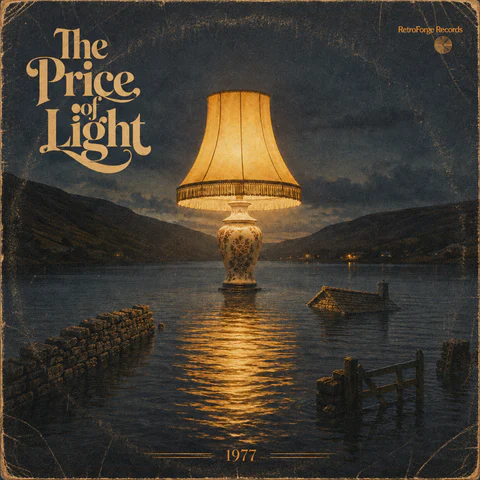
ジャケットはこの関係を、貯水池の中で光る巨大な家庭用ランプに凝縮する。手前には沈んだ壁、門、屋根の線があり、尾根の向こうには遠い明かりがある。擦れたマットなスリーブの質感は架空の1970年代風装丁に属する。巨大なランプは表紙の象徴であり、物語で起きる超自然的事件ではない。
歌詞
英語の原詞を、節名や演奏指示を追加せずに掲載。
01 · Pegs in the Lower Field
There are four red pegs in the lower field,
two by the ditch and two beyond the gate.
I nearly pulled the first one with my boot
before I saw the tape stretched through the grass
and the tripod standing where the cattle turn.

They have chalk on their sleeves and mud on their knees.
One of them asks which fence is ours.
I point to the wall, then farther down
where the hedge has grown through the wire,
and he writes something without looking up.

Leave them where they stand.
Leave them there until we know.

By dinner the men have crossed to the far side.
A white card is tied beneath the gate latch.
My name is typed correctly.
The field is described in numbers,
though nothing in it has moved.

I walk the line again before dark,
past the patch where the ground stays wet,
past the broken post we keep meaning to mend,
past the place the river shows between the alders.

Leave them where they stand.
Now we know enough.
02 · Compensation Day
Property to be acquired.
Access to be retained.
Fixtures by separate schedule.
Outbuildings subject to inspection.

A hand turns the page.
From the second row: does the orchard count?
At the back, twenty years of rent
is placed on the table as if it ought to count for something.

Reasonable costs of removal.
Alternative accommodation where applicable.
Livestock transport to be assessed.
Existing rights to be extinguished.

A chair scrapes back.
A man beside the window says,
“If you mean the house, say house.”
Nobody writes that sentence down.

Sign here.
Initial there.
Take a copy home.

Market value at the appointed date.
No allowance for attachment.
No allowance for expectation.
No allowance for inconvenience beyond the terms stated.

One family whispers over debts.
Another folds the paper twice.
Across the aisle comes the remark
that accepting early makes it easier for them.

Property to be acquired.
Access to be retained.
The same words return,
but the room has changed around them.

A woman asks who moves the piano.
Laughter breaks too loudly near the door.
Another form slides across the table.

Sign here.
Keep your copy.

Next.
03 · Against the Motion
Put it to the room, then.
Put the paper down where everyone can see it.
You say refusal keeps the road open.
He says refusal only changes the date.
From the back comes: the churchyard first,
and three people answer before the chair can call order.

We came here together.
That lasted ten minutes.

You call it surrender.
I call it knowing what comes next.
You have land above the line.
We do not.
You can wait another winter.
We have already packed the upstairs rooms.

No, that is not what I said.
No, don't tidy it for me.
If the offer stands, I take it.
If you want to hate me for that,
use my name when you do it.

The chairman asks for order.
The chairman asks again.

A hand rises slowly near the wall:
What happens to the graves?

For once,
nobody answers at once.

Against the motion.
For the motion.
Abstain if you must.

A vote is a useful thing
when the question fits inside it.

This one does not.

From the left: we should stand as one.
From the doorway: we stopped doing that
the moment the first figure arrived.

Count the hands.
Count them twice.
Record the result.

Then meet your neighbor's eyes.
04 · Rooms Without Curtains
The curtains went yesterday, and without them the front room looks taller than it ever did when the table was under the window and the kettle could be heard from the hall.

There are pale squares above the mantel where the pictures hung,
and two clean strips on the floor where the cabinet stood,
and one bent hook by the door that I leave in place because removing it would be more deliberate than I can manage today.

We carry the last boxes down the stairs slowly, not because they are heavy but because there is no reason to hurry anymore, and the sound of our shoes travels farther through the house than it used to.

In the kitchen a cup has been left behind.
Not the good one.
Not anyone's favorite.
Just a chipped brown cup at the back of the shelf.

I put it in a box anyway.

You have the keys in your coat pocket, and I still reach for mine when I come through the passage, which makes us both laugh once, briefly, before neither of us knows what to say after it.

The bedroom door catches at the same place.
The third stair still complains.
There is dust under the bedstead and a nail in the wall we never used.

Everything is exactly where the house left it.

Except us.

At the gate I turn the key until the lock takes,
then try the handle twice from habit.

We walk to the road.

I do not look back again.
05 · Aggregate
Stone through the hopper.
Dust whitening the road.
A loaded lorry crawls
where the sheep track ran.

Check the grade.
Brace the shuttering.
Wave the mixer forward.
The chute swings over the timber.

Crush it.
Grade it.
Pour it.
Hold.

Boots on wet boards.
Cable drawn taut.
A banksman lifts one arm
through the engine noise.

The drum turns.
The barrows queue.
A shovel works the corners
before the mix can stiffen.

By noon the forms are full.
Cement dries grey across the gloves.
A man knocks each board with his hammer,
listens,
then moves to the next.

Another lorry backs into place.

Crush it.
Grade it.
Pour it.

Hold.
06 · Below the Red Line
The cattle go first to the upper farm.
Tools are tagged and loaded by the shed.
Two pews leave through the vestry door.
The brass cross travels wrapped in blankets.
A crate is marked for books,
another for the kitchen things no one has claimed.

Take what can be carried.
Leave the rest below the red line.

The gate comes off its hinges.
Useful timber is stacked by the road.
A stone trough takes four men and a chain.
The old mower will not start,
so they drain it, curse it,
and winch it onto the lorry anyway.

Move what can be moved.
Mark the rest below the red line.

Names are copied from the grave markers.
Numbers are checked against a list.
Soil is lifted carefully.
Families stand farther back than they expected to.
The small stones travel with the large ones.
The cracked one is kept because the name can still be read.

At the church door
someone asks whether the bell is coming.

It is.

Raise what can be raised.
Close the road below the red line.

By evening there are fewer reasons to return.
One crate waits without a label.
One gate stands open.
One room still has a broom against the wall.

Nobody needs it.

Take what can be carried.
The line has already decided the rest.
07 · Sluice
The gate is checked.
The channel is clear.
Pressure holds where the concrete joins.
A hand signal passes down the platform.

Close.

The current turns.
The intake takes it.
Levels climb past marks
painted months before.

By noon the lower road
ends in brown water.

Road below.
Wall below.
Orchard below.

The gauge moves.

Water finds the contour.
Concrete holds.
At the spillway the needles settle.
Beyond the wall,
the river runs narrow.

One level.
Then another.

The last red mark
goes under.
08 · Lights Beyond the Ridge
Lights beyond the ridge,
warm in rooms we never see.
A hand finds the switch,
and evening changes quietly.

A kettle starts in a kitchen.
A workshop keeps one bench alive.
Street lamps take the corner one by one.
Pages turn beneath a shaded bulb.
At closing time a sign stays burning
above a door on the high street.

Nothing in those rooms is extraordinary.

Lights beyond the ridge,
steady along the road.
Current through the wire,
ordinary as being home.

You do not know the lower field.
You have no reason to.
You do not know which house had curtains
or who carried the bell uphill.

You turn the lamp toward the table.
You finish what you were doing.
Outside, the line runs over the ridge
and disappears from view.

Lights beyond the ridge,
small and warm and clear.
The wire drops behind the hill.
Work goes on till late.
さらに探す
1970年代の英国風プログレ、物語性のあるコンセプト・アルバム、牧歌的な編曲、アナログ鍵盤を軸にしたロックを好むリスナーへ。
次に聴く候補として、RetroForgeのほかのプログレッシブ・ロック作品を紹介。共通の物語があるという意味ではありません。