
Auf dieser Seite
Über dieses Album
The Price of Light beginnt vor dem Wasser. In einem namenlosen, erfundenen britischen Bergtal gibt es noch bewirtschaftete Höfe, Steinhäuser, eine schmale Straße, eine Kirche und einen Friedhof. Vier Vermessungspfähle genügen, um den vertrauten Boden in das zu teilen, was bleiben darf, und das, was weichen muss.
Das Wasserkraftprojekt gelingt. Sein Strom deckt echte Bedürfnisse, und die Menschen auf der Baustelle werden nicht zu Bösewichten gemacht. Das Album verfolgt, was dieser Erfolg verlangt: Bewertungen, zerstrittene Versammlungen, Abschiede von Zuhause, Betonarbeiten und den behutsamen Transport von Dingen, deren Umgebung sich nicht retten lässt.
Die erste Hälfte bleibt nah an den Bewohnern. Später treten Arbeitsrhythmen und hydraulische Systeme stärker hervor, bis menschliche Sprache in „Sluice“ selten wird. Das Schlussstück verlässt das Tal und besucht Räume, die sein Strom beleuchtet. Weder der Nutzen noch die Zerstörung hebt das jeweils andere auf.
1977 bezeichnet den fiktiven Archivrahmen und die Klangästhetik, kein historisches Aufnahmedatum. Dies ist ein eigenständiges fiktionales Album, kein Bericht über eine dokumentierte Stauseekatastrophe.
Titelliste
- 1Pegs in the Lower Field05:02
- 2Compensation Day04:42
- 3Against the Motion05:17
- 4Rooms Without Curtains03:52
- 5Aggregate04:09
- 6Below the Red Line05:19
- 7Sluice05:04
- 8Lights Beyond the Ridge04:48
Gesamtspielzeit: 38:13. Alle acht Titel enthalten Gesang; „Sluice“ ist stark instrumental geprägt.
Titel für Titel
1. Pegs in the Lower Field
Vier rote Vermessungspfähle kündigen eine Veränderung an, die die Landschaft noch nicht erreicht hat. Im maschinengeschriebenen Bescheid stimmt der Name des Bewohners, während das Feld ausschließlich in Zahlen beschrieben wird. Die Aufforderung, die Pfähle stehen zu lassen, führt vom Warten auf Auskunft zum Begreifen ihrer Bedeutung.
2. Compensation Day
Verwaltungssprache trifft auf Fragen, die sie kaum beantworten kann: Zählt ein Obstgarten mit? Was bedeuten zwanzig Jahre Miete? Wer transportiert ein Klavier? Die Formulare bleiben sachlich, während die Stimmung im Raum unruhiger wird. Geld ist notwendig, doch eine Bewertung erfasst nicht alles, was aufgegeben wird.
3. Against the Motion
Unter dem Ruf nach Einigkeit legt die Bürgerversammlung unterschiedliche Interessen frei. Bewohner oberhalb der geplanten Wasserlinie können sich einen Widerstand leisten, der denen beim Kofferpacken verwehrt bleibt. Die Frage nach den Gräbern unterbricht den Streit kurz; eine Abstimmung liefert ein Ergebnis, ohne den Konflikt zu lösen.
4. Rooms Without Curtains
Der Blick verengt sich auf ein fast leeres Haus. Kahle Wände, vertraute Geräusche und eine angeschlagene Tasse tragen jene Trauer, für die in den Entschädigungstabellen kein Platz war. Lange, gesprächsnahe Sätze verzögern den Aufbruch; die letzte Schlüsseldrehung ist ebenso Gewohnheit wie Entscheidung.
5. Aggregate
Der körperlich schwerste Moment des Albums gibt dem Bau seine eigene Arbeitssprache. Trichter, Schalungen, Mischer und Handzeichen ersetzen die Worte der Versammlung. Die Arbeiter verstehen ihr Handwerk und bearbeiten reale Materialien; das Unbehagen entsteht durch das, was ihre wirksame Arbeit ermöglicht.
6. Below the Red Line
Die Räumung führt von Vieh und Werkzeugen zu Kirchenausstattung und Grabsteinen. Auch innerhalb einer unumkehrbaren Entscheidung bleibt praktische Fürsorge möglich: Der gerissene Stein wird bewahrt, weil sein Name noch lesbar ist. Die Glocke lässt sich heben; die Gemeinschaft, zu der sie gehörte, passt auf keinen Lastwagen.
7. Sluice
Sparsame, dokumentarische Gesangspassagen lassen Raum für den großen architektonischen Höhepunkt. Tore, Druck und Messgeräte bestimmen den Ablauf, während das Wasser Straße, Mauer und Obstgarten erreicht. Die Anlage versagt nicht: Die letzte rote Markierung verschwindet, weil das System genau das tut, wofür es gebaut wurde.
8. Lights Beyond the Ridge
Das Schlussstück führt in Küchen, Werkstätten und gewöhnliche Straßen, die Strom erhalten. Ihre Bewohner werden weder angeklagt noch zu Zeugen eines Tals gemacht, das sie nie kannten. Eine Lampe hilft jemandem, eine Arbeit zu beenden; hinter dem Höhenzug bleibt der Verlust. Die Nützlichkeit des Stroms klärt seinen Preis nicht.
Klangpalette
Pastoraler Progressive Rock schafft ländliche Nähe, während Symphonic Prog Bau und Überflutung ihre Dimension gibt. Ungerade Taktarten und Tempowechsel folgen dem Geschehen, statt fortwährend technische Virtuosität vorzuführen.
Das Klavier bildet die wiederkehrende Verbindung. Die Hammondorgel reicht von zurückhaltenden Akzenten bis zu großen architektonischen Passagen; das Mellotron setzt dosiert kühlere Farben. Analogsynthesizer bleiben sparsam. Cello und gelegentliche Klarinetten- oder Saxophonfarben ergänzen die Tasteninstrumente um ein weiteres menschliches Register.
Gezupfte Akustik- und zwölfsaitige Gitarren stehen neben klaren E-Gitarrenfiguren, kantigem Kontrapunkt, gehaltenen Tönen und gezielt gesättigtem, härterem Spiel. Der Bass bleibt melodisch und in den Mitten hörbar; aus lyrischer Bewegung entstehen die Arbeitsrhythmen der Baustelle. Natürlich klingendes akustisches Schlagzeug bewahrt Dynamik und Raumcharakter.
Der männliche Hauptgesang verändert sich mit den Umständen: Beobachtung, knappe Verfahrenssprache, streitende Ensemblepassagen, beinahe gesprochene Zeilen und entschlossener Baustellengesang. Analog inspirierte Wärme der späten Siebziger, Sättigung, gezieltes Delay sowie Platten- oder Kammerhall verbinden diese Ansätze, ohne die Instrumente ineinander aufzulösen.
Archivnotizen
Eine Linie erscheint zunächst als Band zwischen Vermessungspfählen. Sie wird Verwaltungsgrenze, Räumungsanweisung und schließlich eine vom Wasser verschluckte Markierung. Die Landschaft hat sich noch nicht bewegt, als sie erstmals in Zahlen beschrieben wird; am Ende bestimmen diese Zahlen mit, was sichtbar bleibt.
Auch Stein verändert seine Funktion. Mauern und Häuser werden zu bewertbarem Eigentum, während Zuschlagstoffe und Beton die Kraft erhalten, den Fluss einzufassen. Grabsteine werden besonders vorsichtig versetzt. Ihre lesbaren Namen bewahren etwas Konkretes, auch wenn der Ort um sie herum nicht überleben kann.
„Rooms Without Curtains“ ist die intime Verengung vor „Aggregate“. Eine Tasse zählt, weil sie zurückbleibt, nicht weil sie kostbar ist. „Aggregate“ bringt körperliches Gewicht; „Sluice“ macht daraus Architektur. Wasser wird erst spät zum bestimmenden Bild, ebenso wie das Licht dem Schluss vorbehalten bleibt.
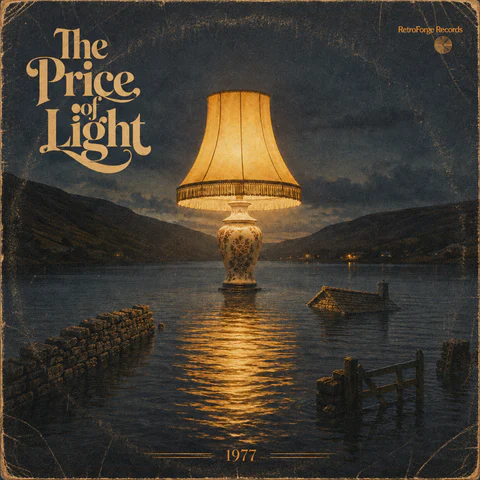
Das Cover verdichtet dieses Verhältnis in einer übergroßen leuchtenden Haushaltslampe im Stausee. Versunkene Mauern, ein Tor und eine Dachlinie liegen vorn, ferne Lichter hinter den Hügeln. Die abgenutzte matte Hüllenoptik gehört zur erfundenen Siebziger-Präsentation; die riesige Lampe ist Bildsymbolik, kein übernatürliches Ereignis der Handlung.
Songtexte
Englische Originalsongtexte, ohne ergänzte Strophen- oder Vortragsangaben wiedergegeben.
01 · Pegs in the Lower Field
There are four red pegs in the lower field,
two by the ditch and two beyond the gate.
I nearly pulled the first one with my boot
before I saw the tape stretched through the grass
and the tripod standing where the cattle turn.

They have chalk on their sleeves and mud on their knees.
One of them asks which fence is ours.
I point to the wall, then farther down
where the hedge has grown through the wire,
and he writes something without looking up.

Leave them where they stand.
Leave them there until we know.

By dinner the men have crossed to the far side.
A white card is tied beneath the gate latch.
My name is typed correctly.
The field is described in numbers,
though nothing in it has moved.

I walk the line again before dark,
past the patch where the ground stays wet,
past the broken post we keep meaning to mend,
past the place the river shows between the alders.

Leave them where they stand.
Now we know enough.
02 · Compensation Day
Property to be acquired.
Access to be retained.
Fixtures by separate schedule.
Outbuildings subject to inspection.

A hand turns the page.
From the second row: does the orchard count?
At the back, twenty years of rent
is placed on the table as if it ought to count for something.

Reasonable costs of removal.
Alternative accommodation where applicable.
Livestock transport to be assessed.
Existing rights to be extinguished.

A chair scrapes back.
A man beside the window says,
“If you mean the house, say house.”
Nobody writes that sentence down.

Sign here.
Initial there.
Take a copy home.

Market value at the appointed date.
No allowance for attachment.
No allowance for expectation.
No allowance for inconvenience beyond the terms stated.

One family whispers over debts.
Another folds the paper twice.
Across the aisle comes the remark
that accepting early makes it easier for them.

Property to be acquired.
Access to be retained.
The same words return,
but the room has changed around them.

A woman asks who moves the piano.
Laughter breaks too loudly near the door.
Another form slides across the table.

Sign here.
Keep your copy.

Next.
03 · Against the Motion
Put it to the room, then.
Put the paper down where everyone can see it.
You say refusal keeps the road open.
He says refusal only changes the date.
From the back comes: the churchyard first,
and three people answer before the chair can call order.

We came here together.
That lasted ten minutes.

You call it surrender.
I call it knowing what comes next.
You have land above the line.
We do not.
You can wait another winter.
We have already packed the upstairs rooms.

No, that is not what I said.
No, don't tidy it for me.
If the offer stands, I take it.
If you want to hate me for that,
use my name when you do it.

The chairman asks for order.
The chairman asks again.

A hand rises slowly near the wall:
What happens to the graves?

For once,
nobody answers at once.

Against the motion.
For the motion.
Abstain if you must.

A vote is a useful thing
when the question fits inside it.

This one does not.

From the left: we should stand as one.
From the doorway: we stopped doing that
the moment the first figure arrived.

Count the hands.
Count them twice.
Record the result.

Then meet your neighbor's eyes.
04 · Rooms Without Curtains
The curtains went yesterday, and without them the front room looks taller than it ever did when the table was under the window and the kettle could be heard from the hall.

There are pale squares above the mantel where the pictures hung,
and two clean strips on the floor where the cabinet stood,
and one bent hook by the door that I leave in place because removing it would be more deliberate than I can manage today.

We carry the last boxes down the stairs slowly, not because they are heavy but because there is no reason to hurry anymore, and the sound of our shoes travels farther through the house than it used to.

In the kitchen a cup has been left behind.
Not the good one.
Not anyone's favorite.
Just a chipped brown cup at the back of the shelf.

I put it in a box anyway.

You have the keys in your coat pocket, and I still reach for mine when I come through the passage, which makes us both laugh once, briefly, before neither of us knows what to say after it.

The bedroom door catches at the same place.
The third stair still complains.
There is dust under the bedstead and a nail in the wall we never used.

Everything is exactly where the house left it.

Except us.

At the gate I turn the key until the lock takes,
then try the handle twice from habit.

We walk to the road.

I do not look back again.
05 · Aggregate
Stone through the hopper.
Dust whitening the road.
A loaded lorry crawls
where the sheep track ran.

Check the grade.
Brace the shuttering.
Wave the mixer forward.
The chute swings over the timber.

Crush it.
Grade it.
Pour it.
Hold.

Boots on wet boards.
Cable drawn taut.
A banksman lifts one arm
through the engine noise.

The drum turns.
The barrows queue.
A shovel works the corners
before the mix can stiffen.

By noon the forms are full.
Cement dries grey across the gloves.
A man knocks each board with his hammer,
listens,
then moves to the next.

Another lorry backs into place.

Crush it.
Grade it.
Pour it.

Hold.
06 · Below the Red Line
The cattle go first to the upper farm.
Tools are tagged and loaded by the shed.
Two pews leave through the vestry door.
The brass cross travels wrapped in blankets.
A crate is marked for books,
another for the kitchen things no one has claimed.

Take what can be carried.
Leave the rest below the red line.

The gate comes off its hinges.
Useful timber is stacked by the road.
A stone trough takes four men and a chain.
The old mower will not start,
so they drain it, curse it,
and winch it onto the lorry anyway.

Move what can be moved.
Mark the rest below the red line.

Names are copied from the grave markers.
Numbers are checked against a list.
Soil is lifted carefully.
Families stand farther back than they expected to.
The small stones travel with the large ones.
The cracked one is kept because the name can still be read.

At the church door
someone asks whether the bell is coming.

It is.

Raise what can be raised.
Close the road below the red line.

By evening there are fewer reasons to return.
One crate waits without a label.
One gate stands open.
One room still has a broom against the wall.

Nobody needs it.

Take what can be carried.
The line has already decided the rest.
07 · Sluice
The gate is checked.
The channel is clear.
Pressure holds where the concrete joins.
A hand signal passes down the platform.

Close.

The current turns.
The intake takes it.
Levels climb past marks
painted months before.

By noon the lower road
ends in brown water.

Road below.
Wall below.
Orchard below.

The gauge moves.

Water finds the contour.
Concrete holds.
At the spillway the needles settle.
Beyond the wall,
the river runs narrow.

One level.
Then another.

The last red mark
goes under.
08 · Lights Beyond the Ridge
Lights beyond the ridge,
warm in rooms we never see.
A hand finds the switch,
and evening changes quietly.

A kettle starts in a kitchen.
A workshop keeps one bench alive.
Street lamps take the corner one by one.
Pages turn beneath a shaded bulb.
At closing time a sign stays burning
above a door on the high street.

Nothing in those rooms is extraordinary.

Lights beyond the ridge,
steady along the road.
Current through the wire,
ordinary as being home.

You do not know the lower field.
You have no reason to.
You do not know which house had curtains
or who carried the bell uphill.

You turn the lamp toward the table.
You finish what you were doing.
Outside, the line runs over the ridge
and disappears from view.

Lights beyond the ridge,
small and warm and clear.
The wire drops behind the hill.
Work goes on till late.
Weiter entdecken
Für Hörer mit Interesse an britisch geprägtem Siebziger-Prog, erzählerischen Konzeptalben, pastoralen Arrangements und analogem, keyboardbetontem Rock.
Weitere Progressive-Rock-Alben von RetroForge als Hörtipps. Daraus ergibt sich keine gemeinsame Handlung.