

Edition timeline
Zaječar's Gitarijada developed as a recurring competitive festival for emerging rock groups, a format fundamentally different from the giant open-field festivals elsewhere in this archive.
Zaječar's Gitarijada developed as a recurring competitive festival for emerging rock groups, a format fundamentally different from the giant open-field festivals elsewhere in this archive.
The Tourist Organisation of Zaječar says the festival's history dates from the late 1960s, when similar events appeared in smaller Yugoslav towns after the 1966 Belgrade Gitarijada; it says the Zaječar event arose on the initiative of local bands and was initially organised twice a year.
The Tourist Organisation of Zaječar says the festival's history dates from the late 1960s, when similar events appeared in smaller Yugoslav towns after the 1966 Belgrade Gitarijada; it says the Zaječar event arose on the initiative of local bands and was initially organised twice a year.
Rock historian Zoran Aleksić, drawing on the Historical Archive in Zaječar and a February 1970 issue of Timok, argues that the 30 January 1970 contest was the first Zaječar Gitarijada.
Rock historian Zoran Aleksić, drawing on the Historical Archive in Zaječar and a February 1970 issue of Timok, argues that the 30 January 1970 contest was the first Zaječar Gitarijada.
Pre-1974 winner records are incomplete in common festival histories, so early champion lists require archive/press verification.
Pre-1974 winner records are incomplete in common festival histories, so early champion lists require archive/press verification.
By the late 1970s and early 1980s Gitarijada had grown from a local contest into an important Yugoslav demo-band platform, reflecting progressive rock, hard rock and newer currents.
By the late 1970s and early 1980s Gitarijada had grown from a local contest into an important Yugoslav demo-band platform, reflecting progressive rock, hard rock and newer currents.
Why this event matters
The important story is continuity through competition. Zaječar is not about one legendary crowd but about building a repeated entry point for musicians outside the dominant metropolitan centres. Zaječar's Gitarijada developed as a recurring competitive festival for emerging rock groups, a format fundamentally different from the giant open-field festivals elsewhere in this archive.

Place, site and audience
The Tourist Organisation of Zaječar says the festival's history dates from the late 1960s, when similar events appeared in smaller Yugoslav towns after the 1966 Belgrade Gitarijada; it says the Zaječar event arose on the initiative of local bands and was initially organised twice a year. The programme connected Beat, Rock, Progressive Rock, Hard Rock, Yugoslav Rock without making advertised billing identical to confirmed performance.
What the audience experienced
Rock historian Zoran Aleksić, drawing on the Historical Archive in Zaječar and a February 1970 issue of Timok, argues that the 30 January 1970 contest was the first Zaječar Gitarijada. Pre-1974 winner records are incomplete in common festival histories, so early champion lists require archive/press verification.

Problems, conflict and practical limits
Origins and pre-1974 records are disputed/incomplete. By the late 1970s and early 1980s Gitarijada had grown from a local contest into an important Yugoslav demo-band platform, reflecting progressive rock, hard rock and newer currents.


Follow the festival beyond the field
Timeline
Related genres
More routes will be connected as the archive grows.
Related band guides
More routes will be connected as the archive grows.
Explore by sound
More routes will be connected as the archive grows.
Essential listening
Sources and further reading
- Tourist Organisation of Zaječar – official Gitarijada historyEditorial source spine · accessed 23 July 2026
- Gitarijada official site – short historyEditorial source spine · accessed 23 July 2026
- BBC Serbian / Danas reporting on the disputed founding year and Zoran Aleksić's archival researchEditorial source spine · accessed 23 July 2026
- Historical Archive / Timok material where accessible for the 1970 contemporary reportEditorial source spine · accessed 23 July 2026
Image credits5 licensed images
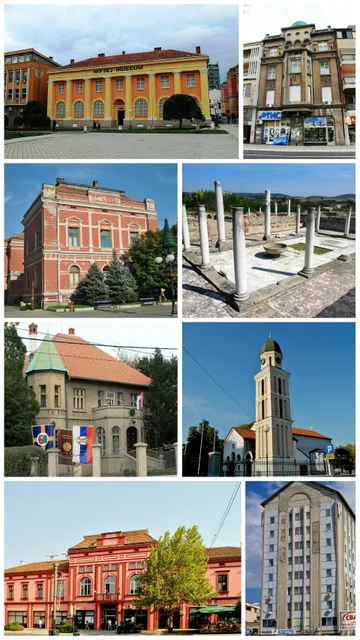
A collage of Zaječar landmarks, used as modern city context for the festival's long local history — Zeks127 — Wikimedia Commons — CC0 · source record · CC0
Converted to WebP and resized; no generative or compositional alterations.
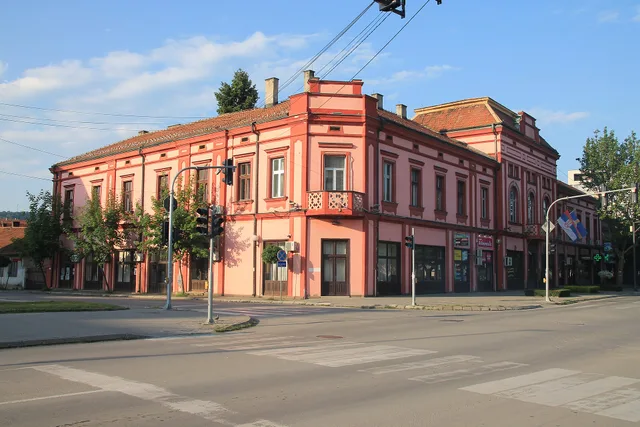
A civic building in Zaječar, used as local institutional context and not as festival documentation — Ванилица — Wikimedia Commons — CC BY-SA 4.0 · source record · CC BY-SA 4.0
Converted to WebP and resized; no generative or compositional alterations.
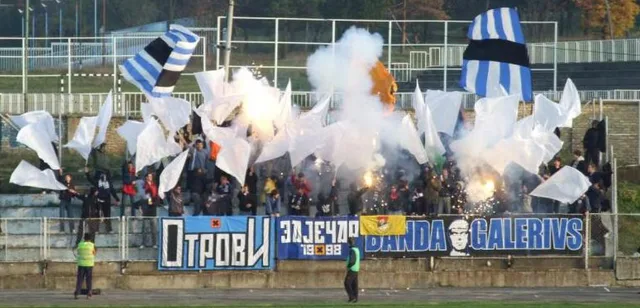
Supporters at the Zaječar stadium in 2008, used only as later venue-area context and not as a Gitarijada crowd — Srbijanka — Wikimedia Commons — CC BY-SA 3.0 · source record · CC BY-SA 3.0
Converted to WebP and resized; no generative or compositional alterations.
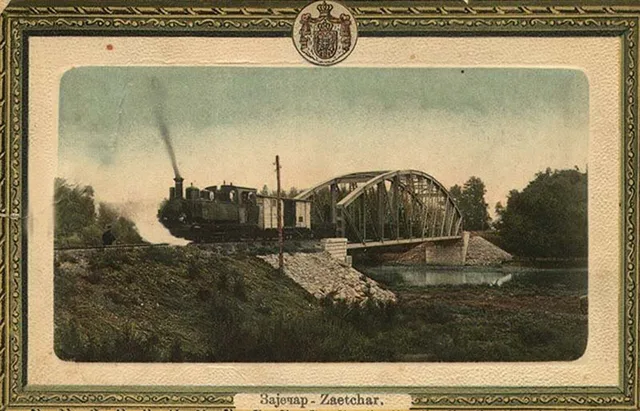
A bridge over the Timok near Zaječar, providing regional geography rather than event imagery — Unknown author Unknown author — Wikimedia Commons — CC BY-SA 4.0 · source record · CC BY-SA 4.0
Converted to WebP and resized; no generative or compositional alterations.
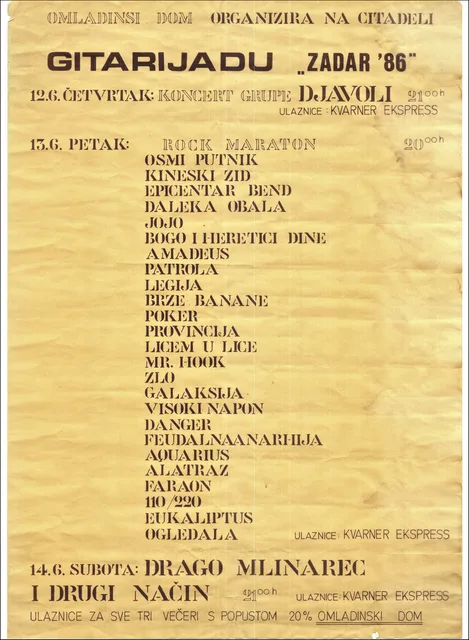
A 1986 Gitarijada poster from Zadar, explicitly used as comparative Yugoslav rock-competition context and not as a Zaječar artifact — Amisa55 — Wikimedia Commons — CC BY-SA 4.0 · source record · CC BY-SA 4.0
Converted to WebP and resized; no generative or compositional alterations.