Motif and Memory
A short melodic cell, rhythmic figure or chord sequence can bind an entire record together. Its return gives the listener orientation while the surrounding music changes.

RetroForge Genre Guide
Long-form compositions, shifting structures, Mellotron choirs and albums designed to be heard as complete journeys.
The Sound
Progressive rock at RetroForge begins where the ordinary song form stops being enough. A melody may return three tracks later in another key. A quiet organ passage can become the foundation of an entire album side. The destination matters, but so does every corridor, false turn and mechanical room encountered on the way there.
The central palette is unapologetically analogue: Hammond organ, Mellotron, Moog-style synthesis, electric piano, melodic bass, live drums and guitars that move between fragile detail and sudden mass. Some records lean toward symphonic scale and cinematic storytelling; others strip the machinery down until rhythm, repetition and dissonance take control.
These are modern RetroForge recordings written in the musical vocabulary of imagined 1970s and 1980s releases. They are not recreations of existing albums. Each one builds its own world, with track sequences meant to reward uninterrupted listening rather than shuffle-play fragments.
What connects the archive is not complexity for its own sake, but the belief that an album can reveal information gradually. A difficult passage should open a door; a long track should earn its length. The best starting point depends on whether you want symphonic sweep, colder machinery, cosmic synthesis or a theatrical story, so the collection below is arranged as a set of routes rather than a single ranking.
What You’ll Hear
How It Works
Prog is defined less by one instrument than by what the arrangement is allowed to become.
A progressive piece does not have to be twenty minutes long, and unusual time signatures alone do not make it progressive. The useful distinction is development. A conventional verse and chorus can create power through recognition; prog often creates it through transformation. A theme arrives in one setting, disappears, and returns with a different tempo, harmony or emotional meaning. The listener remembers the material while hearing it from a new angle.
That is why the album matters so much. Individual tracks can behave like chapters rather than isolated singles. An overture may quietly introduce a melody that only reaches its full form near the ending. Instrumental passages are not automatically solos: they may move the story forward, change the scale of the imagined space or let a musical argument unfold without words. When the structure works, length feels like distance travelled rather than time spent waiting.
A short melodic cell, rhythmic figure or chord sequence can bind an entire record together. Its return gives the listener orientation while the surrounding music changes.
Fragile acoustic passages, organ-heavy climaxes, silence and sudden electric weight make one another more effective. Prog often tells its story through scale.
Hammond supplies physical force, Mellotron adds unstable orchestral colour and analogue synthesis creates sounds that do not belong to a traditional ensemble.
Technical playing matters when it clarifies motion, tension or character. Complexity without purpose is decoration; the strongest performances make difficult movement feel inevitable.
The Main Routes
Symphonic prog borrows the scale and long-range development associated with orchestral music, but its engine is still a rock band. Canterbury-style records tend to favour jazz harmony, lighter touch and an eccentric sense of movement. Heavier and more experimental branches use dissonance, aggressive rhythm or repetition instead of pastoral grandeur. Neo-prog keeps the long-form drama and melodic sweep while introducing the cleaner keyboards and sharper production associated with the 1980s.
These borders are useful signposts, not laws. One album can move between several traditions, and RetroForge frequently uses that overlap as part of the concept. The archive year identifies the musical vocabulary being imagined; the actual recordings are contemporary works, not recovered historical releases.
Listen for this: when a familiar idea returns, ask what has changed around it. In progressive rock, the answer often reveals the album’s real narrative.
Historical Development
A concise map of how the style developed before it entered the RetroForge archive.
Progressive rock emerged at the end of the 1960s where psychedelia, jazz improvisation, classical scale and new studio possibilities began to overlap. No single album invented it. King Crimson’s In the Court of the Crimson King became an especially visible 1969 marker because it gave those ambitions a concentrated, dramatic form.
During the early 1970s, the language split into distinct schools. Yes pursued large melodic structures, Genesis joined narrative theatre to intricate ensemble writing, Van der Graaf Generator made the form darker and more confrontational, and the Canterbury scene brought jazz harmony and a lighter, eccentric touch. The result was never one fixed sound, but a permission to let rock composition develop on a larger canvas.
Later decades did not simply repeat that first wave. Neo-prog translated its drama into the cleaner production of the 1980s, while avant-prog, progressive metal, electronic composition and modern instrumental groups kept testing what “progressive” could mean.
The Real-World Foundations
Not a ranking: six distinct entrances into the historical genre.
A foundational collision of Mellotron grandeur, jazz tension and controlled violence.
Three extended pieces where recurring themes and ensemble precision create a complete arc.
English storytelling, dynamic contrast and intricate melodic arrangement.
Organ, saxophone and psychological intensity pushed toward the edge of collapse.
Counterpoint, shifting metres and compact ideas assembled with chamber-like precision.
A warmer, melodic route through extended structure and expressive guitar.
Start Here
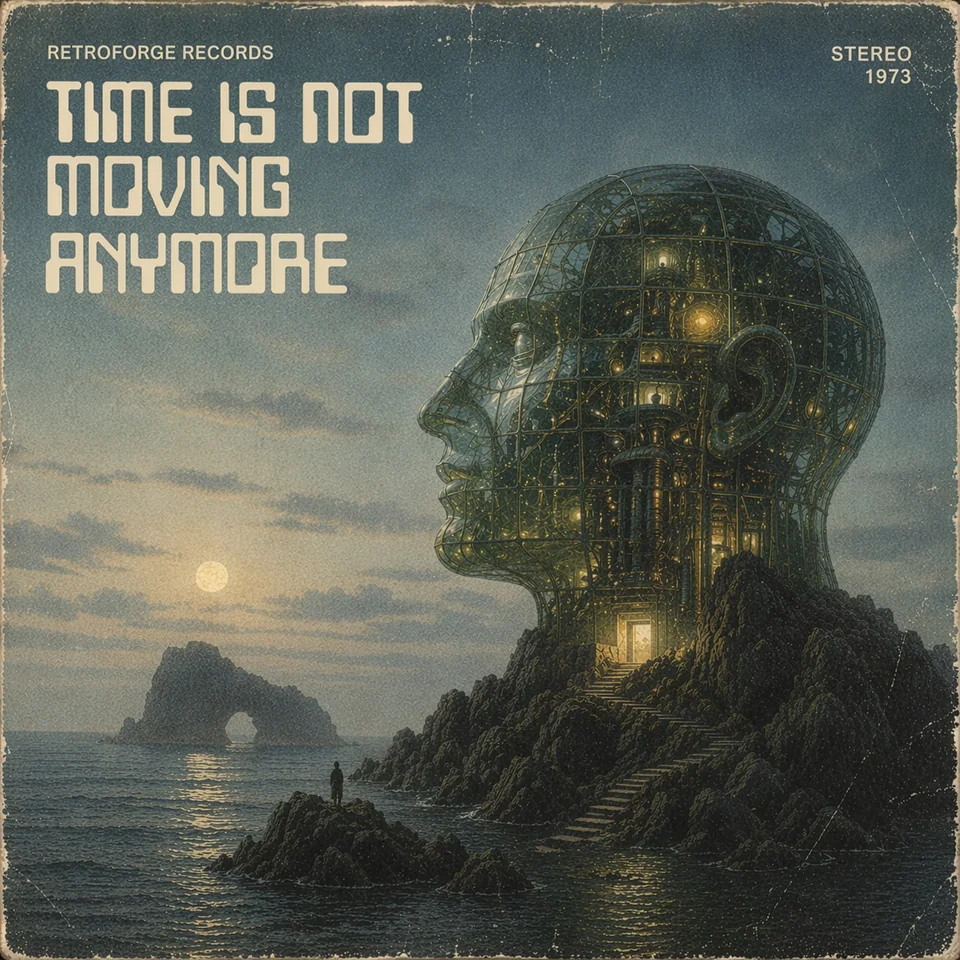
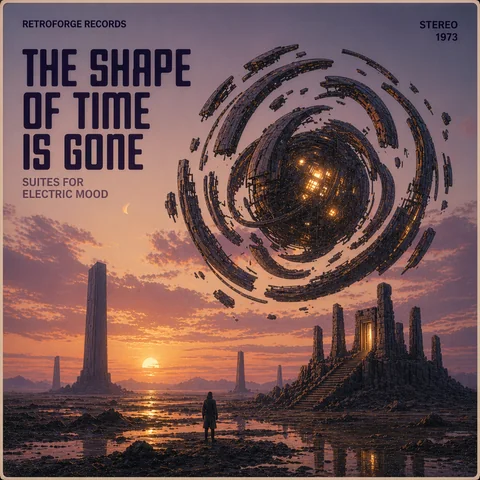
1973 · Progressive Rock
A clear entry into RetroForge prog: shifting time, analogue keyboards and a complete concept that grows stranger without losing its emotional centre.
Open the liner notes →Six Ways In
A compact set of contrasting entry points. The complete catalogue remains in Discography.
Go Deeper
Keep Exploring
Research Trail
Questions Answered
Development matters more than any single instrument. Progressive rock lets themes transform, structures expand and an album behave as a connected work rather than a stack of unrelated songs.
No. Length can create space for development, but a concise piece can still be progressive when its harmony, rhythm or structure meaningfully changes instead of merely repeating.
Hammond organ, Mellotron, analogue synthesizers, electric piano, melodic bass, electric and acoustic guitars, and a flexible rock drum kit are common, but none is compulsory.
Start with King Crimson’s In the Court of the Crimson King, Yes’s Close to the Edge or Genesis’s Selling England by the Pound, then follow the branch that appeals most.
Deeper Discovery
Start with The Map Refuses the Territory as a RetroForge companion, then return through Genres to place it inside the wider family.
Curated paths into the people, records, events and ideas that give this subject its wider musical context.