

Edition timeline
Spring Rhythms: Tbilisi-80 ran from 8 to 16 March 1980 in Tbilisi.
Spring Rhythms: Tbilisi-80 ran from 8 to 16 March 1980 in Tbilisi.
Sources describe it as one of the first official Soviet rock festivals and specifically as a major Ministry-of-Culture-sanctioned event.
Sources describe it as one of the first official Soviet rock festivals and specifically as a major Ministry-of-Culture-sanctioned event.
Organising institutions included the Georgian National Philharmonic, the Georgian SSR Union of Composers, youth-culture organisations and Komsomol structures; music critic Artemy Troitsky was also involved.
Organising institutions included the Georgian National Philharmonic, the Georgian SSR Union of Composers, youth-culture organisations and Komsomol structures; music critic Artemy Troitsky was also involved.
More than twenty groups from numerous Soviet cities participated, with amateur and professional acts appearing in a competitive framework.
More than twenty groups from numerous Soviet cities participated, with amateur and professional acts appearing in a competitive framework.
Why this event matters
The history concerns official recognition without pretending recognition meant freedom. Tbilisi-80 created a state-visible rock space, but the competition, juries and ideological framework make it very different from Western counterculture festivals. Spring Rhythms: Tbilisi-80 ran from 8 to 16 March 1980 in Tbilisi.

Place, site and audience
Sources describe it as one of the first official Soviet rock festivals and specifically as a major Ministry-of-Culture-sanctioned event. Organising institutions included the Georgian National Philharmonic, the Georgian SSR Union of Composers, youth-culture organisations and Komsomol structures; music critic Artemy Troitsky was also involved.
What the audience experienced
More than twenty groups from numerous Soviet cities participated, with amateur and professional acts appearing in a competitive framework. Temporary sound, power, stage access and changeovers determined how the advertised programme became a live event.

Problems, conflict and practical limits
Claims of 'first official Soviet rock festival' vary in wording. Claims of 'first official Soviet rock festival' vary in wording.


Follow the festival beyond the field
Timeline
Related genres
More routes will be connected as the archive grows.
Related band guides
More routes will be connected as the archive grows.
Explore by sound
More routes will be connected as the archive grows.
Essential listening
Sources and further reading
- General cross-check – Tbilisi Rock Festival 1980Editorial source spine · accessed 23 July 2026
- Russian-language cross-check – Весенние ритмы. Тбилиси-80Editorial source spine · accessed 23 July 2026
Image credits5 licensed images
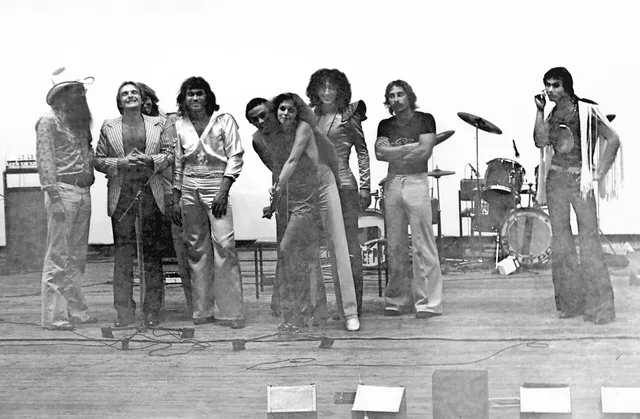
The Soviet rock group Integral on stage, used as wider Soviet rock context without claiming this photograph was made at Tbilisi-80 — Творческая студия Бари Алибасова — Wikimedia Commons — CC BY-SA 4.0 · source record · CC BY-SA 4.0
Converted to WebP and resized; no generative or compositional alterations.
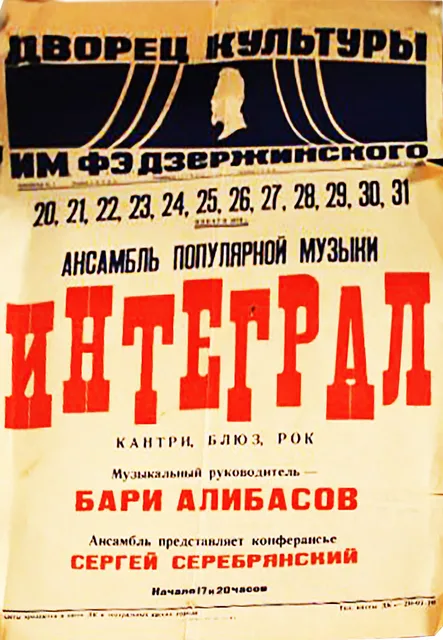
Integral at a live performance, used as artist and circuit context rather than direct festival documentation — Творческий центр Бари Алибасова — Wikimedia Commons — CC BY-SA 4.0 · source record · CC BY-SA 4.0
Converted to WebP and resized; no generative or compositional alterations.
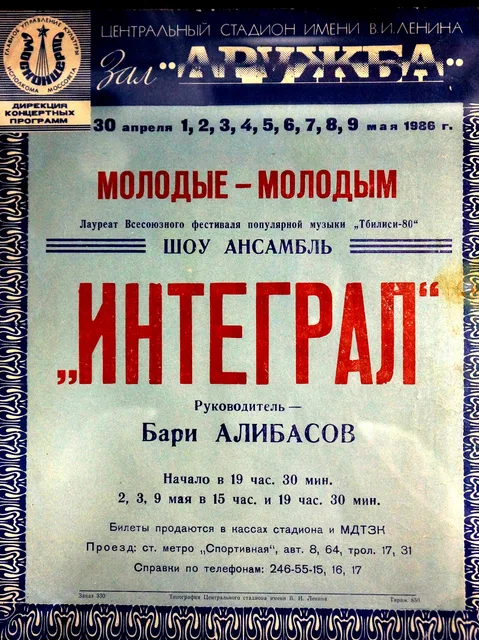
A poster connected with Integral, used as Soviet rock-culture context and retained with its item-level source record — Творческая студия Бари Алибасова — Wikimedia Commons — CC BY-SA 4.0 · source record · CC BY-SA 4.0
Converted to WebP and resized; no generative or compositional alterations.
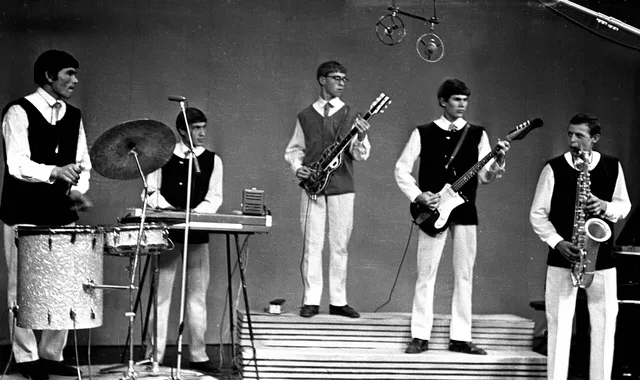
Integral in a television image, illustrating the mediated Soviet rock environment around Tbilisi-80 — Творческая студия Бари Алибасова — Wikimedia Commons — CC BY-SA 4.0 · source record · CC BY-SA 4.0
Converted to WebP and resized; no generative or compositional alterations.
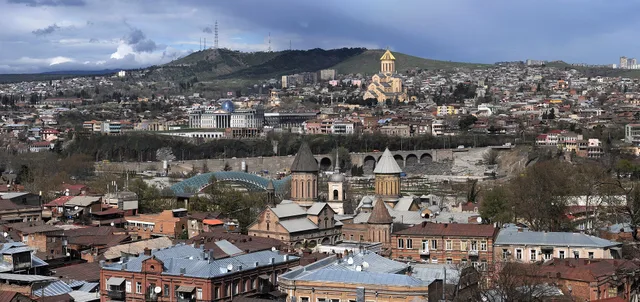
A later panoramic view of Tbilisi, used to locate the festival city rather than as event photography — User:Ggia — Wikimedia Commons — CC BY-SA 3.0 · source record · CC BY-SA 3.0
Converted to WebP and resized; no generative or compositional alterations.