

Edition timeline
The first US Festival meets extreme heat
A broad three-day programme combines new wave, mainstream rock, camping and a technology exposition.
The promoter machinery changes
Barry Fey replaces Bill Graham as the principal professional partner for the second edition.
Genre days divide the audience
New Wave, Heavy Metal and Rock days package increasingly distinct musical markets.
Country Day closes the experiment
A separate fourth programme completes a festival whose enormous reach still cannot cover its costs.
Why this event matters
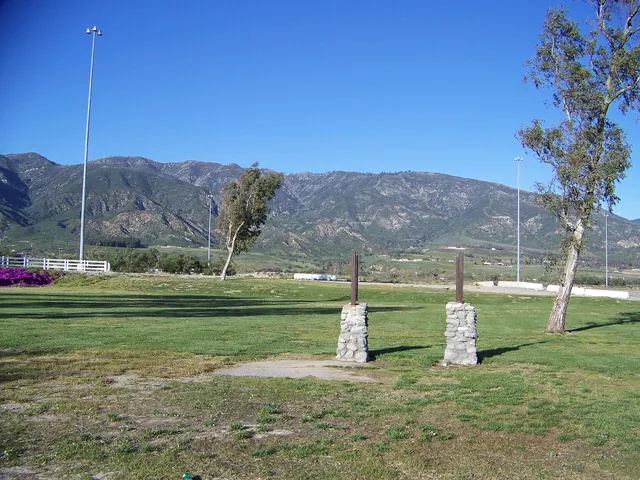
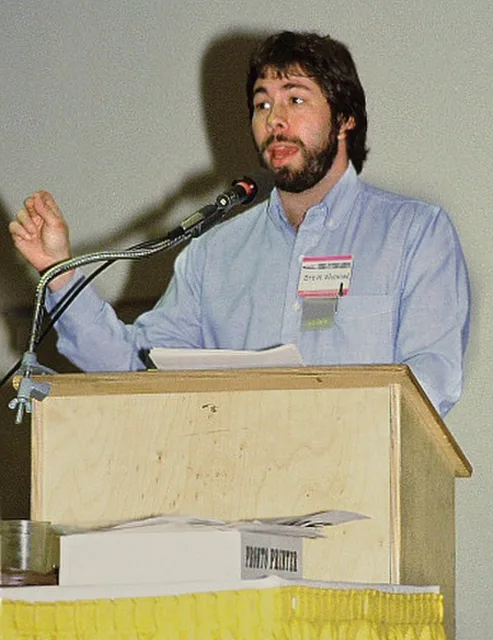
The US Festival is a fitting endpoint to the classic festival era because it revives utopian language with Silicon Valley capital, giant screens and corporate-scale logistics. Apple co-founder Steve Wozniak wanted music and technology to create a more cooperative “us.” The two editions show both the power and limit of that idea. Technical ambition could build an extraordinary event environment and archive, but it could not guarantee ticket sales sufficient to recover the money invested. Wozniak supplied the vision and extraordinary financing through Unuson, while professional concert promoters translated it into working bills and site operations. Bill Graham participated in 1982; Barry Fey became the major partner for 1983. Separating idea, money and execution avoids turning the festival into one man’s psychology. The organisational change also explains why the two editions were not copies. Their schedules, promoter relationships and market assumptions differed even though the social language remained recognisably Wozniak’s. Glen Helen was not merely an empty field rented for a weekend. Roads, audience areas, camping, utilities, a giant stage, screens and service infrastructure required major investment. The modern park photograph on this page provides location context only, while the 1982 panorama documents the festival itself. Visitors occupied an engineered landscape whose scale reflected both optimism and distance: technology could help people see and hear, yet it also made visible how far many stood from the performers. The first festival ran 3–5 September 1982, moving through new wave and post-punk, mainstream rock and a Sunday featuring Grateful Dead, Jackson Browne and Fleetwood Mac. In 1983 scheduling became genre architecture: New Wave Day, Heavy Metal Day and Rock Day over Memorial Day weekend, followed by Country Day on 4 June. The Clash, Van Halen, David Bowie and Willie Nelson anchored distinct markets. The themed structure acknowledged that one undifferentiated rock audience no longer existed.


What the audience experienced
Heat, huge walking distances, camping and the need to watch remote action on screens made Glen Helen unlike a 1969 festival village. Historic Films footage records people arriving before dawn, sleeping near vehicles, cooling themselves, cooking and navigating enormous crowds. The technology exposition added another layer of activity, but practical needs remained basic: shade, water, toilets, food and transport. Different days also produced different audience cultures as new wave, metal, rock and country publics occupied the same infrastructure. The US Festival’s technical history should be described without unsupported “first” claims. Large video displays, multi-camera recording, computer imagery and a technology exposition were central and unusually visible, while a documented satellite communication experiment joined Wozniak’s social purpose to actual equipment. More than 100 hours of professional footage are described in the archive. Technology functioned simultaneously as audience service, broadcast system, exhibit and symbol of a future-facing event culture. Contemporary UPI reporting makes the financial problem clear while avoiding later mythology. Before the 1983 edition, Wozniak expected losses of several million dollars; only about 300,000 of 900,000 available tickets had reportedly sold, far below break-even. Published final totals vary and should remain attributed. The essential conclusion does not depend on choosing the largest loss figure: a heavily financed festival could draw several hundred thousand people, function spectacularly and still be economically impossible for one individual to repeat. No third Wozniak-financed US Festival followed. Glen Helen nevertheless remained important for large concerts, and the festival’s genre-day logic became increasingly familiar elsewhere. The technology-and-music ideal also survived in later event culture through screens, interactive exhibits, communications systems and sponsor villages, though those features had multiple precursors. The end of the series therefore marks the end of one private experiment, not the disappearance of its production ideas.

Films, recordings and surviving documents
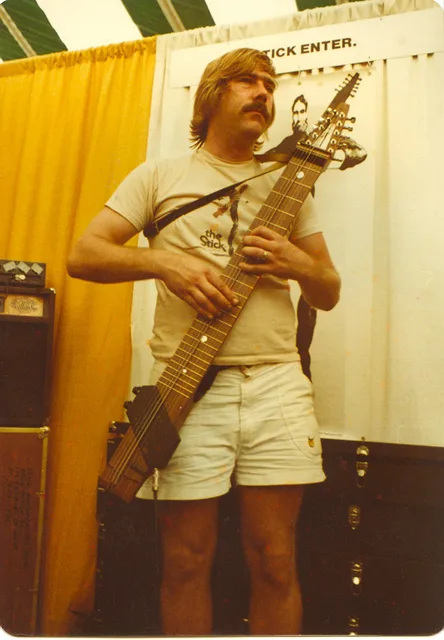
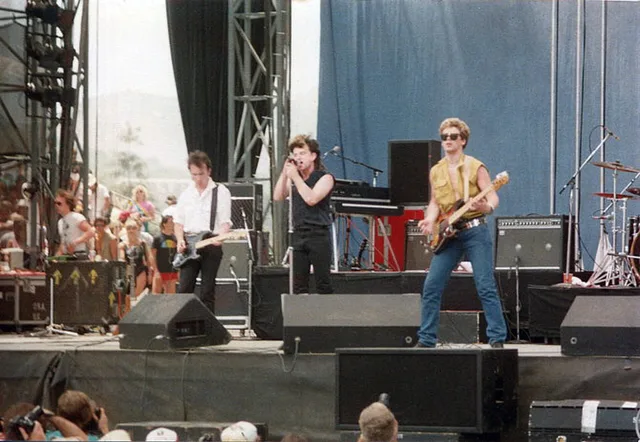
The two editions are exceptionally well documented through professional multi-camera footage, audience b-roll, photography, press coverage and later official releases. Historic Films catalogues performance and social footage from both years, including camps, traffic, crowd behaviour and computer graphics. Rights remain commercial even when detailed logs are publicly searchable. The Commons panorama, U2 photograph and Chapman Stick demonstration used here provide a legally reusable visual layer while the controlled archive remains an essential research source. Wozniak’s experiment retained the dream that a festival could improve social relations, but replaced much handmade counterculture infrastructure with capital-intensive systems. A technology exposition did not automatically create community, nor did video screens remove physical separation. Yet the combination mattered. It proposed that music, computing and communications belonged in one public environment, anticipating later festival practice without proving that the US Festival invented it. The utopia was engineered, impressive and financially fragile at the same time. California Jam II supplies an immediate predecessor for television-ready Southern California scale, while its arena-rock package contrasts with the US Festival’s explicit technology mission and genre segmentation. The Heavy Metal Day points toward specialised metal festivals; Country Day shows the mega-site extending beyond rock; new wave connects the field to post-punk club culture. Following those internal routes turns Glen Helen into a crossroads between older counterculture, 1980s media production and the modern multi-market festival. The US Festival proved that Silicon Valley money could build an enormous, technologically sophisticated rock environment, and that no amount of spectacle guaranteed sustainability. Its genre days anticipated later programming strategies, its screens and recordings made media infrastructure inseparable from the live event and its archive preserves unusually detailed evidence of audience life. The series closes RetroForge’s classic-era arc with a paradox: the old festival dream survived, but by 1983 fulfilling it required machinery and capital on a scale that made repetition harder, not easier.


Follow the festival beyond the field
Timeline
Related genres
More routes will be connected as the archive grows.
Related band guides
More routes will be connected as the archive grows.
Explore by sound
More routes will be connected as the archive grows.
Essential listening
Sources and further reading
- US Festival 1983 may be the lastUPI Archives, 27 May 1983 · accessed 23 July 2026
- US Festival aftermath reportUPI Archives, 31 May 1983 · accessed 23 July 2026
- 1983 US Festival performance and audience footageHistoric Films Archive · accessed 23 July 2026
- 1982 US Festival b-rollHistoric Films Archive · accessed 23 July 2026
- US Festival arrival and crowd footageHistoric Films Archive · accessed 23 July 2026
Image credits5 licensed images
A Chapman Stick demonstration at the US Festival in 1982 or 1983, documenting how instruments, technology and promotion shared space with the main stages — Michael Kollwitz — Wikimedia Commons — CC BY 2.0 · source record · CC BY 2.0
Converted to WebP and resized; no generative or compositional alterations.
A wide view across the September 1982 US Festival, showing the scale of the audience and the engineered concert landscape at Glen Helen — Swanny — Wikimedia Commons — CC BY-SA 3.0 · source record · CC BY-SA 3.0
Converted to WebP and resized; no generative or compositional alterations.
U2 performing at the US Festival in Devore on 30 May 1983, a direct stage document from the second edition's Rock Day — James LaMantia — Wikimedia Commons — CC BY-SA 4.0 · source record · CC BY-SA 4.0
Converted to WebP and resized; no generative or compositional alterations.
Glen Helen Regional Park in a later photograph. The landscape image documents the wider site but not the temporary festival grounds as they appeared in 1982 or 1983 — Johnwayne Stroud — Wikimedia Commons — CC BY-SA 3.0 · source record · CC BY-SA 3.0
Converted to WebP and resized; no generative or compositional alterations.
Steve Wozniak at a computer convention in 1983. The period portrait provides organizer context for the technologist whose vision and funding created the US Festival — Alan Light — Wikimedia Commons — CC BY 2.0 · source record · CC BY 2.0
Converted to WebP and resized; no generative or compositional alterations.