Wood, string and breath
Acoustic guitar, flute, recorder, piano, hand percussion and lightly bowed strings keep physical gesture audible.

RetroForge Atmosphere Guide
Wood, breath and open air—often beautiful, never automatically safe.
Pastoral is not merely quiet
Pastoral music evokes a relationship between people and an imagined natural world. Acoustic instruments and modal melody are common, but the atmosphere becomes distinctive through scale, pacing and the tension between shelter and exposure.
Acoustic guitar, flute, recorder, piano, hand percussion and lightly bowed strings keep physical gesture audible.
Sparser arrangements let resonance and small attacks suggest an environment rather than a crowded stage.
Stepwise, modal or folk-derived lines can feel remembered rather than announced.
Dissonance, low drones or abrupt electric entrances prevent landscape from becoming decorative wallpaper.
An arrangement ecology
This model treats the ensemble as an environment: a close human gesture, a repeating path, a distant horizon and occasional weather.
Five colours, five functions
Pastoral writing is specific. Replace the flute with distorted guitar, or close-mic the percussion and remove room sound, and the emotional geography changes even when the notes remain identical.
Finger noise and transient detail keep the human hand near the listener.
Breath and narrow melodic lines can imply open air, ritual or childhood memory.
Single notes provide clear landmarks; resonance can join interior room and imagined exterior space.
Tape strings or flute turn natural imagery into fragile recollection rather than direct realism.
A light pulse suggests walking or dance without imposing a heavy mechanical grid.
Four kinds of pastoral movement
The atmosphere is most convincing when the rhythm and harmony imply a way of moving through the imagined place.
Stable harmony, clear melody and open arrangement create shelter—but it becomes meaningful when the music acknowledges that shelter may not last.
A moderate repeated pulse and phrases shaped like breath make travel feel bodily rather than mechanical.
Recurring material suggests growth, decay and renewal when orchestration or harmony alters each appearance.
Drone, modal ambiguity and distant electronics turn the familiar countryside into a place of memory, folklore or threat.
Listening anatomy
Listen for the point where acoustic intimacy becomes orchestral, electric or psychologically uncertain.
English imagery, acoustic passages and folk-like melody coexist with electric virtuosity and social unease.
Read the album guide → Jethro Tull · 1977Folk instrumentation, layered vocals and intricate rhythm make rural imagery energetic rather than delicate.
Read the album guide → Camel · 1976Flute, guitar sustain and spacious ensemble writing create landscape through melody without abandoning rhythmic motion.
Read the album guide → Harmonium · 1975Acoustic timbres and a seasonal frame expand from human-scale song into an imagined fifth season.
Explore progressive folk → Comus · 1971Acoustic instruments and woodland imagery become feverish and threatening, exposing the pastoral tradition’s darker edge.
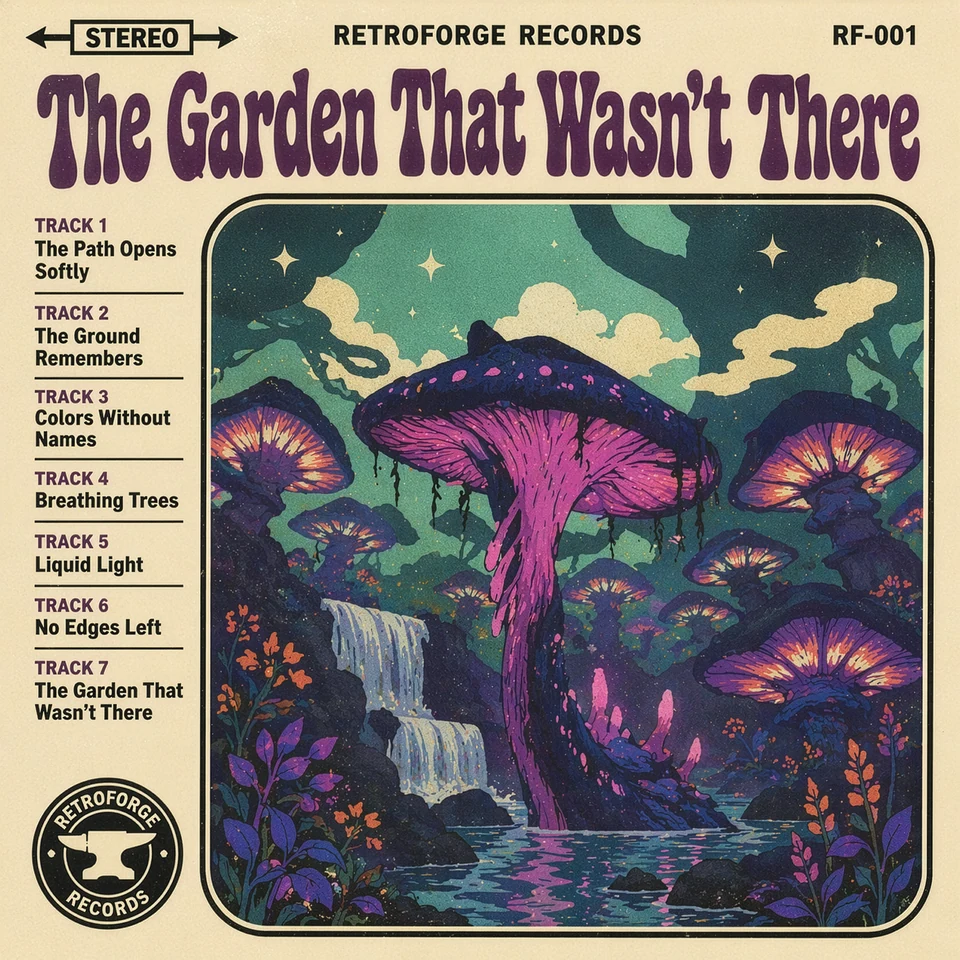
Explore acid folk → RetroForge · 1967Acoustic intimacy, tape colour and recurring garden imagery make landscape behave as memory rather than scenery.
Open the liner notes →The postcard test
A pretty acoustic introduction is not enough. The imagined landscape must affect pacing, instrumentation and emotional development.
A nature recording adds little when it does not alter the music’s sense of place or return later with new meaning.
Without contrast, the arrangement cannot distinguish safety from isolation, memory or loss.
Recorder and acoustic guitar do not create folk logic when melody, rhythm and phrasing remain unrelated to them.
Sources and context
The five historical listening examples were checked against official artist, band or label sources. The RetroForge example links to its first-party liner notes. The arrangement ecology, four pastoral movements and postcard test are original RetroForge listening models rather than categories attributed to the artists.
Curated paths into the people, records, events and ideas that give this subject its wider musical context.