Story Carries Form
Narrative movement determines where musical sections change.

Progressive Rock Family
Folk song, acoustic timbre and inherited story expanded through progressive structure without losing the grain of the original material.
The Sound
Progressive folk begins with the recognisable materials of folk music—acoustic guitar, traditional melody, narrative lyric and instruments associated with a particular place—then allows them to develop beyond ordinary strophic song.
A tune may pass through changing metres, instrumental episodes or several harmonic settings. Electric bass, drums, organ and Mellotron can enlarge the arrangement, but the acoustic centre remains audible. The strongest music does not use folk colour as decoration. It lets old forms determine how the composition breathes while using progressive technique to reveal new scale and tension.
The border with folk rock, acid folk and pastoral prog is naturally porous. Acid folk tends to emphasise trance, altered perception and ritual atmosphere. Progressive folk places more weight on formal development, musicianship and the journey of the arrangement. Both can inhabit the same album, especially when landscape and story become part of a larger concept.
What You’ll Hear
How It Works
Progressive folk begins with acoustic language—story song, modal melody, traditional instrumentation or communal rhythm—and allows it to develop beyond inherited form. A tune may become a suite, a narrative may move between viewpoints, and an apparently ancient pattern may support modern harmonic or studio ideas.
The relationship with tradition can be affectionate, critical or entirely imaginative. Listen for what remains stable while the arrangement expands. A repeated drone, vocal contour or picking figure often provides continuity as the surrounding music enters progressive territory.
Useful distinction: Boundary line: adding flute to progressive rock does not create progressive folk. The folk material must shape the composition’s grammar, not merely colour its surface.
Narrative movement determines where musical sections change.
Melodies preserve an older tonal character inside modern arrangements.
Strings, reeds and hand percussion can function as structural voices.
Familiar forms are extended without losing their original pull.
Historical Development
Progressive folk emerged when the folk revival's songs, modes and acoustic instruments entered the album-oriented experimentation of the late 1960s and 1970s. British folk-rock groups had already shown that traditional material could work with a rhythm section; progressive folk extended the form, narrative and harmonic range.
Jethro Tull used flute, acoustic guitar and English imagery inside increasingly elaborate rock composition. Gryphon brought early-music instruments and formal play; Strawbs moved from acoustic roots toward Mellotron-rich prog; Renaissance used piano and folk-derived melody within a symphonic frame.
Comparable ideas appeared outside Britain, including Quebec's Harmonium and many regional scenes where local tradition shaped progressive composition. The crucial point is not decoration. Folk material must influence the grammar—melodic contour, drone, rhythm, storytelling or the way a suite unfolds.
The Real-World Foundations
Not a ranking: six useful doors into the style.
A continuous album-length composition keeps acoustic wit inside a changing rock structure.
Early instruments and instrumental development create one of the clearest progressive-folk hybrids.
Folk songwriting, dark narrative and symphonic keyboards meet in a rebuilt electric band.
Piano-led composition and folk melody expand into a richly arranged progressive language.
Acoustic texture and seasonal form give Quebec prog a pastoral masterwork.
Traditional song, jazz-inflected playing and acoustic ensemble detail provide an important foundation.
Closest RetroForge Route
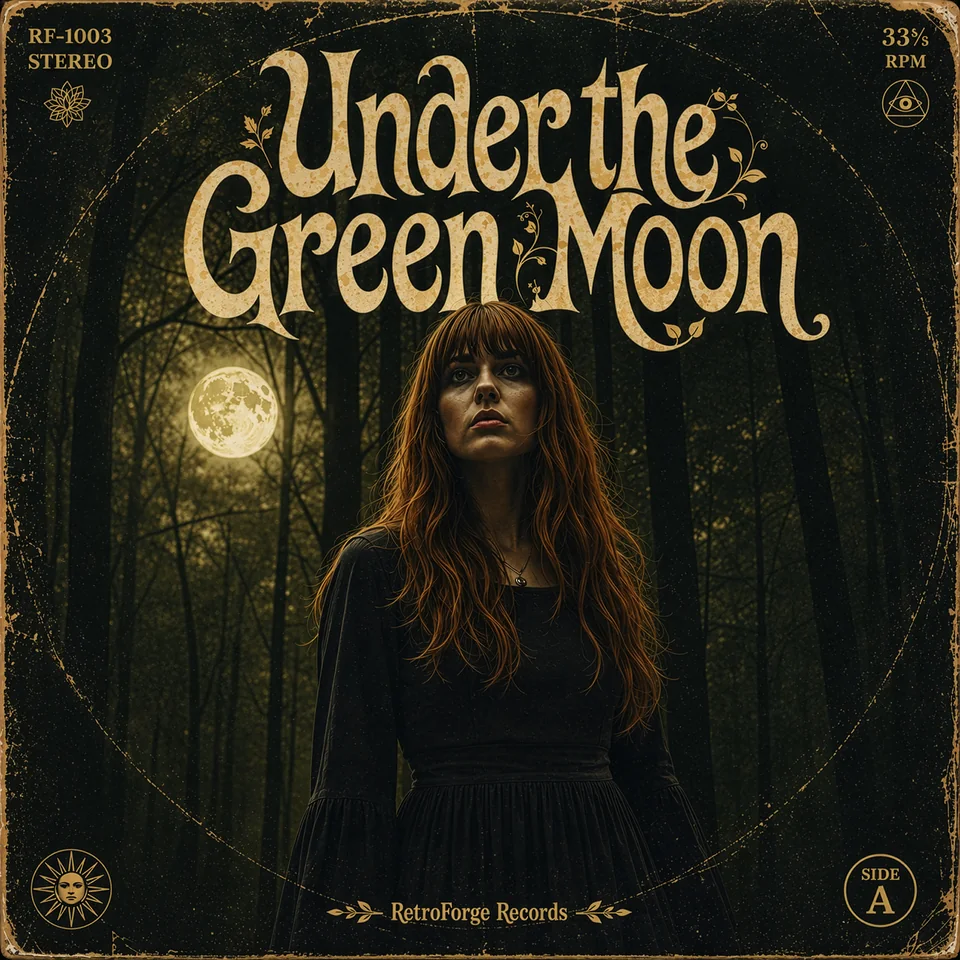
1968 · Occult Acid Folk
The album is labelled acid folk, but its acoustic ritual, extended arrangements and complete-world approach make it the closest progressive-folk route.
Open the liner notes →Questions from the Record Room
Not exactly. Progressive folk usually pushes traditional material into extended, conceptual or unusually arranged forms.
No. Original writing can belong when folk modes, instruments or narrative methods shape the composition.
Under the Green Moon joins acoustic ritual, forest imagery and progressive development.
Related Styles
Research Trail
Deeper Discovery
Start with The River Beneath the World as a RetroForge companion, then return through Progressive Rock to place it inside the wider family.