

Edition timeline
A few hundred gather
Local musicians, communes and production workers turn a Pennine valley into a small free festival.
Attendance grows to roughly 3,000
The event develops a stronger regional network while retaining volunteer organisation.
The festival reaches mass regional scale
An estimated 20,000 encounter space rock, reggae, punk and welfare infrastructure in the valley.
The final core valley edition returns
A similarly large gathering confirms the hybrid culture before related events move elsewhere.
Why this event matters
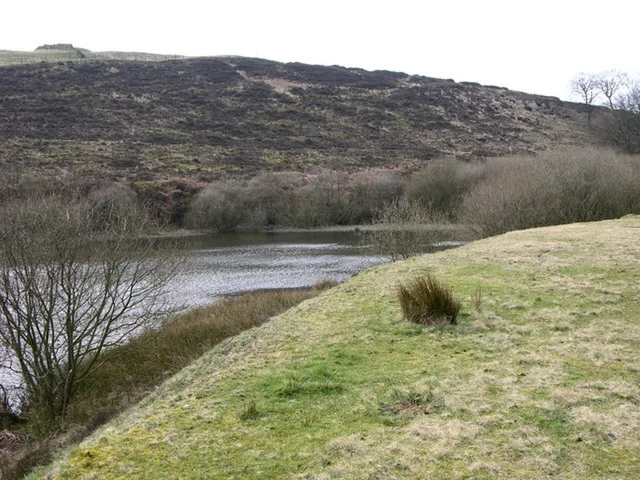
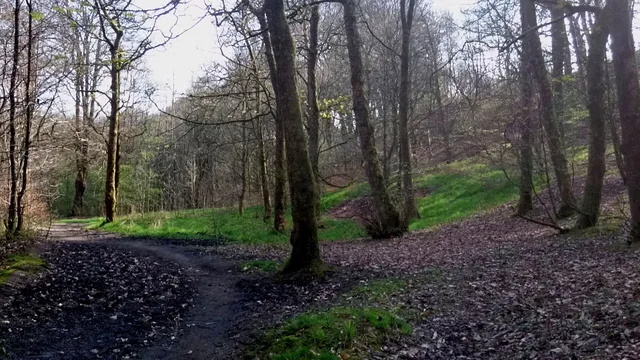
Deeply Vale corrects any history in which British free festivals simply fade when punk arrives. Between 1976 and 1979, a small Pennine gathering grew from roughly 300 people to estimates around 20,000 while maintaining free entry and an alternative organisational network. Its programme brought space rock and progressive underground culture into contact with punk, reggae and emerging post-punk. The result was not a clean replacement of hippies by punks, but a working, sometimes difficult coexistence. No single origin explains Deeply Vale. Chris Hewitt brought production experience and memories of Bickershaw; Tractor’s Rochdale circle supplied music, equipment and local connections; communes and volunteers provided labour. Specialist history also traces inspiration through Rivington Pike in 1976. These routes converged in a northern regional network that could secure land, assemble a stage and invite participation without conventional ticket finance. The festival emerged from relationships already active before anyone counted a first audience. Deeply Vale’s terrain was not picturesque background. Tracks, slopes, water, woodland and nearby farms shaped access, camping, equipment movement and the distance between festival and community. Participants helped turn the site into working infrastructure, and the modern landscape photographs here document that geography rather than the event itself. As attendance grew, the same valley had to support more vehicles, tents, food, sanitation and welfare while preserving the informal identity that made the gathering attractive. Early local progressive and space-rock networks remained important, but the bill did not freeze in 1976. Steve Hillage, Tractor, Here & Now and Nik Turner’s Sphynx could share historical space with The Fall, The Ruts, Durutti Column, Misty in Roots and other punk, post-punk and reggae-adjacent acts. That mixture is the argument. Deeply Vale allowed distinct underground cultures to hear one another before genre-specific commercial circuits made their separation easier.

What the audience experienced
Camping and participation were the festival model, not services added around a purchased concert. Visitors approached through a rural Pennine landscape, established temporary homes and shared practical responsibility unevenly with organisers and volunteers. Archive photographs and recollections show weather, mud, stage views, food and informal social space. An audience of 300 could rely on personal contact; a crowd approaching 20,000 required systems. The changing experience across four years reflects that tension between intimacy and scale. Calling Deeply Vale DIY should not imply that production was careless. Hewitt and the Tractor/Wigwam circle brought real PA and stage knowledge, while volunteers, communes and welfare networks supplied labour outside ordinary commercial contracts. Sound, sanitation, food, first aid and access had to grow together. Later-cited welfare praise for the 1978 organisation should be quoted only from the surviving report, but the broader record supports an event that built substantial capability without abandoning free entry. Soggy ground and difficult early conditions are part of the documentation, yet mud is not the whole history. Weather exposed the vulnerability of access tracks, electrical work, camping and supply, while growing attendance increased every consequence. The harder limit was structural: alternative networks could build impressive systems, but each expansion demanded more equipment, labour and negotiation. Deeply Vale’s achievement and fragility came from meeting those demands without the predictable income or authority of a commercial promoter. The original Deeply Vale run ended after 1979. Related free festivals continued at Pickup Bank and elsewhere in 1980–81, but the valley sequence had closed. Musicians, PA workers, independent labels and regional organisers carried knowledge into other projects. Later anniversary events and archive work restored attention to the series without pretending continuity was unbroken. Its ending therefore belongs to a wider reorganisation of the underground around 1980 rather than a simple disappearance.

Films, recordings and surviving documents
Deeply Vale has an unusually rich participant-built archive. The specialist Deeply Vale site preserves photographs, accounts and information about live recordings by The Fall, The Ruts and Steve Hillage. Truly, Madly, Deeply Vale and later anniversary projects add retrospective voices, while James Ingham’s peer-reviewed study supplies a critical framework and attributed attendance curve. These materials have different rights and purposes; availability for research does not make every performance image or recording freely reusable. Punk did not arrive in an empty field. It entered a working free-festival culture with communal labour, space-rock sound systems and countercultural assumptions already in place. Deeply Vale made the resulting friction productive: shorter, sharper music and northern post-punk networks shared resources with long-form improvisation and hippie organisation. This challenges a tidy generational break. The same stage could expose differences in aesthetics while the same welfare, PA and access systems forced people to cooperate materially. Bickershaw links Hewitt’s production experience to an earlier commercial festival under severe weather, while Windsor and Stonehenge show other relationships between free gathering, land and authority. Deeply Vale’s northern geography and punk crossover distinguish it from those southern routes. Connections to The Fall, Durutti Column and the Rochdale sound industry point forward into independent post-punk infrastructure. Following them reveals continuity through equipment, labour and local networks even when musical identities changed rapidly. Deeply Vale demonstrated that a free festival could grow dramatically, operate with meaningful infrastructure and adapt to punk without surrendering its alternative basis. Its influence is visible less in a surviving global brand than in regional memory, PA history, live recordings and the people who carried DIY production into the 1980s. The archive matters because it restores a northern experiment that conventional festival history might overlook and shows how organisation, not only ideology, allowed different undergrounds to meet.


Follow the festival beyond the field
Timeline
Related genres
More routes will be connected as the archive grows.
Related band guides
More routes will be connected as the archive grows.
Explore by sound
More routes will be connected as the archive grows.
Essential listening
Sources and further reading
- The Deeply Vale Music Festival: Its Demise, Influence and LegacyRock Music Studies / Taylor & Francis · accessed 23 July 2026
- Deeply Vale archiveDeeply Vale / Ozit Records · accessed 23 July 2026
- Deeply Vale photo and recording archiveDeeply Vale / Ozit Records · accessed 23 July 2026
- Deeply Vale anniversary and organiser historyDeeply Vale / Ozit Records · accessed 23 July 2026
- Deeply Vale and Ashworth Valley location imagesWikimedia Commons · accessed 23 July 2026
Image credits5 licensed images
Mill Reservoir in Deeply Vale. The later photograph records the valley landscape in which a small free gathering grew into a meeting point for hippies, punks and new wave — liz dawson — Wikimedia Commons — CC BY-SA 2.0 · source record · CC BY-SA 2.0
Converted to WebP and resized; no generative or compositional alterations.
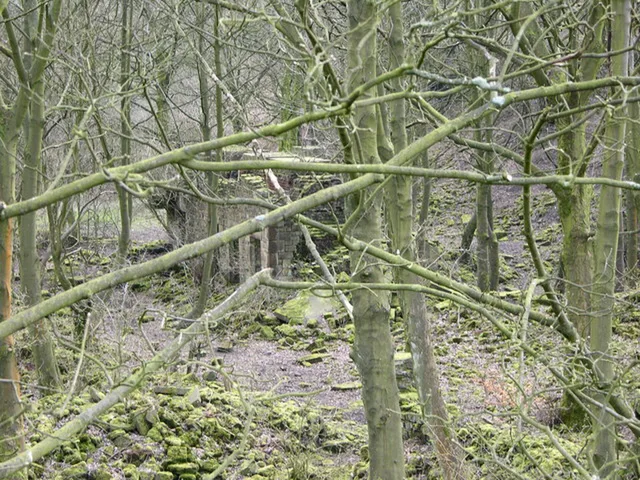
Overgrown remains of the old works at Deeply Vale. The image shows how post-industrial land and rural space overlapped around the festival environment — liz dawson — Wikimedia Commons — CC BY-SA 2.0 · source record · CC BY-SA 2.0
Converted to WebP and resized; no generative or compositional alterations.
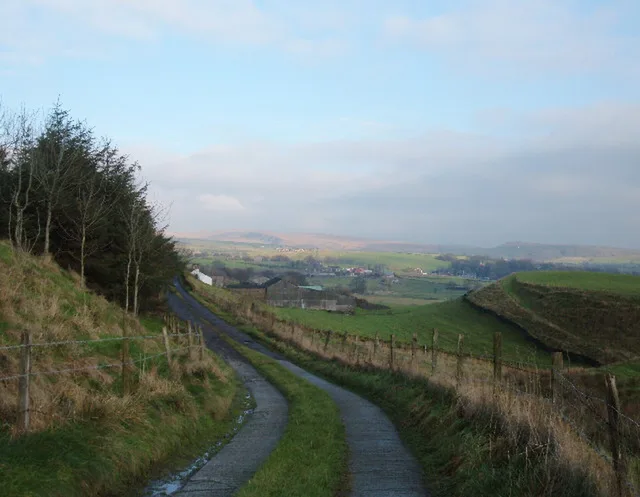
Copped Hill Farm in Ashworth Valley in a later photograph. It provides wider geographical context for the Rochdale and Bury landscape around Deeply Vale — michael ely — Wikimedia Commons — CC BY-SA 2.0 · source record · CC BY-SA 2.0
Converted to WebP and resized; no generative or compositional alterations.
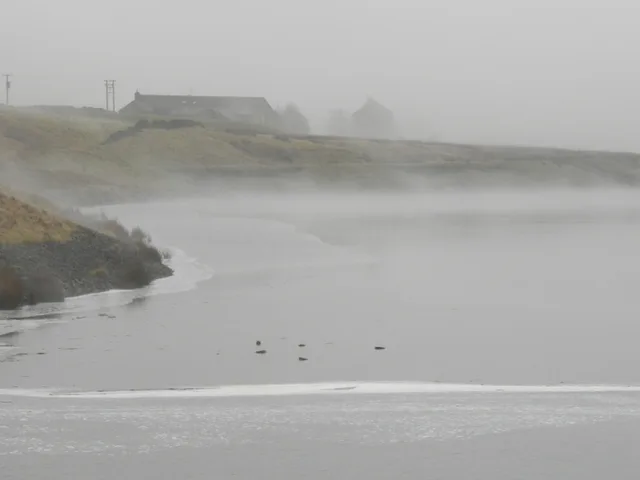
Ashworth Valley Reservoir in a later view, documenting the moorland and water infrastructure surrounding the free-festival terrain — David Dixon — Wikimedia Commons — CC BY-SA 2.0 · source record · CC BY-SA 2.0
Converted to WebP and resized; no generative or compositional alterations.
Dobb Wood in Ashworth Valley. This later landscape image anchors the account in the physical geography of the valley and is not a photograph of a festival performance — John Westhead — Wikimedia Commons — CC BY-SA 2.0 · source record · CC BY-SA 2.0
Converted to WebP and resized; no generative or compositional alterations.