

Edition timeline
Windsor ends in confrontation
The violent police clearance creates pressure for another approach.
Watchfield occupies the former airfield
A tolerated free festival builds a temporary settlement with basic public services.
Parliament debates costs
Water, sanitation, local services and policing become questions of public policy.
The model is not repeated
Mobile free festivals continue while Stonehenge becomes a larger focus.
Why this event matters
Watchfield was an extraordinary policy experiment: after the violence at Windsor in 1974, the British government made a former military airfield available for a free festival instead of simply trying to suppress it. The move from Windsor Great Park to Watchfield changed the legal and political relationship between festival culture and the land. The gathering was tolerated on an allocated site, not merely relocated by its organisers. Runways, hangars and the remains of an airfield gave the temporary settlement an unusual physical language. A former state and military landscape became a place for communal music, trade and camping. Gong, Hawkwind-associated musicians and many underground acts are linked to Watchfield, but retrospective line-up lists remain uneven. Confirmed performance evidence is kept separate from later memory.

What the audience experienced
The stages were only part of Watchfield. Camps, kitchens, stalls, welfare, children, political discussion and informal performance made the site function more like a temporary town than a conventional concert. DIY stages and independent sound culture operated beside essential services enabled by public authorities. Watchfield was neither a commercial production nor a wholly unsupported occupation. Parliamentary debate records spending on water, sanitation, local services and policing. Official tolerance was a practical attempt to manage risk, not an uncomplicated endorsement of counterculture. The accommodation model was not repeated on the same terms. Mobile free-festival networks continued elsewhere while Stonehenge accumulated growing symbolic and organisational weight.

Films, recordings and surviving documents
Hansard, specialist festival archives, flyers, photographs and participant testimony preserve different layers of evidence. Memories are valuable, but they do not supply reliable attendance totals by themselves. Watchfield proved that negotiated accommodation was possible while placing the gathering on terrain authorities considered manageable. Those interpretations are complementary rather than mutually exclusive. Watchfield belongs between Windsor and Stonehenge as a one-year laboratory in festival policy, welfare and contested public responsibility.


Follow the festival beyond the field
Timeline
Related genres
Related band guides
More routes will be connected as the archive grows.
Explore by sound
Essential listening
Sources and further reading
- Watchfield Free Festival archiveUK Rock Festivals · accessed 23 July 2026
- Watchfield Pop Festival parliamentary answerUK Parliament, Historic Hansard · accessed 23 July 2026
- Festival policy debateUK Parliament, Historic Hansard · accessed 23 July 2026
- Licensed image recordsWikimedia Commons · accessed 23 July 2026
Image credits5 licensed images
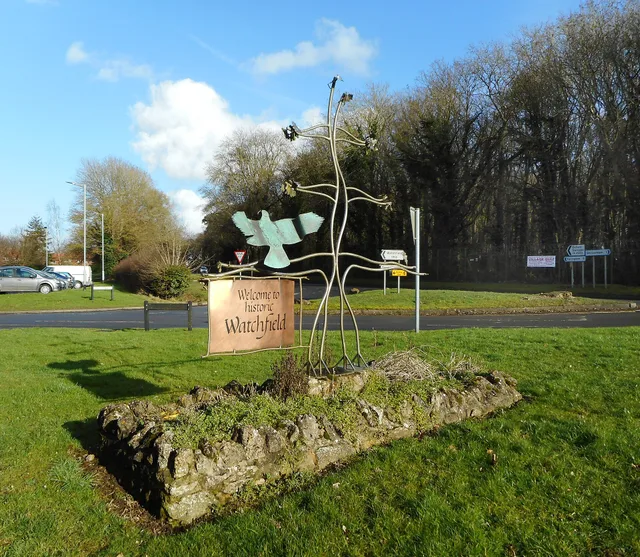
A modern sign at Watchfield, used to anchor the festival in the Oxfordshire village beside the former airfield rather than as a photograph of the 1975 gathering — Des Blenkinsopp — Wikimedia Commons — CC BY-SA 2.0 · source record · CC BY-SA 2.0
Converted to WebP and resized; no generative or compositional alterations.
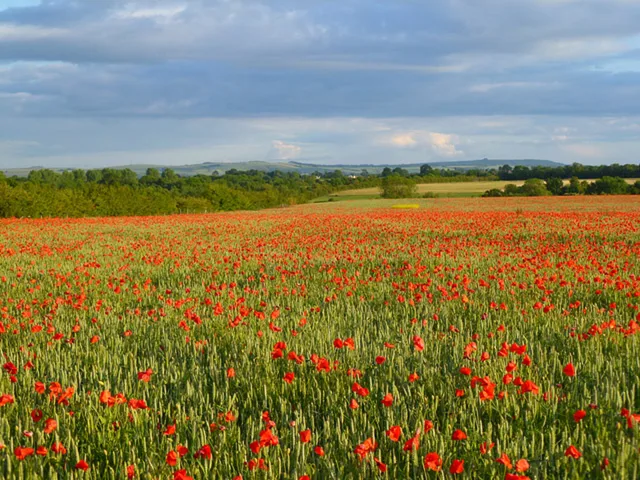
Modern farmland at Watchfield. The image provides landscape context and does not claim to show the 1975 festival field — Andrew Smith — Wikimedia Commons — CC BY-SA 2.0 · source record · CC BY-SA 2.0
Converted to WebP and resized; no generative or compositional alterations.
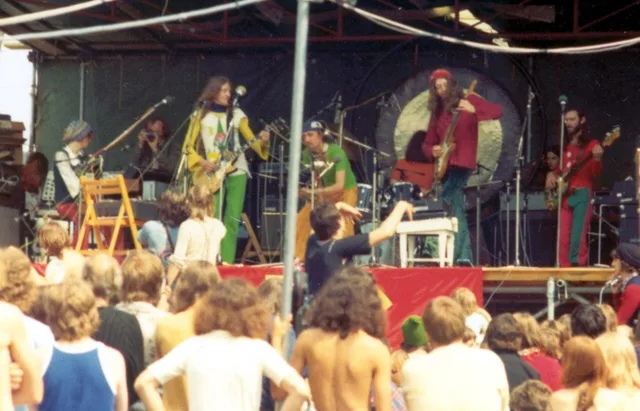
Gong in 1974, close-period artist context for the communal progressive and space-rock culture associated with Watchfield — TimDuncan — Wikimedia Commons — CC BY 3.0 · source record · CC BY 3.0
Converted to WebP and resized; no generative or compositional alterations.
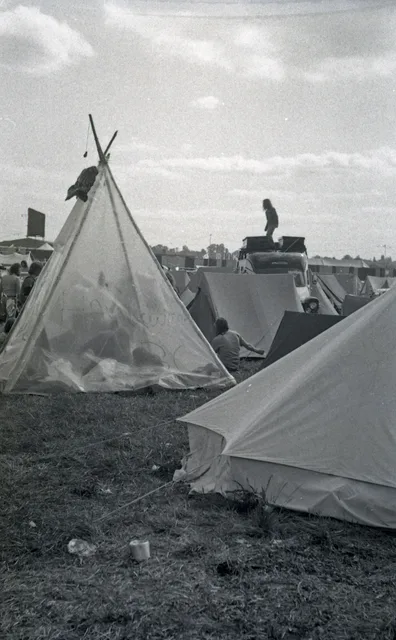
Hawkwind’s tent at Reading in 1975. The exact venue is identified; this image documents the group’s contemporary festival presence rather than Watchfield itself — David Major — Wikimedia Commons — CC BY 2.0 · source record · CC BY 2.0
Converted to WebP and resized; no generative or compositional alterations.
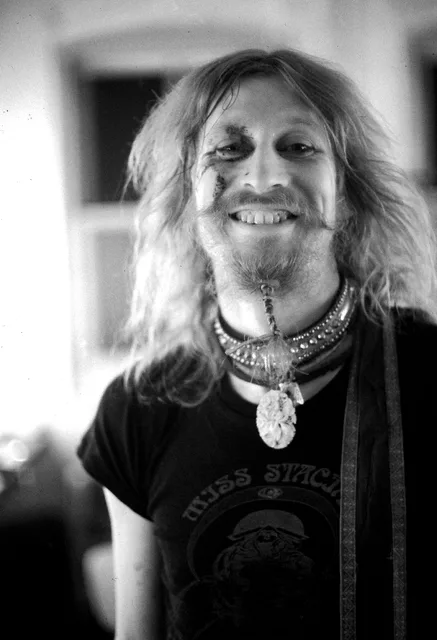
Nik Turner with Hawkwind in 1974, period artist context for the free-festival network — Jim Summaria — Wikimedia Commons — CC BY-SA 3.0 · source record · CC BY-SA 3.0
Converted to WebP and resized; no generative or compositional alterations.