

Edition timeline
The National Jazz Festival opens at Richmond
Pendleton adapts the Newport jazz-festival model for a British outdoor audience.
Blues and rhythm and blues reshape the identity
Youth demand and amplified groups make the original jazz label increasingly incomplete.
The festival leaves Richmond and keeps moving
Noise, licensing and audience pressure lead through Windsor and Kempton Park.
Plumpton becomes the late-decade home
Blues-rock, psychedelia and progressive hard rock dominate more of the programme.
Reading becomes the institutional bridge
A separate 1971 civic anniversary festival precedes the established August event’s arrival in 1972.
Why this event matters
This series is crucial because it shows a British festival evolving rather than suddenly appearing. Reading’s longevity makes much more sense when the 1961–1970 nomadic decade is visible. The documented anchor for this section is Founded by Marquee Club promoter Harold Pendleton. That fact is kept separate from later legend, because programmes, press reports, film and participant memory answer different questions. Harold Pendleton, the Marquee Club and the influence of Newport Jazz Festival belong at the beginning of this history. The first event was conceived within jazz promotion rather than rock counterculture. The documented anchor for this section is Reading Museum states the first National Jazz Festival took place at Richmond Athletic Ground in 1961. That fact is kept separate from later legend, because programmes, press reports, film and participant memory answer different questions. Richmond and the later relocations form an infrastructure history. Reading Museum’s oral-history material with Pendleton explains why the festival repeatedly had to search for a workable home. The documented anchor for this section is The festival’s title evolved as jazz shared space with blues, rhythm and blues, beat and rock; by the mid-1960s “Jazz and Blues” better reflected the programme. That fact is kept separate from later legend, because programmes, press reports, film and participant memory answer different questions. The changing bill forms a timeline from jazz through blues and rhythm and blues to psychedelic, progressive and hard rock. Jazz did not disappear overnight; the balance changed as British audiences and amplified music changed. The documented anchor for this section is Richmond became increasingly difficult as audience pressure and local resistance grew. That fact is kept separate from later legend, because programmes, press reports, film and participant memory answer different questions.
_played_by_Eric_Clapton_(Cream),_present_from_George_Harrison_to_Eric_Clapton_(Cream),_painted_in_1967_by_The_Fool_Collective_-_Play_It_Loud._MET_(2019-05-13_19.29.10_by_Eden,_Janine_and_Jim).jpg)
What the audience experienced
The changing audience is itself evidence of cultural transition—from seated/club-linked jazz fandom toward younger rock crowds and camping/outdoor expectations. The documented anchor for this section is The festival became geographically nomadic before settling at Plumpton Racecourse for the late-1960s editions. That fact is kept separate from later legend, because programmes, press reports, film and participant memory answer different questions. A promoter rooted in club culture gradually learned to present increasingly amplified music outdoors. That transition connects small jazz presentation with the infrastructure of the later rock festival. The documented anchor for this section is By 1967–1970, artists such as Cream, Fleetwood Mac, Jeff Beck Group, Pink Floyd, Jethro Tull, Deep Purple, Yes and other blues/progressive/hard-rock acts reflected the changing centre of gravity. That fact is kept separate from later legend, because programmes, press reports, film and participant memory answer different questions. Reading Museum’s Pendleton oral history documents Richmond’s practical and local pressures more reliably than later stereotypes about hostile residents and young audiences. The documented anchor for this section is Pendleton organised Reading’s separate June 1971 anniversary pop festival as part of the town’s Festival of Arts. Reading Museum notes that the workload meant the traditional August National Jazz & Blues Festival was cancelled that year; Pendleton then brought the National Jazz & Blues Festival to Reading in its normal August slot in 1972. The year 1971 is therefore a closely related bridge rather than simply the next annual edition under the same schedule. That fact is kept separate from later legend, because programmes, press reports, film and participant memory answer different questions. Reading’s 1971 anniversary programme and the arrival of Pendleton’s established festival identity in 1972 created the institutional bridge to the modern Reading Festival. The documented anchor for this section is The established Reading history makes this travelling decade its explicit prehistory. That fact is kept separate from later legend, because programmes, press reports, film and participant memory answer different questions.
_played_by_Eric_Clapton,_and_The_Fool_Bass_VI_(1962_Fender_Bass_VI)_played_by_Jack_Bruce_-_both_painted_in_1967_by_The_Fool_Collective_-_Play_It_Loud._MET_(2019-05-13_19.29.06_by_Eden,_Janine_and_Jim).jpg)
Films, recordings and surviving documents
Posters, flyers, local-government records, Marquee material and Reading Museum objects all survive as evidence. Festival posters document advertised billing rather than proving that every announced appearance took place. The documented anchor for this section is Founded by Marquee Club promoter Harold Pendleton. That fact is kept separate from later legend, because programmes, press reports, film and participant memory answer different questions. A jazz institution became a rock institution by adapting its sites, programme and public identity rather than preserving a single musical formula. The documented anchor for this section is Reading Museum states the first National Jazz Festival took place at Richmond Athletic Ground in 1961. That fact is kept separate from later legend, because programmes, press reports, film and participant memory answer different questions. Durable festivals can survive by changing identity. Reading’s longevity came from repeatedly absorbing the music its audience was moving towards rather than preserving one genre. The documented anchor for this section is The festival’s title evolved as jazz shared space with blues, rhythm and blues, beat and rock; by the mid-1960s “Jazz and Blues” better reflected the programme. That fact is kept separate from later legend, because programmes, press reports, film and participant memory answer different questions. The legacy is Reading itself—and the demonstration that British festival history grew from older jazz/blues promotion structures as much as from hippie counterculture. The documented anchor for this section is Richmond became increasingly difficult as audience pressure and local resistance grew. That fact is kept separate from later legend, because programmes, press reports, film and participant memory answer different questions.

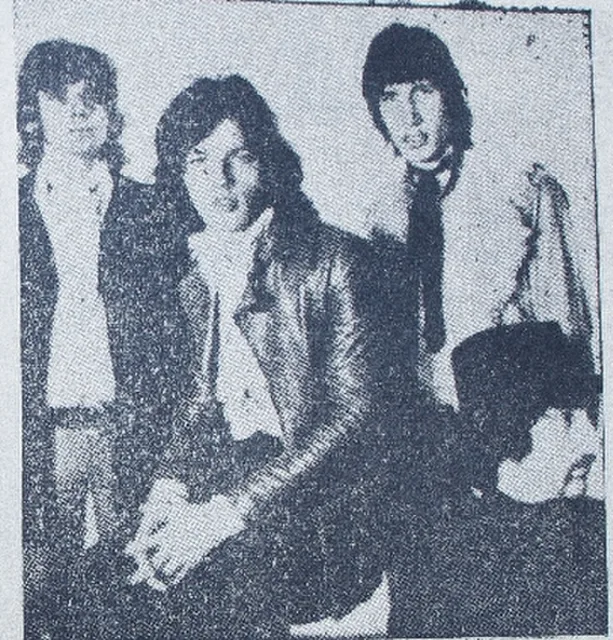
_Aktuil-031-1969.jpg)
Follow the festival beyond the field
Timeline
Related genres
More routes will be connected as the archive grows.
Related band guides
More routes will be connected as the archive grows.
Explore by sound
More routes will be connected as the archive grows.
Essential listening
Sources and further reading
- Reading Festival collection historyReading Museum · accessed 23 July 2026
- Reading in 1971: the town of the first Reading FestivalReading Museum · accessed 23 July 2026
- Reading Festival historyReading Festival · accessed 23 July 2026
- Marquee Club archiveThe Marquee Club · accessed 23 July 2026
- National Jazz & Blues Festival image sourcesWikimedia Commons · accessed 23 July 2026
Image credits5 licensed images
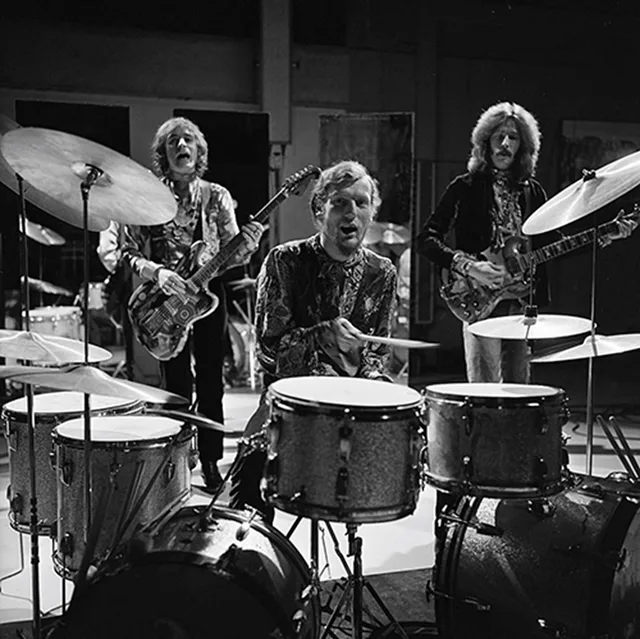
Cream performing for Dutch television in 1968. The period image represents the amplified blues-rock centre of gravity that had transformed Pendleton's festival programme by the late 1960s; it is not a festival photograph — F. van Geelen, Omroepvereniging VARA — Wikimedia Commons — CC BY-SA 3.0 · source record · CC BY-SA 3.0
Converted to WebP and resized; no generative or compositional alterations.
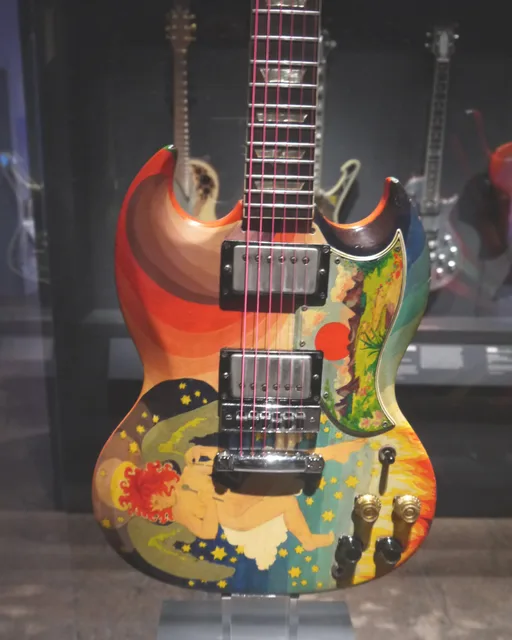
Eric Clapton's 1964 Gibson SG, painted by The Fool in 1967 and photographed in a later museum display. The instrument provides material context for Cream's psychedelic blues era, not direct evidence of a festival performance — Eden, Janine and Jim from New York City — Wikimedia Commons — CC BY 2.0 · source record · CC BY 2.0
Converted to WebP and resized; no generative or compositional alterations.
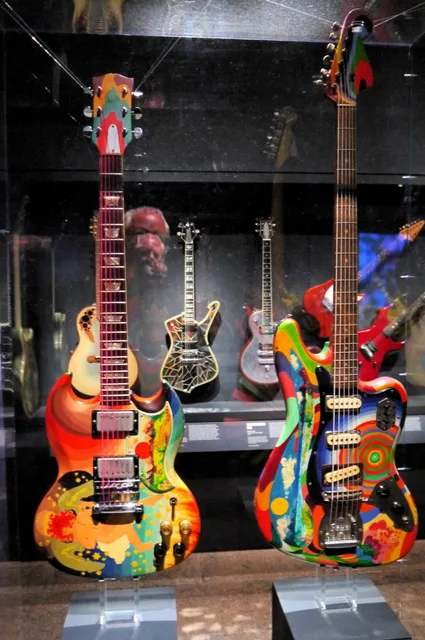
The Fool-painted instruments associated with Eric Clapton and Jack Bruce, seen in a later exhibition. They illustrate how the festival's blues programming entered the psychedelic visual culture of 1967 — Eden, Janine and Jim from New York City — Wikimedia Commons — CC BY 2.0 · source record · CC BY 2.0
Converted to WebP and resized; no generative or compositional alterations.
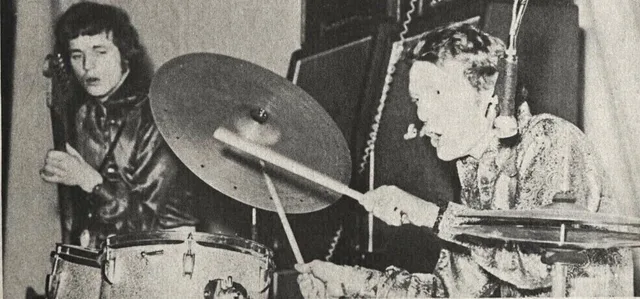
Jack Bruce and Ginger Baker performing with Cream in 1967. This period stage photograph supplies artist context and is not identified as the National Jazz & Blues Festival — Unknown author Unknown author This is a retouched picture , which means that it has been digitally altered from its original version. Modifications made by Dcameron814 . — Wikimedia Commons — Public domain · source record · Public domain
Converted to WebP and resized; no generative or compositional alterations.
Pink Floyd in a 1969 issue of the Indonesian music magazine Aktuil. The reproduced period image marks the progressive and psychedelic route that increasingly shared the festival bill with jazz and blues — Majalah Aktuil — Wikimedia Commons — Public domain · source record · Public domain
Converted to WebP and resized; no generative or compositional alterations.