

Edition timeline
Labor Day weekend begins
The first major Texas rock festival opens beside Dallas International Motor Speedway.
Twenty-six major acts
Blues, soul, brass-rock, psychedelia and hard rock alternate on the main stage.
A second life by the lake
Campers, vendors, local performers and informal music create a parallel festival environment.
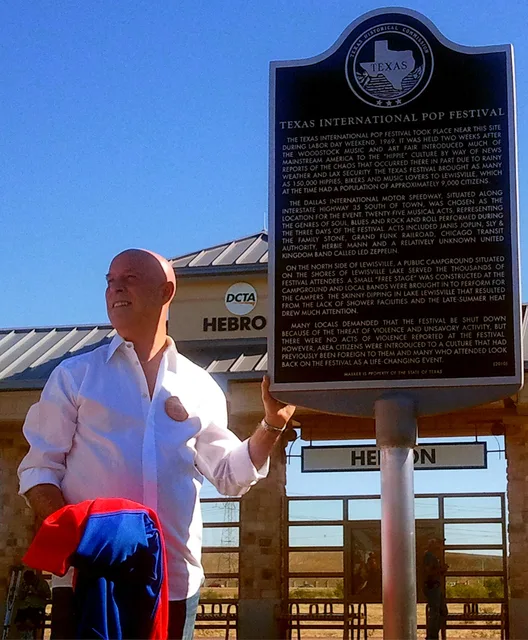
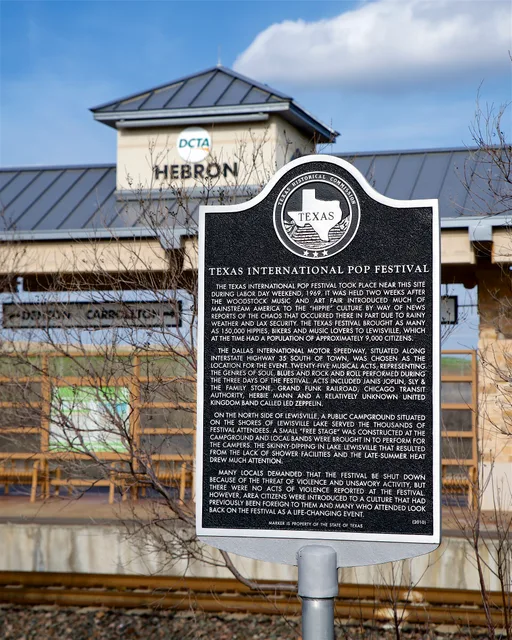
Texas recognises the site
An official historical marker makes the once-controversial gathering part of public history.
Why this event matters
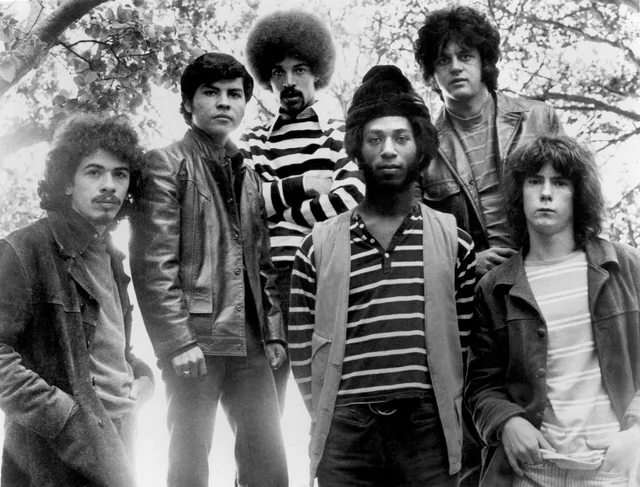
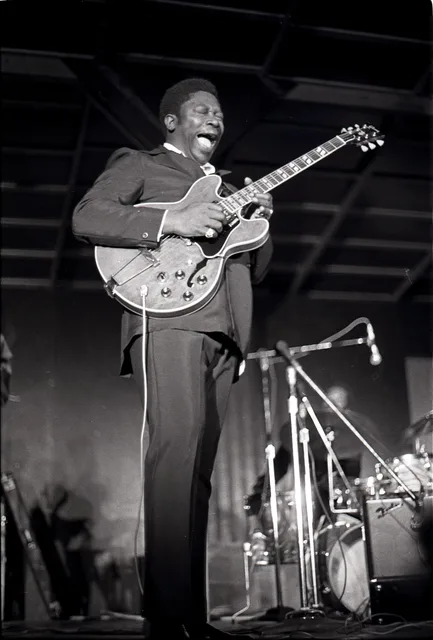
The Texas State Historical Association calls Lewisville the first major rock festival in Texas. It brought roughly 120,000 people to a town of about 9,000 and demonstrated that the 1969 festival boom had become a national infrastructure rather than a coastal fashion. Its importance also lies in mixture: Texas blues, Southern soul, Latin rock, brass-rock and new British heaviness occupied the same Labor Day programme. Angus Wynne III and partners built on relationships formed around the Atlanta festival and promoted the Texas event at Woodstock. The reported budget was only about $120,000, with daily admission at $6.50. Janis Joplin and Led Zeppelin were among the highest-paid acts at roughly $10,000 each. Those figures reveal an early business model in which a huge international bill could be assembled for sums small by later stadium standards. The principal venue stood at Dallas International Motor Speedway, while most visitors camped on the adjoining Lake Lewisville waterfront. That split created two linked environments: a controlled performance site and a sprawling settlement of tents, vendors, swimmers and improvised music. Highways and a motor-racing landscape enabled mass arrival, but late-summer Texas heat and the much smaller host town made the audience’s physical scale impossible to ignore. Documented performers included Janis Joplin, Sam and Dave, Sly and the Family Stone, Santana, Canned Heat, Chicago Transit Authority, Johnny Winter, Spirit, Freddie King, B.B. King, Ten Years After, Sweetwater and Led Zeppelin. B.B. and Freddie King placed blues lineage beside the new heavy guitar language; Santana and Chicago pointed toward Latin and jazz-rock crossover; Sam and Dave brought concentrated Southern soul energy.

What the audience experienced
The campground functioned as a marketplace and temporary village. Astrologers, craftspeople, food sellers and artists worked beside thousands of tents. Nude swimming in Lake Lewisville became the scandal most often repeated by observers, while heat and a small number of drug overdoses created real medical concerns. Despite official anxiety, major violence did not materialise. The weekend was remembered by many participants as intense, communal and comparatively well run. A budget-conscious production kept twenty-six acts moving across the main programme while a smaller free stage served the camp. Showco and Wynne’s regional concert knowledge helped turn the speedway into a functioning large event. Competence should not be confused with comfort: heat, traffic and distance remained difficult. The achievement was that music, basic services and crowd movement broadly continued under pressure that authorities had expected to become unmanageable. Police and local officials anticipated drug use, traffic failure, nudity and violence. Some fears were justified in limited form: roads were crowded, overdoses occurred and nude lake swimming attracted national attention. The more catastrophic predictions were not. This contrast belongs at the centre of the page because it shows how the counterculture was framed as a threat before arrival and how practical cooperation produced a more complicated reality. The festival lost money and did not become an annual institution, even though attendees and historians generally judged the event a success. The motor speedway later disappeared, making location memory less obvious than at a surviving arena. Lewisville gradually incorporated the weekend into civic history through oral accounts, a city archive and the 2010 Texas Historical Marker. A temporary population once treated as invasion became part of the city’s recognised past.

Films, recordings and surviving documents
Bootleg recordings circulated for decades, joined by later video material, posters, programmes, interviews and municipal research. The TSHA entry and City of Lewisville history provide an unusually strong local spine for money, attendance, camp life and official reaction. Photographs used here include the marker and period images of Santana and B.B. King; the Ann Arbor caption identifies its actual venue so it cannot be mistaken for Lewisville. Lewisville challenges the pastoral shorthand attached to festival history. The central landscape was a modern speedway, interstate traffic, severe heat and a vast man-made lake. Yet visitors still built an alternative settlement around crafts, communal camping and informal music. The collision of industrial leisure infrastructure with temporary counterculture is precisely what made Texas International Pop distinctive rather than a regional copy of Woodstock. Most historical lineups focus on the main stage, but the lakefront camp changed how the weekend functioned. A small free stage supported local bands, while accounts say some major performers joined informal music after hours. Specific jam stories require caution, yet the broader evidence is clear: visitors experienced commerce, swimming, camping and performance beyond the ticketed arena. Internal links to other raceway festivals make this two-zone design especially useful for comparison. Texas International Pop stands among the major American festivals of 1969 and remains the most consequential one-off rock gathering in Texas history. It connected local blues heritage to international psychedelic and heavy-rock circuits, overwhelmed the scale of Lewisville without producing the violence many predicted, and left a substantial recorded and civic archive. The historical marker embodies its changing status from feared counterculture incursion to publicly protected memory.



Follow the festival beyond the field
Timeline
Related genres
Related band guides
Explore by sound
More routes will be connected as the archive grows.
Essential listening
Sources and further reading
- Texas International Pop Festival, 1969Texas State Historical Association · accessed 23 July 2026
- 1969 Texas International Pop FestivalCity of Lewisville · accessed 23 July 2026
- Historical markers in LewisvilleCity of Lewisville · accessed 23 July 2026
- Texas International Pop Festival collectionUNT Digital Library · accessed 23 July 2026
- Texas International Pop Festival licensed imagesWikimedia Commons · accessed 23 July 2026
Image credits5 licensed images
The Texas International Pop Festival historical marker in Lewisville, documenting the event’s physical commemoration — Brandon Cooper — Wikimedia Commons — CC BY 3.0 · source record · CC BY 3.0
Converted to WebP and resized; no generative or compositional alterations.
A second view of the official historical marker, used to connect the vanished speedway event with its present-day public memory — Danazar — Wikimedia Commons — CC BY-SA 4.0 · source record · CC BY-SA 4.0
Converted to WebP and resized; no generative or compositional alterations.
Santana in a 1969 press photograph. This is period artist context, not a Lewisville performance image — Distributed by Columbia Records — Wikimedia Commons — Public domain · source record · Public domain
Converted to WebP and resized; no generative or compositional alterations.
B. B. King performing in 1969 at Ann Arbor. The exact event is identified to avoid confusing it with his Texas set — University of Michigan — Wikimedia Commons — CC BY 4.0 · source record · CC BY 4.0
Converted to WebP and resized; no generative or compositional alterations.
A reusable studio image of Santana, included as artist context for the Latin-rock strand heard at Lewisville — Santana MontanaReal — Wikimedia Commons — CC BY-SA 4.0 · source record · CC BY-SA 4.0
Converted to WebP and resized; no generative or compositional alterations.