

Edition timeline
A revival bill is assembled
Promoters pair first-generation rock-and-roll stars with newer groups at Varsity Stadium.
Ticket sales remain weak
The promoters seek a late intervention capable of transforming public attention.
Lennon arrives with a new band
The Plastic Ono Band rehearses on the flight and performs before more than 20,000 people.
Toronto travels through records and film
Live Peace in Toronto appears, while Pennebaker footage later supports a much longer documentary afterlife.
Why this event matters
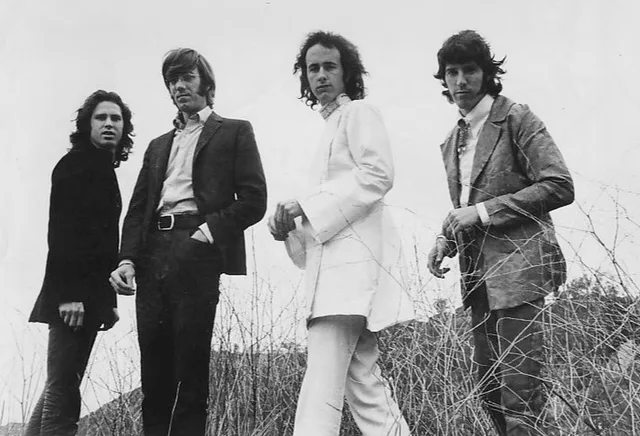
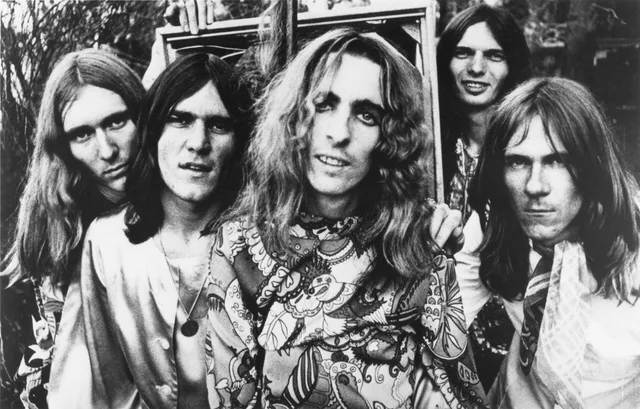
Toronto’s Revival joined several histories in one stadium. Chuck Berry, Little Richard, Jerry Lee Lewis, Bo Diddley and Gene Vincent represented the foundations of rock and roll; The Doors, Alice Cooper and Chicago represented music changing around them. John Lennon’s last-minute decision to perform made the day a break in Beatles history and the first public statement of a hastily assembled Plastic Ono Band. The event matters because revival, contemporary rock and experimental performance collided rather than appearing in separate museums. Promoters John Brower and Kenny Walker had an impressive programme but weak advance sales. Kim Fowley’s recollection on Lennon’s official site describes only about 2,000 tickets sold before the intervention. Lennon and Yoko Ono were invited in hopes of increasing attention. Lennon chose to play rather than merely appear, calling Eric Clapton, Klaus Voormann and Alan White. The decision converted a commercial rescue attempt into a new band’s public debut with almost no preparation. Varsity Stadium provided an urban university setting with established seating, access and a concentrated field, unlike the improvised rural cities of many 1969 festivals. The Canadian Museum of History records an audience above 20,000, while Lennon’s official archive uses 25,000. Both figures describe the same scale without requiring false precision. The stadium also made the lighting of matches during Lennon’s introduction visually powerful: a controlled bowl briefly became a field of individual lights. The day was built around living architects of rock and roll, not tribute performers. Berry, Richard, Lewis, Diddley and Vincent could be heard beside groups extending the vocabulary through longer forms, amplification and theatre. The Doors were the advertised headliner. Alice Cooper’s notorious chicken incident became one fragment of the event’s memory, while Chicago brought brass-driven rock. Lennon’s appearance did not erase this design; it made the conversation between origins and reinvention more explicit.

Lennon arrives
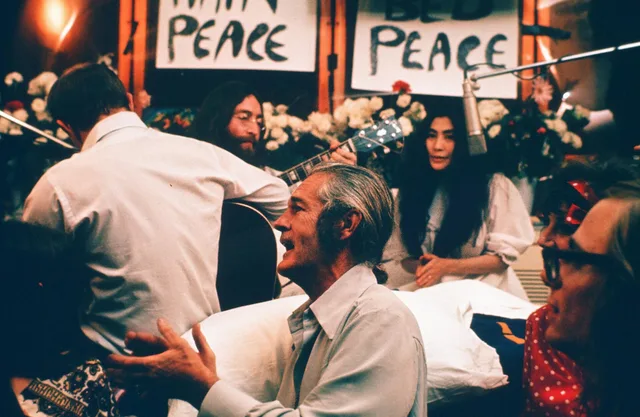
The Plastic Ono Band rehearsed acoustically on the flight from London. Lennon, Clapton, Voormann and White had never played a concert as a unit. Their set therefore relied on rock-and-roll songs they already knew, the Beatles’ “Yer Blues,” the new “Cold Turkey” and “Give Peace a Chance.” Yoko Ono’s closing pieces shifted the performance into sustained experimental sound. The sequence moved from revival material to a deliberately unresolved ending, making the group’s instability part of its artistic statement. The Revival was a long one-day stadium programme rather than a camping festival. Audience energy changed as veteran performers, contemporary groups and the unexpected Lennon appearance followed one another. Memories of matches, the Alice Cooper set and the Plastic Ono Band’s feedback ending dominate later accounts, but thousands also experienced hours of ordinary changeovers and music before those moments. Treating the day as more than Lennon restores the curatorial argument that made his set meaningful. The festival was professionally recorded, allowing Live Peace in Toronto 1969 to appear within months. D. A. Pennebaker’s crew also filmed the event after Lennon required recording and film rights. These systems did not merely document a completed performance; they helped make the appearance viable and gave it a global afterlife. The album isolates the Plastic Ono Band, while surviving film can restore the wider bill, crowd and commercial uncertainty that the record sleeve leaves outside its frame. The decisive production problem emerged before show day: a strong historical concept was not selling enough tickets. The invitation to Lennon was therefore both artistic opportunity and emergency marketing. His acceptance solved attention but created new practical demands—international travel, musicians, instruments, rehearsal, rights and film arrangements in almost no time. The event’s later legendary status can hide how close the promotion came to failure. Toronto demonstrates that canonical history can grow from an improvised response to an ordinary box-office crisis.

What happened afterward
Live Peace in Toronto was released in December 1969 and became the first separately issued live album by a Beatle. The performance strengthened Lennon and Ono’s movement away from Beatles expectations toward a flexible Plastic Ono Band identity. For Toronto, the event became evidence that Canadian venues could host internationally significant popular-music moments rather than only receive tours after their meaning was established elsewhere. Brower later promoted the Toronto Peace Festival, extending relationships formed around the Revival. The official Lennon archive gives detailed participant testimony, personnel, repertoire and the 25,000 estimate. The Canadian Museum of History preserves a poster that does not list Lennon or Ono, material proof of how late the transformation occurred. Pennebaker footage and the later REVIVAL69 documentary recover the wider event around an album long centred on one set. Contemporary press adds the audience’s immediate reception, including language about Ono that reveals period prejudice as much as musical judgement. The title “Revival” promised a return to rock and roll’s beginnings, yet the most enduring performance pointed away from stable nostalgia. Lennon used familiar songs to make an unrehearsed group possible, then introduced new peace material and Ono’s experimental work. The festival’s historical power lies in that reversal. The old vocabulary was not embalmed; it became a launch platform for a musician publicly stepping beyond the Beatles and for an audience asked to accept feedback and abstraction beside classic hits. Toronto survives through an unusually rich combination of object, record, film and testimony. Its poster preserves the programme before Lennon; Live Peace preserves the set that transformed it; museum interpretation restores Canadian context; REVIVAL69 returns attention to the promoters’ crisis and the whole day. Together they show how an event can become famous for a late addition without losing the history already built into its bill. The Revival remains a junction between rock’s first generation, psychedelic-era theatre and post-Beatles experimentation.


Follow the festival beyond the field
Timeline
Related genres
More routes will be connected as the archive grows.
Related band guides
Explore by sound
More routes will be connected as the archive grows.
Essential listening
Sources and further reading
- Live Peace in Toronto 1969John Lennon official site · accessed 23 July 2026
- Toronto Rock & Roll Revival posterCanadian Museum of History · accessed 23 July 2026
- REVIVAL69Official documentary project · accessed 23 July 2026
- REVIVAL69 documentaryPBS · accessed 23 July 2026
- Music is more than entertainmentCanadian Museum of History · accessed 23 July 2026
Image credits5 licensed images
John Lennon performing Give Peace a Chance in 1969. This is close-period context for his Toronto appearance, not a Varsity Stadium photograph — Roy Kerwood — Wikimedia Commons — CC BY 2.5 · source record · CC BY 2.5
Converted to WebP and resized; no generative or compositional alterations.
The Doors in 1969. The public-domain publicity photograph documents the festival's advertised headliner, not the Toronto performance itself — Elektra Records — Wikimedia Commons — Public domain · source record · Public domain
Converted to WebP and resized; no generative or compositional alterations.
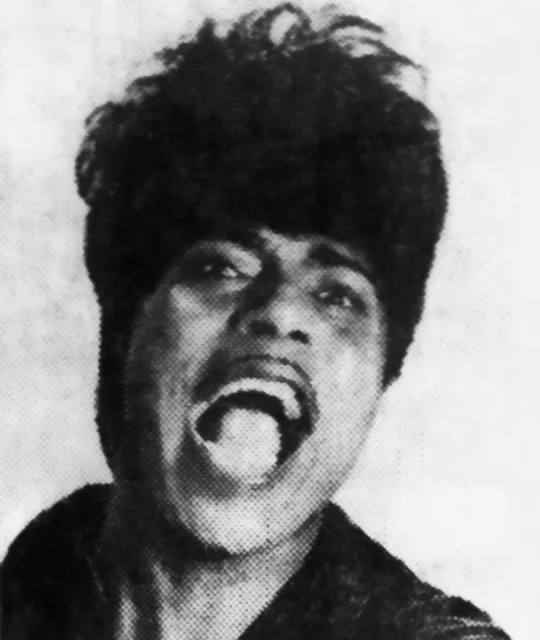
Little Richard in a 1960s publicity portrait, representing the first-generation rock-and-roll performers around whom the Revival was built — Okeh Records — Wikimedia Commons — Public domain · source record · Public domain
Converted to WebP and resized; no generative or compositional alterations.
The Alice Cooper band in a publicity photograph. Their Toronto set connected the revival bill's rock-and-roll past with a more theatrical emerging underground — Enigma Records — Wikimedia Commons — Public domain · source record · Public domain
Converted to WebP and resized; no generative or compositional alterations.
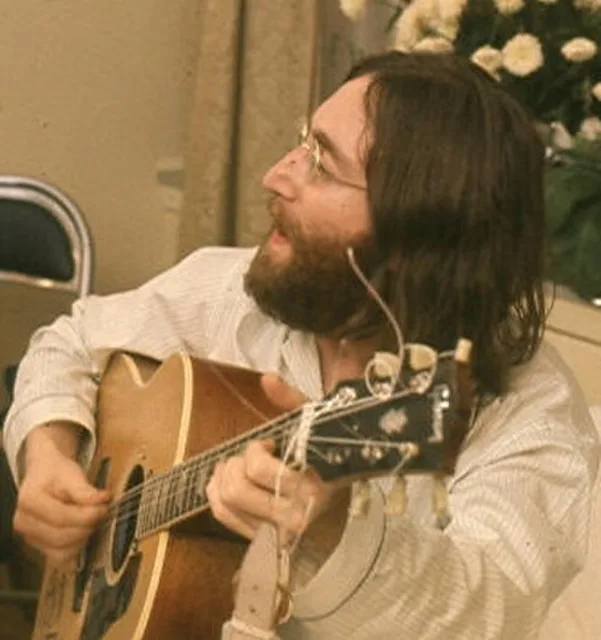
John Lennon during his 1969 peace campaign. The image provides context for the public identity he carried into the hastily assembled Plastic Ono Band performance — Roy Kerwood — Wikimedia Commons — CC BY 2.5 · source record · CC BY 2.5
Converted to WebP and resized; no generative or compositional alterations.