Rhythm Responds
The groove remains active and conversational beneath the soloist.

RetroForge Genre Guide
Improvisation, electric keyboards and rhythm sections that turn progressive complexity into a live conversation.
The Sound
Jazz rock and fusion bring jazz harmony, improvisation and rhythmic interaction into amplified ensembles. Electric piano, organ, synthesizer and distorted guitar expand the palette, while bass and drums behave as independent voices rather than a fixed platform beneath a soloist.
The terminology overlaps. Jazz rock often describes music where the rock rhythm section and song-derived structure remain visible; fusion can extend further into jazz-led improvisation, electric timbre and technical density. Neither label guarantees one specific sound.
The link with progressive rock is strong but incomplete. Both value extended form and instrumental skill, yet fusion often develops through performance and interaction rather than recurring narrative themes. A composition may provide the launch point; the players determine its route in real time.
What You’ll Hear
How It Works
Jazz-rock and fusion bring jazz harmony, improvisational responsiveness and rhythmic flexibility into amplified ensembles. Electric piano, synthesizer, bass and guitar do more than modernise the palette: they change the weight, sustain and spatial possibilities of the group.
Follow the conversation rather than waiting for a song form. A soloist may redirect the rhythm section; bass can carry harmonic motion; drums can comment on phrases instead of simply marking time. Composition supplies the frame, but performance decides how that frame behaves in the moment.
Useful distinction: Boundary line: technical playing is not the genre. Fusion depends on interaction, harmonic language and the productive tension between written material and improvisation.
The groove remains active and conversational beneath the soloist.
Chords create several possible directions rather than one inevitable cadence.
Sustain, amplification and processing reshape instrumental phrasing.
Written themes establish identity before improvisation tests their limits.
Listen beyond the soloist. The most revealing moments often occur when bass, drums and keyboards react to one another, shifting the ground while a melody continues above them. Complexity becomes a form of communication rather than an architectural display.
Catalogue status: RetroForge has jazz-rock influence and Canterbury-style writing, but not yet a release presented as a pure fusion album.
Historical Development
Jazz-rock and fusion developed when late-1960s musicians began exchanging more than surface detail. Rock groups adopted extended improvisation, electric piano and advanced harmony; jazz musicians absorbed amplification, studio processing and the physical pulse of rock and funk. The traffic moved in both directions.
Miles Davis's electric period was decisive, and musicians from his groups helped form Mahavishnu Orchestra, Weather Report and Return to Forever. On the rock side, Soft Machine, Frank Zappa, Santana and Canterbury-related players used jazz methods to alter composition rather than merely decorate solos.
The terms overlap but are not identical. Fusion often starts from jazz performance and adds rock power, while jazz-rock can begin with a rock ensemble learning to improvise and reharmonise. Both depend on conversation: written structures create pressure, then the players reshape them in real time.
The Real-World Foundations
Not a ranking: six useful doors into the style.
Electric rhythm, studio assembly and collective improvisation changed the scale of jazz-rock.
Odd metre and extreme ensemble precision give fusion the force of a rock band.
Electronic colour and group improvisation replace the conventional soloist-plus-accompaniment model.
Virtuosity, composition and synthesizer-rich production reach an unusually polished balance.
Canterbury history meets guitar-led instrumental jazz-rock through Allan Holdsworth.
A British ensemble route built from rhythmic detail, electric keyboards and disciplined improvisation.
RetroForge Bridge

Electric keyboards, odd metres and jazz-coloured motion form the closest catalogue bridge.
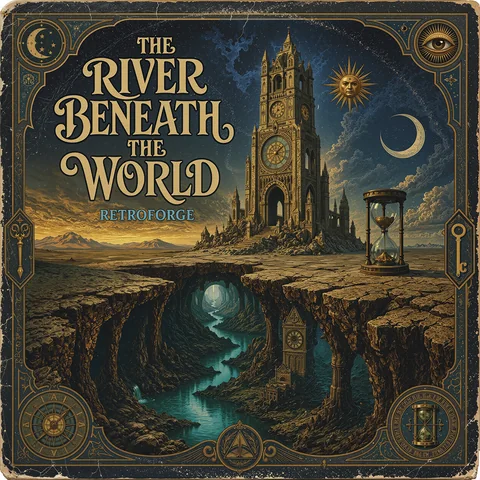
Primarily symphonic prog, with jazz-rock rhythms embedded in a more theatrical structure.
Questions from the Record Room
The terms overlap. Jazz-rock often describes rock musicians adopting jazz language; fusion often describes jazz musicians integrating rock, funk and electronics.
No. Improvisational thinking can shape rhythm, harmony and ensemble interaction even inside concise compositions.
The Inner Mounting Flame has the most immediate physical impact; Canterbury listeners may prefer Soft Machine.
Research Trail
Historical Routes
Deeper Discovery
Start with The Glass Engine Awakens as a RetroForge companion, then return through Progressive Rock to place it inside the wider family.
Curated paths into the people, records, events and ideas that give this subject its wider musical context.