Time Becomes Elastic
Long fades, drones and repeated patterns loosen the ordinary sense of arrival. A section may feel suspended even while the pulse continues underneath it.

RetroForge Genre Guide
Farfisa haze, tape echo, acid-rock colour and albums where perception changes before the scenery does.
The Sound
RetroForge psychedelia is less interested in decorating ordinary rock songs with a few strange noises than in changing the rules of the room. Time stretches. Colours begin to behave like instruments. A path appears where the ground had been closed, and the listener is expected to follow before asking whether it is safe.
The sound draws on late-1960s recording language: Farfisa organ, tremolo guitar, spring reverb, tape delay, Mellotron, warm bass, loose drums and occasional folk or blues roots left visible beneath the hallucination. Some albums are bright and exploratory; others move through forests, swamps, deserts and rooms that become more threatening with every repetition.
These records are written as complete environments. Vocals may guide the journey, but long instrumental passages often do the real work, allowing texture and studio movement to become part of the story. The result can be gentle, ritualistic, heavy, pastoral or deeply disorienting—sometimes within the same album.
Production is part of the composition. Echo trails are allowed to overlap the next phrase, organ tones drift slightly out of tune and sections may dissolve instead of ending cleanly. That imperfection gives the archive its sense of place. Choose the gentler dream records if you want to float; follow the acid-blues, desert and occult-folk routes when you want the same colours with sharper edges.
What You’ll Hear
How It Works
The psychedelic effect comes from relationships between sound, space and expectation—not from fuzz alone.
Psychedelic rock can be loud, but its most important tool is uncertainty. A familiar rhythm may continue while the guitar drifts out of focus. A vocal can sound close enough to whisper into the listener’s ear, then dissolve into a chamber of echo. Repetition creates a stable surface; production quietly changes what that surface seems to mean. The music feels altered because the frame around it refuses to remain fixed.
Late-1960s studios offered a practical vocabulary for that illusion. Tape could be slowed, reversed, layered or fed back into itself. Spring and plate reverberation gave dry instruments an imaginary location. Tremolo, rotating speakers and panning made sound appear to move. None of those devices automatically produces psychedelia. Their value comes from placement: a small disturbance introduced at the right moment can be stranger than an entire arrangement shouting for attention.
Long fades, drones and repeated patterns loosen the ordinary sense of arrival. A section may feel suspended even while the pulse continues underneath it.
Echo depth, stereo movement and changes in tone create rooms, horizons and distances that do not exist outside the recording.
Surreal lyrics work through suggestion rather than explanation. Objects behave like living things; places become states of mind; identity becomes unstable.
Blues, folk, garage rock and pop often survive beneath the experiment. That familiar skeleton makes the altered details easier to feel.
The Spectrum
The gentler end of the spectrum uses chiming guitar, soft organ and open arrangements to create drift rather than danger. Acid folk moves the same instability into acoustic instruments, ritual rhythm and landscape imagery. Psychedelic blues keeps the weight and physical repetition of the blues while stretching tone and atmosphere. Heavier acid rock pushes fuzz, bass and drums toward pressure, heat and confrontation.
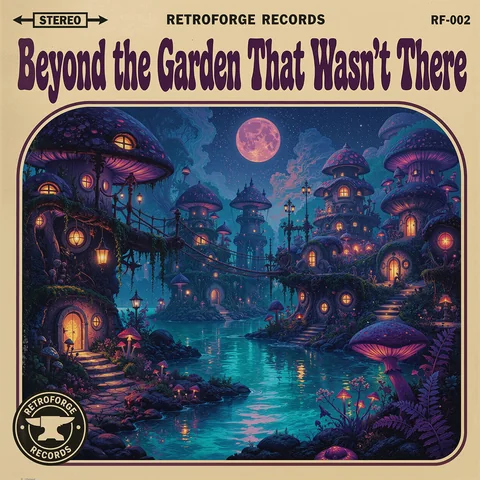
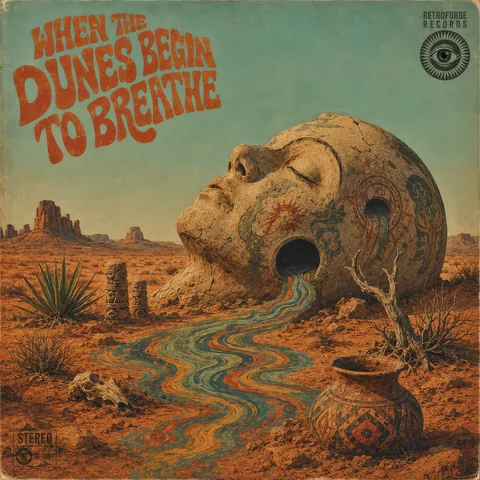
RetroForge uses those routes as different climates inside the same archive. Forests and gardens invite exploration; swamps and deserts make movement difficult; cosmic records remove the ground entirely. The recurring subject is perception: what happens when the setting changes faster than the person inside it can understand.
Listen for this: follow the decay after a note, not only the note itself. The echo, wobble or silence around it is often where the psychedelic arrangement is actually moving.
Historical Development
A concise map of how the style developed before it entered the RetroForge archive.
Psychedelic rock formed in the mid-1960s as garage rock, folk, blues, non-Western musical ideas and rapidly expanding studio technique began to change one another. The goal was not simply to describe altered perception in the lyrics, but to make the recording itself behave differently.
The year 1967 became a highly visible peak rather than a single birthplace. San Francisco groups stretched improvisation and communal performance; British artists treated the studio as an instrument. Pink Floyd’s The Piper at the Gates of Dawn captured both directions by placing long-form improvisation beside short, strange songs.
By the end of the decade, psychedelia had already branched outward. Its heavier guitar language fed acid rock and early hard rock; its extended forms helped progressive rock develop; its drones, collage and electronic experiments travelled into krautrock, folk, soul and later neo-psychedelic revivals.
The Real-World Foundations
Not a ranking: six distinct entrances into the historical genre.
Whimsical songs and open-ended improvisation inside one vividly experimental debut.
San Francisco harmony, electric folk roots and psychedelic atmosphere.
Orchestral detail, unease and concise songwriting beneath a sunlit surface.
Organ-led darkness, blues foundations and theatrical tension.
A raw early statement where garage rock and explicitly psychedelic intent meet.
Electronics, collage and radical studio design without conventional electric guitar.
Research Trail
Start Here
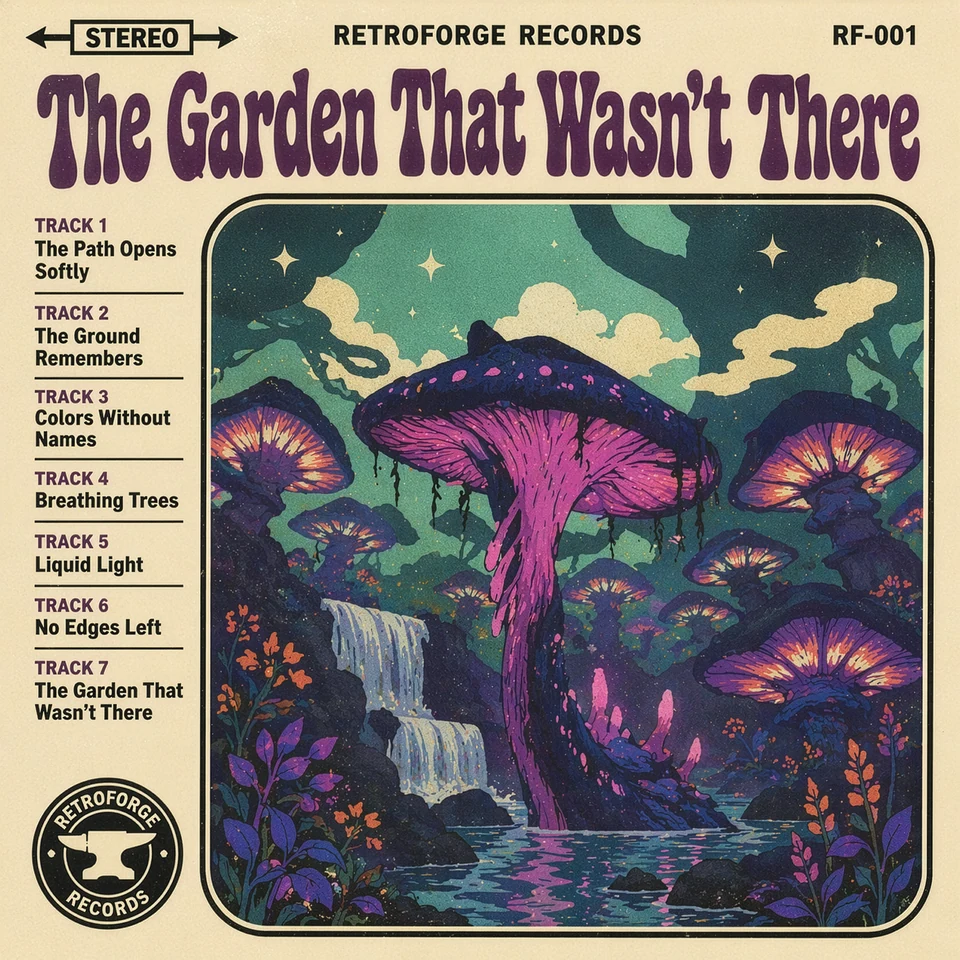
1967 · Psychedelic Rock · Vintage Acid Rock
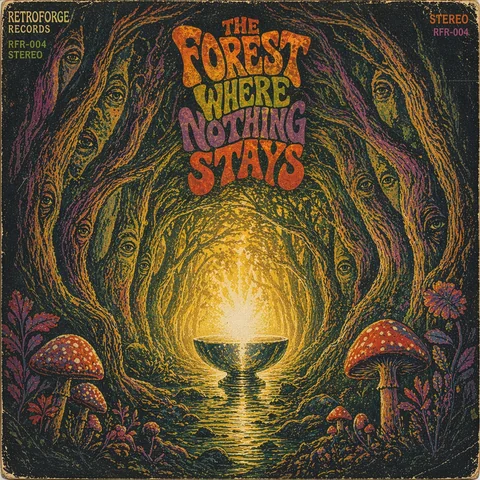
The most direct doorway into RetroForge psychedelia: Farfisa, tape echo, saturated colour and a landscape that changes as the album moves through it.
Open the liner notes →Six Ways In
Six contrasting environments. The complete list remains available in Discography.
Go Deeper
Keep Exploring
Questions Answered
Psychedelic music changes the listener’s sense of space, time or perspective through sound. Repetition, unusual timbre, studio manipulation, improvisation and surreal writing are common tools.
Acid rock is a heavier branch of psychedelia, usually built around louder guitar, extended improvisation and a more forceful rhythm section. Psychedelic rock is the broader family.
Fuzz or tremolo guitar, Farfisa or Hammond organ, Mellotron, sitar or drone instruments, warm electric bass and drums treated with echo, phasing or unusual stereo movement often appear.
Pink Floyd’s The Piper at the Gates of Dawn, Jefferson Airplane’s Surrealistic Pillow and Love’s Forever Changes show three very different routes into the style.
Deeper Discovery
Start with The Soft Geometry of Dreams as a RetroForge companion, then return through Genres to place it inside the wider family.
Curated paths into the people, records, events and ideas that give this subject its wider musical context.