

Edition timeline
Political tension grows in Portland
Officials expect anti-war protest around the American Legion convention.
McCall’s administration accepts the Vortex plan
A state park is opened to a free counterculture gathering intended to draw people away from downtown.
Vortex occupies Milo McIver State Park
Regional music, camping and selective non-enforcement create an unusual temporary settlement.
The feared confrontation does not occur
The one-off experiment enters Oregon political history rather than becoming an annual festival.
Why this event matters
Vortex I belongs to political history as much as music history. Oregon used a counterculture gathering as an improvised instrument of de-escalation during a week of feared confrontation in Portland. Vortex I ran from 28 August to 3 September 1970 at Milo McIver State Park. The American Legion convention, planned anti-war actions and memories of recent campus violence created an atmosphere in which officials expected serious conflict. Oregon Encyclopedia records about 35,000 people by the end of the second concert day, while Oregon histories commonly summarise about 40,000 overall. Governor Tom McCall accepted the political risk of opening a state park to the gathering. The decision was an unusual negotiation between counterculture organisers and state government, not a conventional entertainment contract. Admission was free and exact counting was impossible. The park was rural enough to draw people away from downtown Portland while remaining reachable from the metropolitan region and Interstate 5. Geography was part of the de-escalation strategy. The feared large confrontation in Portland did not occur.
_-_01.jpg)
Music without superstar logic
Regional musicians supplied most of the programme. Music served the social and political purpose of the gathering rather than a celebrity bill serving as its organising principle. Vortex I ran from 28 August to 3 September 1970 at Milo McIver State Park. Free admission, camping, nudity, drug use and restrained enforcement shaped daily life. These were not merely colourful details; they were conditions created by a deliberate policy of tolerance. Oregon Encyclopedia records about 35,000 people by the end of the second concert day, while Oregon histories commonly summarise about 40,000 overall. State involvement meant access, sanitation, coordination and permission, not a modern government agency booking a commercial festival bill. That distinction explains both the event’s uniqueness and its practical limits. Admission was free and exact counting was impossible. Selective non-enforcement and negotiated separation of potentially hostile groups formed the central experiment. Police and National Guard units were instructed to tolerate many nonviolent behaviours normally subject to intervention. The feared large confrontation in Portland did not occur.
_-_03.jpg)
What happened afterward
The feared major clash in Portland did not occur, and McCall later won re-election. Vortex belongs to that political context without being credited as the single cause of either outcome. Vortex I ran from 28 August to 3 September 1970 at Milo McIver State Park. Oregon Public Broadcasting, state archives, contemporary newspapers and the Oregon Encyclopedia preserve complementary evidence about decisions inside government and life in the park. Oregon Encyclopedia records about 35,000 people by the end of the second concert day, while Oregon histories commonly summarise about 40,000 overall. Vortex asks whether a festival can become public policy. For one week Oregon treated counterculture not only as a threat to contain, but as a community with which government could negotiate. Admission was free and exact counting was impossible. Vortex remains one of the strangest encounters between American state government and festival culture. Its importance lies in the temporary political arrangement more than any canonical performance. The feared large confrontation in Portland did not occur.

.jpg)
Follow the festival beyond the field
Timeline
Related genres
Related band guides
More routes will be connected as the archive grows.
Explore by sound
Essential listening
Sources and further reading
- Vortex I music festivalOregon Encyclopedia · accessed 23 July 2026
- Oregon Experience: Vortex IOregon Public Broadcasting · accessed 23 July 2026
- Tom McCall biographyOregon Encyclopedia · accessed 23 July 2026
- Milo McIver and McCall image sourcesWikimedia Commons · accessed 23 July 2026
Image credits5 licensed images
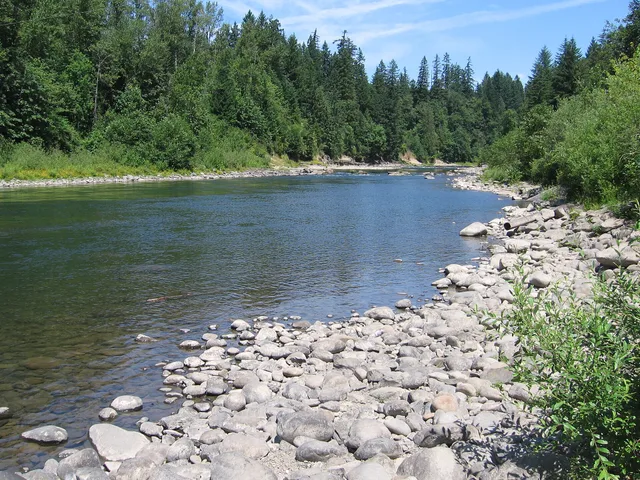
A later landscape at Milo McIver State Park. It documents the site selected for Vortex I, not the 1970 gathering itself — --b-- — Wikimedia Commons — CC BY-SA 2.0 · source record · CC BY-SA 2.0
Converted to WebP and resized; no generative or compositional alterations.
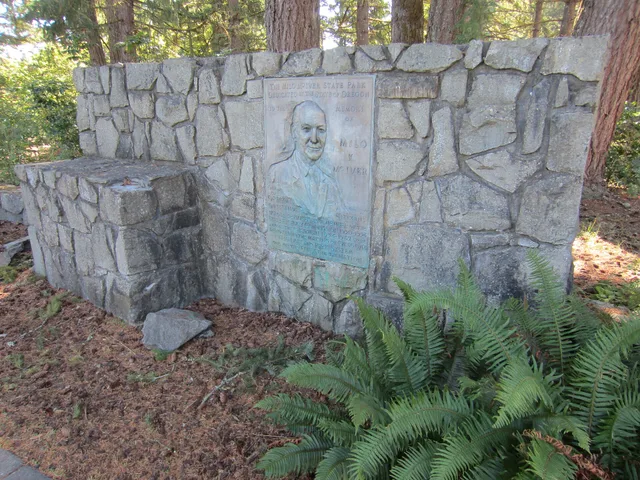
Milo McIver State Park in 2021, used to explain the rural geography of Vortex I rather than to reconstruct the historical crowd — Another Believer — Wikimedia Commons — CC BY-SA 4.0 · source record · CC BY-SA 4.0
Converted to WebP and resized; no generative or compositional alterations.
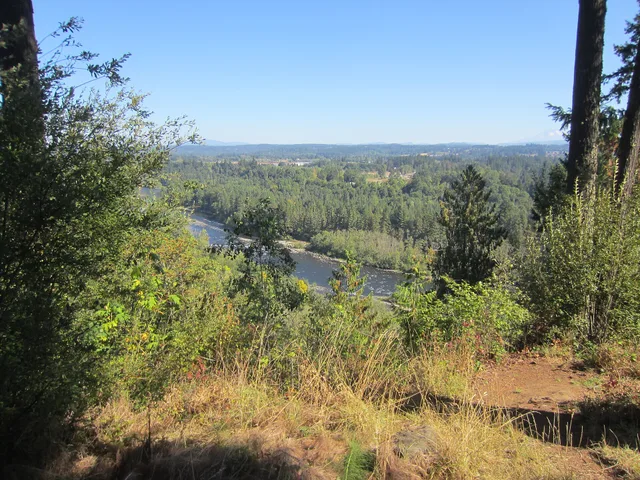
A modern wooded view of Milo McIver State Park, clearly separated from the festival’s 1970 visual record — Another Believer — Wikimedia Commons — CC BY-SA 4.0 · source record · CC BY-SA 4.0
Converted to WebP and resized; no generative or compositional alterations.
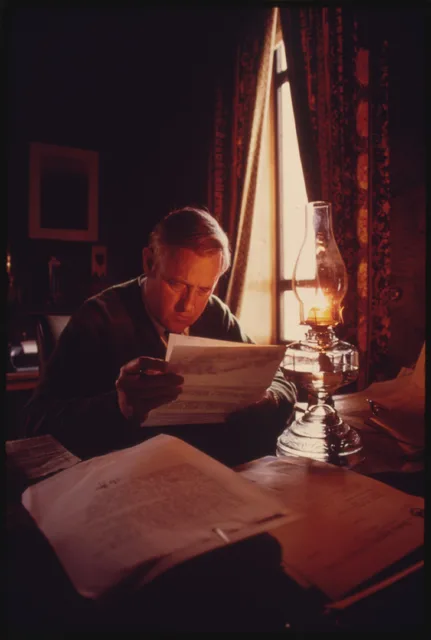
Governor Tom McCall in a public-domain government photograph. This later image provides political context for the administration that enabled Vortex I — David Falconer — Wikimedia Commons — Public domain · source record · Public domain
Converted to WebP and resized; no generative or compositional alterations.
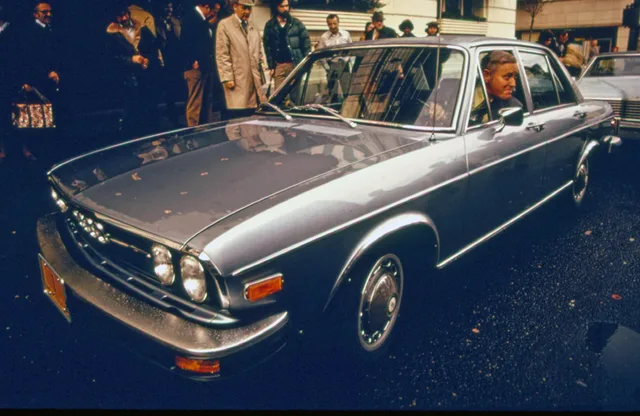
Tom McCall with his official car in a 1974 government photograph, illustrating the public figure who accepted the political risk of Vortex I — David Falconer — Wikimedia Commons — Public domain · source record · Public domain
Converted to WebP and resized; no generative or compositional alterations.