

Edition timeline
A national bill is advertised
Promoters sell Powder Ridge as a natural amphitheatre with major rock performers.
Residents obtain an injunction
The court prevents the advertised artists from performing and services are curtailed.
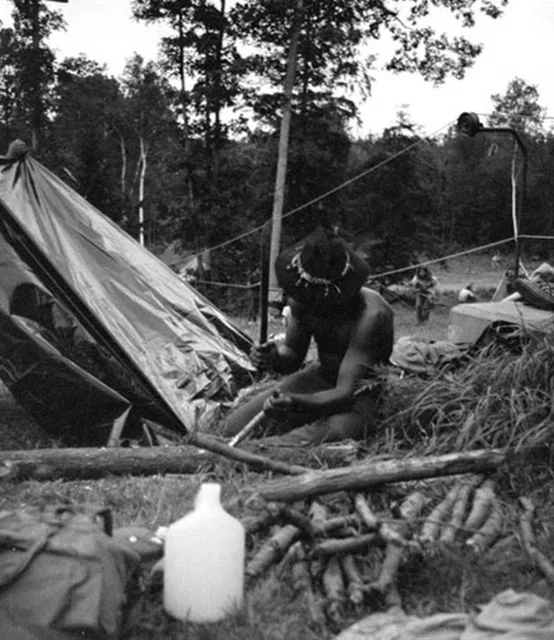
About 30,000 people stay
Roadblocks do not stop a vast encampment from forming on and around the ski slope.
Melanie performs
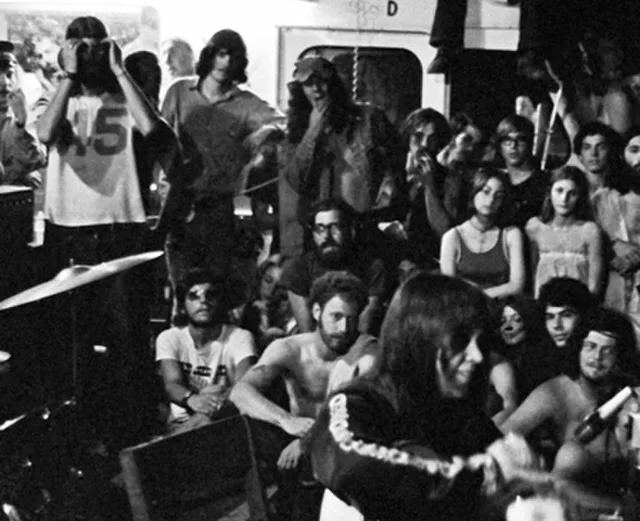
An improvised appearance becomes the principal documented exception to the cancelled programme.
Why this event matters
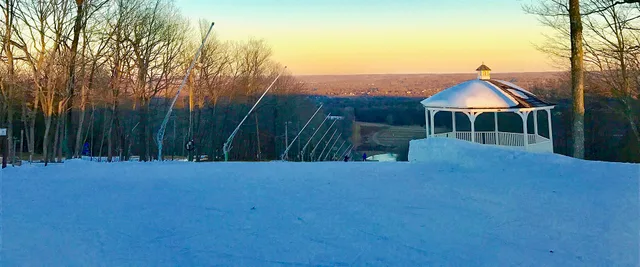
Powder Ridge is important precisely because the promised festival did not happen. A court order removed the programme, but roughly 30,000 people still arrived and occupied the ski area. Music history usually follows performances; this event makes absence the evidence. It shows how festival culture had become a social practice independent of any working stage and how local government, courts, police and residents could determine the shape of a gathering before a promoter opened the gates. Advertising promised three days on a “natural amphitheatre” with a bill ranging from Sly & the Family Stone and Fleetwood Mac to Joe Cocker, Van Morrison, Jethro Tull, Janis Joplin and Grand Funk Railroad. Residents objected to the expected scale and its pressure on a small town. Legal action culminated in an injunction barring the advertised performers. By the time owner Louis Zemel announced the cancellation, advance publicity had already turned Middlefield into a destination. Powder Ridge’s ski runs offered sightlines and open ground that promoters could describe as a ready-made amphitheatre. They also sat inside a road network and community not designed for a sudden population of tens of thousands. State police established roadblocks as far as two miles away, while utilities and services were cut. The later landscape photograph used here is site context, not event documentation; it shows why the slope looked attractive and why access became a civic problem. The poster survives as a catalogue of intention, not performance. Modern retellings often repeat its names as if the artists shared a stage, but the injunction kept the normal programme away. That distinction is central to honest festival history. The advertised bill demonstrates commercial ambition and the musical routes promoters believed would sell in 1970. It cannot prove who played. Melanie Safka remains the principal repeatedly documented exception, appearing through an improvised arrangement rather than the planned production.

What the audience experienced
People began arriving before the scheduled weekend and many remained after learning that the concerts were cancelled. The gathering became camping, protest, waiting and self-organised social life without the sequence of headline sets that normally structured festival time. Food, water, sanitation and medical need became more visible because stage activity could not absorb attention. Contemporary descriptions of drug use require care, but they document the risks created when a vast crowd occupied a site whose formal services had been deliberately withdrawn. Hanley Sound prepared for Powder Ridge, but the court order prevented the advertised production from becoming a normal working system. This makes the event a useful negative image of festival engineering: speakers, stage plans, contracts and crew expertise could exist and still be rendered inactive by law. Melanie’s appearance is remembered through a small improvised sound source associated with a Mister Softee vehicle and generator. Its fragility underlines the distance between the planned national spectacle and what could actually be heard. The injunction did more than cancel entertainment. Together with police roadblocks and curtailed utilities, it tried to prevent the social event from forming. The strategy only partly worked: artists stayed away, but thousands of visitors did not. Powder Ridge therefore separates control of a programme from control of a population. Authorities could make professional performance legally impossible while still inheriting the public-health and traffic consequences of the audience already mobilised by advertising and countercultural expectation. No recurring Powder Ridge rock festival followed. The ski area returned to other uses, while the weekend entered Connecticut memory as both a warning and a strangely durable communal episode. Legal success did not produce a clean non-event; it produced a different event whose costs and risks were harder to manage. For promoters, authorities and later festival planners, the lesson was that cancellation timing mattered. Once a crowd had committed to travel, removing the stage could not simply reverse that movement.

Surviving documents
Connecticut History, Connecticut Public and Middlesex County Historical Society preserve complementary accounts. Local-history programmes record the injunction and Melanie’s exception; production history explains what Hanley Sound had prepared; period music-trade advertising shows the promised event before it collapsed. Reusable photographs document the tent, Melanie and the site, while captions distinguish contemporary evidence from later landscape and publicity images. The archive is fragmented, but that fragmentation matches an event experienced without a coherent official programme. Powder Ridge asks where a festival begins. If it begins with the first note, the event barely existed. If it begins with advertising, travel, camping and a temporary public, then it clearly did. The crowd transformed legal cancellation into the central historical fact. That does not romanticise the encampment or deny health risks. It recognises that festival culture had acquired enough independent momentum to produce collective behaviour even when every commercial promise attached to the ticket had been withdrawn. Powder Ridge follows Woodstock’s proof that audiences would travel toward a promised temporary community, but reverses Woodstock’s musical outcome. It precedes Goose Lake by one week, creating a sharp comparison between a blocked programme and a purpose-built festival that largely functioned. Later free festivals would also separate gathering from conventional ticketing, though under different political intentions. Internal links across these pages let readers compare cancellation, porous access, state intervention and the changing authority of promoters. The event’s legacy is not a famous live album or canonical set. It is a clear demonstration that the festival audience had become an organising force of its own by 1970. Powder Ridge also warns against converting posters into performed history: most of its celebrated names were never on the stage. The surviving images and local testimony preserve a more unusual truth—a cancelled festival can still reshape a place, mobilise public authority and leave a social memory strong enough to outlast many successful concerts.


Follow the festival beyond the field
Timeline
Related genres
More routes will be connected as the archive grows.
Related band guides
Explore by sound
More routes will be connected as the archive grows.
Essential listening
Sources and further reading
- Connecticut’s Woodstock CanceledConnecticut History / CTHumanities · accessed 23 July 2026
- Remembering Powder RidgeConnecticut Public · accessed 23 July 2026
- Powder Ridge Rock Festival 1970 programme notesMiddlesex County Historical Society · accessed 23 July 2026
- The Festival That Never WasThe Last Seat in the House / JSTOR · accessed 23 July 2026
- Contemporary Powder Ridge announcementRecord World via World Radio History · accessed 23 July 2026
Image credits5 licensed images
A tent at Powder Ridge during the 1970 gathering. The image documents the encampment that formed even though the advertised festival had been stopped — Armandd — Wikimedia Commons — CC BY-SA 3.0 · source record · CC BY-SA 3.0
Converted to WebP and resized; no generative or compositional alterations.
Melanie Safka at Powder Ridge, the principal performer repeatedly documented as having played despite the court-blocked programme — Armandd — Wikimedia Commons — CC BY-SA 3.0 · source record · CC BY-SA 3.0
Converted to WebP and resized; no generative or compositional alterations.
A later view down Powder Ridge's Middlefield slope. This modern site photograph explains the natural-amphitheatre setting and does not depict the 1970 crowd — Morrowlong — Wikimedia Commons — CC BY-SA 4.0 · source record · CC BY-SA 4.0
Converted to WebP and resized; no generative or compositional alterations.
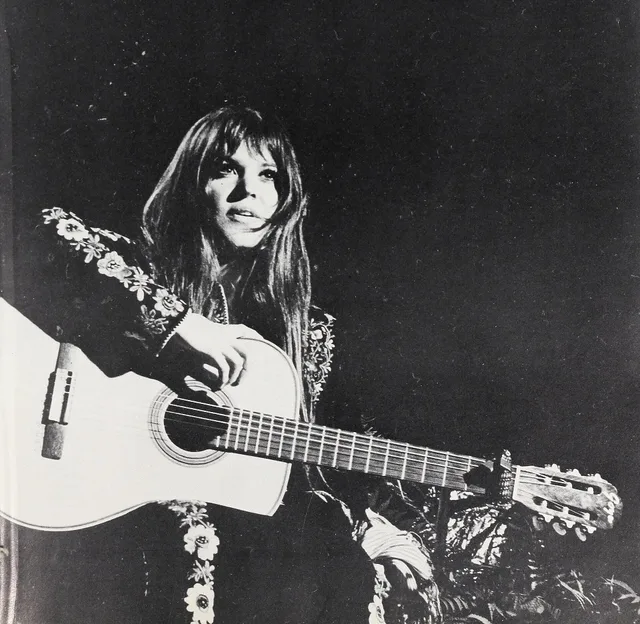
Melanie Safka in 1970. The public-domain trade photograph provides close-period artist context alongside the surviving Powder Ridge performance image — Buddah — Wikimedia Commons — Public domain · source record · Public domain
Converted to WebP and resized; no generative or compositional alterations.
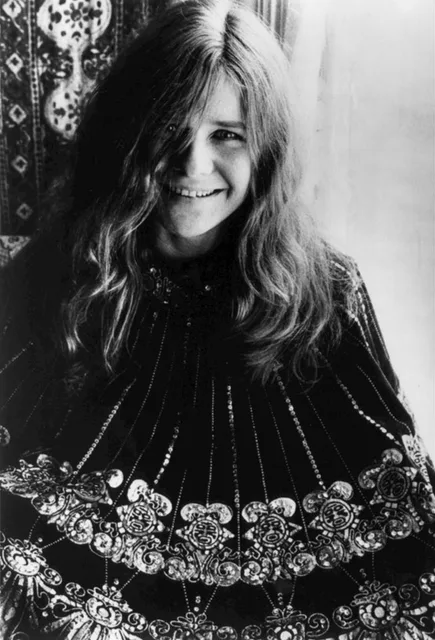
Janis Joplin in 1969. She was advertised for Powder Ridge but did not perform; the caption preserves that distinction rather than turning the cancelled bill into a false lineup — Ashley Famous Agency/Albert B. Grossman-management — Wikimedia Commons — Public domain · source record · Public domain
Converted to WebP and resized; no generative or compositional alterations.