
.jpg)
Edition timeline
A permanent festival park is proposed
Richard Songer and collaborators develop a fenced, serviced rock-event site rather than borrowing an ordinary field.
About 200,000 people arrive
National touring acts and a concentrated Michigan scene share a three-day programme.
Infrastructure and counterculture collide
Tokens, toilets and medical tents coexist with an open drug market and intense police attention.
The permanent experiment ends
Political backlash and enforcement pressure prevent Goose Lake from becoming the recurring centre its promoters imagined.
Why this event matters
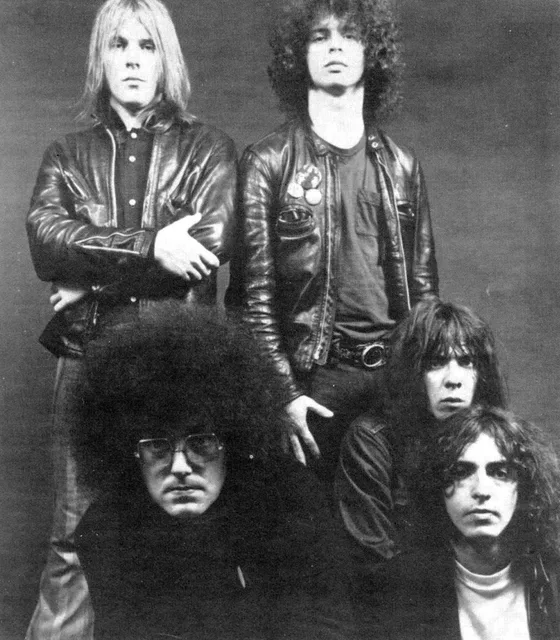
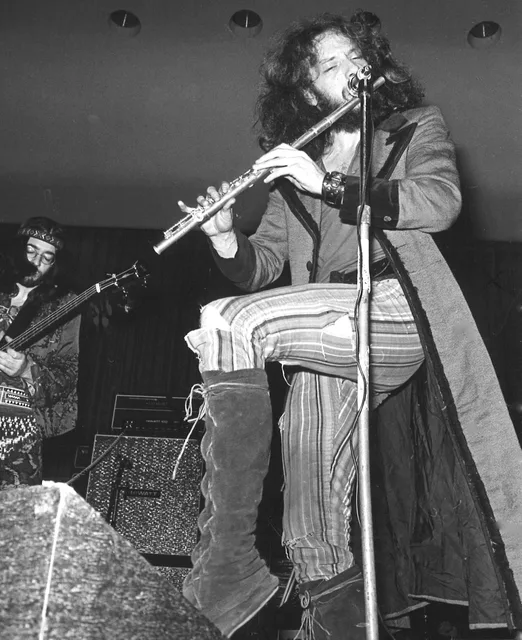
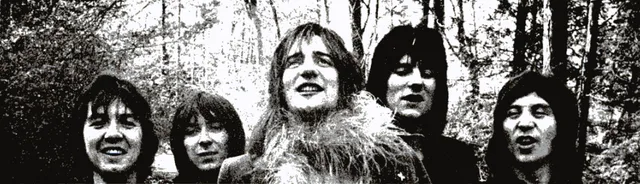
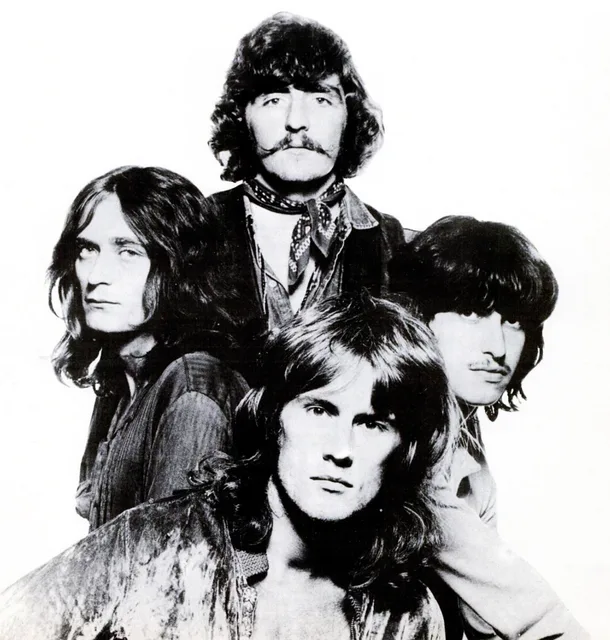
Goose Lake matters because it was designed as an answer to Woodstock rather than an imitation of its imagery. Promoters treated sanitation, ticket fraud, medical coverage and stage delays as engineering problems that could be corrected with a permanent site. The result was one of the largest gatherings of 1970 and a rare test of whether countercultural scale could be made repeatable. Its history complicates the familiar division between a well-run festival and a failed one: many systems worked, yet the event still became politically impossible to repeat. Construction entrepreneur Richard Songer supplied the central organisational drive. Detroit promoter Russ Gibb contributed music-business connections and booking, while designer and production figure Tom Wright is associated with staging, logistics and the revolving-stage idea. Later summaries sometimes merge these roles, but the archive supports a more careful division of labour. Their common ambition was Goose Lake Park: a dedicated environment that could host large rock audiences repeatedly, with roads, boundaries and services planned before the first camper arrived. Chain-link fencing surrounded the site, protecting neighbouring property and creating a controlled perimeter. Coloured admission tokens replaced paper tickets to make counterfeiting harder. The Rock Hall catalogue also records ample toilets and medical tents placed at regular intervals. Those details turn Goose Lake from a lineup into a physical system. Camping, traffic routes, stage access and emergency provision were considered together, although a crowd approaching 200,000 inevitably exceeded the assumptions of even an unusually ambitious site plan. The programme joined the national touring circuit to a striking concentration of Michigan rock. Faces, Jethro Tull, Chicago, Ten Years After, Mountain, James Gang and Flying Burrito Brothers offered hard rock, jazz-rock, blues and country-rock routes. MC5, The Stooges, Bob Seger, Mitch Ryder and Detroit, SRC, The Up, Third Power, Savage Grace and Brownsville Station made the event a public survey of the Detroit and Ann Arbor ecosystem. Goose Lake was therefore both a megafestival and a regional statement.

What the audience experienced
Visitors entered a site whose organisers had tried to reduce familiar festival frustrations, yet the weekend remained a temporary city. Camping, vendors, queues and the distance between different parts of the park shaped experience as much as the stage. State archival photographs also document an open drug market and unsanitary conditions in parts of the grounds. These scenes should not erase the music or the working services; they show how audience life developed beyond the promoters’ designed channels. The rotating stage became Goose Lake’s best-known technical claim. Two performance areas could be prepared on opposite sides, allowing one act’s equipment to be readied while another played before the audience. When the platform turned, dead time could be reduced. The mechanism belonged to a wider production philosophy visible in tokens, fencing and distributed services: time and flow were treated as design variables. Surviving film and handbill material provides firmer evidence than later superlatives about exact capacities or speed. Operational ambition did not neutralise political meaning. Police records and Michigan Public’s retrospective show that drug sales became central to official memory, while local and state authorities confronted the presence of a vast youth population. Arrests and investigations after the weekend helped recast an event promoters considered manageable as a threat to public order. The conflict was not simply chaos inside the gates; it was a struggle over whether any mass countercultural gathering could remain acceptable to the state. Goose Lake Park had been imagined as reusable infrastructure, but no second international festival followed. Local resistance, political backlash and law-enforcement scrutiny closed the route toward an annual institution. The physical investment therefore outlived the event without fulfilling its original purpose. That outcome distinguishes Goose Lake from festivals that gradually professionalised: its organisers tried to build the professional system first, then discovered that civic legitimacy could not be manufactured with fences, toilets and a technically inventive stage.
.png)
Films, recordings and surviving documents
The Rock & Roll Hall of Fame Library & Archives holds a dedicated collection containing a double-sided handbill, five coloured admission tokens and 107 minutes of concert and audience footage. Michigan state-police records preserve another viewpoint through official documentation and photographs. These archives answer different questions: promotional material shows intended order, film shows selected moments inside the gathering and police records show what authorities watched. Their disagreement is historically productive and prevents one institution from owning the whole story. Goose Lake’s central paradox is that the promoters were partly right. Better ticketing, sanitation, medicine and changeover design could improve a festival, and later event production adopted exactly that professional logic. They were wrong only if they assumed organisation would make the gathering politically neutral. A crowd of 200,000 still created its own economy, symbolism and public fear. Engineering could shape movement and reduce risk; it could not determine how neighbours, police, politicians or participants interpreted the temporary city. Goose Lake belongs beside Woodstock as a conscious post-1969 response, but also beside Powder Ridge, where public authority stopped the advertised programme before it began. Its rotating-stage ambition points forward to television-scale productions such as California Jam, while the Michigan bill connects the page to Detroit’s harder psychedelic and proto-punk history. Following those links reveals that festival development was not a straight march toward professionalism: technical progress, cultural experimentation and political restriction moved at different speeds. The strongest Goose Lake legacy is a question about systems. The event demonstrated that promoters could build more deliberate infrastructure for enormous audiences, but it also exposed the limits of that achievement. Today the surviving tokens, handbill, film and police files make the festival unusually legible even though reusable event photography remains scarce. Goose Lake deserves more than the label “forgotten Woodstock”: it was a serious attempt to design the next festival model, and a warning that production competence alone could not guarantee continuity.
.png)
_circa_1969.jpg)
Follow the festival beyond the field
Timeline
Related genres
More routes will be connected as the archive grows.
Related band guides
Explore by sound
More routes will be connected as the archive grows.
Essential listening
Sources and further reading
- Collection on Goose Lake International Music FestivalRock & Roll Hall of Fame Library & Archives · accessed 23 July 2026
- Goose Lake: The music festival that did not lay the golden eggMichigan Public · accessed 23 July 2026
- Goose Lake Park original handbill and festival flyerInternational League of Antiquarian Booksellers · accessed 23 July 2026
- Bob Seger Rock Hall induction essay with Goose Lake recollectionRock & Roll Hall of Fame · accessed 23 July 2026
- Rights-cleared period artist imagesWikimedia Commons · accessed 23 July 2026
Image credits5 licensed images
MC5 in 1970. This public-domain publicity photograph documents the local Detroit force on the Goose Lake bill; it was not made at the festival — Distributed by Atlantic Records — Wikimedia Commons — Public domain · source record · Public domain
Converted to WebP and resized; no generative or compositional alterations.
Ian Anderson performing in Helsinki in January 1970. The photograph is close-period artist context for Jethro Tull at Goose Lake, not an image of the Michigan stage — Leo Luoti / Helsingin Sanomat — Wikimedia Commons — Public domain · source record · Public domain
Converted to WebP and resized; no generative or compositional alterations.
The Faces in 1970. This public-domain publicity image supplies period context for the group that appeared at Goose Lake with Rod Stewart — Warner Bros. Records — Wikimedia Commons — Public domain · source record · Public domain
Converted to WebP and resized; no generative or compositional alterations.
Ten Years After in a 1970 trade advertisement. It is used as period artist context and is not presented as festival photography — Deram / London Records — Wikimedia Commons — Public domain · source record · Public domain
Converted to WebP and resized; no generative or compositional alterations.
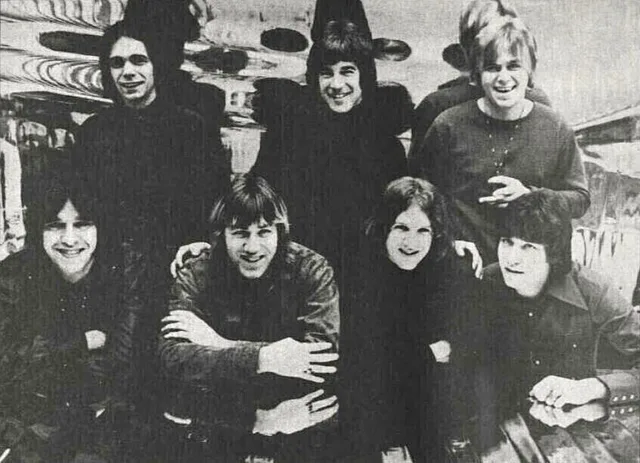
Chicago Transit Authority around 1969, shortly before the group performed at Goose Lake under the shorter name Chicago. This is contextual publicity material — Hit Parader magazine This is a retouched picture , which means that it has been digitally altered from its original version. Modifications made by Dcameron814 . — Wikimedia Commons — Public domain · source record · Public domain
Converted to WebP and resized; no generative or compositional alterations.