Something the ear can recognise
A memorable interval, rhythm or contour gives the listener an identity to follow across changing contexts.

RetroForge Structure Guide
Without lyrics, musical events become the verbs: a theme enters, collides, disappears and returns altered.
Absence is not the method
Instrumental storytelling begins when musical material acquires identity and consequence. A melody can behave like a character; a recurring texture can identify a place; a rhythmic interruption can function like an event.
A memorable interval, rhythm or contour gives the listener an identity to follow across changing contexts.
Change its tempo, harmony, instrumentation or register and a familiar theme returns with new emotional information.
A sudden silence, new metre or timbral rupture divides the journey into moments that feel caused rather than merely adjacent.
When material reappears, the listener compares it with the first statement. That act of recognition supplies narrative weight.
A possible dramatic arc
This map shows one common instrumental trajectory. It is a listening tool, not a rule: the music can establish tension and resolution without depicting named characters or events.
A theme, pulse or sound world gives the ear its first coordinates.
New voices reveal what the opening material can support.
Harmony, metre or texture makes the known material uncertain.
A climax, silence or rupture changes the direction of travel.
An earlier identity returns in a different musical condition.
The ending shows what the opening has become—or refuses closure.
Timbre can carry identity
Assigning “the guitar is the hero” is often too literal. More useful questions concern behaviour: which sound initiates change, which one resists it and which texture marks the return of a particular space?
A saxophone, guitar or synthesizer line can remain recognisable because of phrasing and register even when its notes change.
Reverb, drones, repeated figures and noise can establish the musical room in which more active events take place.
Unison, counterpoint and improvisational response let a group communicate tension without assigning a fixed role to every instrument.
Four different engines
The same narrative attention can arise from composed return, groove, improvisation or gradual change. Listening well means recognising which engine is actually moving the piece.
Written themes undergo clear harmonic, rhythmic and orchestrational transformation before returning.
A stable pulse makes small changes in density, editing and interaction feel structurally important.
The story emerges from decisions made between players rather than a fully predetermined sequence.
Tone colour, register and space can create a perceptible journey even when no conventional melody leads it.
Listening anatomy
Listen once for orientation, then again for the exact moment earlier material becomes newly meaningful.
Layered motifs and instrumental entrances accumulate across the first side; repetition gives the ear landmarks while colour continually changes.
Explore instrumental progressive rock → Camel · 1975Recurring themes and orchestration bind a complete album whose narrative frame is stated by titles rather than sung exposition.
Read the album guide → Miles Davis · 1969Two side-long performances shaped through Teo Macero’s editing turn improvised ensemble material into an album-scale arc.
Explore jazz-rock fusion → Mahavishnu Orchestra · 1973Composed unisons, asymmetric rhythm and improvisational release make virtuosity serve contrast rather than replace structure.
Explore jazz-rock fusion → Tangerine Dream · 1975Sequence, texture and register define movement across two extended electronic pieces without a conventional lead narrator.
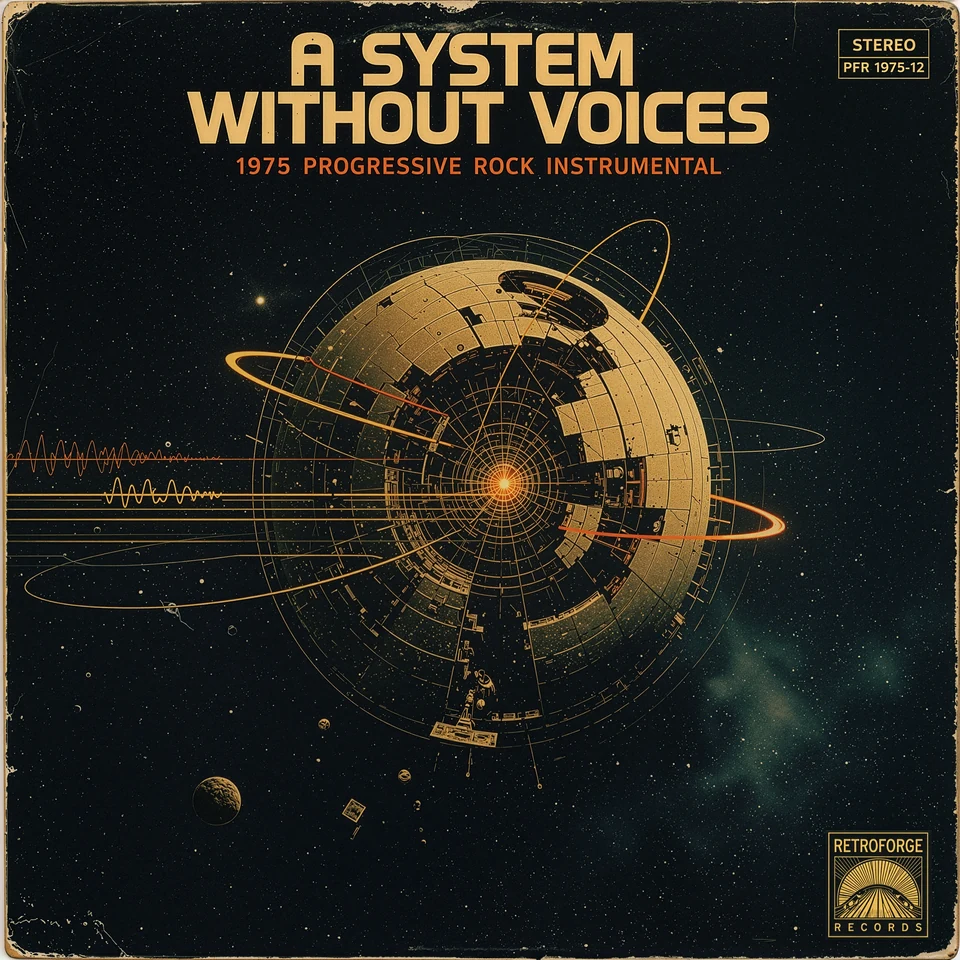
Read the album guide → RetroForge · 1975A purpose-built instrumental narrative in which returning material must carry every structural and emotional connection.
Open the liner notes →A practical listening method
Instrumental music can direct attention without fixing one verbal meaning. Keep observation separate from the story you personally attach to it.
Notice themes, pulses and timbres that recur. Do not decide what they “represent” yet.
Ask what changed in harmony, instrumentation, tempo, register or dynamics.
Only then connect the musical evidence to titles, artwork, programme notes or your own narrative reading.
Sources and context
The dramatic arc and four-engine model are original RetroForge listening tools, not terms attributed to the artists. Release dates, instrumental status and album structures for the five historical examples were checked against official artist, band or catalogue sources; the musical commentary remains original analysis.
Curated paths into the people, records, events and ideas that give this subject its wider musical context.