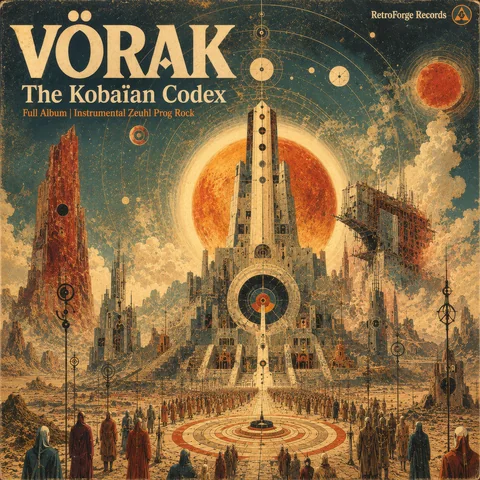
Theme as Character
A recognisable melody can return in altered harmony, tempo or instrumentation, carrying a history that words would otherwise explain.

RetroForge Genre Guide
Progressive narratives carried by motifs, rhythm and changing texture—with no narrator standing between the listener and the world.
The Sound
Instrumental progressive rock asks the arrangement to do everything a lyric normally would. A bass figure can introduce a character. A Mellotron chord can turn a room into a horizon. When a theme returns damaged, slowed or buried beneath another rhythm, the listener understands that something has changed even when no voice explains what happened.
RetroForge’s instrumental records use that freedom to build complete concepts rather than collections of backing tracks. Hammond organ, Mellotron, analogue synthesis, fretless or melodic bass, guitar and live drums trade the narrative between them. Silence and repetition matter as much as virtuosity; the point is not constant display, but motion with consequence.
The current archive contains two fully instrumental progressive albums with very different centres of gravity. One travels through an analogue system searching for meaning without language. The other charts an alien civilisation through ritual, industry and collapse. This collection is deliberately strict: albums with a single instrumental track belong elsewhere until the full record is genuinely wordless.
Without lyrics, sequencing becomes even more important. The opening track must teach the listener how to read the record, while later movements can challenge or overturn that grammar. Track titles provide coordinates, not explanations. Listen for timbre, pulse and the distance between sections: those changes carry the emotional information that a singer would normally place in words.
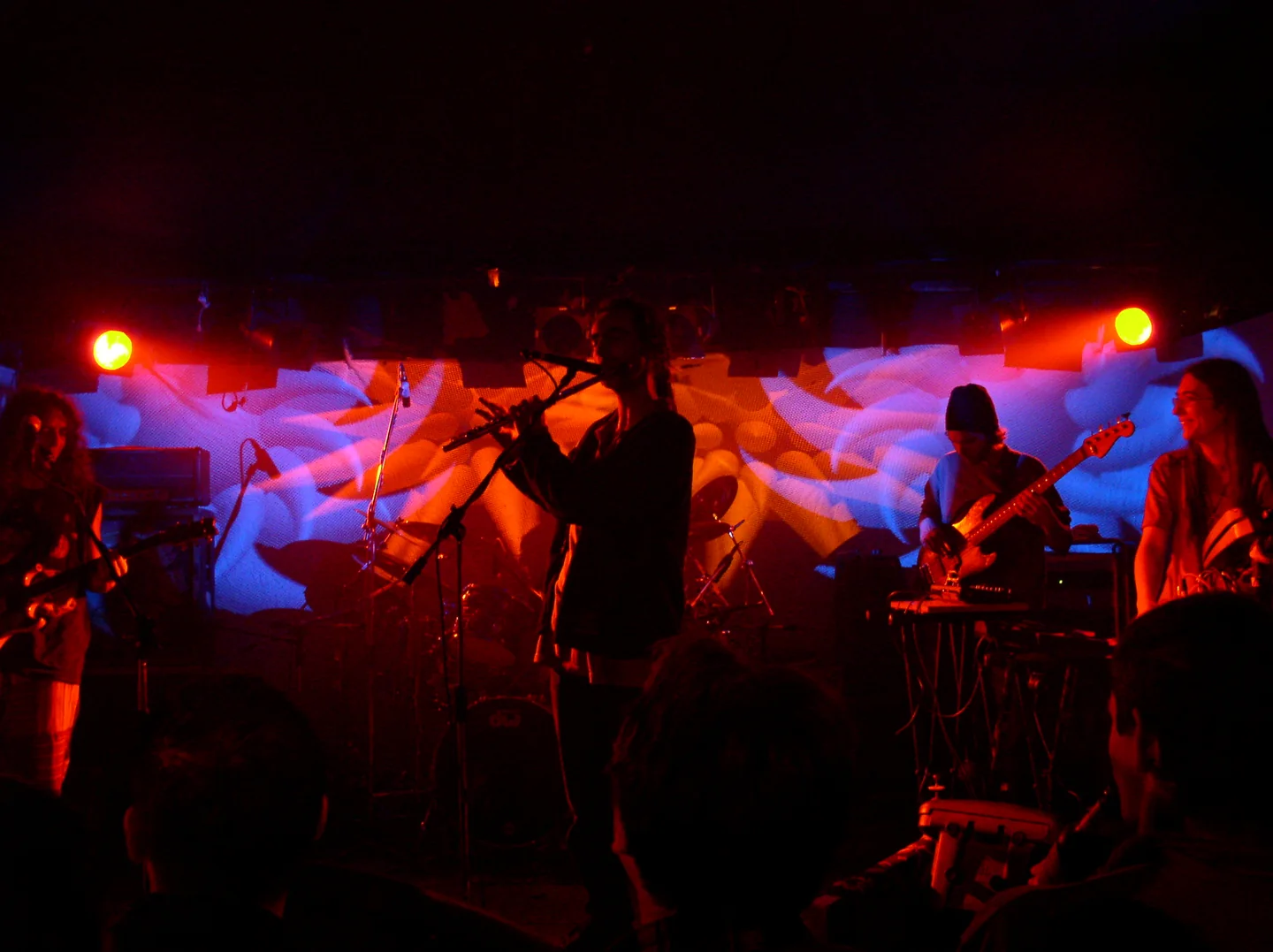
What You’ll Hear
How It Works
Instrumental music does not remove meaning. It moves meaning into performance, sequence and sound.
Without lyrics, the listener is not told which detail is a character, a place or a turning point. The arrangement must establish its own grammar. A repeated bass figure can become a source of stability; a detuned keyboard can make that stability feel unreliable; the disappearance of both can register as a genuine event. Track titles suggest a direction, but the emotional reading remains open.
This makes pacing especially important. If every instrument plays at full intensity, nothing can acquire consequence. Strong instrumental prog creates hierarchy: some ideas lead, some provide architecture, and some are held back until the album has taught the listener why they matter.
A recognisable melody can return in altered harmony, tempo or instrumentation, carrying a history that words would otherwise explain.
Mellotron, organ, guitar and synthesis create distinct spaces. Moving between those colours can feel like crossing from one room or world into another.
A groove that tightens, fractures or disappears changes the listener’s sense of purpose. Pulse can communicate confidence, resistance or collapse.
Empty space makes the next entrance meaningful. A pause can function like a cut in a film, separating one state of the story from the next.
Listen for this: choose one motif on the first track and follow what happens to it. Its later form may tell you more than any proposed plot summary.
Historical Development
Instrumental progressive rock uses motif, timbre and ensemble movement to carry functions usually assigned to lyrics. Its foundations include classically derived keyboard pieces, jazz-rock, soundtrack composition and extended works by artists such as Mike Oldfield, Focus and Camel.
The Snow Goose demonstrated how a complete narrative arc could be suggested through recurring instrumental themes. Tubular Bells built two album sides from accumulation and transformation, while jazz-fusion groups proved that instrumental precision could retain the physical force of rock.
Later artists expanded the field through electronic sequencing, post-rock dynamics and heavier guitar languages. The category remains broader than technical display: an instrumental solo is not a narrative by itself. Form, return and contrast must tell the listener where the piece has travelled.
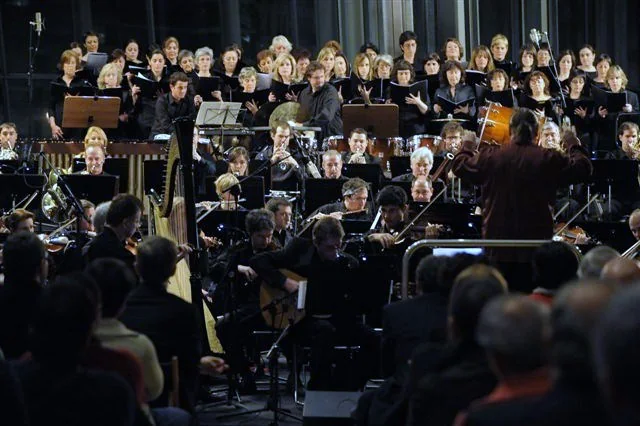
The Real-World Foundations
Not a ranking: six useful doors into the style. These records trace the instrumental language rather than obeying a strict no-voice rule; the RetroForge archive below applies that narrower full-album classification.
Layered motifs and gradual accumulation sustain two album sides; brief spoken and vocalised moments make it mostly, not wholly, instrumental.
Recurring themes provide a clear emotional narrative without a sung explanation.
The original 1971 Dutch release joins the mostly instrumental “Hocus Pocus” to the 22-minute instrumental “Eruption”; wider international releases followed in 1972.
Rhythmic force and ensemble precision demonstrate the fusion route into instrumental prog.
Electric keyboards, guitar and detailed rhythm create a compact British fusion language.
Space-rock electronics and guitar-led journeys carry the form beyond the 1970s, although “Iscence” is a documented vocal exception.
Start Here
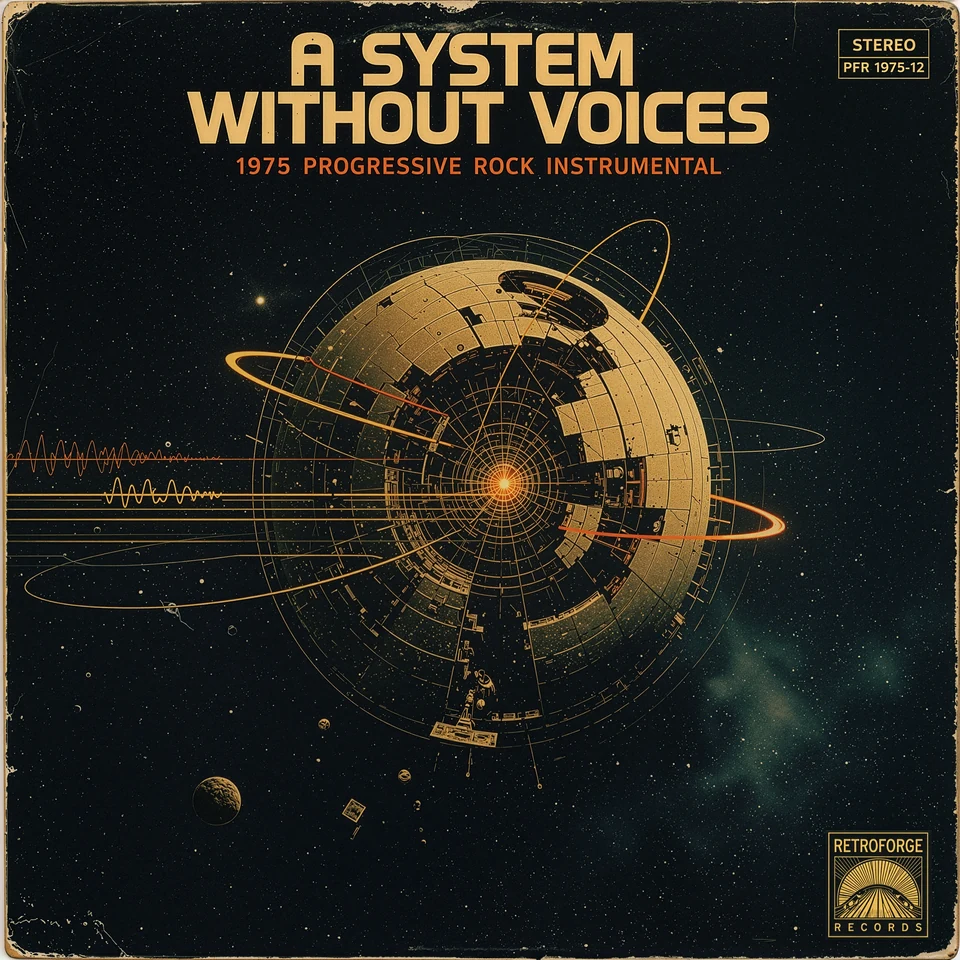
1975 · Instrumental Progressive Rock
Twelve wordless tracks moving as one analogue-space transmission—the clearest introduction to this part of the archive.
Open the liner notes →From the Archive
The instrumental archive will grow. New fully wordless RetroForge albums will be added here as they are released. The page will not classify a record as instrumental simply because one track has no vocals.
Questions from the Record Room
No. Strong instrumental prog redistributes narrative and structural roles across motif, rhythm and timbre.
No. Ensemble development and recurring ideas matter more than individual display.
A System Without Voices is the clearest full-length statement, with story carried entirely by recurring systems and texture.
Research Trail
Go Deeper
Keep Exploring
Deeper Discovery
Start with The Distance Between Seconds as a RetroForge companion, then return through Progressive Rock to place it inside the wider family.
Curated paths into the people, records, events and ideas that give this subject its wider musical context.