Ange gave French progressive rock a distinctive theatrical voice through Christian Décamps’s delivery and Francis Décamps’s treated keyboards.
Language is central to Ange’s progressive rock. Christian Décamps whispers, declaims and inhabits characters rather than acting as a neutral narrator. Francis Décamps answers him with the orchestral wash of a modified Viscount organ, while guitar, bass and drums turn the songs into staged scenes. The classic records connect medieval allegory and regional oral history with contemporary French rock.
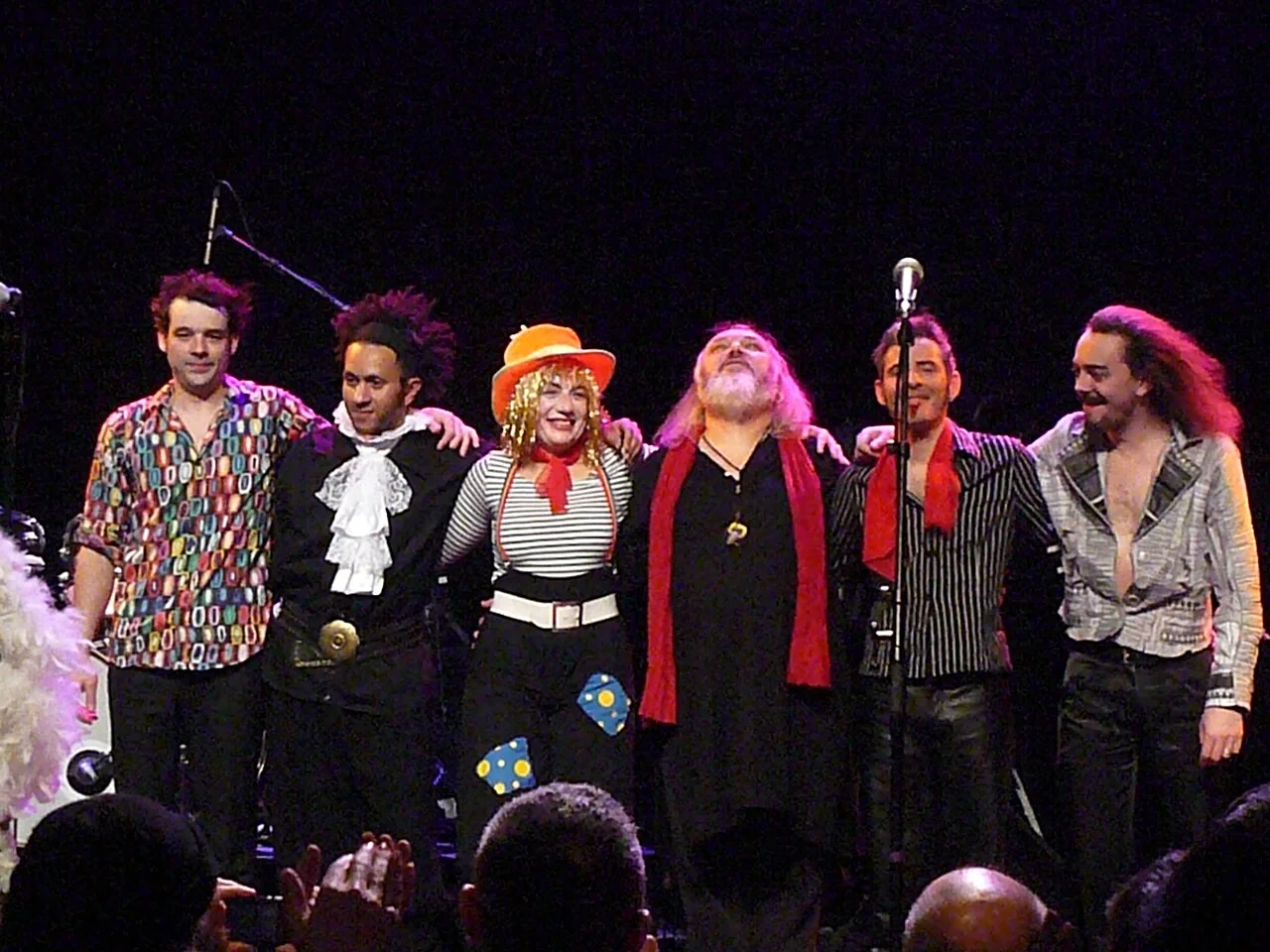
Ange performing in Florange, France, on 5 February 2010.Photo: Fredamas / Wikimedia Commons · Licensed under CC BY-SA 4.0. Converted to WebP for this page.
Formation & History
Christian and Francis Décamps formed Ange in Belfort in 1969; Christian’s son Tristan now leads the band onstage.
Guitarist Jean-Michel Brézovar, bassist Daniel Haas and drummer Gérard Jelsch completed the best-known early lineup. Ange won the annual Golf Drouot competition in 1971, signed to Philips and released the debut album Caricatures in 1972. Le cimetière des arlequins, Au-delà du délire and Émile Jacotey followed in three successive years. The classic formation changed after 1974, and the first era ended with a farewell tour in 1995 when Francis Décamps departed. Christian revived the Ange name with a new formation in 1999. After Christian’s final concerts in February 2025, Tristan Décamps became the group’s lead singer for its next touring chapter while Christian remained involved as lyricist and adviser.
Sound & Style
Grainy organ textures support shifts between song, speech, whisper and theatrical narration.
Francis Décamps created the signature early keyboard sound by modifying a Viscount organ and routing it through Hammond reverb, producing sustained colours often mistaken for a Mellotron. Brézovar moves from acoustic accompaniment to sharp electric lines, while Haas and Jelsch keep the long narrative pieces mobile. Christian Décamps uses French prosody as musical material: consonants, pauses and exaggerated character voices shape the arrangements. Later lineups changed the instrumentation, but theatrical storytelling remained the constant.
Essential Albums
1974
Au-delà du délire
Philips · Original 1974 release
Au-dela du delire is the classic Ange lineup at its most coherent. The medieval narrative moves from “Godevin le vilain” through encounters with power, faith and violence, while the Decamps brothers' voice-and-keyboard partnership keeps the story immediate. Brezovar's guitar provides bite against the organ's mist, and recurring ideas make the album feel staged rather than merely sequenced. The French text is central even for listeners who do not understand every word: Christian's phrasing communicates character and danger. This is the strongest starting point for Ange's combination of folk memory, satire and symphonic theatre.
Key tracks: Godevin le vilain · Ballade pour une orgie · Au-delà du délire
Le cimetiere des arlequins is a more varied and unsettled record. Its transformation of Jacques Brel's “Ces gens-la” demonstrates Ange's method: a canonical chanson becomes dark progressive theatre without losing the accusation in the original. The title track and “Bivouac” expand the group's own dramatic language through organ, acoustic passages and sudden changes of scale. Compared with Au-dela du delire, the album feels like several rooms rather than one narrative corridor. That variety makes it the best place to hear how Ange connected chanson performance, countercultural rock and emerging symphonic form.
Key tracks: Ces gens-là · Aujourd’hui c’est la fête chez l’apprenti-sorcier · Le cimetière des arlequins
Emile Jacotey places the recorded voice of an elderly Franche-Comte storyteller inside Ange's music. His spoken memories introduce and interrupt songs, turning regional oral history into the album's structural foundation. “Bele, bele petite chevre” and “Sur la trace des fees” balance folk-like melody with the band's electric theatre, while “Ode a Emile” makes the tribute explicit. The concept could have become picturesque nostalgia, but the contrast between Jacotey's plain speech and Ange's amplified imagination gives it dignity. It is the key record for understanding the band's relationship to place.
Key tracks: Bêle, Bêle Petite Chèvre · Sur la trace des fées · Ode à Émile
Ange built theatrical progressive rock around French speech, regional memory and a keyboard sound of their own.
The run from Caricatures to Par les fils de Mandrin demonstrates sustained development rather than imitation: Jacques Brel, medieval allegory, the voice of Franche-Comté storyteller Émile Jacotey and the Décamps brothers’ stagecraft all enter the music on their own terms. The handover from Christian to Tristan Décamps in 2025 also makes Ange a rare progressive-rock group whose performing history now crosses two generations.
RetroForge Records publishes original music and independent editorial guides. This historical band guide is not affiliated with the artist, labels or rights holders. No unlicensed album artwork is reproduced.