

Why Montreux matters here
Montreux Jazz Festival belongs in a progressive live-culture archive because its programming and recording practices repeatedly crossed the boundaries later used to separate jazz, fusion, blues, hard rock and progressive rock. Founded in 1967, it began with jazz at its centre and expanded without treating expansion as abandonment. An electric group could enter dialogue with the festival’s jazz history rather than appear as an unrelated commercial intrusion.
Its second distinction is preservation. Claude Nobs understood that performances should be recorded with care, and the resulting collection became one of the world’s major audiovisual music archives. More than 4,000 concerts from 1967 to 2012 are represented in the Claude Nobs legacy preserved by the foundation. Montreux therefore shaped live music twice: first by creating encounters, then by allowing later generations to hear and study them.

1967: a festival in a lakeside town
Claude Nobs, Géo Voumard and René Langel founded the festival in Montreux with support from local tourism structures and international music contacts. The first edition was a compact three-day event at the casino rather than the multi-venue city occupation known today. Location mattered. Montreux was a resort town with hotels, rail connections and a cultural reason to attract visitors beyond its traditional season.
The scale allowed close attention to performance and recording. Jazz festival models already existed at Newport, Antibes and elsewhere, but Montreux developed its own combination of hospitality, technical seriousness and personal relationships. Nobs’s role was not only booking names. He became a host whose continuity helped persuade musicians to return, experiment and trust the microphones around them.
The casino and the fire
The Montreux Casino served as the festival’s early home. On 4 December 1971, during a Frank Zappa and the Mothers of Invention concert, a fire started after a flare gun was discharged inside the hall. The building was destroyed. Deep Purple, in Montreux to record, watched smoke spread over Lake Geneva and transformed the event into “Smoke on the Water.” The song made the fire globally familiar, but the local consequences were practical: a venue was lost and the festival had to adapt.
The episode is often told as rock folklore with a perfect origin story. Its historical value is broader. It shows how closely Montreux’s festival, recording industry, visiting musicians and town were connected. Nobs helped people escape the fire and was named in Deep Purple’s lyric as “Funky Claude.” The rebuilt and relocated festival carried that relationship forward rather than allowing one disaster to define the institution.

Jazz remains the foundation
Expansion did not make jazz ceremonial. Bill Evans, Nina Simone, Ella Fitzgerald, Oscar Peterson, Miles Davis and many others produced performances that became central to their recorded legacies. Montreux offered experienced listeners and high technical standards, conditions in which subtle ensemble interaction could survive the transition from room to tape. The festival’s repeated relationships with artists are more important than a list of famous names.
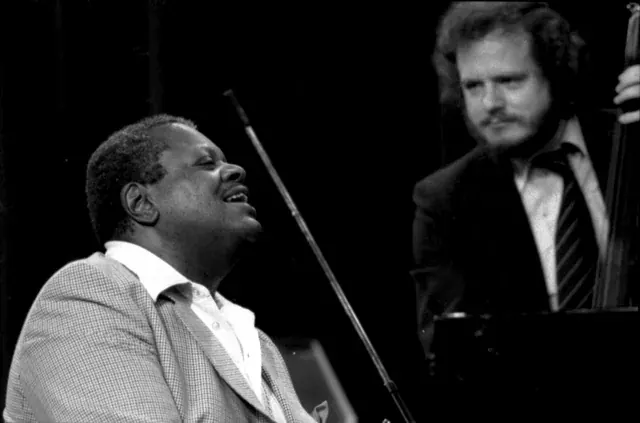
The 1979 photograph of Oscar Peterson with Niels-Henning Ørsted Pedersen captures that continuity. It is not a generic symbol of “jazz excellence” but a specific partnership built through listening, timing and trust. Montreux’s progressive relevance begins here: long-form improvisation, instrumental dialogue and formal risk were already normal within jazz. Rock musicians did not invent those values when they adopted them.
Fusion and the porous 1970s
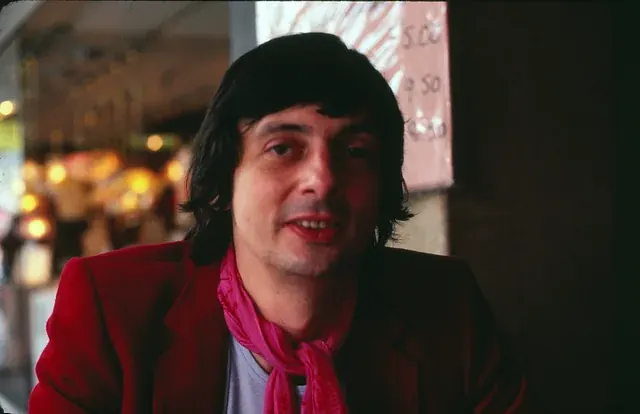
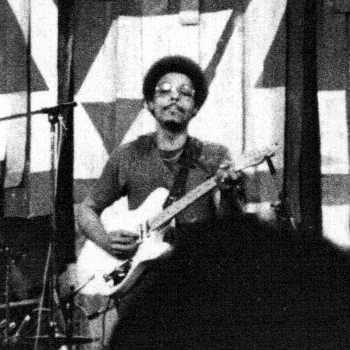
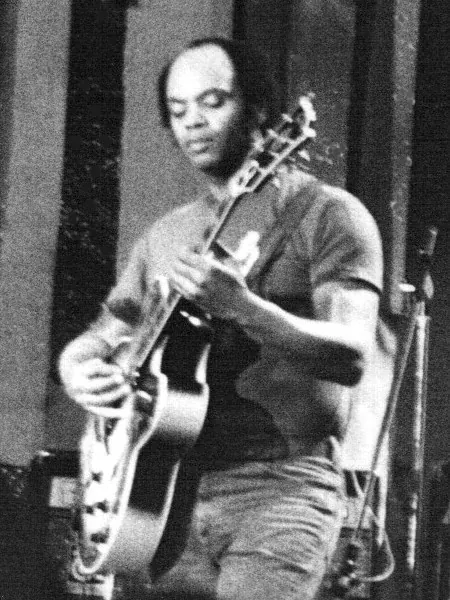
During the 1970s, electric keyboards, amplified guitar, funk rhythm and extended improvisation transformed jazz and rock simultaneously. Weather Report, Soft Machine and artists moving through studio, soul and fusion networks fit Montreux naturally. Guitarists such as Cornell Dupree, Eric Gale and Philip Catherine carried different vocabularies into programmes where categories were useful for publicity but insufficient for listening.
Fusion at Montreux was not one sound. It could mean dense electric composition, groove-centred ensemble playing, European chamber textures or virtuoso solo exchange. The festival’s value was to place those approaches inside a history broad enough to reveal their sources. For progressive-rock listeners, the archive provides a corrective to family trees that treat jazz influence as decoration rather than a living parallel tradition.

Rock enters without erasing the name
Hard rock, blues rock and progressive groups became increasingly visible at Montreux. Deep Purple’s relationship with the town is the most famous, but the programme’s openness reached far beyond one band. The word “Jazz” in the title acted less as a border than as a declaration of values: attention to live performance, improvisation, musicianship and the possibility that an evening might exceed its advertised category.
That openness attracted criticism whenever audiences feared dilution, a tension shared by many jazz festivals. Montreux’s answer was accumulation rather than replacement. Jazz remained present while the stages widened. The festival could preserve a Bill Evans set and host electric rock because the archive and institution were large enough to keep both histories visible.
Recording as part of the event
At Montreux, microphones were not an afterthought applied once a performance became legendary. Recording was embedded from the early years. This affected technical choices and artist relationships. A live tape could become broadcast material, an official album or part of a protected archive. Montreux Sounds, founded by Claude Nobs in 1973, helped manage and release performances with artist agreement rather than treating the vault as anonymous raw material.
The result is an unusually deep record of live interpretation. Studio compositions can be followed across years as arrangements change. Musicians who appear in another artist’s band become visible as participants in their own right. The archive also carries rights obligations. Preservation does not mean unrestricted reuse; access, ownership and artist agreements remain part of responsible presentation.

From tape shelves to digital heritage
Analogue audio and video formats are vulnerable to decay and obsolescence. The Montreux Jazz Digital Project, involving the Claude Nobs Foundation and EPFL, developed methods to digitise, describe and make the collection usable. Preservation at this scale is not simply copying a tape. It requires playback equipment, conservation, metadata, storage, rights management and systems capable of connecting one performance to thousands of related records.
In 2013 UNESCO entered the Montreux Jazz Festival: Claude Nobs’ Legacy in the Memory of the World Register. The recognition applies to the documentary collection, not to a claim that every concert was equally important. Its force lies in range and continuity: decades of changing music captured through an institution that treated live sound and image as heritage before many promoters did.
Legacy
Montreux changed expectations about what a festival archive could be. Many historic events survive through fragments assembled later. Montreux created a long-running record from within the institution. That record supports official releases, research, restoration and new listening while preserving the individual circumstances of dates, venues and line-ups.
For RetroForge’s map of progressive culture, Montreux is a junction rather than a side route. Jazz improvisation, electric fusion, blues feeling, progressive form and rock spectacle met there without becoming identical. The festival’s strongest lesson is that a musical identity can remain coherent while its borders stay open—provided the history is documented carefully enough to show how every crossing occurred.
Follow the festival beyond the field
Timeline
Related genres
Related band guides
Explore by sound
Essential listening
RetroForge Echo
Hear a Fictional Archive Response
These modern RetroForge releases echo part of the festival’s musical vocabulary; they are not historical festival recordings.
Sources and further reading
- Montreux Jazz Festival history and timelineMontreux Jazz Festival · accessed 23 July 2026
- The Montreux Jazz Festival: Claude Nobs’ LegacyClaude Nobs Foundation · accessed 23 July 2026
- Montreux Jazz Digital ProjectEPFL · accessed 23 July 2026
- Montreux Jazz Festival legacy nominationUNESCO Memory of the World · accessed 23 July 2026
- About the audiovisual archiveMontreux Sounds · accessed 23 July 2026
- 50 Summers of MusicMontreux Jazz Festival · accessed 23 July 2026
Image credits5 licensed images
Oscar Peterson and Niels-Henning Ørsted Pedersen at Montreux in 1979 — Claude TRUONG-NGOC — Wikimedia Commons — CC BY-SA 3.0 · source record · CC BY-SA 3.0
Converted to WebP and resized; no generative or compositional alterations.
Philip Catherine at Montreux in 1980, representing the European jazz-rock and fusion currents that travelled naturally through the festival — Pattymooney — Wikimedia Commons — CC BY-SA 3.0 · source record · CC BY-SA 3.0
Converted to WebP and resized; no generative or compositional alterations.
Cornell Dupree at Montreux on 2 July 1976 — Lionel decoster — Wikimedia Commons — CC BY-SA 3.0 · source record · CC BY-SA 3.0
Converted to WebP and resized; no generative or compositional alterations.
Eric Gale at Montreux on 2 July 1976 — Lioneldecoster — Wikimedia Commons — CC BY-SA 3.0 · source record · CC BY-SA 3.0
Converted to WebP and resized; no generative or compositional alterations.
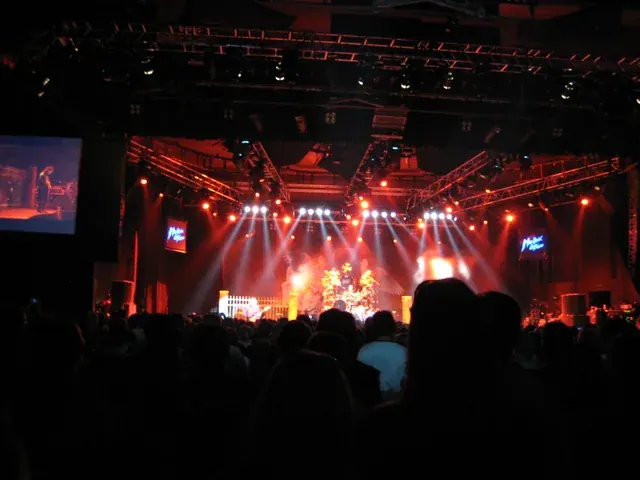
A later view of the Montreux Jazz Festival, included as present-day site context — Schaer Chris — Wikimedia Commons — CC BY-SA 2.0 · source record · CC BY-SA 2.0
Converted to WebP and resized; no generative or compositional alterations.