
.jpg)
Edition timeline
The citywide programme opens
Concerts, discussions, chanson, political song and experimental performance begin across Essen rather than behind one festival gate.
Forty-three programme items
Official Essen sources agree on roughly 43 concerts or programme items and about 40,000 visits, but disagree on whether more than 150 or more than 200 artists took part.
A tent city by Baldeneysee
Free camping at the Emil-Frick-Heim and shuttle transport connected a temporary visitor settlement to the dispersed urban programme.
No annual sequel
Later Pop & Blues festivals used Essen’s appetite and infrastructure but were a distinct project, not simply another Songtage edition.
Why this event matters
The Internationale Essener Songtage cannot be understood as a German copy of Woodstock. It happened eleven months earlier, used a citywide network rather than one field and defined popular music broadly enough to include rock, chanson, political song, free jazz, cabaret, discussion and multimedia. Its historical force came from proximity: emerging West German underground groups met international performers, municipal institutions met countercultural organisers, and music shared space with arguments about politics and postwar public life.
City of Essen sources describe the Songtage as the largest European festival for popular music mounted up to that point. They agree on roughly 40,000 visitors and 43 programme items or concerts, while disagreeing over the artist count: one municipal history says more than 200, another more than 150. The difference is preserved here because it reveals the limits of even official retrospective records. Scale is secure; a falsely exact total is not.

West Germany in 1968
The festival emerged from a period in which West German youth politics, university protest, underground publishing and new music were challenging inherited cultural authority. Popular music was no longer only entertainment imported from Britain or the United States. German-language song, free improvisation, communal rock groups and political theatre offered ways to argue about the Federal Republic itself. The Songtage brought these currents into unusually visible public space while their forms and names were still unsettled.
That visibility depended on an unlikely partnership. Essen’s youth office worked with a younger organising group associated with figures including Rolf-Ulrich Kaiser, Bernd Witthüser, Martin Degenhardt and Thomas Schroeder; Henryk M. Broder handled press work. Municipal participation did not domesticate the underground, nor did it remove conflict. It supplied venues and coordination for a programme whose purpose included confrontation with conventional cultural expectations.
A festival spread across Essen
There was no single Songtage field from which the whole event could be seen. The Grugahalle handled major amplified performances, while Saalbau spaces, youth centres, educational halls, cinemas, clubs, Kennedyplatz and other locations carried smaller concerts, cabaret, debate and experimental work. Visitors moved through Essen rather than settling permanently in front of one stage. The city was not background scenery; its institutions and transport routes formed the production architecture.
A free tent city at the Emil-Frick-Heim near Baldeneysee gave travelling visitors a communal base, with shuttle transport connecting the camp to programme locations. That separation created a distinctive rhythm: temporary living at the lake, movement through ordinary streets and entry into venues with very different capacities and social rules. Compared with later rural megafestivals, the Songtage distributed both opportunity and friction across an existing city.

The programme exceeded rock
The Mothers of Invention, The Fugs, Tim Buckley, Family and Alexis Korner represented different international underground and rock routes. Amon Düül, Tangerine Dream, Guru Guru and Floh de Cologne pointed toward several West German futures: communal improvisation, electronic exploration, political rock and forms later gathered loosely under the term “krautrock.” The bill also made room for singer-songwriters, chanson, protest song, folk, free jazz, cabaret and multimedia. Breadth was not a side effect; it was the festival’s proposition.
Lineup reconstruction still requires discipline. An advertised name is evidence of planning, not automatic proof of performance, and the network of venues makes a single definitive running order especially difficult. The safest historical approach is to use official city lists and surviving programmes together, while describing artists as documented participants unless edition-specific performance evidence is stronger. The programme’s meaning lies in the collision of forms, not in inflating it with every rumoured appearance.
German underground music before the export label
Amon Düül, Tangerine Dream and Guru Guru are now routinely placed inside krautrock history, but that retrospective label can hide how open the scene was in September 1968. Electronics, long improvisation, political performance, free jazz and psychedelic rock had not yet hardened into separate marketing categories. Musicians shared stages and audiences with folk singers, satirists and international groups because the organising question was wider: what could a new popular culture sound and look like?
The Songtage should therefore not be treated as a genre’s birth certificate. It was a convergence point where several practices became publicly legible at once. Tangerine Dream’s later electronic identity was not fully formed; Amon Düül’s communal and political contexts mattered alongside its sound; Floh de Cologne used theatrical satire as much as rock instrumentation. Essen captured a field of possibilities before critics abroad packaged part of it under one convenient name.

What the audience experienced
Attending the Songtage meant navigating a cultural map. A visitor might encounter a major rock set in the Grugahalle, move to a smaller discussion or chanson programme, return to the tent city and meet an audience that had followed another route entirely. This circulation prevented the event from producing one homogeneous crowd image. The festival was part concert series, part urban happening, part temporary forum and part communal accommodation system.
The experience also exposed boundaries. Large halls and small clubs offered different degrees of access; shuttle schedules and capacity shaped what any one person could see. Officially supported spaces had rules that countercultural participants could challenge but not simply erase. The friction between permission and transgression was not accidental. It emerged because the festival invited radical culture into civic infrastructure without pretending that institutions and participants already agreed on how that culture should behave.
Production as urban coordination
Production cannot be summarised by the size of one sound system. The Grugahalle required concert-scale amplification, lighting and stage management; smaller halls needed equipment suited to speech, acoustic performance, film or experimental sound. Programmes had to be timed across venues, artists and audiences moved through the city, and the free camp needed transport connections. The achievement was coordination across incompatible rooms and art forms.
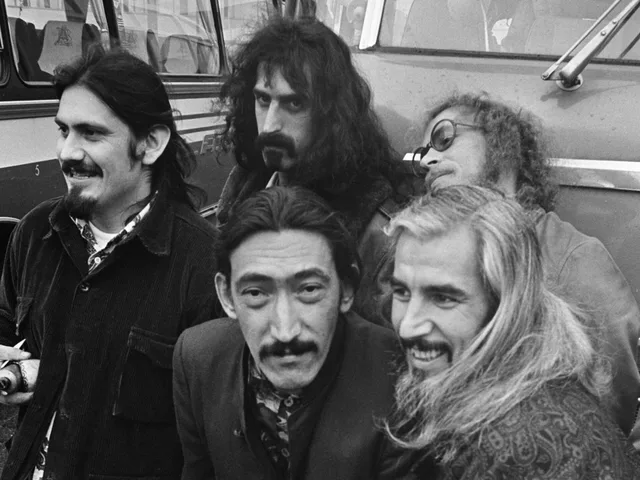
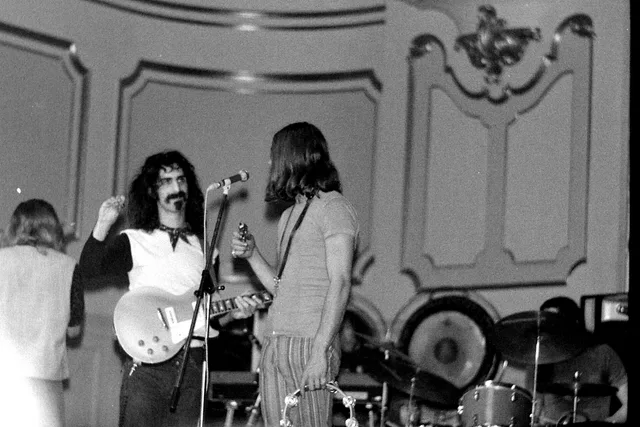
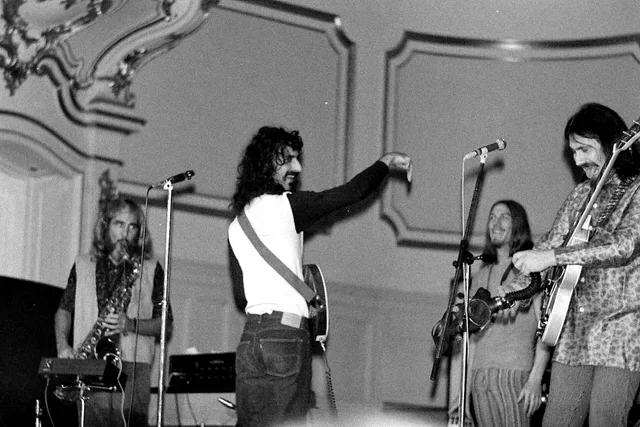
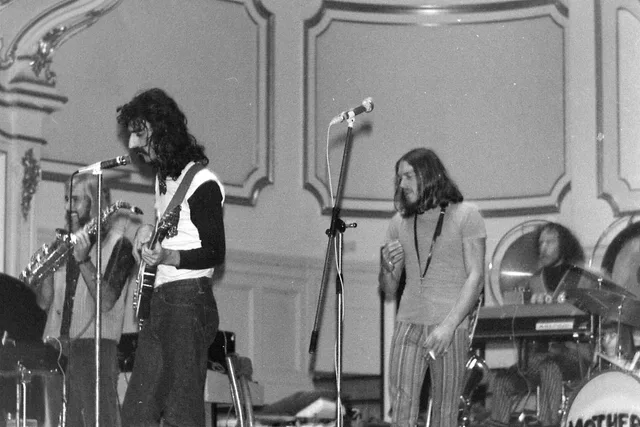
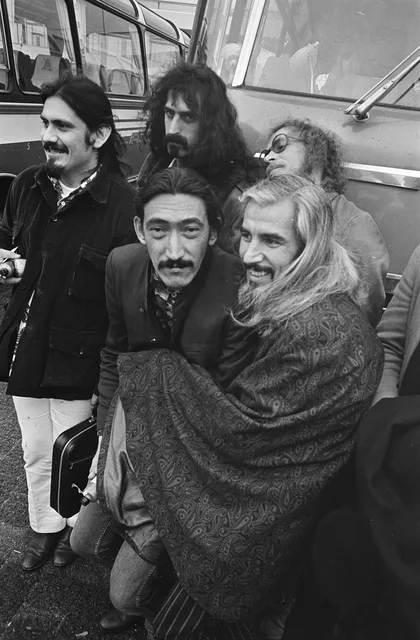
That structure also makes surviving documentation uneven. A prominent amplified act may have attracted press and photographic attention while a discussion or small experimental performance left only a programme entry. Historians should not mistake the visibility of an archive for the importance of an event. The licensed images on this page focus on the Mothers of Invention because reusable period photographs exist, but the captions explicitly avoid suggesting that those images show the Essen stages.

Scandal, argument and official openness
City histories record controversy from the opening reception onward. That conflict is best understood structurally rather than as a collection of colourful incidents. A municipal youth authority had helped create a platform for people who questioned established cultural and political authority. Public money, official hospitality, provocation and underground self-presentation therefore met in the same rooms. The partnership made the festival possible and made its disagreements visible.
Official support had limits, but those limits do not prove that the experiment failed. The Songtage institutionalised debate as part of popular culture and demonstrated that a city could temporarily host forms it did not fully control. At the same time, countercultural mythology should not erase practical obligations or turn every dispute into repression. The surviving municipal record is valuable precisely because it preserves an institution looking back on an event that had tested its own openness.
What happened afterward
The Internationale Essener Songtage did not become an annual series. Later Pop & Blues festivals at the Grugahalle inherited parts of Essen’s live-music audience and used some of the city’s infrastructure, but they were a separate project with a more recognisable rock-festival format. Treating them as simple sequels would hide the Songtage’s unusually broad cultural and political design. The archive instead links them as related chapters in Essen’s rapid late-1960s transformation.
The city later returned to the history through retrospective events in 1993 and 2003 and through research including the 2008 publication Zappa, Zoff und Zwischentöne. The need for those recoveries is itself significant. An event once described at enormous European scale became strangely faint in local public memory. Reconstructing it required libraries, archives and participants to reconnect programmes, photographs and institutional records.
Magazines, photographs and surviving documents
The 1968 Song-Magazin, festival programmes, posters, city-library holdings, photographs and later studies form the core documentary trail. These sources answer different questions. A programme records intention; a photograph proves one visible moment; a press report captures contemporary reaction; a later municipal history can recover organisational structure while also introducing retrospective framing. Strong history comes from keeping those functions distinct rather than asking one source to carry the whole event.
Rights must be kept equally distinct. Archive access does not mean an image is free to reproduce. The five photographs used here have item-level Commons records and compatible licences. They document the Mothers of Invention during the festival year and the group’s European touring context, not the Songtage performance itself. That limitation is stated in every caption. A rights-clear contextual image is more honest than an unlicensed “perfect” photograph presented without provenance.
Before krautrock became a category
Later genre history encourages readers to search the Songtage for the beginning of krautrock. The more useful interpretation is that Essen showed why no single category was yet sufficient. German groups were combining electronics, improvisation, theatre, collective organisation, political satire and psychedelic amplification while sharing space with international rock and non-rock traditions. Their common ground was a refusal of older cultural boundaries, not one agreed musical technique.
Seen this way, the festival becomes a map of relationships. The Mothers of Invention offered one model of composition, satire and stage disruption; The Fugs joined poetry and political counterculture; German groups answered from their own social and musical conditions. The Songtage did not announce what these routes would later be called. It gave them enough public scale to recognise one another and enough documentary residue for later listeners to trace the encounter.
Legacy
The Songtage gave West Germany’s emerging underground confidence to occupy major public cultural space without presenting itself as a minor imitation of Anglo-American rock. It connected local and German-language experimentation to international touring networks while keeping political song, jazz and performance inside the frame. Essen was not merely receiving a finished counterculture from elsewhere. Organisers, artists, officials and audiences were constructing their own contested version.
Its legacy also belongs to festival form. A city can become a temporary network of venues rather than a backdrop to one fenced field; production can mean coordinating rooms, transport and debate as well as amplification; an archive can preserve disagreement instead of resolving it. Later German festivals would use different models, but the Songtage remains a decisive example of popular culture becoming urban, institutional and oppositional at the same time.
Follow the festival beyond the field
Timeline
Related genres
Related band guides
Explore by sound
Essential listening
Sources and further reading
- Internationale Essener Songtage 1968Stadtbibliothek Essen · accessed 23 July 2026
- Sound und RevolteBundeszentrale für politische Bildung · accessed 23 July 2026
- Neue Essener Bibliographie 2024City of Essen / Stadtarchiv · accessed 23 July 2026
- Tangerine Dream history 1967–1973Tangerine Dream official archive · accessed 23 July 2026
- Zappa, Zoff und ZwischentöneRosa-Luxemburg-Stiftung · accessed 23 July 2026
Image credits5 licensed images
The Mothers of Invention in 1968. This rights-cleared press photograph documents a central Songtage act in the festival year, not the Essen performance itself — Ron Kroon for Anefo — Wikimedia Commons — CC0 · source record · CC0
Converted to WebP and resized; no generative or compositional alterations.
Frank Zappa with the Mothers of Invention in October 1968, days after the Essener Songtage; used as period artist context rather than as an Essen stage photograph — ThomasFHH — Wikimedia Commons — CC BY-SA 4.0 · source record · CC BY-SA 4.0
Converted to WebP and resized; no generative or compositional alterations.
The Mothers of Invention performing in October 1968. The image is period context and is not presented as a photograph of the Songtage — ThomasFHH — Wikimedia Commons — CC BY-SA 4.0 · source record · CC BY-SA 4.0
Converted to WebP and resized; no generative or compositional alterations.
Frank Zappa and the Mothers of Invention on stage in 1968, illustrating the international underground strand represented at Essen — ThomasFHH — Wikimedia Commons — CC BY-SA 4.0 · source record · CC BY-SA 4.0
Converted to WebP and resized; no generative or compositional alterations.
The Mothers of Invention arriving at Schiphol in 1968, evidence of the touring network that connected European underground festivals and venues — Ron Kroon for Anefo — Wikimedia Commons — CC0 · source record · CC0
Converted to WebP and resized; no generative or compositional alterations.