
Overview
Soft Machine formed in mid-1966 around Robert Wyatt, Kevin Ayers, Daevid Allen and Mike Ratledge. The quartet belonged to the emerging London underground as much as to the network later called the Canterbury scene: it played the UFO, Speakeasy and Middle Earth clubs, toured continental Europe and stretched short material into open-ended stage pieces. Allen was refused re-entry to Britain after the group returned from France in 1967, leaving Wyatt, Ayers and Ratledge to record the 1968 debut as a trio.
The numbered albums document repeated reinvention rather than one stable lineup. Hugh Hopper replaced Ayers for Volume Two; Elton Dean enlarged the instrumental palette on Third and Fourth; John Marshall and Karl Jenkins arrived during the making of Fifth and Six. Later records added guitar more prominently, first through Allan Holdsworth and then John Etheridge. A lineage formed by former members resumed the Soft Machine name in 2016 and remains active.
Formation & History
Sharing management with the Jimi Hendrix Experience brought Soft Machine onto Hendrix's 1968 North American tours. The debut was recorded in New York in April, after the first leg; Ayers left after the final September date, not after the second album. Wyatt and Ratledge re-formed the group with Hopper in December to meet contractual obligations, and the new trio recorded Volume Two. Dean joined after a short-lived seven-piece horn lineup, creating the Wyatt–Hopper–Ratledge–Dean quartet heard on Third and Fourth. In August 1970 they became the first rock group invited to perform at the Proms. Wyatt departed in August 1971 and formed Matching Mole.
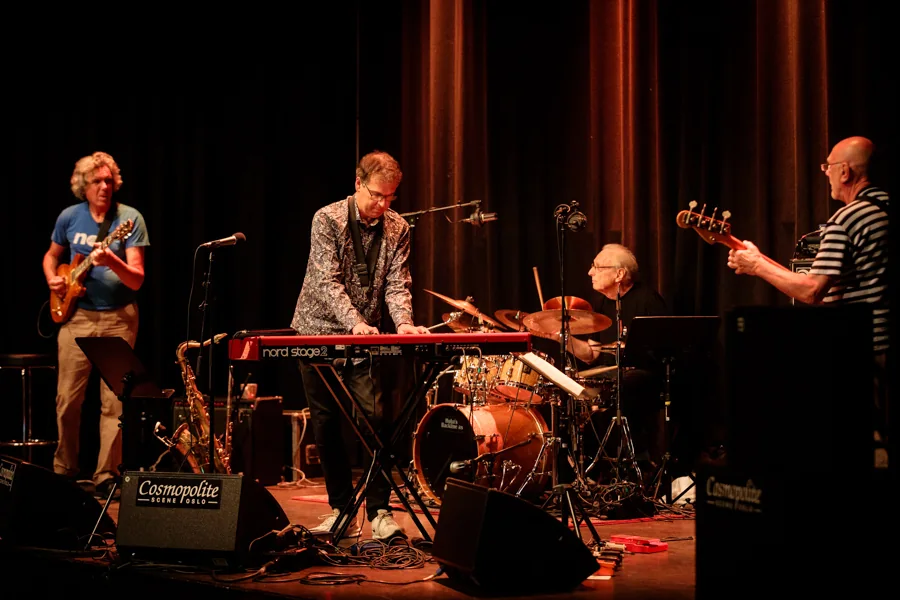
Phil Howard and John Marshall divide the drum chair on Fifth; Dean then left and fellow former Nucleus member Jenkins joined for Six. Hopper departed in 1973, Ratledge during the sessions for Softs in 1976, and the working band wound down after 1978, with later projects in 1981 and 1984. Soft Machine Legacy began in 2004 with Dean, Hopper, Etheridge and Marshall. It dropped “Legacy” in 2016, released Hidden Details in 2018 and subsequently continued with Etheridge, Theo Travis, Fred Thelonious Baker and Asaf Sirkis.
Sound & Style
The early records splice songs together rather than presenting them as isolated pop tracks. Wyatt moves between high, unforced vocals and highly responsive drumming; Ayers supplies bass, guitar and a lower vocal colour; Ratledge's organ and electric piano carry harmony and distortion at once. On Volume Two, Hopper's fuzz bass becomes a structural voice, binding brief themes, tape interventions and recurring motifs into two continuous side-long sequences.
Third expands that method to four compositions, one per original LP side. “Facelift” incorporates concert recording and tape editing, Dean's saxello and alto saxophone converse with Ratledge's keyboards on “Slightly All the Time”, and “Moon in June” retains Wyatt's vocals inside a largely instrumental album. Fourth removes vocals entirely. Jenkins, Marshall and later guitarists Holdsworth and Etheridge then shift the balance toward composed jazz fusion: reeds, electric keyboards and odd-metre rhythm sections remain central, but guitar becomes a sustained melodic lead on Bundles and Softs.
Essential Albums
Third
1970Four pieces occupy the four sides of this double LP. Hopper's “Facelift” is assembled partly from concert tape; Ratledge's “Slightly All the Time” and “Out-Bloody-Rageous” organise extended keyboard-and-horn development; Wyatt wrote, sang and played most instruments on “Moon in June”. The album reached number 18 in the UK and preserves the quartet at the point where song, tape construction and jazz improvisation still coexist.
Key tracks: Facelift · Moon in June · Out-Bloody-Rageous
Open album guide → View on Amazon →Volume Two
1969Recorded after Hugh Hopper replaced Kevin Ayers, the second album arranges short pieces into the linked “Rivmic Melodies” and “Esther's Nose Job” sequences. Hopper's fuzz bass and Ratledge's organ repeatedly pull the music away from conventional rock accompaniment, while Wyatt's voice and miniature interludes keep the increasingly instrumental programme connected to the debut.
Key tracks: Pataphysical Introduction Pt. 1 · Pataphysical Introduction Pt. 2 · 10:30 Returns to the Bedroom
Open album guide → View on Amazon →Wyatt, Ayers and Ratledge recorded the debut in New York in April 1968 after the first leg of the Hendrix tour. Its pieces run into one another: the opening “Hope for Happiness” sequence, Ayers's spare “Why Are We Sleeping?” and the closing “Box 25/4 Lid” move between compact song, organ-driven instrumental writing and repetition shaped by the trio's stage practice.
Key tracks: Hope for Happiness · Save Yourself · Box 24/4 Lid
Open album guide → View on Amazon →Affiliate note: Amazon links on this page may earn RetroForge Records a small commission, at no extra cost to you.
Deeper Cuts
Fourth
1971The first fully instrumental Soft Machine studio album and the last to feature Wyatt. Ratledge, Hopper and Dean provide the principal compositions; guest brass and Roy Babbington's double bass widen the ensemble while Wyatt's drums remain mobile beneath music moving decisively away from the debut's songs.
Open album guide → View on Amazon →Fifth
1972A record split across a personnel change: Phil Howard drums on the first LP side and John Marshall on the second. It is Dean's final Soft Machine studio album, with saxello and alto saxophone leading much of the first half; the arrival of Marshall brings a firmer pulse to Ratledge's closing material.
Open album guide → View on Amazon →Six
1973The double album separates a live first record from a studio second. Jenkins replaces Dean on reeds and keyboards, Marshall anchors the group throughout, and Hopper makes his final studio appearance with Soft Machine before Roy Babbington takes over. The contrast reveals how recurring themes were reshaped between stage performance and studio construction.
Open album guide → View on Amazon →Why They Still Matter
Soft Machine's importance lies partly in the documented transitions between its records. The 1968 trio could join songs into suites; the 1970 quartet could devote an LP side to one composition; the 1972–76 groups could exchange founding members for musicians from British jazz without abandoning the numbered-album continuum. Third's number-18 UK chart peak and the invitation to the 1970 Proms show that this experimentation was not confined to a private cult audience.
The continuing band makes that history more than a closed 1960s story. Etheridge joined in 1975, Travis entered Soft Machine Legacy in 2006, and the current rhythm section arrived after Roy Babbington and John Marshall retired. Their recordings under the restored name combine new writing with selected earlier themes. That continuity should not erase the decisive differences among the Wyatt, Jenkins and modern periods; it gives listeners a reason to hear each as a distinct chapter.
Connected archive routes
Explore This Band
Sources & Further Reading
Continue through the RetroForge knowledge graph
Curated paths into the people, records, events and ideas that give this subject its wider musical context.