

Edition timeline
The island festival opens
Wind, rain and weak site services immediately disrupt the promised German megafestival.
Billing and performance diverge
Weather, travel and timetable failure remove several advertised artists.
Hendrix finally plays
After delay and an initially hostile reception, Hendrix performs for more than an hour.
Memory changes abruptly
Hendrix dies twelve days later, transforming Fehmarn into a site of pilgrimage.
Why this event matters
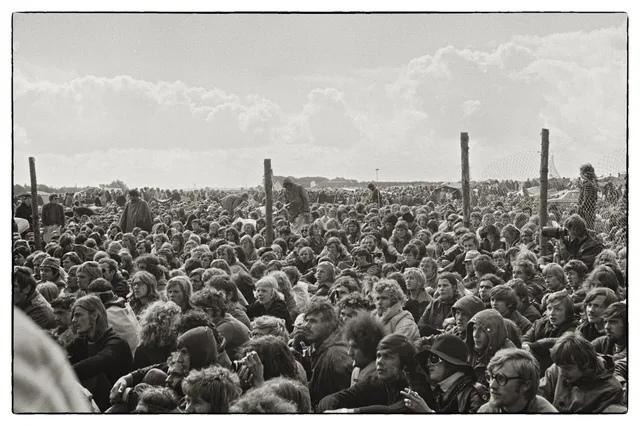
Fehmarn is remembered through Jimi Hendrix’s final festival appearance, but its wider importance is a failed German megafestival experiment. Organisers attempted to translate the Woodstock model to a Baltic island with famous bookings, fifty hectares, a rotating stage and imported sound. Weather, weak site services, security conflict and money pressure exposed the gap between spectacle and organisational depth. Hendrix makes the event famous; the larger failure explains why it belongs in festival history. Woodstock’s film had made the megafestival a global model, and Isle of Wight 1970 had just demonstrated European appetite on an extraordinary scale. WDR identifies three Kiel restaurateurs and occasional concert organisers behind Fehmarn, supported by a 200,000 DM advance from Beate Uhse, whose shops sold tickets. Bold finance and technical rentals were visible. Sanitation, transport resilience, weather planning and crowd systems were much less secure. The site near Flügge lighthouse lay open to Baltic wind and rain. Water blew toward the stage, mud deepened, clothing stayed wet and electrical safety deteriorated; musician testimony includes shocks on the wet platform. These conditions should not be romanticised as another version of Woodstock mud. At Fehmarn weather undermined sound, scheduling, sanitation and safety simultaneously. The landscape was an active force in the festival’s collapse. Fehmarn posters contain celebrated names who did not play. Weather, transport and the collapsing timetable widened the distance between announcement and performance. Confirmed appearances include Hendrix, Ginger Baker’s Air Force, Mungo Jerry, Fotheringay, Frumpy, Embryo, Peter Brötzmann, Witthüser & Westrupp, Floh de Cologne and Rote Steine. The page uses “advertised,” “cancelled” and “performed” precisely because a famous printed bill is not a historical set list.

German experimental music inside a global bill
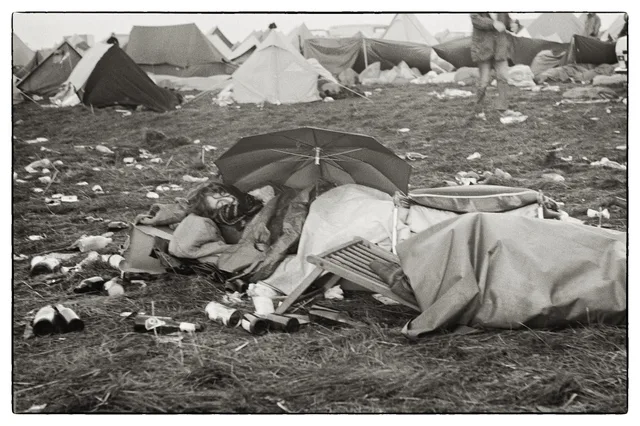
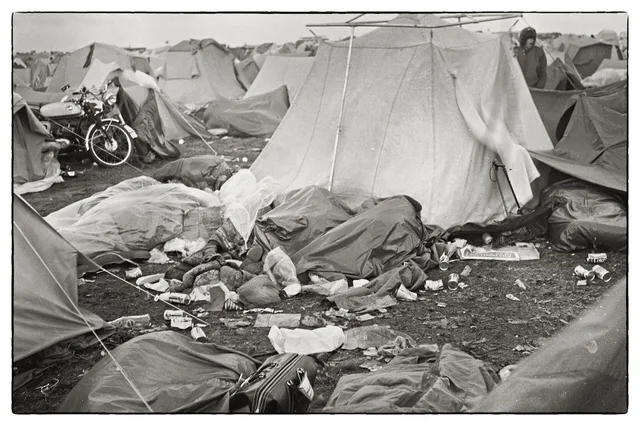
The domestic programme makes Fehmarn more than a Hendrix footnote. Embryo brought jazz-informed improvisation; Peter Brötzmann represented radical free music; Frumpy, Floh de Cologne and Witthüser & Westrupp occupied distinct progressive, political and folk-experimental routes. Rote Steine preceded Ton Steine Scherben. These groups connect the failed megafestival directly to the German underground that RetroForge traces through krautrock, political rock and experimental culture. Visitors faced difficult arrival, heavy wind, rain, mud, poor toilets, weak sound coverage, cancelled acts and long uncertainty. Contemporary reusable photographs show heavy coats, improvised sleeping and a visibly fragile camp. Extraordinary performances still occurred, but communal endurance should not erase exhaustion or fear. The audience did not know the event’s later Hendrix significance; they were responding to immediate cold, delay, announcements and the unstable relationship between organisers and security. A rotating stage and large imported sound system signalled serious ambition. Neither could compensate for exposure, electrical danger, disrupted running orders and insufficient services across fifty hectares. Production hardware is only one layer of festival organisation. Without reliable schedules, weather protection, communications, sanitation and payment systems, expensive equipment becomes another vulnerable object in the field. Fehmarn’s contradiction lay between impressive components and the absence of a resilient whole. WDR reports that around 180 Hamburg Hells Angels became paid security after arriving. Their role grew central as money ran short and pressure over payments intensified. Violence, intimidation, damage and fires around stage or organiser infrastructure marked the ending. Those details require sourced restraint: sensational retellings can obscure how organisers transferred authority to an improvised security force without the financial or institutional capacity to manage the consequences.

Hendrix on Sunday
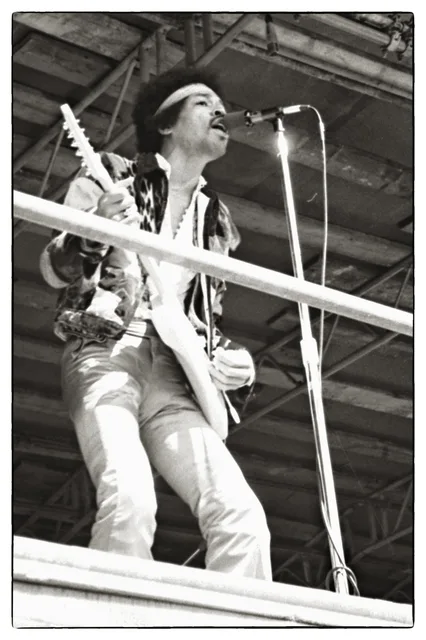
Hendrix had been expected earlier but finally appeared on Sunday 6 September after the site had endured two punishing days. NDR records boos and whistles before he played for more than an hour with Billy Cox and Mitch Mitchell. It was his final festival and last full concert with that touring trio, not his final public appearance of any kind: he later joined Eric Burdon and War at Ronnie Scott’s on 16 September. Fehmarn has a rich fragmented archive: NDR photography, WDR and NDR histories, audience and archival audio, Super 8 film, a dedicated historical group and authorised Hendrix releases. Most broadcaster gallery photographs remain copyrighted research evidence. The five images used here carry explicit Commons licences and include exact audience, camp, Alexis Korner and Hendrix festival views. Their provenance makes them unusually strong visual documentation for an early festival page. Calling Fehmarn the “anti-Woodstock” is useful only if it describes fragile systems rather than denying every communal moment. Woodstock mythology suggested that mud and logistical crisis could be redeemed by shared purpose. Fehmarn showed how quickly wind, water, unpaid obligations and coercive security could make the same ideal unsafe. The failure was not German culture’s inability to host a festival; it was the mismatch between borrowed megafestival ambition and inadequate organisational depth. Hendrix died twelve days later, transforming a chaotic event into a site of pilgrimage. Memorials and revival gatherings now give Fehmarn a second life that the original organisers could not sustain. The festival also remains a warning in German open-air history and a meeting point for early krautrock, political rock and international blues. Its legacy holds artistic importance, institutional failure and commemorative reinvention together rather than allowing one final performance to erase everything around it.


Follow the festival beyond the field
Timeline
Related genres
Related band guides
More routes will be connected as the archive grows.
Explore by sound
Essential listening
Sources and further reading
- Love and Peace Festival historyWDR · accessed 23 July 2026
- Jimi Hendrix auf FehmarnNDR · accessed 23 July 2026
- Festival history and lineup researchFehmarn Festival Group · accessed 23 July 2026
- Jimi Hendrix official archiveExperience Hendrix · accessed 23 July 2026
- Fehmarn Festival licensed mediaWikimedia Commons · accessed 23 July 2026
Image credits5 licensed images
The Fehmarn audience in 1970, a contemporary view of the weather-exposed festival ground — Detlef Hansen — Wikimedia Commons — CC BY-SA 4.0 · source record · CC BY-SA 4.0
Converted to WebP and resized; no generative or compositional alterations.
Overnight life in the Fehmarn festival camp, documenting the temporary settlement behind the advertised programme — Detlef Hansen — Wikimedia Commons — CC BY-SA 4.0 · source record · CC BY-SA 4.0
Converted to WebP and resized; no generative or compositional alterations.
The 1970 tent camp on Fehmarn, showing how weather and logistics shaped the audience experience — Detlef Hansen — Wikimedia Commons — CC BY-SA 4.0 · source record · CC BY-SA 4.0
Converted to WebP and resized; no generative or compositional alterations.
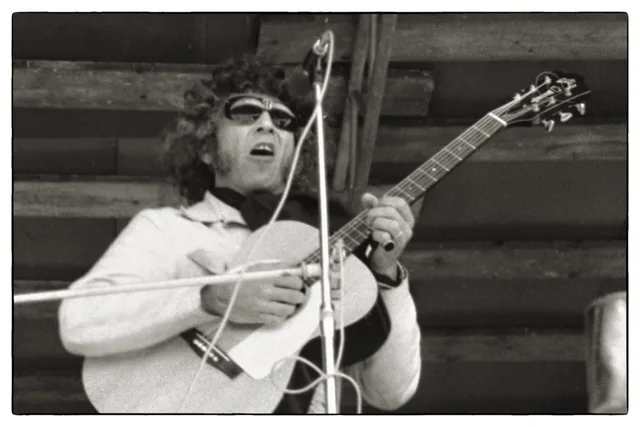
Alexis Korner performing at Fehmarn, one of the surviving images that confirms an actual stage appearance — Detlef Hansen — Wikimedia Commons — CC BY-SA 4.0 · source record · CC BY-SA 4.0
Converted to WebP and resized; no generative or compositional alterations.
Jimi Hendrix at Fehmarn on 6 September 1970, the final concert performance of his life — Detlef Hansen — Wikimedia Commons — CC BY-SA 4.0 · source record · CC BY-SA 4.0
Converted to WebP and resized; no generative or compositional alterations.