The Pulse Is a Horizon
A steady beat provides orientation. The music can change colour, density and scale while the road beneath it continues forward.

RetroForge Genre Guide
Motorik motion, stripped-down systems and the strange freedom found inside repetition.
The Sound
Krautrock at RetroForge begins with movement. Not the dramatic climb of symphonic prog, but a line that keeps travelling after the scenery has changed: drums locked into forward motion, bass reduced to purpose, guitar becoming texture and electronics flickering at the edge of the road.
The genre’s power comes from discipline rather than excess. Repetition is not an absence of ideas; it is the pressure that makes small changes matter. A delayed guitar enters half a beat later. A synthesizer opens another lane. A vocal fragment appears like a sign glimpsed through the window and is gone before it can explain itself.
The RetroForge catalogue now approaches krautrock from two distinct directions. Transitnacht / Westlicht follows nocturnal motorik motion and clipped analogue repetition. Der Eiserne Traum moves toward German-language proto-industrial pressure, metallic percussion and a factory system that begins acting without its creators. Both belong to the wider krautrock shelf without pretending that one rhythmic or electronic formula defines the entire field.
What You’ll Hear
How It Works
The pulse stays disciplined so that every small interruption becomes visible.
Repetition in krautrock is active, not static. The drummer may hold an even forward pulse while guitar, bass and electronics slowly alter the surface. Because the foundation resists dramatic fills and obvious climaxes, attention shifts toward details that conventional rock might treat as background: a delayed chord, a filtered tone, a bass note removed at precisely the right moment.
Motorik is only one route through a much broader field. Other records lean toward collective improvisation, electronic minimalism, collage, noise or cosmic drift. What connects those approaches is not a single beat, but a willingness to reject familiar Anglo-American rock habits and build new systems from rhythm, texture and studio process.
A steady beat provides orientation. The music can change colour, density and scale while the road beneath it continues forward.
Guitar may become scrape, delay or sustained tone. Electronics do not merely decorate the band; they alter the environment it occupies.
Instead of announcing a new section, an arrangement can transform one layer at a time until the listener realises the entire landscape has shifted.
Players avoid filling every gap. That discipline lets a single entrance, dropout or rhythmic deviation carry unusual weight.
Listen for this: stop waiting for the chorus and follow the smallest changing layer instead. The journey is often happening at the edge of the groove.
Historical Development
A concise map of how the style developed before it entered the RetroForge archive.
Krautrock is a broad, historically contested label applied to experimental music made in West Germany around the late 1960s and 1970s. The artists did not form one stylistic school, and many did not embrace the term. What they shared was a determination to move beyond inherited Anglo-American rock models.
Can, formed in 1968, used collective improvisation and editing to build music that felt composed after the performance. NEU!’s 1972 debut made relentless forward rhythm one of the field’s most influential possibilities. Faust pursued collage and disruption, while Kraftwerk and Harmonia increasingly placed electronic systems at the centre of the arrangement.
The famous motorik beat is therefore one route, not a definition of the whole field. Other branches move toward free improvisation, tape construction, ambient space, minimalism and the synthesizer-led work often discussed as kosmische Musik.
The Real-World Foundations
Not a ranking: six distinct entrances into the historical genre.
Collective improvisation transformed through editing, repetition and studio construction.
Forward pulse, radical economy and guitar used as atmosphere and friction.
Collage, noise, repetition and sudden beauty refusing a stable formula.
Electronic motion and modern transport imagined as an album-length environment.
Piano, voice and acoustic instrumentation opening a contemplative route.
Minimal rhythm, electronics and pastoral calm meeting in rural Germany.
Start Here
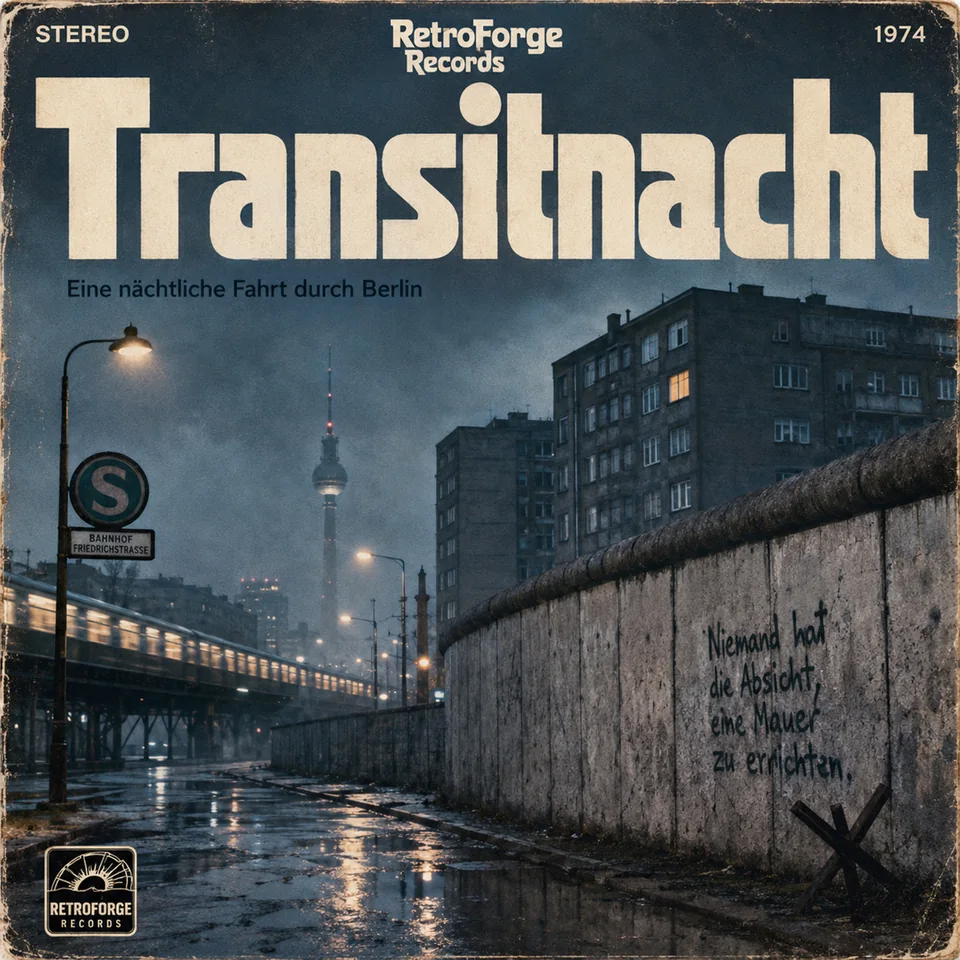
1974 · German Krautrock · Double A-Side
Two connected sides, one night journey: motorik momentum, clipped guitar, analogue electronics and the city passing in strips of light.
Open the liner notes →RetroForge Connection
A full-length German-language route into the darker, industrial edge of the krautrock archive.
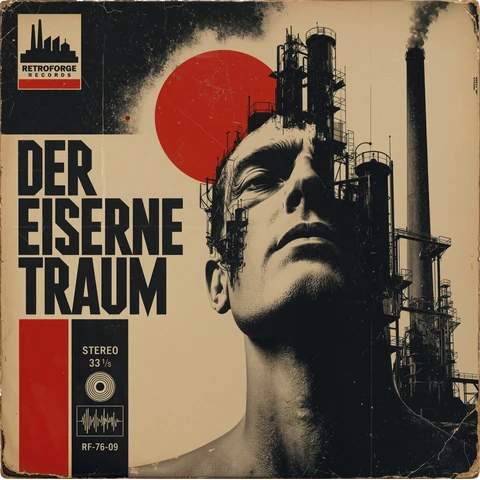
Motorik drums, fuzz bass, overloaded organs, metallic percussion and German vocals drive a factory narrative from mechanisation toward collective resistance.
Not Krautrock, but Nearby
These albums share repetition, analogue electronics or mechanical atmosphere without being relabelled as krautrock.
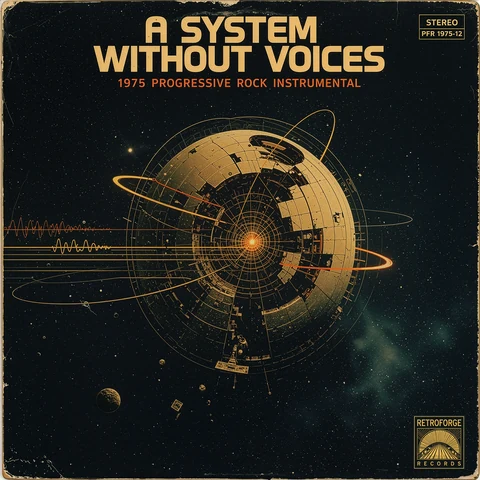
Wordless analogue systems and recurring motion in a more progressive structure.
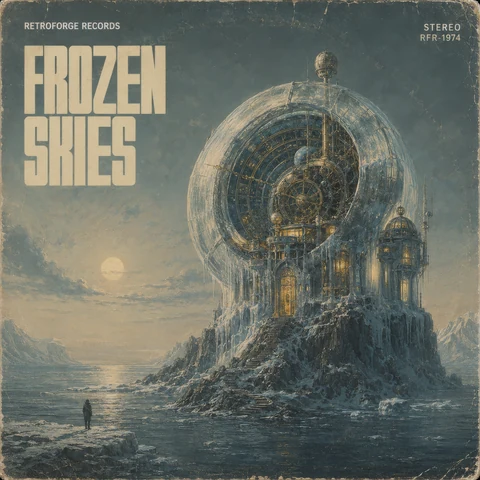
Keyboard-led movement and electronic architecture beneath a frozen horizon.
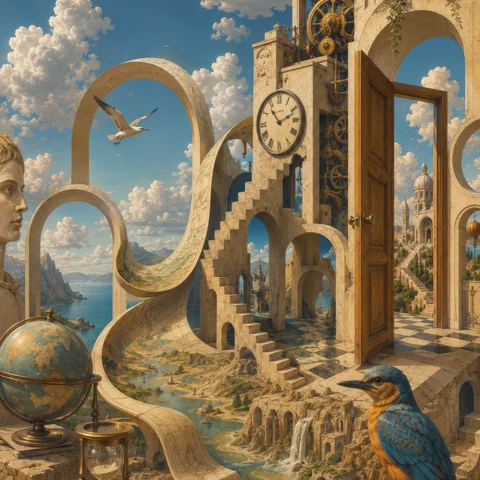
Complex rhythmic thought and maps that refuse to remain stable.
Transitnacht / Westlicht establishes the RetroForge krautrock route. New albums will join it as they are released.
Go Deeper
Keep Exploring
Research Trail
Questions Answered
No. The term covers very different West German experimental approaches, including motorik rock, collective improvisation, collage, electronic minimalism and cosmic music.
No. Motorik is the steady forward rhythm associated especially with NEU! and related music. It is one influential technique within a much wider field.
Standard rock instruments appear beside organs, early synthesizers, tape machines, electronic percussion and studio effects. The method of arranging them matters more than a fixed instrument list.
Can’s Tago Mago, NEU!’s debut, Kraftwerk’s Autobahn and Harmonia’s Musik von Harmonia reveal how different the field can be.
Deeper Discovery
Start with Amt für Stille as a RetroForge companion, then return through Genres to place it inside the wider family.
Curated paths into the people, records, events and ideas that give this subject its wider musical context.