
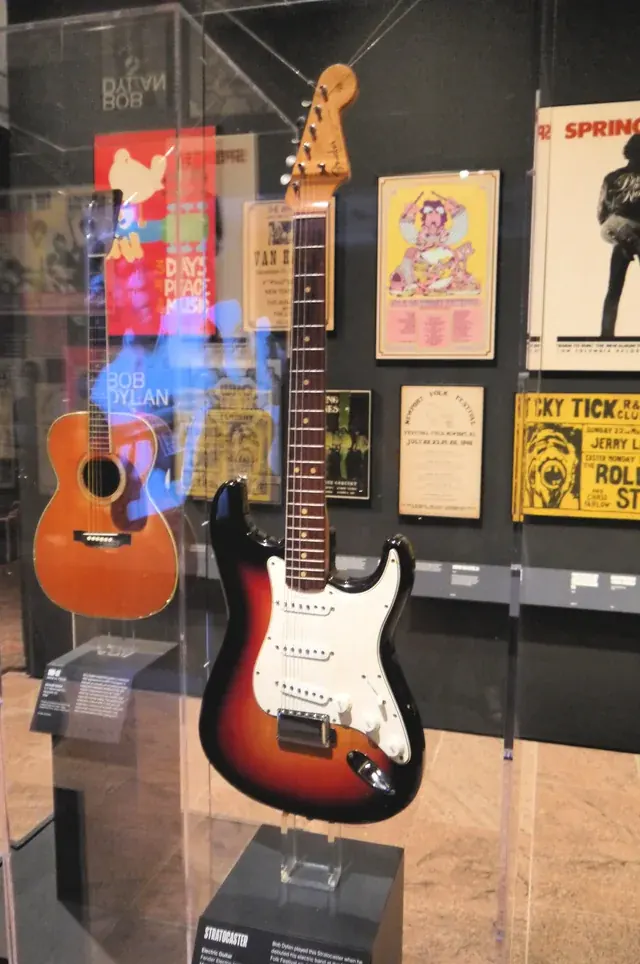
_in_3_tone_sunburst%2C_played_when_Dylan_Goes_Electric_at_Newport_Folk_Festival_on_July_25%2C_1965._Lost_ca.1965%2C_rediscovered_in_2012_-_Play_It_Loud._MET_(2019-05-13_19.42.45_by_Eden%2C_Janine_and_Jim).jpg)
Why this event matters
Newport 1965 is often reduced to three minutes of cultural theatre: Bob Dylan appears with an electric guitar, an acoustic-minded audience boos, and rock music defeats folk orthodoxy. The compression makes a good movie ending, but it obscures the festival around it and simplifies the sound heard on 25 July. Electric instruments were not unknown at Newport. Blues musicians, gospel groups and amplified bands had already complicated any clean division between an authentic acoustic past and a commercial electric future. What changed was the symbolic position of Dylan, whose songs had been treated as common property and whose public image had become entangled with the folk revival’s moral purpose.
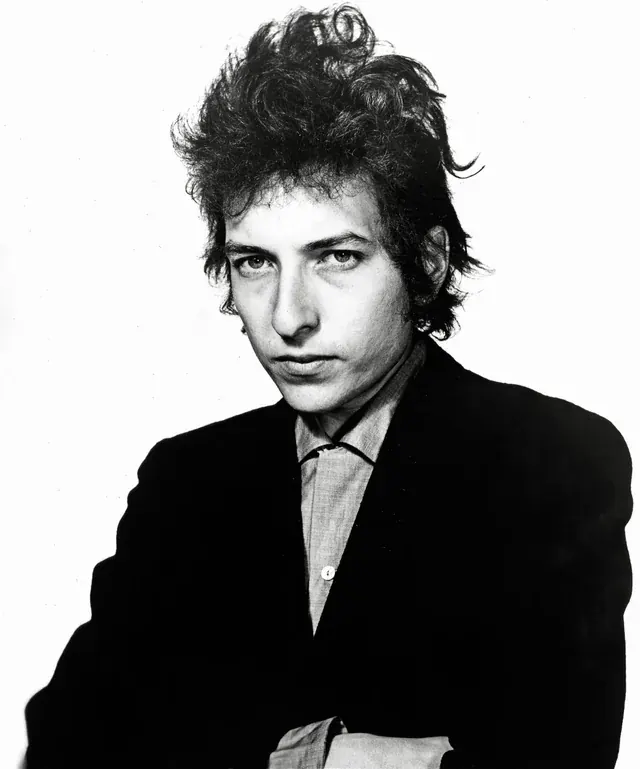
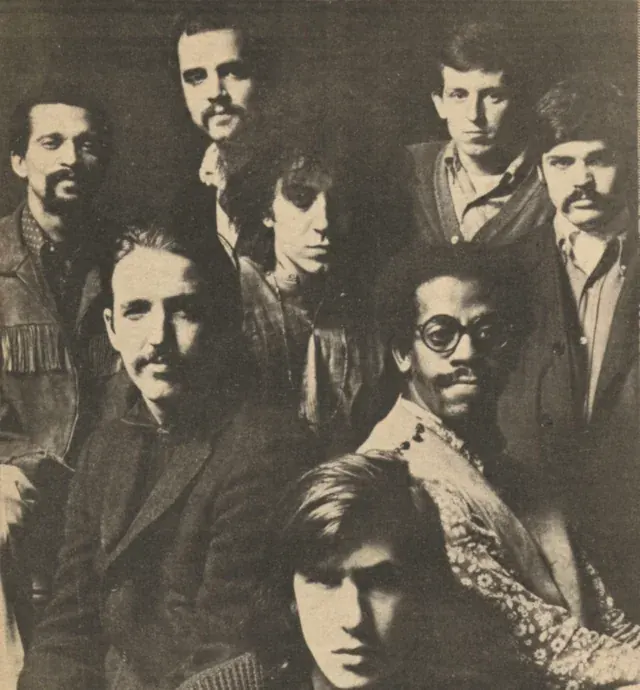
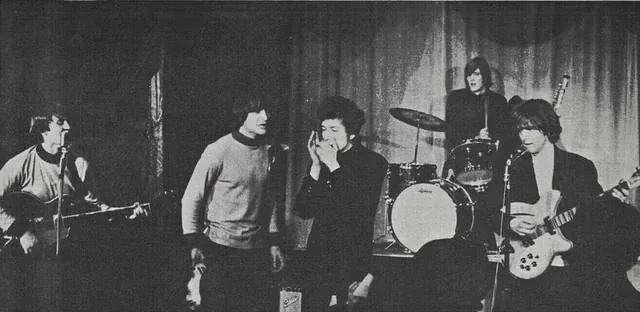
His amplified performance mattered because it exposed disagreements already present inside that revival: who controlled a song after it entered public life, whether musical tradition was a method or a fixed sound, and how an artist could change without appearing to reject the community that had supported him. The set did not single-handedly invent folk rock. The Byrds had already taken “Mr. Tambourine Man” to the top of the American charts, Dylan had recorded electric material, and the Paul Butterfield Blues Band was demonstrating how Chicago blues could energise a younger audience. Newport concentrated those developments into one difficult, highly visible encounter.
.jpg)
Newport before the electric set
The Newport Folk Festival was built as more than a sequence of stars. Daytime workshops placed musicians beside one another by instrument, region or tradition, encouraging audiences to hear relationships between commercial performers, field-recording subjects, revivalists and working tradition-bearers. That structure produced extraordinary exchanges, but it also exposed inequalities. Artists arrived with different access to money, publicity and institutional authority. A festival that celebrated tradition still had to decide who was presented as a creator, who was treated as a source and who was allowed to cross categories.
Dylan had appeared at Newport in 1963 and 1964. By 1965 he was no longer simply an emerging songwriter associated with topical folk song. Bringing It All Back Home had placed an electric band on one side of an LP and a changed acoustic language on the other. “Like a Rolling Stone,” recorded in June and released days before the festival, pushed the shift into popular culture. His Newport appearance therefore arrived amid active transformation rather than beginning it. The audience had reasons to anticipate change, even if nobody knew what form the Sunday evening performance would take.
The musicians and the three electric songs
Dylan’s electric group was assembled around musicians connected to the Paul Butterfield Blues Band. Mike Bloomfield played guitar, Jerome Arnold bass and Sam Lay drums; Al Kooper and Barry Goldberg played keyboards. Rehearsal time was limited. The resulting set opened with “Maggie’s Farm,” moved through “Like a Rolling Stone” and ended with “Phantom Engineer,” the song later known as “It Takes a Lot to Laugh, It Takes a Train to Cry.” Accounts disagree about exact timings and about who made the decision to stop, but the electric segment was short and the response audibly mixed.
This was not polished festival crossover. The band played hard, Dylan’s vocal fought the amplification and the sound in the field was disputed even by witnesses who welcomed electric music. Some listeners cheered. Others booed. Some objected to volume or distortion, some to the abbreviated set, some to Dylan’s apparent distance from the event and some to what electricity represented. Treating every negative sound as a vote against electric guitars turns a complicated audience into a single fictional character.

The acoustic return
After the band left, Dylan returned alone with an acoustic guitar. He performed “Mr. Tambourine Man” and, after asking for a harmonica, “It’s All Over Now, Baby Blue.” The sequence is central to the event’s ambiguity. The evening did not finish with electricity simply replacing an obsolete acoustic form. Dylan moved between formats, and the final song could be heard as farewell, rebuke or simply a powerful choice from his recent repertoire. Later narratives often assign it a precise message that no surviving evidence can prove.
The acoustic return also challenges the idea that performer and audience had severed all connection. Listeners quietened and responded. Dylan continued to appear within folk-related contexts even as his touring sound became louder and more confrontational. Newport marked a rupture in public expectation, but not a clean border after which folk existed on one side and rock on the other. The most productive music of the following years repeatedly crossed that supposed line.
Pete Seeger, the axe and the problem of memory
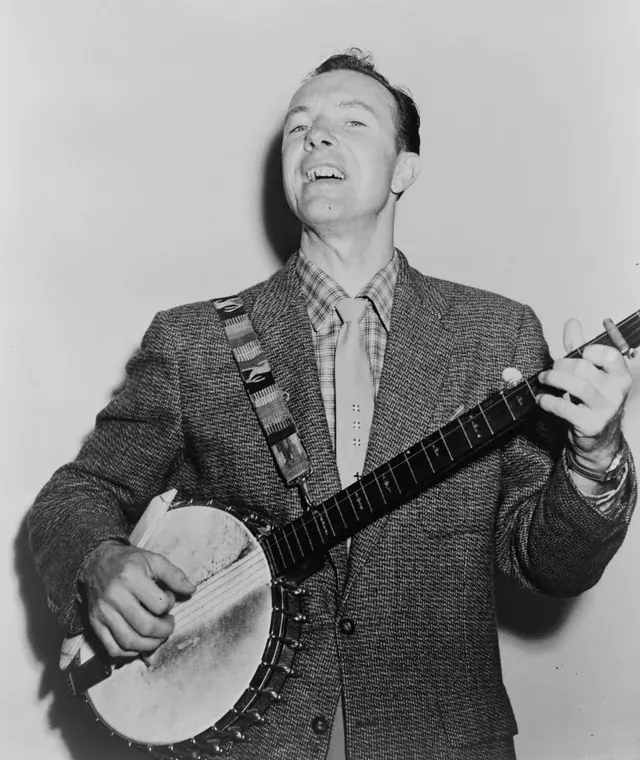
No Newport story has travelled further than the claim that Pete Seeger tried to cut the power cables with an axe. Versions differ substantially. Seeger later explained that he was angry because the distorted system prevented listeners from hearing Dylan’s words and said that, if he had possessed an axe, he would have cut the cable. Other witnesses remembered arguments around the sound controls. The image of an elder statesman physically attacking electricity converts frustration, technical failure and institutional conflict into a perfect symbolic duel.
Responsible history keeps the distinction between an event and the story later built from it. Seeger was not a cartoon enemy of musical change; his work joined preservation, participation, political organisation and modern media. Nor was Dylan a solitary inventor escaping a lifeless tradition. Both depended on networks of musicians and audiences. The axe survives because it makes those networks disappear. It gives the tale two protagonists and one dramatic object, while the real festival remains crowded with competing motives.

What the camera and recordings preserve
Murray Lerner’s film footage made Newport unusually available to later viewers. It captures performance, backstage fragments and audience reaction, but filmed evidence still has boundaries. Camera position, microphone placement and editing determine what becomes legible. A soundtrack can make a response appear unified when it was dispersed across a field. A close-up can turn a passing expression into a verdict. Documentary film is invaluable here precisely when it is treated as constructed evidence rather than a transparent window.
Official audio and later restorations allow listeners to hear the attack of the electric group more clearly than many people in the field could. That clarity can create another illusion: that a modern listener hears the historical event exactly as it happened. The festival sound system, crowd noise, physical distance and surprise were part of the performance. The archive preserves music and reaction, but it cannot reproduce the social pressure of hearing a familiar public figure change in real time.
A larger festival than one controversy
Concentrating on Dylan makes the rest of Newport 1965 vanish. The programme connected Joan Baez, Odetta and Pete Seeger with Maybelle Carter, Son House, Mississippi John Hurt, bluegrass players, topical singers and workshop participants. These musicians represented different histories and different relationships to the recording industry. The festival offered audiences access to traditions that commercial radio rarely presented, while also packaging those traditions for a largely young and often middle-class public.
That contradiction deserves attention. Newport could preserve, revive, transform and simplify at the same time. Its educational ambition created encounters that changed musicians’ lives, yet the language of authenticity could freeze older artists into representative roles. Dylan’s refusal to remain in an assigned category became spectacular because categories were doing so much organisational work. The electric set was therefore not outside the festival’s history; it revealed the tensions inside its curatorial model.

Legacy
Newport 1965 became a usable origin story for folk rock, singer-songwriter autonomy and the idea that an audience may resist an artist’s necessary change. Those meanings are real, but none requires the audience to be dismissed as ignorant. Listeners had invested songs with collective purpose and were responding to sound, duration, symbolism and expectation at once. Their reaction shows how powerfully popular music can become shared cultural property even when legal and artistic control remains with the performer.
The best way to remember the night is not as the instant electricity won. It is as a collision between living traditions, modern amplification, celebrity, documentary media and a community uncertain about its own boundaries. The music survived the argument. So did Newport, folk music and electric rock. What changed was the confidence that any institution could decide where one ended and the other began.
Follow the festival beyond the field
Timeline
Related genres
Related band guides
Explore by sound
Essential listening
RetroForge Echo
Hear a Fictional Archive Response
These modern RetroForge releases echo part of the festival’s musical vocabulary; they are not historical festival recordings.
Sources and further reading
- Newport Folk Festival program, 22–25 July 1965Canadian Museum of History · accessed 23 July 2026
- Dylan Goes Electric at NewportLibrary of Congress event with Elijah Wald · accessed 23 July 2026
- Bob Dylan collection and Smithsonian exhibition materialSmithsonian Institution · accessed 23 July 2026
- The real story behind Dylan’s early career and NewportSmithsonian Magazine · accessed 23 July 2026
- The Night Bob Dylan Went ElectricTIME / Elijah Wald · accessed 23 July 2026
- Bob Dylan 1965 set listsBob Dylan official site · accessed 23 July 2026
Image credits5 licensed images
The sunburst Fender Stratocaster associated with Bob Dylan's electric Newport set — Eden, Janine and Jim from New York City — Wikimedia Commons — CC BY 2.0 · source record · CC BY 2.0
Converted to WebP and resized; no generative or compositional alterations.
Bob Dylan in 1965 — Daniel Kramer (Albert Grossman Management) — Wikimedia Commons — Public domain · source record · Public domain
Converted to WebP and resized; no generative or compositional alterations.
The Paul Butterfield Blues Band around 1967 — Unknown photographer — Wikimedia Commons — Public domain · source record · Public domain
Converted to WebP and resized; no generative or compositional alterations.
Pete Seeger in a documentary press photograph made before Newport 1965 — Fred Palumbo , World Telegram staff photographer — Wikimedia Commons — Public domain · source record · Public domain
Converted to WebP and resized; no generative or compositional alterations.
Bob Dylan playing with The Byrds in 1965 — Unknown photographer — Wikimedia Commons — Public domain · source record · Public domain
Converted to WebP and resized; no generative or compositional alterations.