

Edition timeline
A modern local experiment
The current official timeline records hundreds of paying visitors at the first edition, establishing a festival that could grow by repetition.
Pop enters the frame
Beat, protest song, blues and rock expanded the original jazz programme; the official timeline identifies Procol Harum’s appearance as the group’s first live concert.
Weather and access pressure
Rain, fence cutting, late running times and resident complaints exposed the limits of the growing volunteer-built event.
Two relocations
Jazz Bilzen moved first to Tabaart and then to the Dell as relations with the town, crowd scale and production needs changed.
Faster changeovers
A semi-rotating stage made the machinery of an increasingly dense rock programme visible.
Punk, new wave and the end
The Clash, Blondie, The Police, The Cure and other newer acts altered the festival’s audience and identity before the original series ended.
Why this event matters
Jazz Bilzen matters less as one perfect weekend than as seventeen years of public experimentation. The series began before the European rock-festival form had stabilised and kept changing while jazz, beat, psychedelia, progressive rock, heavy music, punk and new wave competed for attention. Each edition tested another combination of volunteer labour, civic permission, international booking and local tolerance. That continuity makes Bilzen unusually revealing: it records not just what audiences heard, but how a town and an organising group learned what a modern festival required.
The official Bilzen-Hoeselt history describes the event as Belgium’s first major music festival and emphasises the practical knowledge later organisers could draw from it. That claim should not be turned into a simplistic family tree leading directly to every Belgian festival that followed. Jazz Bilzen’s stronger legacy is environmental. It helped create an audience, a touring stop, a media vocabulary and a body of hard-earned production experience in a country that would later sustain several internationally important festival institutions.

Before the first stage was built
The origin was local and comparatively modest. Fons Coch, chairman of the Bilzen Davidsfonds branch, wanted a contemporary cultural event that could sit beside older civic celebrations without simply repeating them. Programmer Paul Bessemans brought jazz knowledge and media contacts. On 5 September 1965 the first edition drew hundreds of paying visitors according to the municipality’s current historical timeline. It was not yet the sprawling youth-culture machine remembered from later years; it was proof that a new kind of programme could draw people to Bilzen.
In 1966 the event expanded over several days and VZW Jazz Bilzen gave the organisation a more durable form. That early formalisation mattered. Volunteer energy could initiate the festival, but contracts, money, technical needs and relations with authorities required an organisation able to return the following year. Jazz Bilzen’s historical value begins here: repetition allowed mistakes to become knowledge and a local initiative to absorb musical changes that no one in 1965 could have planned in detail.
A festival that kept changing place
There was no single timeless Jazz Bilzen field. The Borreberg belonged to the first phase, when the festival still sat close to the town and its existing cultural geography. Expansion made that proximity increasingly difficult. Noise, traffic, camping and the movement of larger crowds did not remain inside an abstract festival boundary; residents encountered them on streets and around homes. The physical history of Jazz Bilzen is therefore a sequence of negotiations between accessibility, capacity and tolerance.
In 1971 the festival moved to Tabaart, partly in response to opposition and practical pressure. In 1973 it moved again to the Dell. Later editions used still more complicated arrangements. These changes were not decorative backdrop. Every site altered access routes, stage possibilities, security, parking and the audience’s relationship with Bilzen itself. A series that moved repeatedly also accumulated fragmented memories: one person’s Jazz Bilzen could mean a compact town festival, another’s a muddy rock gathering at a different edge of the city.

From jazz and skiffle to beat and psychedelia
The first editions were grounded in jazz and related popular forms, but the programme widened quickly. By 1967, beat groups, protest song, blues and rock were sharing the same festival frame. The official timeline records Procol Harum’s Bilzen appearance that year as the group’s first live concert. Whether audiences arrived for jazz continuity or the new electricity, the booking logic already recognised that youth music no longer fitted a single inherited category. The festival name remained stable while its contents became increasingly unstable.
The late 1960s brought British and continental rock into sharper focus. Psychedelia, blues-derived amplification and the first progressive ambitions required different listening habits and different production resources from the event’s beginnings. Jazz did not simply disappear; it became one current among several. That overlap is important for RetroForge’s wider archive because later genre boundaries can make the period seem tidier than it was. At Bilzen, new forms did not arrive in separate museums. They met on a working festival programme.
Progressive rock, heavy music and jazz-rock
Across the early and middle 1970s, artists including Deep Purple, Soft Machine, The Moody Blues, Black Sabbath, The Kinks, Cat Stevens, Humble Pie, Chick Corea, Charles Mingus, Sonny Rollins, Golden Earring, Procol Harum, Caravan and Focus appeared in the festival’s documented history. This list should not be mistaken for one impossible super-bill: performers belong to different editions, and posters or announced programmes must still be distinguished from confirmed appearances. Read chronologically, however, they show how wide the festival’s working definition of modern music had become.
Soft Machine and Chick Corea locate jazz-rock inside the same institution that hosted hard rock and melodic progressive music. Black Sabbath and Deep Purple show blues-derived rock becoming heavier, while Caravan, Focus and Procol Harum point toward long-form composition and organ-led textures. Bilzen did not invent these routes. It provided a recurring Belgian place where their audiences could overlap, compare and change. That annual contact helped genre identities emerge from lived programmes rather than from retrospective labels alone.

What the audience experienced
No single image can represent an audience that changed from 1965 to 1981. Early organisers worried openly about respectability and even introduced forms of moral supervision. Press coverage often treated young clothes, hair and behaviour as a spectacle beside the music. As the series grew, camping, mud, queues, long waits and improvised social life became more central. Visitors learned how to inhabit a festival over several days, while the town learned that an audience was also traffic, noise, waste and demand for basic services.
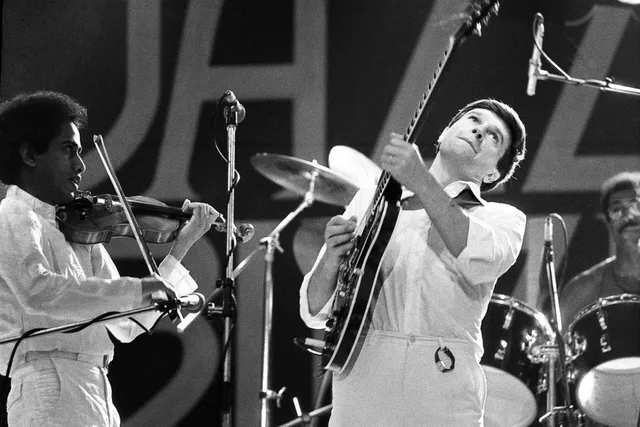
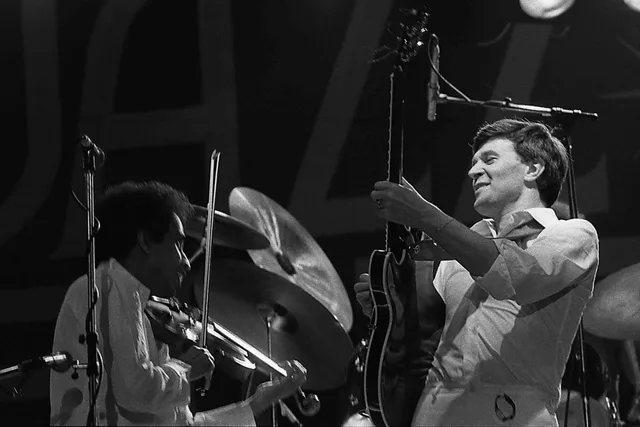
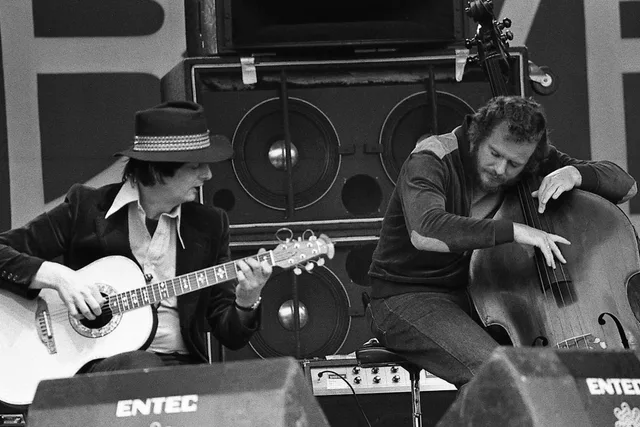
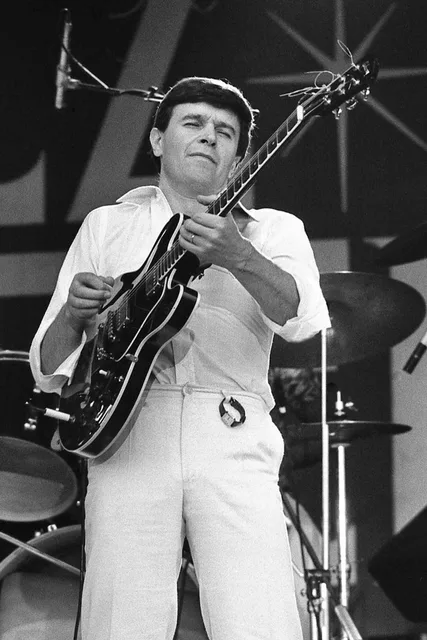
The surviving 1978 photographs on this page capture performers rather than the full social world, but they still show how different the later festival had become. Electric jazz virtuosity could occupy a stage inside a programme increasingly shaped by rock and new wave. By the punk era, audience energy, style and expectations had shifted again. Jazz Bilzen’s crowd was never one timeless “hippie generation.” It was a succession of Belgian and travelling youth cultures using the same festival name for different kinds of belonging.
Stage, sound and the work of repetition
Growing musical ambition required growing infrastructure. Camping and parking had to be organised rather than assumed. Amplified rock increased demands on sound coverage, lighting, electricity and crew coordination. Long delays became a recurrent criticism, revealing the gap between a poster dense with attractions and the physical time needed to remove one group’s equipment and prepare another’s. The festival’s volunteer origins did not disappear, but professional touring expectations made informal solutions harder to sustain.
In 1974 Jazz Bilzen introduced a semi-rotating stage to reduce changeover time. The detail is valuable because it turns “festival growth” into a visible piece of machinery. One act could be prepared while another occupied the audience-facing side, allowing a denser programme to move with less silence. It was not a complete cure for delay or organisational strain. It was evidence of learning by repetition: a recurring festival could redesign its systems in response to problems that a one-off event never had the chance to correct.

When the festival and the town collided
The 1969 edition concentrated several pressures at once. Rain damaged the site and audience comfort. Fence cutting and free-entry pressure weakened ticket control. Performances ran very late, and residents complained. Organisers eventually opened the festival for free for the remainder of the weekend. The episode should not be reduced to romantic gate-crashing or to a moral tale about disorder. It exposed a structural problem: a volunteer-built event had become attractive on a scale its financial and spatial boundaries could not reliably contain.
Relocation in 1971 did not end conflict. Later editions continued to face disputes over fencing, security, politics and the festival’s impact on Bilzen. Residents had legitimate concerns about sleep, damage and access; organisers faced the equally real task of maintaining an adventurous programme under financial and administrative pressure. The series survived for so long partly because both sides repeatedly renegotiated what was possible. Its eventual end shows that endurance did not make those tensions disappear.
Punk, new wave and the final years
By the late 1970s, the centre of gravity had moved again. The Clash, Blondie, The Police, The Jam, The Boomtown Rats and The Cure appear in the official historical account of the later period, while AC/DC represents the continued force of hard rock. These bookings changed more than surface style. Punk and new wave brought different performance lengths, fashions, politics and audience divisions into a festival whose name still advertised jazz. The gap between title and programme had become a historical record in itself.
Financial pressure, internal disagreement, weaker attendance and the loss of the Dell as a usable venue all contributed to the final phase. The 1981 edition became the last of the original annual series, and in 1982 organisers announced that Jazz Bilzen would not return. A one-off revival in 1998 demonstrated the durability of the name without restarting the institution. Memory proved easier to revive than the organisational ecosystem that had sustained seventeen consecutive editions.
Films, broadcasts and surviving documents
Jazz Bilzen survives through local heritage work, Heemkundekring Bilisium material, posters, programmes, press reports, photographs and Belgian broadcast records. The official Bilzen-Hoeselt timeline is particularly useful because it reconstructs the series year by year rather than flattening seventeen editions into a list of famous visitors. Its details about sites, controversies and organisational decisions make the archive valuable beyond music fandom. They reveal the labour and local politics that conventional artist histories often leave outside the frame.
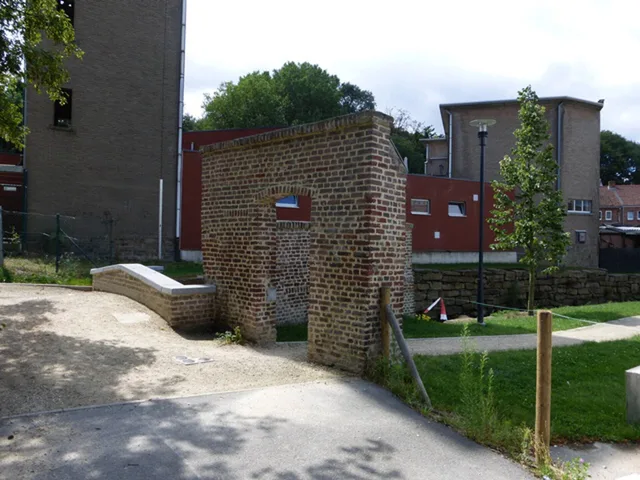
Public visibility does not automatically grant reuse rights. Many historically perfect press or television images remain protected and are therefore research evidence rather than website assets. The photographs used here come from individual Wikimedia Commons records with explicit reusable licences. Four document Jazz Bilzen in 1978; the modern town image documents present-day heritage context and is captioned so it cannot be mistaken for a period festival photograph. Credits preserve creator, source, licence and the WebP conversion.
From jazz to punk without changing the name
Taken literally, “Jazz Bilzen” became an increasingly inaccurate label. Historically, that is exactly why it is useful. The unchanged name allows readers to watch the meaning of a European youth-music festival expand around it. Jazz and skiffle gave way to a mixed environment of beat, blues and psychedelia; progressive, heavy and jazz-rock forms then shared space; punk and new wave finally challenged the assumptions of the 1970s. The institution’s identity was continuity through change rather than stylistic purity.
That history cautions against writing festivals as static brands. A recurring event is rebuilt by new artists, technologies, audiences, volunteers, regulations and local debates. Jazz Bilzen retained enough identity to be remembered as one series, yet no edition can stand for all the others. Its name became a container for cultural transition. In that sense the festival operated like an archive before anyone formally preserved it: each year added another layer to the argument over what contemporary music and public youth culture could be.
Legacy
Jazz Bilzen helped normalise the idea that Belgium could host an ambitious, internationally connected and musically broad festival culture. It trained organisers and audiences through experience, gave touring artists a recurring Belgian platform and forced public authorities to develop responses to camping, sound, security and mass youth attendance. Later institutions developed their own organisations and identities, so the legacy should not be reduced to a direct line of succession. The wider ecosystem was the inheritance.
Its archive also demonstrates why longevity matters. A one-off festival can preserve a moment; Jazz Bilzen preserves change itself. From the hundreds of paying visitors described for the 1965 experiment to the contested, stylistically fragmented final years, the series records how European live culture became more amplified, international, infrastructural and difficult to categorise. Belgium’s festival laboratory did not find one permanent answer. It remained historically important because it kept testing new ones.
Follow the festival beyond the field
Timeline
Related genres
Related band guides
Explore by sound
Essential listening
Sources and further reading
- Jazz Bilzen: de geschiedenisVisit Bilzen-Hoeselt · accessed 23 July 2026
- Jazz Bilzen: tijdslijn 1965–1981Visit Bilzen-Hoeselt · accessed 23 July 2026
- Jazz Bilzen heritage overviewVisit Bilzen-Hoeselt · accessed 23 July 2026
- Jazz Bilzen historical bookVisit Bilzen-Hoeselt · accessed 23 July 2026
- Jazz Bilzen licensed media categoryWikimedia Commons · accessed 23 July 2026
Image credits5 licensed images
L. Shankar and John McLaughlin at Jazz Bilzen in 1978, evidence of how far the programme had travelled from the festival’s mid-1960s jazz beginnings — Chris Hakkens — Wikimedia Commons — CC BY-SA 2.0 · source record · CC BY-SA 2.0
Converted to WebP and resized; no generative or compositional alterations.
One Truth Band at Jazz Bilzen in 1978, when jazz-rock and electric virtuosity belonged to the festival’s changing vocabulary — Chris Hakkens — Wikimedia Commons — CC BY-SA 2.0 · source record · CC BY-SA 2.0
Converted to WebP and resized; no generative or compositional alterations.
Philippe Catherine and Niels-Henning Ørsted Pedersen at Jazz Bilzen in 1978, preserving the jazz line inside an increasingly rock-oriented programme — Chris Hakkens — Wikimedia Commons — CC BY-SA 2.0 · source record · CC BY-SA 2.0
Converted to WebP and resized; no generative or compositional alterations.
John McLaughlin at Jazz Bilzen in 1978. The surviving photographs document individual sets rather than a single unchanging idea of the festival — Chris Hakkens — Wikimedia Commons — CC BY-SA 2.0 · source record · CC BY-SA 2.0
Converted to WebP and resized; no generative or compositional alterations.
The Jazz-Bilzenplein area in the town. This modern heritage photograph records the local setting, not the historical festival itself — Kennes, Hilde — Wikimedia Commons — CC BY 4.0 · source record · CC BY 4.0
Converted to WebP and resized; no generative or compositional alterations.