

Edition timeline
Rock Against Racism is founded
Musicians, designers and activists begin organising against racism in popular culture.
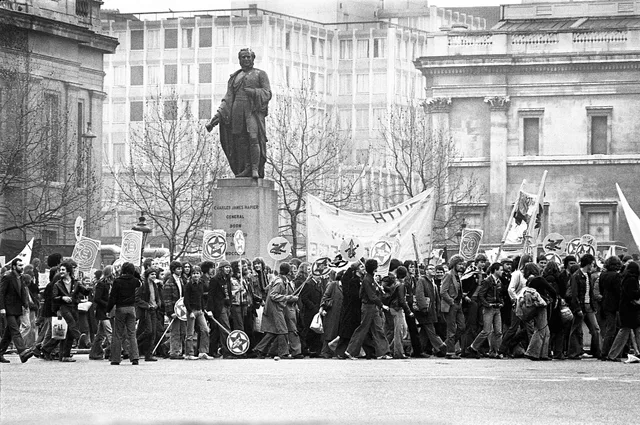
The march leaves Trafalgar Square
Tens of thousands move through London toward Victoria Park.
Punk and reggae share the carnival stage
Music turns the demonstration into a mass public cultural event.
The carnival model spreads
Further events include the Northern Carnival in Manchester.
Why this event matters
The April 1978 carnival joined anti-racist organising, a mass march and live music at a scale that made punk and reggae part of a visible public coalition. Rock Against Racism emerged amid racist violence, the growth of the National Front and inflammatory statements within British popular culture. Music became a tool for organising rather than decoration. The march from central London to Victoria Park turned movement through the city into part of the event. The route made the coalition public before anyone reached the stage. The Clash, Steel Pulse, X-Ray Spex, Tom Robinson Band and Patrick Fitzgerald placed different scenes together without pretending their music or audiences were identical.

What the audience experienced
Banners, badges, political stalls, fanzines and a dense park crowd made the carnival both demonstration and concert. Participation extended beyond watching performers. A free outdoor programme for tens of thousands required fundraising, volunteer labour, transport and professional sound. Political urgency still depended on practical production. The carnival opposed organised racism but did not end it. Violence, policing and debate over strategy continued outside Victoria Park and across later local campaigns. Further RAR and Anti-Nazi League carnivals followed in 1978, including the Northern Carnival in Manchester, extending the model beyond one London date.

Films, recordings and surviving documents
Photographs, badges, posters, fanzines and oral histories preserve how visual design and live music carried the campaign. Archives also reveal the labour behind the spectacle. The defining form was the connection between route and destination. Political assembly became cultural performance, and the concert gave the march an amplified public endpoint. Victoria Park remains a central example of popular music used to build anti-racist solidarity, while later histories continue to debate who was represented and whose work entered the archive.

.jpg)
Follow the festival beyond the field
Timeline
Related genres
Related band guides
More routes will be connected as the archive grows.
Explore by sound
Essential listening
Sources and further reading
- Rock Against Racism digital collectionModern Records Centre, University of Warwick · accessed 23 July 2026
- Rock Against Racism archive catalogueModern Records Centre, University of Warwick · accessed 23 July 2026
- Victoria Park historyLondon Borough of Tower Hamlets · accessed 23 July 2026
- Licensed carnival and performer imagesWikimedia Commons · accessed 23 July 2026
Image credits5 licensed images
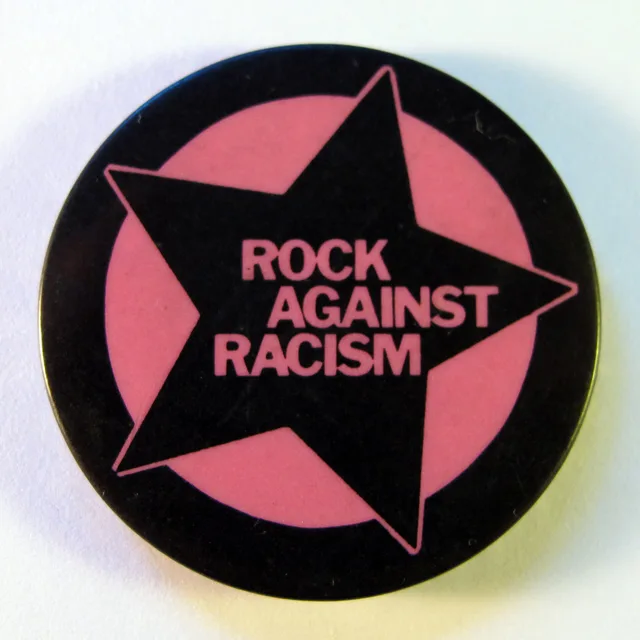
A contemporary photograph from the Rock Against Racism carnival in Victoria Park in 1978 — Danny Birchall — Wikimedia Commons — CC BY 2.0 · source record · CC BY 2.0
Converted to WebP and resized; no generative or compositional alterations.
A second contemporary view of Rock Against Racism in 1978, documenting the political music culture around the carnival — Sarah Wyld — Wikimedia Commons — CC BY-SA 3.0 · source record · CC BY-SA 3.0
Converted to WebP and resized; no generative or compositional alterations.
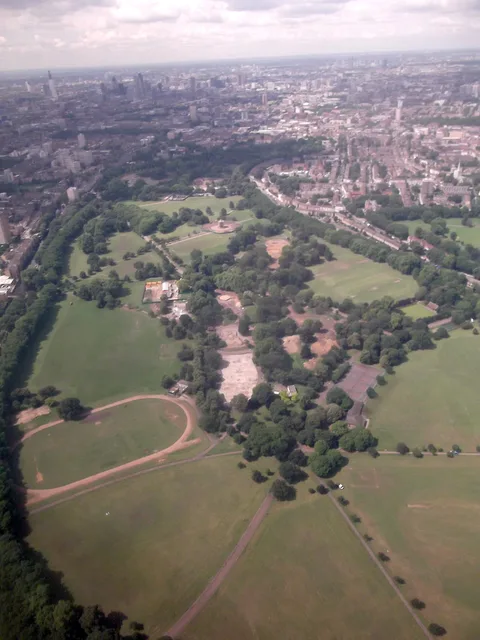
A later aerial view of Victoria Park, used to explain the scale and geography of the 1978 carnival site — Matt Brown from London, England — Wikimedia Commons — CC BY 2.0 · source record · CC BY 2.0
Converted to WebP and resized; no generative or compositional alterations.
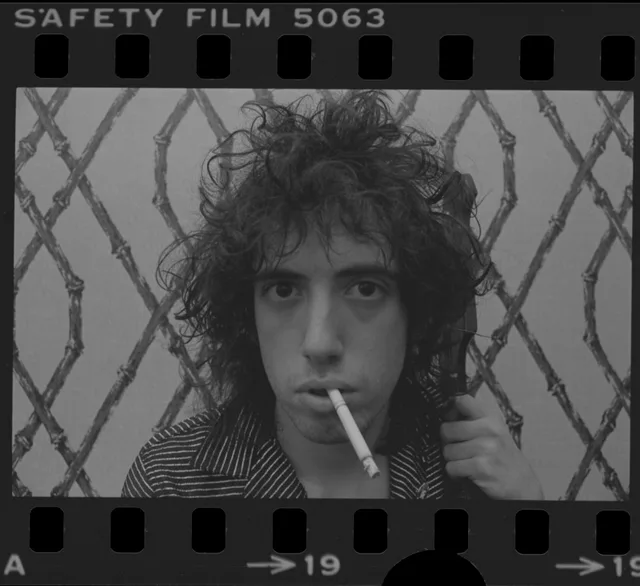
Mick Jones of The Clash in 1978. This period portrait provides performer context and is not a Victoria Park stage photograph — UCLA Library Special Collections — Wikimedia Commons — CC BY 2.0 · source record · CC BY 2.0
Converted to WebP and resized; no generative or compositional alterations.
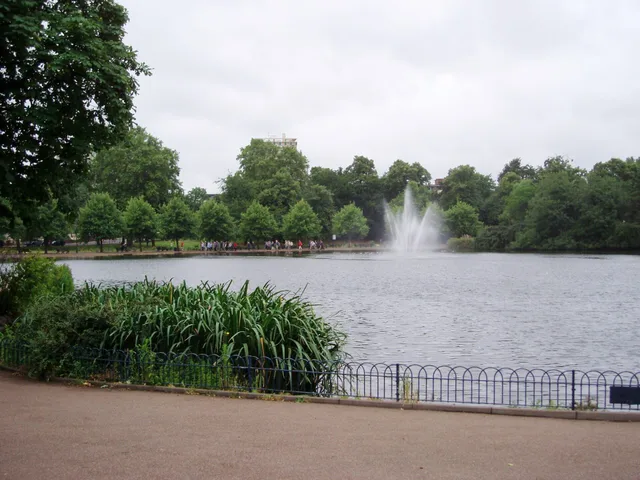
Victoria Park in a later photograph, connecting the historic march destination with the surviving public landscape — Ewan Munro from London, UK — Wikimedia Commons — CC BY-SA 2.0 · source record · CC BY-SA 2.0
Converted to WebP and resized; no generative or compositional alterations.