Riff as Starting Point
The central figure generates later sections and returns changed.

Progressive Rock Family
Hard rock that keeps its direct physical engine while allowing riffs, songs and whole albums to grow beyond ordinary form.
The Sound
Progressive hard rock begins from hard rock rather than from symphonic or avant-garde composition. The riff remains a central source of identity, the rhythm section retains a direct punch and vocals often carry the drama. Progressive ideas enter by extending that foundation: changing metres, multi-part songs, conceptual sequences and instrumental development.
The distinction from heavy prog is one of perspective rather than a hard border. Heavy prog is progressive rock whose language becomes physically heavy. Progressive hard rock is hard rock whose language becomes structurally ambitious. Many records can be described both ways, and the best term depends on whether the listener hears the riff or the architecture first.
Organ, synthesizer and acoustic interludes can broaden the palette, but the genre should still move like a band in a room. Technique matters when it makes the riff turn, expand or return with a different meaning—not when it interrupts the momentum merely to demonstrate itself.
What You’ll Hear
How It Works
Progressive hard rock keeps the immediate physical language of riffs, drums and vocal hooks while allowing the arrangement to stretch beyond standard hard-rock symmetry. Sections can change metre, instrumental themes can carry narrative weight and albums can connect songs through recurring material.
The distinction lives in movement. A strong riff establishes identity, but the piece must travel somewhere with it. Listen for transitions that reframe the riff, bridges that open a new harmonic room, and instrumental passages that alter the song rather than pause it.
Useful distinction: Boundary line: virtuosity and length alone are insufficient. Progressive hard rock uses ambition to reshape direct rock energy, not simply to extend a solo.
The central figure generates later sections and returns changed.
Strong melodic lines hold the listener through structural turns.
Bass and drums redirect momentum without losing physical drive.
Motifs and production connect songs beyond their individual hooks.
Historical Development
Progressive hard rock begins with the direct engine of hard rock: memorable riffs, emphatic drums, prominent vocals and the sensation of a band pushing air in a room. Its progressive character appears when that engine is stretched through changing metres, extended instrumental passages, connected songs or album-length concepts. The riff remains the invitation even when the structure becomes ambitious.
The overlap became especially fertile in the early 1970s. Deep Purple expanded blues-derived hard rock through Jon Lord's organ and the band's improvisational reach; Led Zeppelin placed acoustic, folk and studio experiments beside enormous electric arrangements; Uriah Heep, Queen, Kansas and Rush found further balances between immediacy and design. None followed exactly the same blueprint, which is why the term describes a useful intersection rather than a closed historical movement.
Progressive hard rock differs from heavy prog mainly in emphasis. Here, the listener is likely to notice the song, chorus and riff before the architecture; in heavy prog, the progressive structure tends to be the starting language. The border remains permeable, but the distinction helps explain why technical expansion can strengthen a direct rock song instead of replacing it.
The Real-World Foundations
Not a ranking: six useful doors into the style.
Organ, guitar and volatile ensemble playing push hard rock beyond the ordinary studio song.
Compact heavy songs sit beside orchestration and a sixteen-minute title piece.
A double album uses hard rock as the centre of a much wider acoustic, eastern and experimental vocabulary.
Layered voices, connected sequences and theatrical production enlarge a fundamentally hard-rock band.
A side-long narrative shows how a direct power trio could carry conceptual progressive form.
American hard rock, violin, keyboards and tightly organised development meet without losing melodic clarity.
Closest RetroForge Route
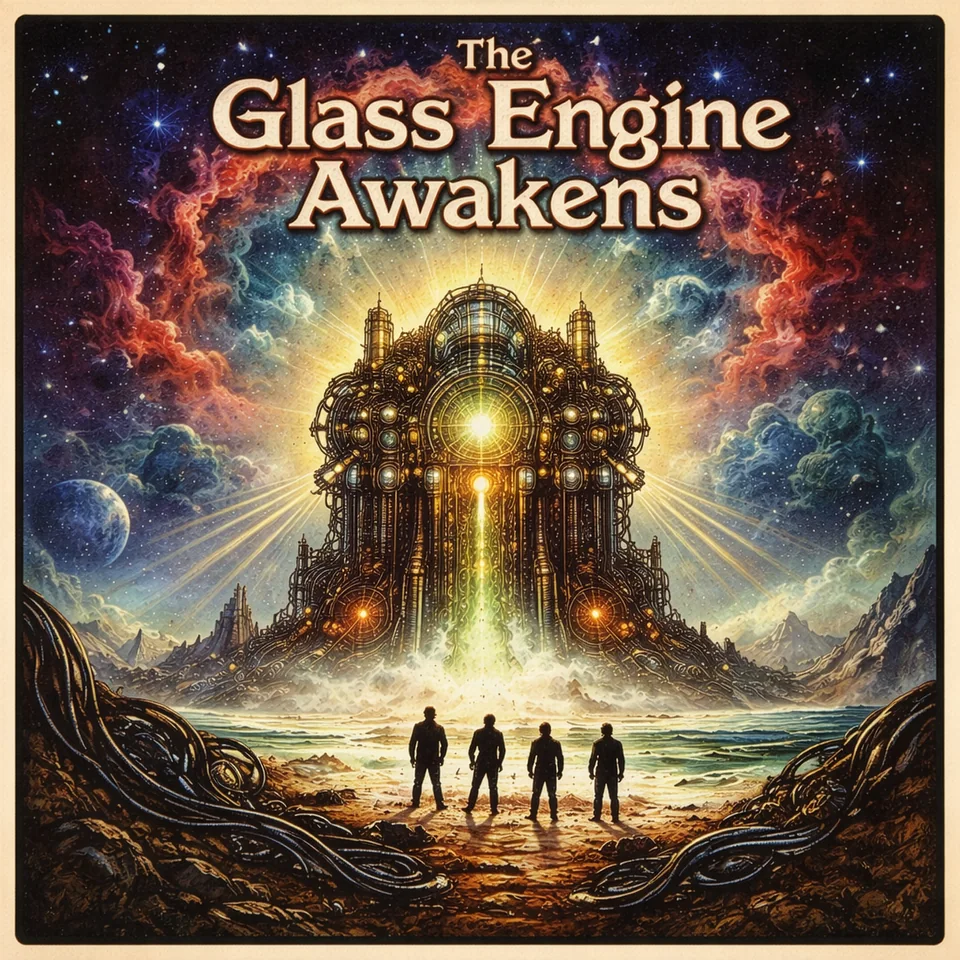
1973 · Progressive Rock
A compact machine narrative where Hammond, Mellotron and guitar-driven momentum keep the progressive structure physically direct.
Open the liner notes →Questions from the Record Room
It overlaps with progressive rock, but retains a stronger hard-rock centre: riffs, hooks and direct ensemble impact remain essential.
Yes. Unusual form, instrumental development or album context can make a concise song progressive without requiring a side-long suite.
Progressive hard rock starts from hard-rock songcraft and expands it; heavy prog starts from progressive form and increases its physical weight.
Related Styles
Research Trail
Deeper Discovery
Start with The River Beneath the World as a RetroForge companion, then return through Progressive Rock to place it inside the wider family.
Curated paths into the people, records, events and ideas that give this subject its wider musical context.