

Why this series matters
The Hyde Park free concerts were not simply festivals without tickets. They placed amplified youth culture inside one of London’s most visible public landscapes and made access itself part of the event’s meaning. From 1968 through 1971, audiences could encounter emerging progressive and psychedelic groups beside already famous performers without passing through a commercial box office. That openness expanded the public for underground music while creating practical conflicts over noise, crowd size, damage, authority and the legitimate use of a Royal Park.
The series also reveals how quickly British rock changed. The 1968 programmes still carried the intimacy and eclecticism of the club underground. By July 1969, the Rolling Stones could draw a crowd described in the hundreds of thousands. Blind Faith made a public debut there; King Crimson appeared before its first album; Pink Floyd moved from psychedelic experimentation toward the large-scale sound that would define the following decade. Hyde Park became a public measuring instrument for music in transition.
.jpg)
Blackhill Enterprises and the idea of free music
Blackhill Enterprises grew around Pink Floyd’s early management circle and developed a reputation for ambitious happenings and free concerts. Its work linked performers, countercultural publishing, technical crews and political arguments about public space. “Free” described the absence of admission, not the absence of cost. Stages, sound, permissions, transport and clean-up still required negotiation and labour, much of it supplied through informal networks that later festival companies would professionalise.
The concerts were possible because organisers repeatedly negotiated with authorities who did not share a single view. Some saw well-managed events as a legitimate use of the park; others feared damage, disorder or the precedent created by mass youth gatherings. Government files and later official histories preserve that institutional side. It is as important as musician recollection because a free concert existed only through temporary permission to occupy, amplify and redirect an otherwise regulated landscape.
1968: the underground steps outside
The first large rock concert in the park took place on 29 June 1968. Pink Floyd, Jethro Tull, Tyrannosaurus Rex and Roy Harper were among the performers associated with that opening phase, while later 1968 events included groups such as The Nice, Traffic, Family, Fleetwood Mac and The Pretty Things. Exact bills and dates should be checked against contemporary programmes because retrospective lists sometimes merge separate days. The overall pattern is clear: acts developed in clubs and colleges were being presented to a much larger, mixed audience.
Outdoor sound changed the music’s scale. Arrangements built for enclosed rooms had to hold attention in open air, where wind, distance and conversation competed with the stage. The concert also changed how bands were seen. An emerging group could appear as one element in an afternoon social landscape rather than the sole object of a ticketed evening. That looseness was attractive, but it made scheduling, listening conditions and control less predictable.

1969: debuts, memorials and mass attention
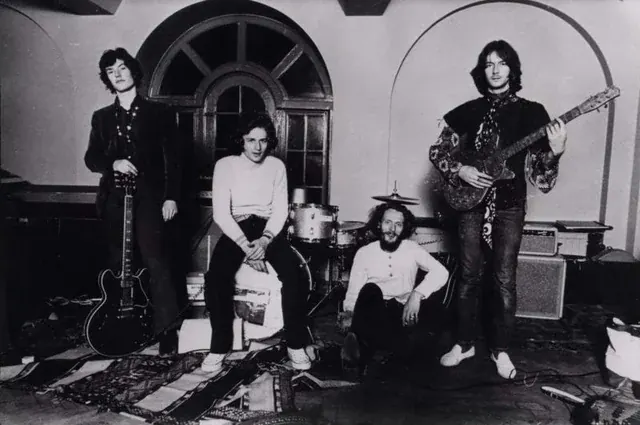
Blind Faith played its public debut in Hyde Park on 7 June 1969. The group’s famous membership guaranteed attention before it had established a live identity. King Crimson’s appearance on 5 July became part of progressive-rock legend because it placed an unsigned or newly emerging musical force before the enormous audience gathered for the Rolling Stones. The day also carried a memorial dimension after Brian Jones’s death two days earlier, with Mick Jagger reading from Shelley and releasing butterflies.
The Rolling Stones concert is frequently assigned an audience of around half a million, but mass-event estimates should be treated as approximations rather than a count. Its importance does not depend on an exact figure. A band returning to public performance, a founding member’s death, extensive press coverage and a free central-London setting combined into an event larger than an ordinary tour date. The resulting film and photographs helped make Hyde Park a permanent part of the Stones’ public history.
Progressive sound in an open park
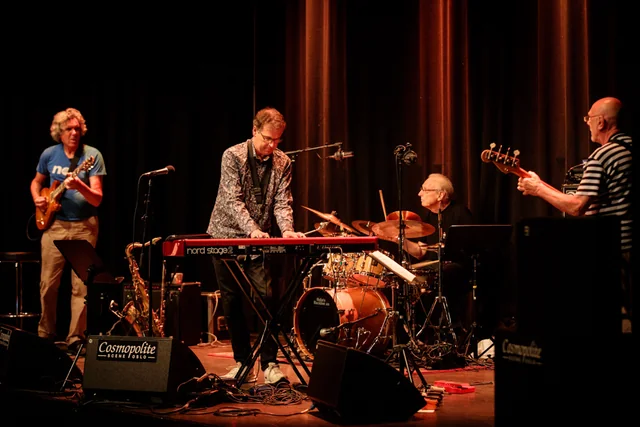
Hyde Park’s programmes make visible the porous boundary between psychedelic, progressive, jazz-influenced and blues-based rock. Soft Machine and King Crimson brought structures that did not behave like conventional pop sets. Pink Floyd’s extended pieces depended on texture and spatial effect. The Nice translated keyboard virtuosity and classical quotation into an outdoor spectacle. These approaches shared audiences before magazines, retailers and later databases stabilised their genre names.
The environment could magnify ambition and expose weakness. Long forms had room to unfold, but subtle detail could disappear through wind and uneven coverage. Large audiences rewarded recognisable gestures. Musicians learned how repetition, dynamics and visual presence functioned at scale. The free concerts therefore belonged to the development of festival rock as a performance language, not only to the history of access.
.jpg)
Crowds, the park and contested permission
A public park is not an empty venue waiting to be used. It has paths, wildlife, vegetation, ordinary visitors and legal responsibilities. Concert crowds compressed those uses into a few hours and left visible consequences. Authorities considered litter, sanitation, traffic, turf damage and sound beyond the park boundary. Organisers answered that public culture should not be restricted to commercial halls and that large gatherings could be managed without turning the landscape into a fortress.
Neither position remained abstract. Each event produced evidence used in the next negotiation. A peaceful audience strengthened the case for another permit; complaints or damage strengthened demands for restriction. This incremental process explains why the series should be studied across years. It was a continuing test of how a city absorbed youth culture, with policy developing in response to experience rather than one permanent decision.
1970–1971 and the end of the first phase
The series continued in 1970 with performers including Pink Floyd, Canned Heat, Eric Burdon and War, Kevin Ayers and others across separate dates. By 1971, the relationship between free concerts, commercial promotion and public authority was changing. Rock audiences had grown, touring had become more organised and promoters increasingly worked through ticketed large-scale events. A free central-London concert was no longer a small extension of club culture; it was a major civic operation.
The early sequence ended, but Hyde Park did not stop hosting music. Later charity spectacles, reunion performances and commercial summer series reused the location under different production models. The contrast is instructive. Modern events deploy extensive fencing, security, ticketing and sponsor infrastructure. The landscape is similar; the assumptions about access, risk and who pays for occupation are not.

Legacy
Hyde Park gave British rock a civic stage. It allowed audiences who might never enter an underground club to hear experimental music and see new groups beside major names. It also helped teach performers and organisers what open-air scale demanded. Progressive rock’s growth into theatres, arenas and festivals was not caused by these afternoons, but the park offered an unusually public rehearsal for that expansion.
The concerts should not be romanticised as effortless gifts. They depended on negotiation, unpaid work, technical compromise and the willingness of a public authority to accept uncertainty. Their strongest legacy is the proposition that ambitious music can belong in common space—and the equally important reminder that common space has other users, material limits and a history that every event temporarily enters.
Follow the festival beyond the field
Timeline
Related genres
Related band guides
Explore by sound
Essential listening
RetroForge Echo
Hear a Fictional Archive Response
These modern RetroForge releases echo part of the festival’s musical vocabulary; they are not historical festival recordings.
Sources and further reading
- A look back at the most iconic concerts in Hyde ParkThe Royal Parks · accessed 23 July 2026
- Hyde Park management plan and historical timelineThe Royal Parks · accessed 23 July 2026
- Culture Clash? Pop in a royal parkThe National Archives · accessed 23 July 2026
- History of Hyde ParkThe Royal Parks · accessed 23 July 2026
- First Hyde Park concert, 29 June 1968UK Rock Festivals archive · accessed 23 July 2026
- The Rolling Stones in Hyde Park, 1969British Pathé · accessed 23 July 2026
Image credits5 licensed images
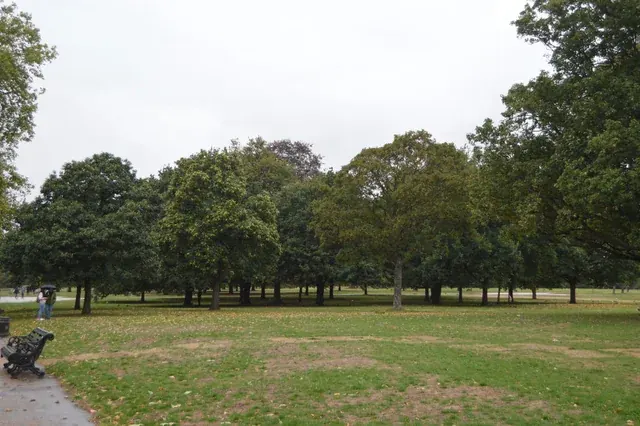
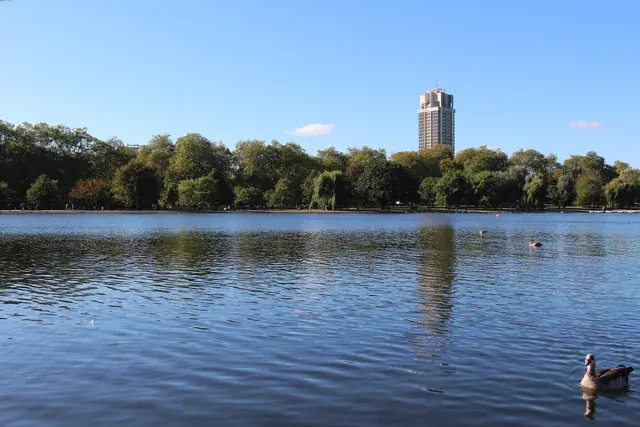
Hyde Park in a later photograph — N Chadwick — Wikimedia Commons — CC BY-SA 2.0 · source record · CC BY-SA 2.0
Converted to WebP and resized; no generative or compositional alterations.
Blind Faith in 1969 — Island Records — Wikimedia Commons — Public domain · source record · Public domain
Converted to WebP and resized; no generative or compositional alterations.
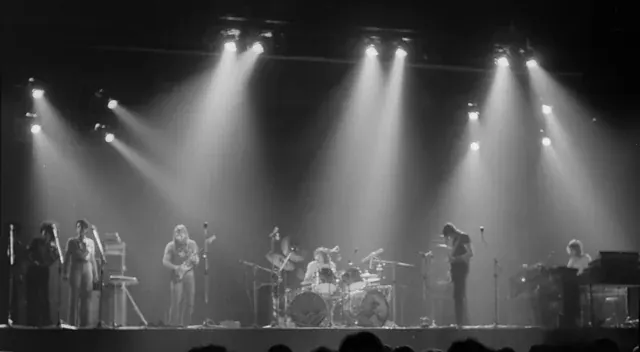
Pink Floyd performing in 1973 — TimDuncan — Wikimedia Commons — CC BY 3.0 · source record · CC BY 3.0
Converted to WebP and resized; no generative or compositional alterations.
Soft Machine performing in 2018 — Tore Sætre — Wikimedia Commons — CC BY-SA 4.0 · source record · CC BY-SA 4.0
Converted to WebP and resized for web delivery; no compositional changes.
A later view of Hyde Park, included as present-day site context rather than evidence of a 1960s concert crowd — Fred Romero from Paris, France — Wikimedia Commons — CC BY 2.0 · source record · CC BY 2.0
Converted to WebP and resized; no generative or compositional alterations.