

Edition timeline
Grobschnitt performs in Dortmund
Long-form German progressive rock enters the Westfalenhalle broadcast archive.
Nina Hagen Band is recorded
Punk and new wave alter the visual and musical language of Rockpalast.
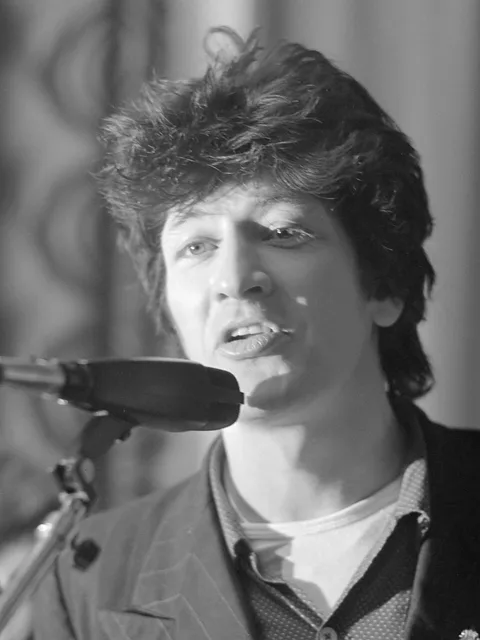
Herman Brood & His Wild Romance follow
Dutch rock adds another transnational route to the sessions.
Rockpalast continues using Dortmund
The venue remains part of WDR’s expanding live-production network.
Why this event matters
The Dortmund sessions show that Rockpalast’s late-decade innovation was a network of venues and broadcasts, not only the famous all-night Essen series. WDR used different halls and programme lengths to test how live rock could work on television. Dortmund supplied concentrated concerts rather than simply duplicating an Essen Rocknacht. Dortmund’s arena offered a large indoor audience, controlled lighting and space for mobile television production. Its architecture shaped both the live sound and the camera plan. Grobschnitt performed on 8 December, followed on 9 December by Nina Hagen Band and Herman Brood & His Wild Romance in surviving WDR chronology.

Progressive rock meets punk
Grobschnitt’s long-form German rock sat beside Nina Hagen’s confrontational new wave and Herman Brood’s compact Dutch rock, making stylistic change visible within one broadcast context. The arena audience followed television pacing, camera sightlines and production pauses as well as music. A broadcast concert was both a public show and a studio session at scale. Lighting had to serve the hall and the television sensor; sound had to satisfy the PA, broadcast mix and recording archive. Those demands did not always point toward the same decision. Rockpalast returned to Dortmund and other German venues, while the Westfalenhalle remained a major touring stop. The December run became one part of a much larger WDR archive.

Films, recordings and surviving documents
Official event pages, WDR holdings and later licensed releases provide stronger anchors than fan-uploaded dates. Each performance is identified independently. Dortmund reveals the Westfalenhalle as a temporary broadcast machine. Audience, stage and control room all contributed to a single live document. The sessions preserve a moment when progressive rock, punk and hard rock overlapped in West German television instead of being separated into later genre histories.

.jpg)
Follow the festival beyond the field
Timeline
Related genres
Related band guides
More routes will be connected as the archive grows.
Explore by sound
Essential listening
Sources and further reading
- Rockpalast official programmeWDR · accessed 23 July 2026
- Rockpalast event archiveWDR · accessed 23 July 2026
- Dortmund venue historyWestfalenhallen · accessed 23 July 2026
- Licensed venue and performer imagesWikimedia Commons · accessed 23 July 2026
Image credits5 licensed images
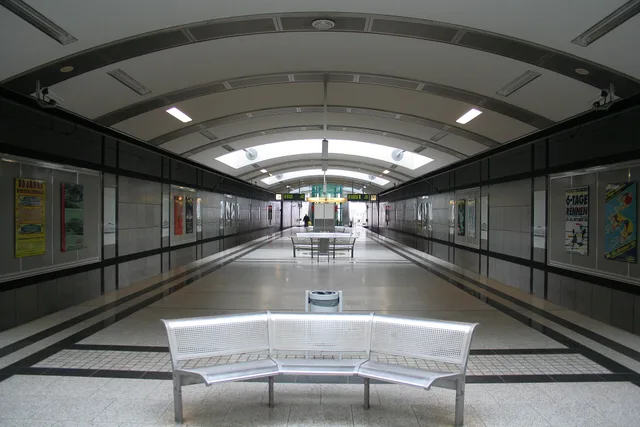
A later view at the Westfalenhallen transit stop, documenting access to the broadcast venue rather than a 1978 concert — User:ReferenceBK — Wikimedia Commons — CC BY-SA 3.0 · source record · CC BY-SA 3.0
Converted to WebP and resized; no generative or compositional alterations.
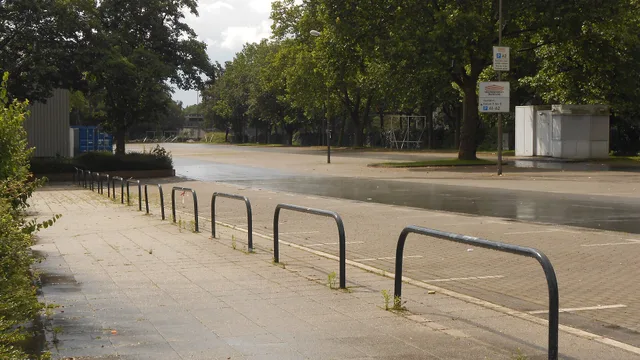
A modern view of the Westfalenhallen site. The 1978–1980 broadcast stages used a different temporary production layout — Joehawkins — Wikimedia Commons — CC BY-SA 4.0 · source record · CC BY-SA 4.0
Converted to WebP and resized; no generative or compositional alterations.
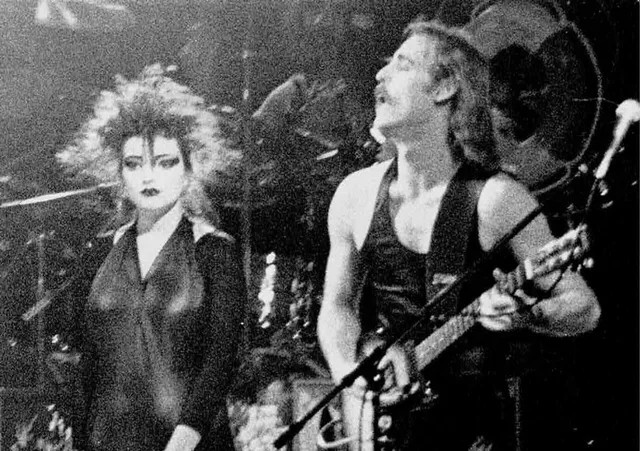
Nina Hagen Band in 1979, close-period context for the group’s December 1978 Dortmund performance — Wolfgang Autenrieth — Wikimedia Commons — CC BY-SA 4.0 · source record · CC BY-SA 4.0
Converted to WebP and resized; no generative or compositional alterations.
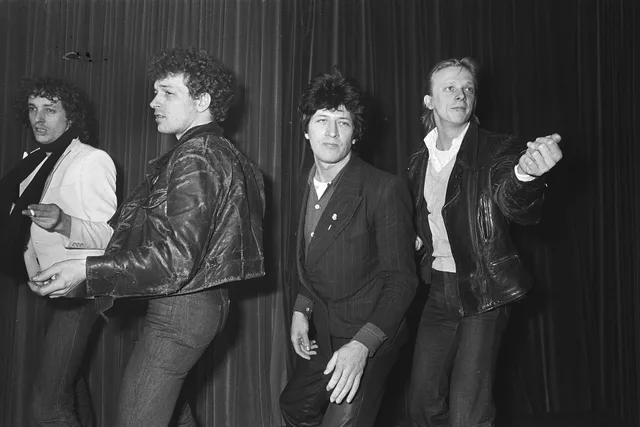
Herman Brood and His Wild Romance in 1979, close-period artist context for the Dortmund sessions — Suyk, Koen / Anefo — Wikimedia Commons — CC0 · source record · CC0
Converted to WebP and resized; no generative or compositional alterations.
Herman Brood in 1979, one year after the documented Westfalenhalle broadcast — Koen Suyk / Anefo — Wikimedia Commons — CC0 · source record · CC0
Converted to WebP and resized; no generative or compositional alterations.