Process Leaves a Trace
The method remains audible in the finished recording.

Progressive Rock Family
Progressive form used as a laboratory: familiar rock materials subjected to new systems, textures and methods of development.
The Sound
Experimental progressive rock is deliberately broad. It describes music that retains prog’s interest in development and album-scale form while making the experiment itself central. A record may test circular structure, extreme repetition, unstable tuning, processed ambience, non-standard recording or a narrative assembled from sound rather than lyrics.
The label differs from avant-prog in emphasis. Avant-prog often draws on dissonant composition and tightly organised ensemble language. Experimental prog can be spacious, electronic, minimal or studio-built. It may remain harmonically simple while radically changing how duration and texture work.
Because “experimental” depends on context, the term should not become an empty compliment. An unusual effect is not enough. The process must change the composition: rules are established, tested and allowed to produce consequences. The listener should hear the record discovering what its own system can do.
What You’ll Hear
How It Works
Experimental progressive rock treats the album as a place where methods can be tested. Tape processes, unusual tuning, unstable repetition, found sound or deliberately incomplete forms may sit beside recognisable rock instrumentation without being forced into a conventional resolution.
Listen for cause and consequence. A sound introduced as atmosphere may later become rhythm; a studio accident may determine the harmony around it; a recurring passage may return damaged or reduced. The experiment becomes musically meaningful when it changes the piece’s behaviour.
Useful distinction: Boundary line: experimentation describes a method, not a quality guarantee. The strongest work builds a listening logic from risk instead of using strangeness as decoration.
The method remains audible in the finished recording.
Noise, drift and imperfection become compositional resources.
Sections may change function as the piece develops.
The music sounds as though it is learning its own rules.
Historical Development
Experimental progressive rock is the laboratory edge of the wider genre. It appeared wherever album-scale composition met tape editing, improvisation, unusual tuning, found sound or a deliberate refusal of stable form. The Beatles, Frank Zappa, King Crimson and Can each supplied different precedents before the category had a name.
During the 1970s, Henry Cow blurred composition and studio process, Magma invented a complete rhythmic and vocal world, and This Heat later applied tape systems and post-punk economy to progressive-scale thinking. The method mattered as much as the instrumental result.
The category remains broad because experimentation must remain open. A record belongs not because it sounds strange, but because a procedure changes its musical behaviour: a loop becomes metre, an improvisation determines later editing, or a recurring theme returns materially damaged.
The Real-World Foundations
Not a ranking: six useful doors into the style.
Composition, documentary fragments and tape construction become inseparable.
Collective improvisation and radical editing turn repetition into a studio-built form.
A new ensemble tests percussion, free improvisation and heavy composition in public.
The studio becomes a compositional partner when written material is no longer sufficient.
Invented language, ritual rhythm and choral force establish an independent musical system.
Tape manipulation, song fragments and political tension carry experimentation into a harsher era.
Start Here
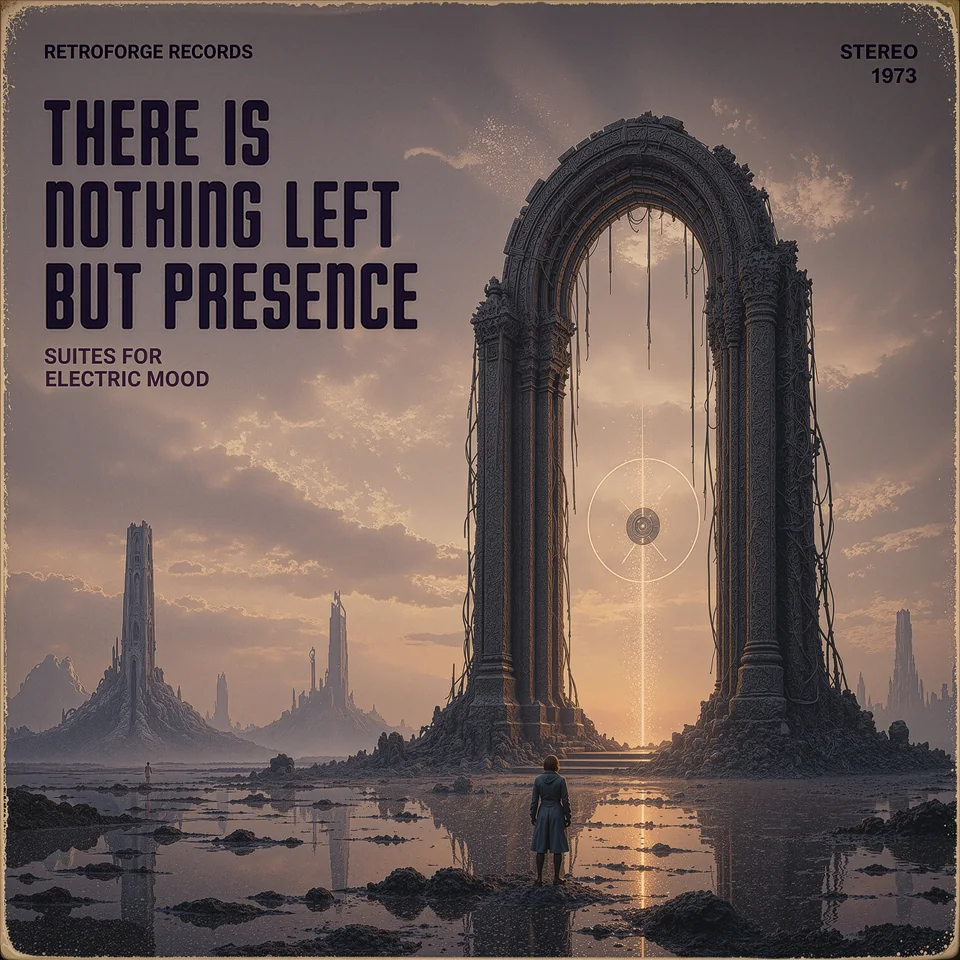
1973 · Progressive Rock
Suspended structures and a world reduced to one remaining condition make the experiment inseparable from the album’s form.
Open the liner notes →Questions from the Record Room
Primarily a method. The music can be quiet, heavy, electronic or acoustic if experimentation changes its structure.
Avant-prog often emphasises composed systems and ensemble difficulty; experimental prog can centre studio process, improvisation or unstable materials.
Absolutely. Melody can be the stable element that reveals how radically everything around it is changing.
Related Styles
Research Trail
Deeper Discovery
Start with The River Beneath the World as a RetroForge companion, then return through Progressive Rock to place it inside the wider family.
Curated paths into the people, records, events and ideas that give this subject its wider musical context.