

Why this event matters
Woodstock became larger than its programme. The event was conceived as a business venture and advertised as three days of peace and music, yet the conditions at Bethel produced something the organisers could not fully control: an immense, undersupplied temporary population gathered around one stage. Roads seized, planned ticket control collapsed, rain altered the ground and the schedule ran deep into the following Monday. The survival of the event without the catastrophe many feared became part of its meaning.
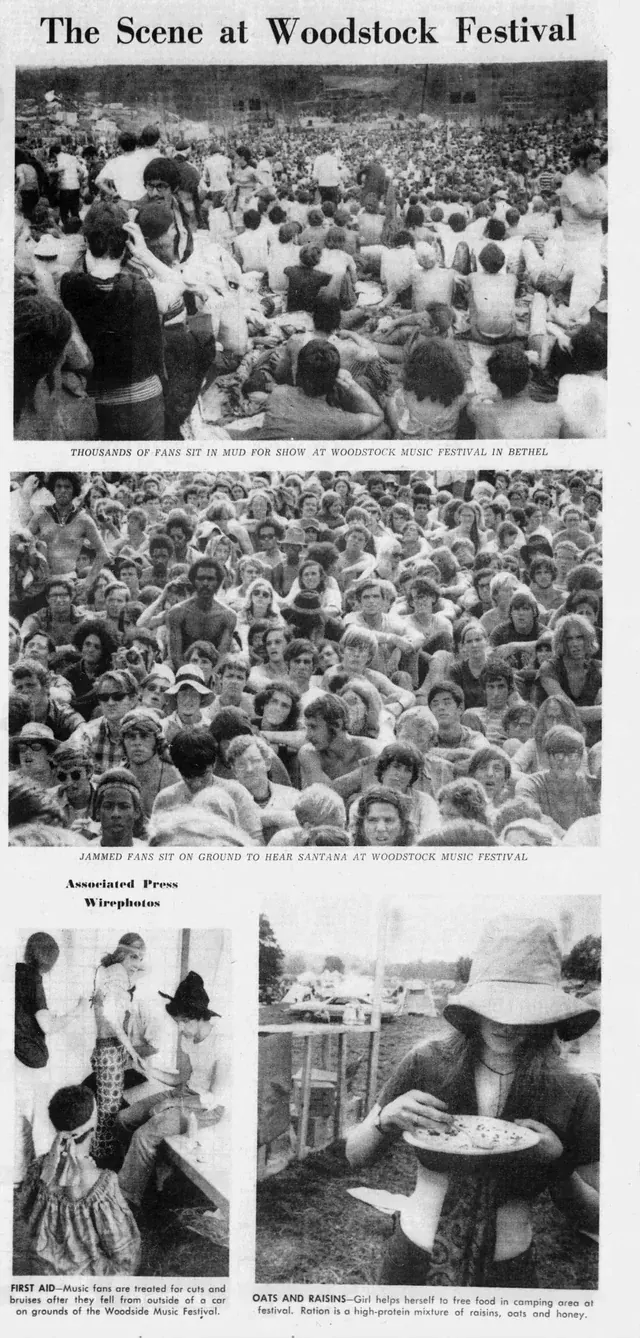
Its historical power comes from a second transformation. Film, soundtrack albums, photographs and repeated anniversary coverage separated Woodstock from ordinary time. Millions who were never near New York learned the event through edited performances and recurring images of fields, mud, blankets and crowds. The archive did not merely report the festival. It built the version of Woodstock that entered public memory.
.jpg)
Before the gates opened
Woodstock did not take place in Woodstock. The name came from the artists' colony where organisers initially imagined building a recording studio and associated cultural project. Proposed sites changed as local opposition and practical obstacles accumulated. The event finally moved to Max Yasgur's dairy farm near Bethel with very little time remaining. That late change helps explain why infrastructure, access and crowd control were under such pressure before the first performance began.
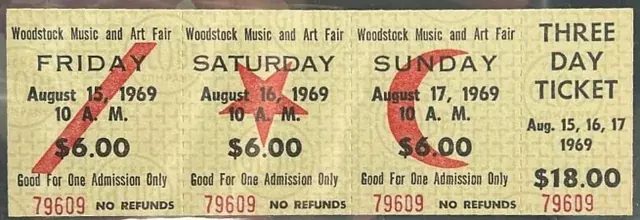
The four principals of Woodstock Ventures brought different resources: music-industry connections, promotional ambition and financial backing. Their plans assumed a large paying audience, not an uncontrolled free gathering. Advance tickets existed and performers were contracted. The shift to free admission was not the original utopian principle of the production; it was a response to fences, entrances and crowds that had already overtaken the intended system. Keeping that distinction visible prevents the legend from erasing the event's commercial origins.
The place and the people
Yasgur's bowl-shaped farmland gave the stage a natural audience area, but the site had to support far more than listening. People needed water, food, medical care, shelter and sanitation. The Hog Farm collective became associated with security and practical assistance, while local residents, volunteers, medical workers and military helicopters became part of the event's improvised support network. Woodstock's social story is therefore not just a crowd behaving peacefully. It is a story of emergency adaptation.
Weather turned the field into the visual landscape remembered from the film and photographs. Yet “mud” can become another lazy shorthand. The audience's experience varied by arrival time, location, health, supplies and ability to leave. Many saw only part of the programme. Others were stranded in traffic or turned back. The famous aerial idea of one unified crowd conceals hundreds of thousands of different practical experiences.

The musical programme
Thirty-two acts performed according to the official Woodstock history, although the sequence departed dramatically from any simple printed timetable. Richie Havens opened after delays made other artists unavailable. Folk and acoustic performers shaped Friday; the weekend then moved through blues rock, Latin rock, soul, psychedelia and hard rock. Joan Baez, Santana, Canned Heat, Mountain, the Grateful Dead, Creedence Clearwater Revival, Janis Joplin, Sly and the Family Stone, The Who and Jefferson Airplane occupied very different musical worlds.
The final stretch carried Crosby, Stills, Nash & Young, the Paul Butterfield Blues Band, Sha Na Na and Jimi Hendrix into Monday morning. Hendrix played to a field already greatly reduced from the weekend peak. His treatment of “The Star-Spangled Banner” became the festival's most frequently interpreted musical document, but its later prominence should not be confused with the size of its immediate audience. Woodstock continually exposes the difference between an event as experienced and an event as remembered.
Stage, sound and production
One stage had to absorb delays, weather, lengthy changeovers and a programme that no longer belonged to ordinary clock time. Sound reinforcement for a crowd of this scale was an engineering problem without today's established festival systems. The PA had to project across open land while performers onstage still needed to hear enough to play. Surviving accounts include both effective moments and serious difficulties; not every artist considered the conditions successful.
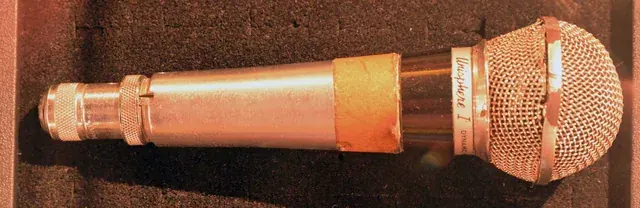
The stage also became a communications platform. Announcements about health, lost people, weather and supplies interrupted the musical flow because the festival had no separate digital or broadcast infrastructure for its temporary population. A microphone was not merely part of the show. It was one of the few ways organisers could speak to the field.

The film and the myth
Michael Wadleigh's documentary gave Woodstock duration, character and structure for audiences who encountered it in a cinema. Split screens could show performer and crowd simultaneously. Backstage labour, traffic, rain and local response widened the film beyond a concert record. Editing selected certain performances and left others outside the dominant story, but it also preserved the event's contradictions: commercial machinery, physical strain, generous improvisation and extraordinary music.
The film and soundtrack turned attendance into cultural participation at a distance. “Woodstock” became available as an identity for a generation, even to people who had not been there. Later commemorations often simplified that identity into peace symbols and nostalgia. A more useful reading keeps the material facts in view. The event was peaceful on a remarkable scale, but it was also dangerously underprepared, financially damaging to its original producers and dependent on assistance far beyond the planned organisation.
What happened afterward
The farm returned to rural use, but the site accumulated national significance. It was added to the National Register of Historic Places in 2017, and the Museum at Bethel Woods now interprets the festival within the wider history of the 1960s. That institutional recognition matters because it treats the landscape itself—not only famous performances—as historical evidence.
Later events used the Woodstock name in 1994 and 1999 under very different conditions. They demonstrate that a name cannot reproduce the social arrangement of 1969. The original depended on an unrepeatable collision of ambition, error, mass movement, media and public mood. Its legacy is neither a simple instruction manual nor proof that large crowds organise themselves. It is a record of what happened when a festival became a city before its builders were ready.

Films, recordings and surviving documents
The 1970 documentary and multi-disc soundtrack fixed a particular set of musical moments in public memory. Some major appearances were omitted or limited because of rights, technical quality or editorial choice. Creedence Clearwater Revival, for example, long occupied a smaller place in the familiar screen version than the band's status on the bill might suggest. An absence from the film is therefore not evidence of an unimportant set.
Tickets, flyers, local newspapers, oral histories and the cultural landscape of the site provide a broader record. Bethel Woods' oral-history work is especially valuable because memory can be compared across attendees, workers and residents rather than treated as one unanimous experience. The National Register documentation adds land use, boundaries and physical features that concert histories often ignore.
What the legend says
Woodstock is often narrated as if half a million people simply chose peace and solved every problem through goodwill. There was striking cooperation, and the low level of violence remains historically important. Yet the outcome also depended on medical professionals, local assistance, emergency transport, food distribution and people doing unglamorous work. Peace was not the absence of infrastructure; it survived partly because new infrastructure was improvised.
Another familiar simplification describes Woodstock as the final pure moment before Altamont. That pairing is powerful symbolism, not a complete history of either event. Counterculture already contained commercial conflict, inequality and risk before August 1969, while cooperation did not disappear afterward.
Legacy
Woodstock changed the imagined scale of live rock. Promoters, authorities and audiences could no longer regard the giant gathering as a novelty likely to disappear. The event also sharpened every unresolved question: who pays for infrastructure, who bears risk, how a crowd receives reliable information, how performers and equipment reach the stage, and how a commercial event negotiates countercultural ideals.
The mythology survives because it contains genuine achievement. Hundreds of thousands endured severe conditions without the violence predicted by some observers; music of lasting importance was recorded; local and improvised support prevented worse outcomes. Historical care does not diminish that achievement. It makes it visible beneath the logo, the slogans and the edited golden memory.
Follow the festival beyond the field
Timeline
Related genres
Related band guides
Explore by sound
Essential listening
RetroForge Echo
Hear a Fictional Archive Response
These modern RetroForge releases echo part of the festival’s musical vocabulary; they are not historical festival recordings.
Sources and further reading
- Woodstock Music Festival SiteU.S. National Park Service · accessed 23 July 2026
- Woodstock HistoryMuseum at Bethel Woods · accessed 23 July 2026
- About the 1969 festivalWoodstock Ventures · accessed 23 July 2026
- Woodstock Festival Grounds Cultural Landscape ReportBethel Woods Center for the Arts · accessed 23 July 2026
- Peace, Love, Music and Mud: LIFE at WoodstockLIFE / TIME archive · accessed 23 July 2026
Image credits5 licensed images
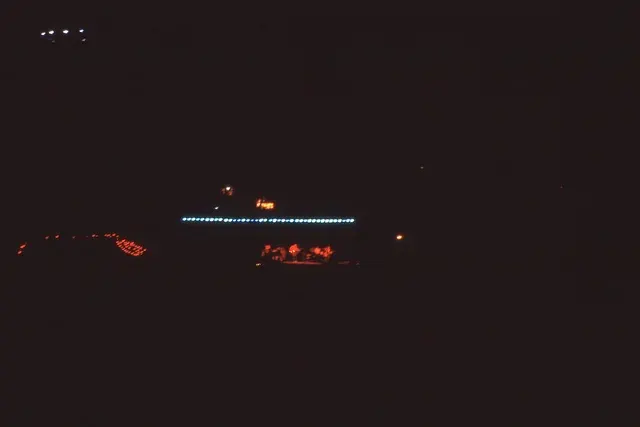
Mountain performing on Saturday night — James M Shelley — Wikimedia Commons — CC BY-SA 4.0 · source record · CC BY-SA 4.0
Converted to WebP and resized; no generative or compositional alterations.
Contemporary newspaper coverage records Woodstock as news before later films, albums and anniversaries turned it into a global symbol — Press and Sun-Bulletin/ Associated Press — Wikimedia Commons — Public domain · source record · Public domain
Converted to WebP and resized; no generative or compositional alterations.
A Woodstock admission ticket — Anonymous — Wikimedia Commons — Public domain · source record · Public domain
Converted to WebP and resized; no generative or compositional alterations.
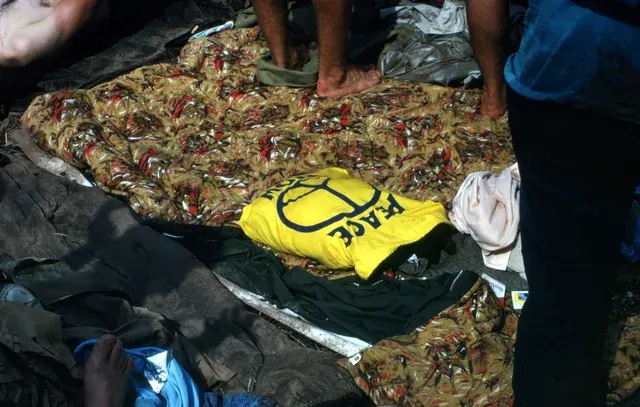
Sleeping bags and a peace-symbol pillow on the festival field: ordinary objects from an improvised temporary city — James M Shelley — Wikimedia Commons — CC BY-SA 4.0 · source record · CC BY-SA 4.0
Converted to WebP and resized; no generative or compositional alterations.
A Shure Unisphere 565 associated with the Woodstock stage, a reminder that the legend depended on fragile, practical sound technology — Jud McCranie — Wikimedia Commons — CC BY-SA 4.0 · source record · CC BY-SA 4.0
Converted to WebP and resized; no generative or compositional alterations.