The Hook as Anchor
A memorable refrain gives complex surroundings a stable point of return.

Progressive Rock Family
Progressive colour and album-minded arrangement meeting melodies that reveal themselves without a twenty-minute initiation ceremony.
The Sound
Crossover prog sits where progressive rock meets accessible songcraft. Its pieces may use odd metres, layered keyboards, thematic continuity and conceptual albums, yet the melody usually arrives clearly and the individual tracks can stand outside the larger sequence.
Concise does not mean simple. A four- or five-minute song can contain sophisticated harmony, an unusual bridge or an instrumental passage that changes the meaning of the final chorus. The craft lies in making those details feel inevitable rather than announcing complexity as a test for the listener.
The category overlaps with art rock, melodic prog and some neo-prog. It is best treated as a listening route rather than a purity label: music for someone who wants progressive atmosphere and arrangement but prefers a more immediate vocal or emotional centre. At album scale, recurring sounds and lyrical themes can still create a complete journey without requiring every track to behave like a suite.
What You’ll Hear
How It Works
Crossover prog keeps progressive rock’s appetite for colour, changing structure and conceptual continuity while giving melody a clearer route through the arrangement. The songs may be shorter, but their internal movement still matters: bridges transform the mood, instrumental passages advance the idea and production creates depth beyond the hook.
The strongest examples do not dilute prog into ordinary radio rock. They compress it. Listen for how much development is carried by economical gestures—a shifted chord beneath the final chorus, a brief odd-metre turn, or a keyboard texture that makes the same melody feel newly exposed.
Useful distinction: Boundary line: accessibility is not simplicity. Crossover prog works when clarity concentrates the arrangement rather than removing its ambition.
A memorable refrain gives complex surroundings a stable point of return.
Structural change happens quickly but still changes the emotional direction.
Layering and tone reward close listening without obscuring the song.
Immediate appeal and album-scale depth are allowed to coexist.
Historical Development
Crossover prog grew wherever progressive musicians found ways to compress large ideas into clearer songs. It was present during the 1970s in the melodic precision of Supertramp, Kansas and the Alan Parsons Project, and became increasingly important as radio, touring and record-company expectations changed.
The approach does not require abandoning album structure. A record may still build recurring themes and dramatic sequence while individual tracks supply recognisable refrains. In the 1980s, cleaner production and synthesizers made that balance especially visible; later artists used the same principle without sounding tied to one decade.
Good crossover prog is not diluted prog. It is concentrated arrangement. A short bridge can perform the structural work that another style assigns to a five-minute instrumental section, and a chorus can return with altered harmony or context.
The Real-World Foundations
Not a ranking: six useful doors into the style.
Strong songs become a coherent album through keyboards, production and recurring emotional pressure.
American hard rock, violin and progressive structure meet memorable vocal writing.
Studio design and a clear literary concept connect accessible individual tracks.
Sequenced keyboards and concise drama show the style entering the new decade.
A long instrumental became widely accessible through recurring motifs and exceptional sonic identity.
Modern production and direct songwriting support a carefully connected album narrative.
Closest RetroForge Route
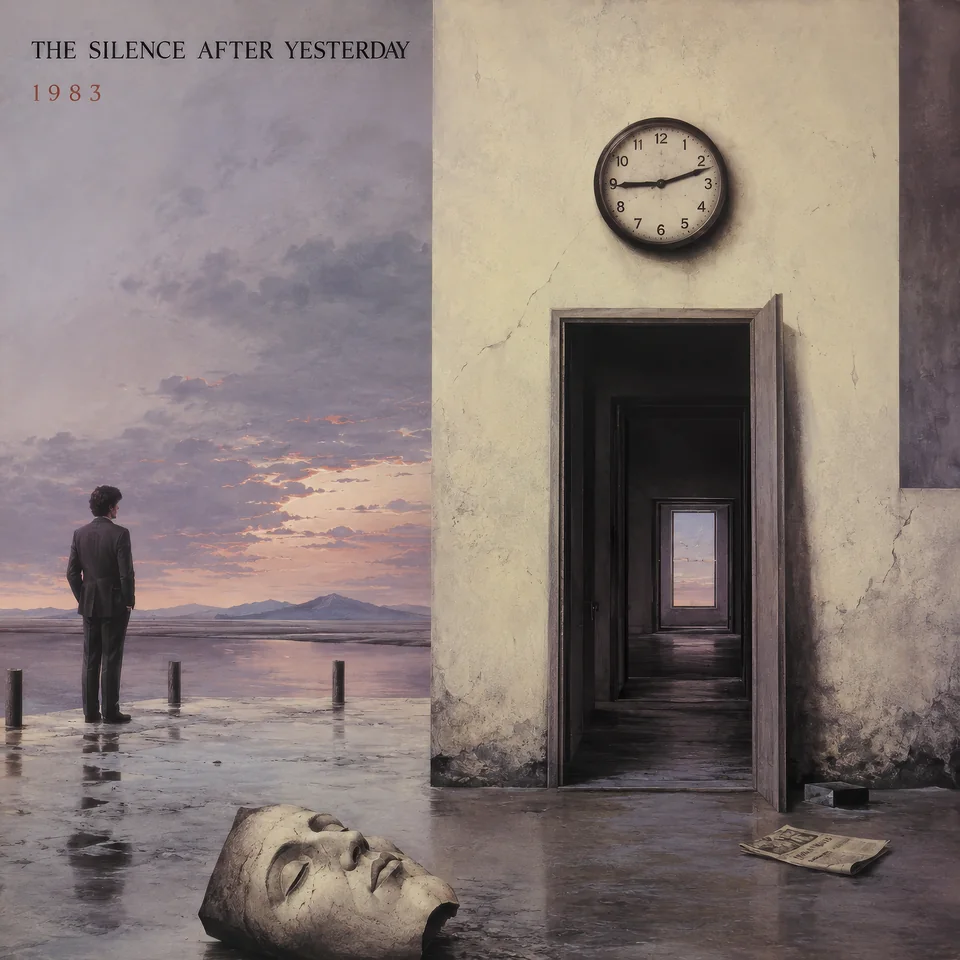
1983 · Neo-Prog
Melodic clarity, 1980s keyboard colour and a connected emotional concept make it the most immediate bridge into RetroForge prog.
Open the liner notes →Questions from the Record Room
Not necessarily. It describes progressive detail communicated through clear melodies and relatively approachable forms.
Yes. The distinction is clarity of entry, not a strict running-time limit.
Notice what changes beneath a repeated chorus or hook; the development is often compressed into harmony, texture and transition.
Related Styles
Research Trail
Deeper Discovery
Start with The River Beneath the World as a RetroForge companion, then return through Progressive Rock to place it inside the wider family.
Curated paths into the people, records, events and ideas that give this subject its wider musical context.