Bass Keeps Authority
The low-end pattern remains the centre of gravity through every expansion.

Psychedelic Rock Family
Soul’s rhythmic authority and vocal expression expanded through fuzz, tape effects, orchestration and arrangements built for altered scale.
The Sound
Psychedelic soul keeps groove and collective performance at its centre. The experiment happens around that foundation: phased rhythm guitar, distorted bass, orchestral colour, extended forms and studio space that changes how the ensemble feels.
The style is historically important because experimentation does not replace social voice or physical rhythm. Ambitious production, direct songcraft and political or personal urgency can occupy the same record.
RetroForge does not currently have a release that should be presented as psychedelic soul. The album below is only a neighbouring psychedelic listen while that genuine catalogue gap remains visible.
What You’ll Hear
How It Works
Psychedelic soul preserves the authority of rhythm, vocal expression and communal response while opening the production toward fuzz, orchestration, extended form and spatial experiment. The groove is not replaced by psychedelia; it becomes the stable force through which the altered environment is understood.
Listen to the relationship between direct emotion and elaborate sound. A lead vocal may remain completely immediate while instruments phase around it, or a repeated bass line may hold together an arrangement that keeps growing beyond ordinary scale.
Useful distinction: Boundary line: psychedelic effects applied to a soul performance are only the surface. The enduring fusion happens when groove, voice and studio experiment depend on one another.
The low-end pattern remains the centre of gravity through every expansion.
Emotional directness survives dense orchestration and processing.
Group vocals and instrumental responses preserve communal energy.
Fuzz, strings and echo enlarge the message rather than obscure it.
Historical Development
Psychedelic soul took shape when late-1960s soul musicians and producers absorbed the expanded studio language of psychedelic rock. Fuzz guitar, tape effects, extended form and surreal atmosphere entered music already grounded in vocal arrangement, dance rhythm, gospel and orchestration. The result was not rock with a soul singer attached; it was a transformation from within Black popular music.
Sly and the Family Stone connected integrated-band politics, funk rhythm and psychedelic colour. Norman Whitfield reshaped the Temptations through long arrangements, wah-wah guitar and socially charged material. George Clinton's Funkadelic made the overlap with acid rock explicit while keeping groove and collective identity at the centre.
The style helped open the route toward funk and ambitious 1970s soul albums. Its bright communal promises were often matched by darker accounts of war, urban pressure and disillusionment. That tension—between liberation and overload—is more defining than any single effect.
The Real-World Foundations
Not a ranking: six useful doors into the style.
Pop immediacy, social argument and elastic funk make psychedelia collective.
Norman Whitfield expands the Motown group sound through topical writing and psychedelic production.
Minnie Riperton's voice rises through orchestral soul, rock instrumentation and studio collage.
Whitfield's production gives psychedelic soul a stranger and less polished vehicle.
Acid-rock guitar, gospel feeling and funk imagination occupy the same damaged landscape.
Gospel-rooted vocals and the extended Time Has Come Today bridge soul and acid rock.
Research Trail
Closest RetroForge Route
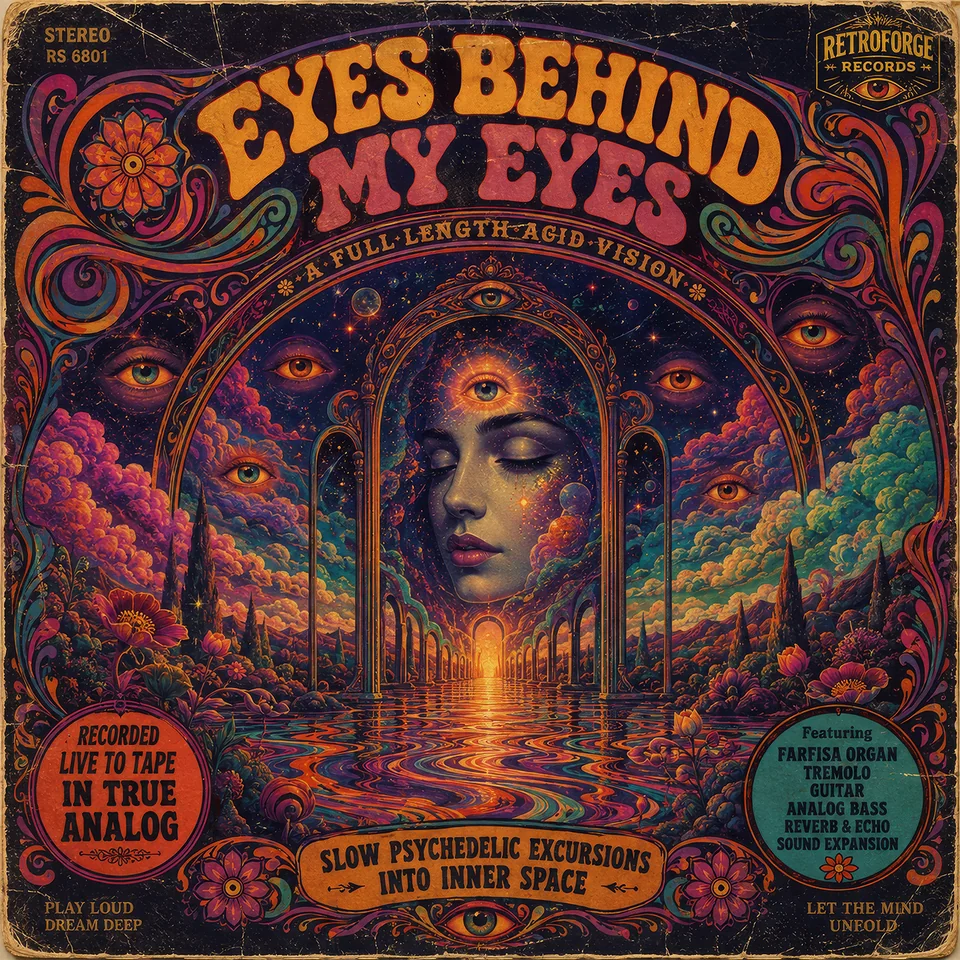
Adjacent Psychedelic Listening
A psychedelic recommendation only; RetroForge has no dedicated psychedelic-soul album yet.
Open the liner notes →Questions from the Record Room
No, but it was an important route into funk. Psychedelic soul often retains elaborate vocal and studio drama while funk makes rhythmic organisation more central.
Norman Whitfield is essential, while George Clinton and Charles Stepney shaped very different branches of the sound.
They allowed grooves, orchestration and studio effects to develop beyond the limits of the standard soul single.
Deeper Discovery
Start with The Purple Sun Is Watching as a RetroForge companion, then return through Psychedelic Rock to place it inside the wider family.
Curated paths into the people, records, events and ideas that give this subject its wider musical context.