The Chorus Survives
A strong melodic return anchors the listener inside shifting colour.

Psychedelic Rock Family
Memorable melody and compact song form passing through dreamlike production, unusual harmony and a studio with no interest in realism.
The Sound
Psychedelic pop keeps the discipline of the song. Hooks, vocal harmony and concise form remain central, but the production makes ordinary reality unreliable. Backward sound, tape speed, phasing, orchestral colour and sudden changes of perspective allow a familiar melody to appear from several angles.
The genre differs from sunshine pop and baroque psychedelia by breadth. It can be bright or unsettling, ornate or minimal. What matters is the tension between accessibility and altered perception: the listener can remember the tune after one play while still being unable to explain the room in which it occurred.
Because the studio carries so much weight, detail matters. A short transition, a doubled voice or one impossible instrumental colour can perform the work that a long psychedelic jam achieves through duration.
What You’ll Hear
How It Works
Psychedelic pop compresses altered perception into concise, memorable songs. Melody and chorus remain central, but arrangement and production keep changing the frame around them: instruments enter from improbable distances, harmonies widen and familiar forms acquire dreamlike transitions.
The craft is in balance. Too little disruption and the result is ordinary pop with decorative effects; too much and the hook loses its organising role. The best records let immediacy and strangeness intensify one another.
Useful distinction: Boundary line: psychedelic pop is not defined by brevity alone. Its pop architecture must be meaningfully changed by studio space, harmony or surreal perspective.
A strong melodic return anchors the listener inside shifting colour.
Unexpected instruments and edits alter meaning quickly.
Layered voices enlarge a compact song without slowing it down.
Every unusual gesture earns its place inside limited running time.
Historical Development
Psychedelic pop developed when the studio discoveries of the mid-1960s entered songs that still depended on melody, hooks and concise form. After records such as Revolver demonstrated how tape speed, backwards sound, sitar, fuzz and layered voices could transform a pop arrangement, producers and groups treated the single as a miniature sound world rather than a document of a live performance.
The style is not simply psychedelic rock shortened to three minutes. Its craft lies in placing unfamiliar timbre inside a structure the listener can remember immediately. The Zombies used keyboard harmony and choral precision; Love balanced orchestral detail with folk-rock tension; Sagittarius and the Millennium made the studio itself function like a band.
Because the surface can be bright, the emotional range is sometimes underestimated. Many defining records place unease, isolation or temporal confusion beneath beautiful harmony. Psychedelic pop succeeds when experiment sharpens the song rather than covering it.
The Real-World Foundations
Not a ranking: six useful doors into the style.
A pop album becomes a laboratory without sacrificing melodic economy.
Keyboard colour, vocal arrangement and melancholy songwriting achieve unusual unity.
Acoustic tension and orchestral detail turn Los Angeles sunshine into something unstable.
Mod energy, studio play and a story-suite share one exuberant record.
A studio project proves that layered production can be the primary creative identity.
Dense harmony and painstaking arrangement push psychedelic pop toward cult perfectionism.
Research Trail
Closest RetroForge Route
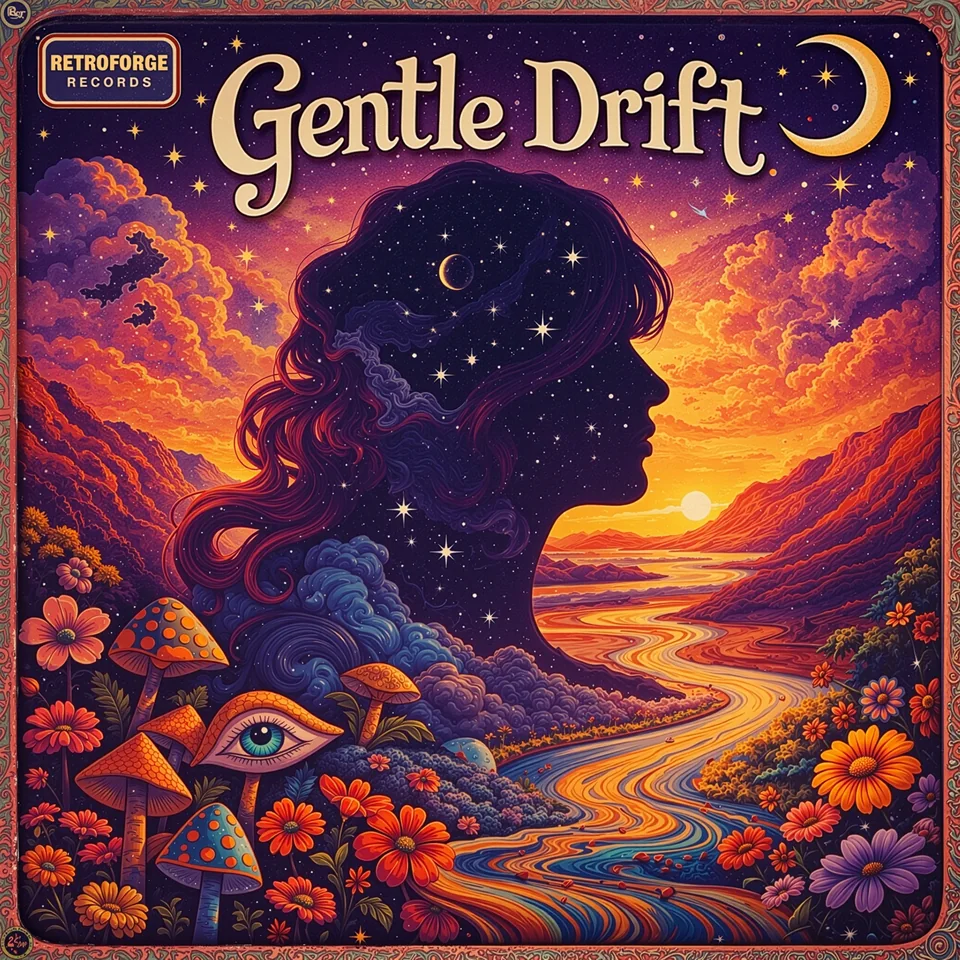
1967 · Dreamy Psychedelic Rock
Its gentle melodic focus and shifting dream colour make it the nearest current route, though the album drifts longer than classic psych pop.
Open the liner notes →Questions from the Record Room
No. Bright harmony often carries melancholy, anxiety or surreal dislocation.
Psychedelic pop foregrounds altered perception and studio experiment; sunshine pop usually prioritises warmth, harmony and polished optimism.
Absolutely. A reversed tape part, unexpected harmonic turn or radically layered vocal can reshape a two-minute song.
Related Styles
Deeper Discovery
Start with The Purple Sun Is Watching as a RetroForge companion, then return through Psychedelic Rock to place it inside the wider family.
Curated paths into the people, records, events and ideas that give this subject its wider musical context.