The Groove Is a Launch Point
A repeated foundation gives improvisation room to move outward.

Psychedelic Rock Family
The louder, rawer and more improvisational edge of psychedelia: saturated guitar, extended movement and rhythm that feels physically altered.
The Sound
Acid rock and psychedelic rock were sometimes used almost interchangeably in the late 1960s, but the narrower label remains useful for the harder end of the spectrum. Guitar distortion becomes a primary environment, the rhythm section plays with live-room force and songs leave space for extended instrumental movement.
The blues often remains underneath, though it may be stretched until the original progression becomes difficult to see. Solos are less about polished display than intensity, feedback and collective momentum. Compared with psychedelic pop, acid rock cares less about compact hooks and more about what can happen once the band stays inside a groove long enough for it to change character.
Volume alone is not sufficient. The psychedelic element comes from transformation: tape echo, modal drift, unstable repetition and improvisation make familiar rock materials feel newly uncertain.
What You’ll Hear
How It Works
Acid rock takes the physical language of blues-based rock and lets amplification, sustain and improvisation loosen its boundaries. Riffs remain important, but they become platforms for expansion. Guitar tone spreads into feedback, rhythm sections hold open spaces and songs can drift beyond the proportions of the single.
The best way to hear the style is through tension between anchor and escape. Bass and drums establish something bodily and recognisable while guitar, organ or voice tests how far the music can travel without losing that centre.
Useful distinction: Boundary line: fuzz is only a tool. Acid rock emerges when altered tone, open form and ensemble improvisation change the behaviour of the entire song.
A repeated foundation gives improvisation room to move outward.
Long guitar tones blur the boundary between melody and atmosphere.
Amplification enlarges the imagined room rather than merely increasing loudness.
The home riff gains meaning after the band has travelled away from it.
Historical Development
Acid rock emerged from the loudest edge of late-1960s psychedelia. Amplifiers became part of the composition: distortion thickened riffs, feedback extended notes beyond ordinary sustain and live volume changed how a trio or quartet could occupy a room. Blues supplied much of the early grammar, but repetition, modal playing and long solos loosened the music from conventional song form.
San Francisco ballrooms encouraged extended performance, while groups elsewhere arrived through hard blues, garage rock and studio experiment. Hendrix could make noise precise and colourful; Blue Cheer made it punishing; Quicksilver Messenger Service treated the jam as collective motion. The label was always broad, and contemporary listeners did not apply it with the tidy boundaries later histories sometimes imply.
By the end of the decade, acid rock was feeding several futures at once. Its weight moved toward heavy metal, its long instrumental passages toward progressive and jam-oriented rock, and its repetitive force toward later stoner music. The core experience remains immediate: a riff, a saturated sound and enough open space for the performance to change shape.
The Real-World Foundations
Not a ranking: six useful doors into the style.
Studio depth and electric improvisation show how expansive heavy psychedelia could become.
Blues songs are rebuilt as overloaded blocks of volume and distortion.
A side-long title track turns a simple riff into ritual, solo space and repetition.
Live-wire vocals and rough ensemble force capture the ballroom sound at full pressure.
Extended guitar exchange makes improvisation the record's central architecture.
Hard blues, organ and compact songwriting connect psychedelia to the coming heavy-rock mainstream.
Start Here
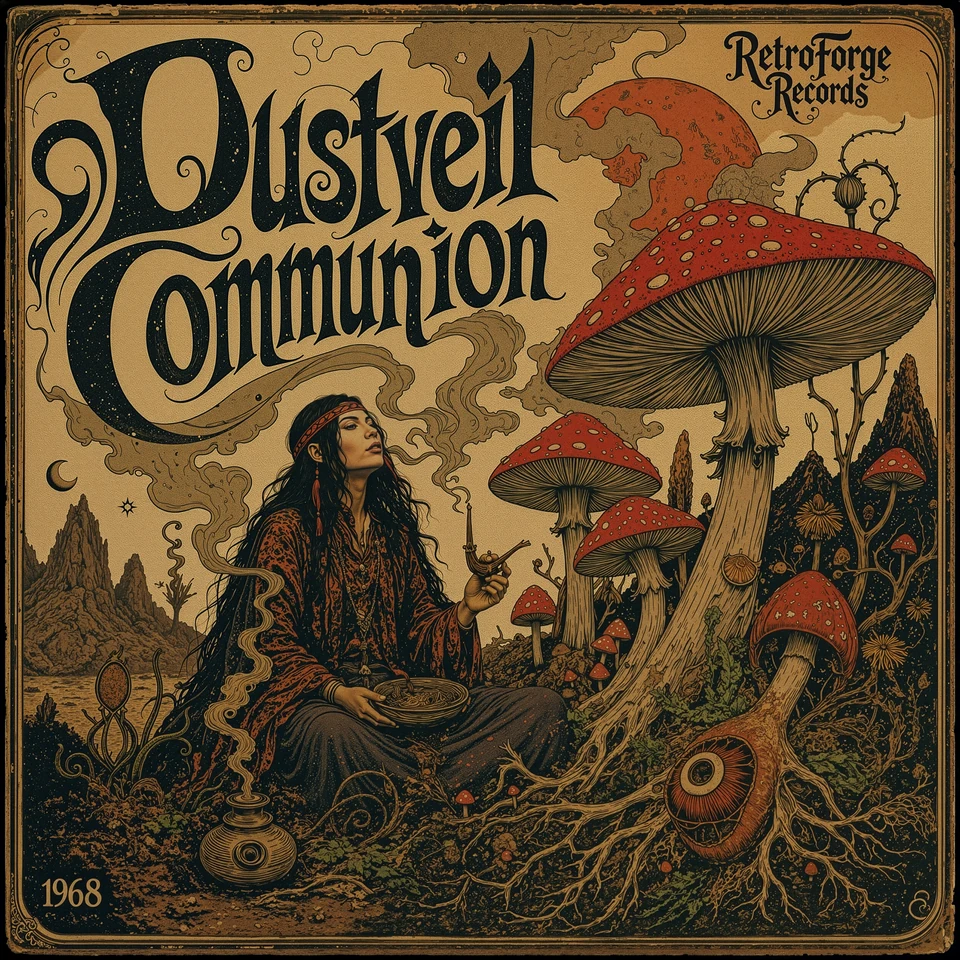
1968 · Psychedelic Blues · Acid Rock
Ten tracks of organ haze, blues-rooted weight and late-1960s acid-rock pressure.
Open the liner notes →Questions from the Record Room
The name grew from the music's association with psychedelic culture and LSD, not from a single formal musical rule.
The terms are often used interchangeably, although heavy psychedelia can also describe later music that borrows the sound without belonging to the original period.
It was one major source. Heavy metal tightened and darkened some of its riffs, but acid rock also fed jam bands, progressive rock and later stoner psychedelia.
Research Trail
Related Styles
Deeper Discovery
Start with The Purple Sun Is Watching as a RetroForge companion, then return through Psychedelic Rock to place it inside the wider family.
Curated paths into the people, records, events and ideas that give this subject its wider musical context.