Make resolution uncertain
Dissonance, pedal points, chromatic motion and ambiguous tonal centres keep the ear from settling.

RetroForge Atmosphere Guide
Darkness is pressure without an easy exit: harmony, register, rhythm and production narrowing the listener’s options.
Minor key is not a complete explanation
A cheerful melody can become disturbing through repetition, detuning or context; a minor chord can feel merely calm. Dark music controls what the listener expects and delays, corrupts or violently supplies the answer.
Dissonance, pedal points, chromatic motion and ambiguous tonal centres keep the ear from settling.
Low sustained tones add physical pressure; isolated high sounds can feel unprotected rather than bright.
Slow ostinatos, asymmetric cycles and sudden stops can feel ritualistic, stalking or structurally unstable.
Close dry sound creates enclosure; long decays and distant reflections create abandonment. Both can be dark for opposite reasons.
A pressure map
This model places a fixed low foundation beneath increasingly unstable layers. The most disturbing event may be the thin exposed signal, not the loudest block.
Five distinct pressures
Identifying the type of pressure prevents every heavy, dissonant or melancholic record from collapsing into the same description.
A slow approach whose destination is sensed before it becomes audible.
Repetition and collective rhythm turn time into an inescapable cycle.
Close sound, narrow register or repeated harmony removes perceived exits.
Established form breaks apart through distortion, silence or loss of pulse.
Darkness becomes spacious and reflective rather than aggressive.
Arrangement is suspense
Dark arrangements often reveal themselves slowly. A repeated bass note may appear neutral until harmony accumulates above it; a familiar theme may return with one interval changed.
A drone or incomplete voicing delays tonal certainty until a later note changes everything already heard.
A known motif returns detuned, reharmonised, slowed or played by a harsher instrument.
A consonant passage or reduced texture promises relief before the earlier pressure returns with greater force.
Silence, an empty beat or sudden removal of bass can create more alarm than another layer of distortion.
Listening anatomy
Listen for the mechanism of pressure: riff, dissonance, ritual repetition, unstable narration or production space.
Low-register guitar weight, compressed trio force and exposed quieter passages make physical density and absence equally threatening.
Read the album guide → Van der Graaf Generator · 1971Organ, saxophone, unstable ensemble form and Peter Hammill’s voice make psychological pressure inseparable from arrangement.
Read the album guide → Magma · 1973Repetition, choral mass and rhythmic escalation create ritual inevitability on an unusually large scale.
Read the album guide → Univers Zéro · 1979Chamber instrumentation, dissonance and patient low-register movement produce dread without relying on rock distortion.
Explore Rock in Opposition → Goblin · 1977Childlike voices, percussion, synthesizer and repeated motifs turn recognisable material into a horror environment.
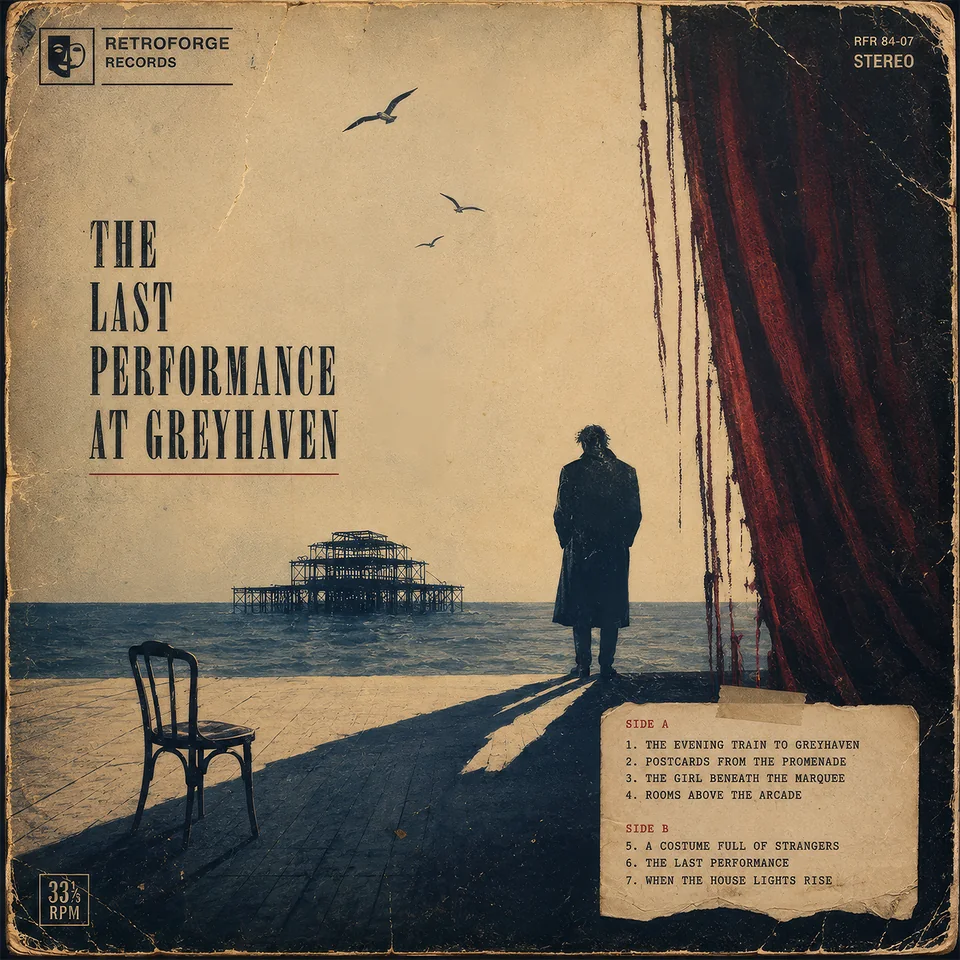
Explore dark prog → RetroForge · 1984Theatrical form, disappearing rooms and recurring stage material make darkness a structural process rather than a colour grade.
Open the liner notes →The weight test
Lower tuning, distortion and black artwork can communicate genre quickly, but they cannot substitute for controlled expectation.
Continuous maximum density removes the possibility of approach, surprise or catastrophic return.
A static sad colour does not become dramatic until tension changes or affects the form.
Dark subject matter feels pasted on when rhythm, register and production do not support or complicate it.
Sources and context
The five historical listening examples were checked against official artist or catalogue sources. The pressure map and dark-atmosphere taxonomy are original RetroForge analytical tools rather than terminology attributed to the artists.
Curated paths into the people, records, events and ideas that give this subject its wider musical context.