
A Genre Born Inside a Fiction
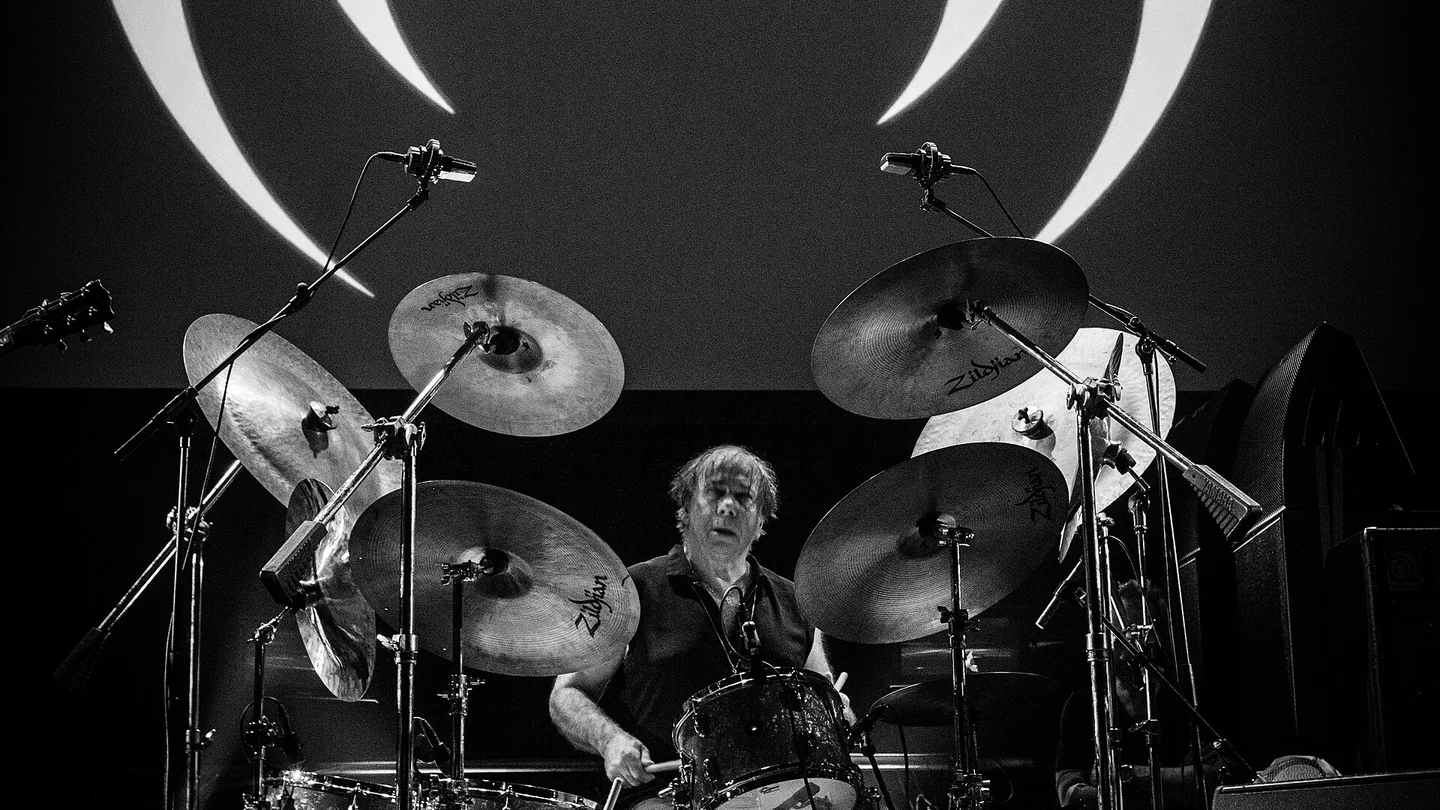
Drummer and composer Christian Vander founded Magma in France in 1969. The group’s 1970 double album Kobaïa introduced a distant world imagined as an alternative to a self-destructive Earth and used Kobaïan, the language Vander devised for Magma’s work. The label zeuhl also comes from that vocabulary and is commonly glossed as “celestial,” although no single English translation can define an entire musical practice.
That origin matters because zeuhl did not begin as a neutral checklist. It first described Magma’s particular artistic world; listeners and writers later broadened it to a musical lineage. Massed voices, disciplined repetition, unusually prominent bass, jazz-derived intensity and long accumulative forms are recurring signs, but none of them establishes membership by itself.
What the Music Actually Does
The easiest feature to hear is the rhythm section. Bass figures often behave like repeating engines while drums push against them with accents, surges and abrupt changes of weight. The repetition is not static. A phrase may remain in place while its harmony, vocal arrangement or density changes around it, creating the sense that the whole piece is climbing.
Voices are used as architecture. A zeuhl chorus can sound devotional, martial, operatic or ecstatic, sometimes within the same passage. Jazz is present less as relaxed swing than as harmonic pressure, improvisational alertness and instrumental stamina. Twentieth-century composition also sits in the background, especially in the use of ostinato, choral blocks and large-scale dramatic form.
The label becomes most useful when those devices work together: repetition acquires ritual force, the ensemble behaves like one organism, and voices participate in rhythm and form rather than merely carrying lyrics. That is an audible relationship to Magma’s method, not proof that every related record belongs to Kobaïan fiction.
Beyond the Founding Band
Personnel links made the first branches concrete. Saxophonist Yochk’o Seffer and keyboardist François “Faton” Cahen left Magma and formed Zao, whose work moved more openly toward jazz-rock and improvisation. Bassist Bernard Paganotti and keyboardist Patrick Gauthier later worked together in Weidorje, concentrating the lineage into a denser, bass-led ensemble sound.
Relationship is therefore more useful than purity. Magma is the centre; Zao and Weidorje are historically close but musically distinct branches. Farther out, the term identifies artists who engage with a recognisable rhythmic and choral grammar without sharing Magma personnel or adopting its fictional canon.
How to Listen
Start with the rhythm before trying to decode the story. Follow the bass pattern, then notice how drums and voices alter its meaning. Zeuhl often reveals itself through accumulation: an apparently severe opening becomes overwhelming because each return adds another layer or changes the balance.
RetroForge’s VÖRAK — The Kobaïan Codex is an original response to that vocabulary, not a historical recording and not part of Magma’s fictional canon. It uses zeuhl as a compositional route: rhythm first, massed momentum, voices and instruments treated as architecture.
The First Magma Records Change the Rules
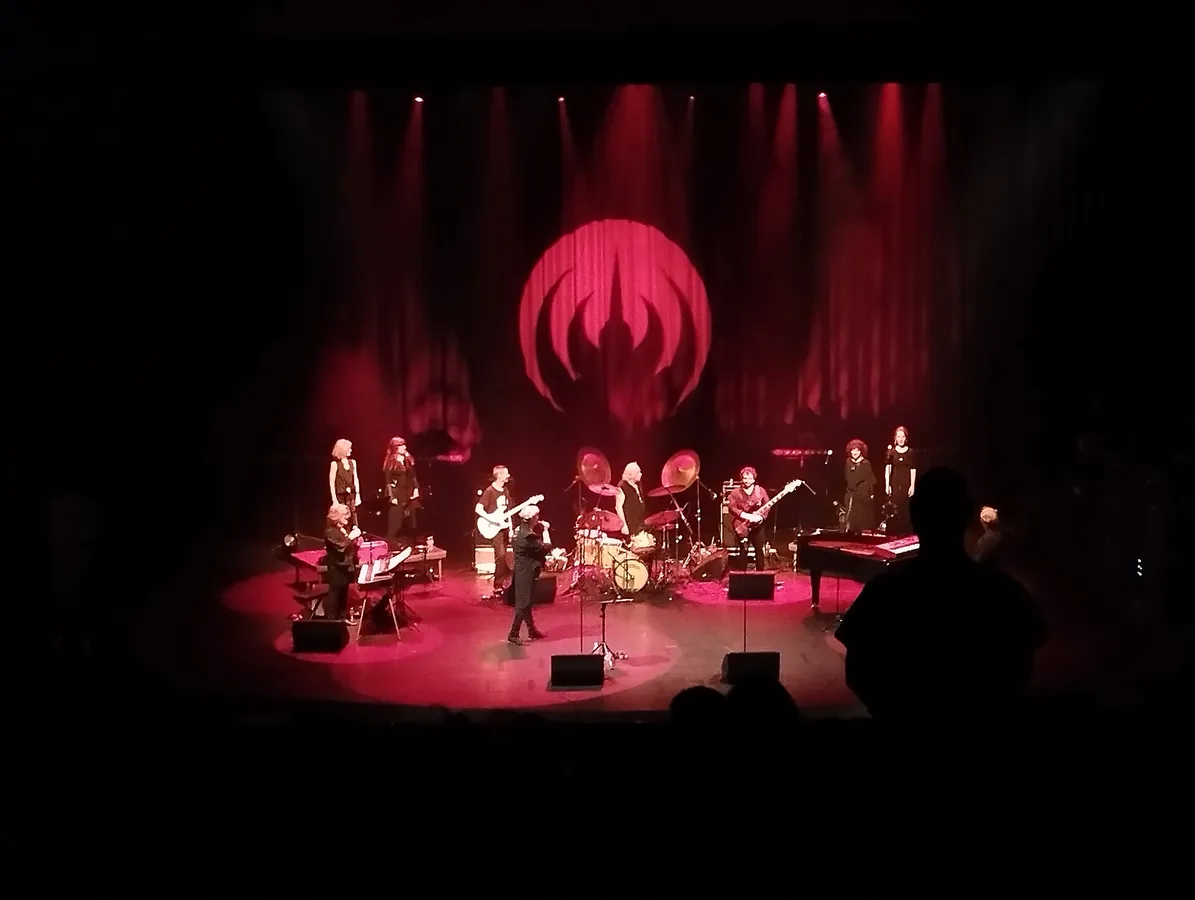
Magma’s early catalogue does not arrive as a finished genre manual. Kobaïa (1970) combines prominent brass, jazz-rock movement and the new language. 1001° Centigrades (1971) deepens that world and contains the long “Rïah Sahïltaahk,” which the band’s official archive presents as a step toward later large-scale works. Mëkanïk Dëstruktïẁ Kömmandöh (1973) places the vocal and cyclical drama at the centre, while Köhntarkösz (1974) gives bass and keyboards more room and changes the rhythmic feel.
The sequence shows why a single “sounds like Magma” checklist is inadequate. Brass-rich jazz-rock, massed vocal ascent and darker keyboard-and-bass suspense all belong to the same developing catalogue. Quiet passages and patient preparation matter as much as the famous martial intensity: the climaxes work because the ensemble controls when density and resolution arrive.
Bass, Drums and the Weight of Repetition
Zeuhl bass is frequently described as distorted or aggressive, but its structural role matters more than its tone. The bassist establishes a figure that the rest of the group can circle, reinforce or pull against. Christian Vander’s drumming then refuses to treat that pattern as a simple loop. Accents migrate, fills arrive as structural events, and cymbals can make a repeated bar feel as if it has suddenly acquired another storey.
Listen to how long a phrase can remain recognisable while its emotional meaning changes. A quiet keyboard voicing may initially make it mysterious; massed vocals make the same figure ceremonial; harder drumming turns it into propulsion. This is repetition as composition rather than repetition as background. Later zeuhl groups could change the instrumentation, language and degree of heaviness while retaining that fundamental idea.
A Scene Spreads Beyond France
Japan produced a later and more abrasive transformation around drummer and composer Tatsuya Yoshida. Ruins reduced the music to a fiercely compressed drum-and-bass format in several line-ups. Kōenjihyakkei expanded the palette to keyboards, reeds, bass, guitar and multiple voices; its label explicitly situates the group in zeuhl while also stressing progressive rock, fusion, neoclassicism, hardcore and metal.
These branches are connected by practice, not by membership in a formal school. A useful history distinguishes Magma’s Kobaïan universe, direct personnel offshoots and later artists working with parts of the musical grammar. That keeps influence visible without pretending that Zao, Weidorje, Ruins and Kōenjihyakkei are interchangeable—or that every choral progressive-rock record is zeuhl.
A Five-Record Listening Route
Begin with Magma’s Mëkanïk Dëstruktïẁ Kömmandöh for the concentrated meeting of massed voice, bass ostinato and long-form ascent. Move backward to Kobaïa for the more openly jazz-rock beginning, then forward to Köhntarkösz for darker pacing and a different use of suspense. Weidorje’s self-titled 1978 album shows a direct personnel branch making the bass-led pressure heavier and more compact. Kōenjihyakkei’s Nivraym demonstrates how Yoshida’s ensemble could rebuild the vocabulary through a much faster Japanese avant-rock language.
Do not worry about understanding every invented word on the first pass. Treat the voice as sound, follow one repeating figure, and notice what changes around it. On a second listen, map the entrances: when does the choir appear, when does the rhythm section tighten, and where does silence briefly interrupt the climb? Zeuhl becomes far less forbidding once its architecture is audible.
Sources and Further Reading
Official artist and label archives support the chronology, personnel links and release details below. The audible boundaries of zeuhl and the five-record route are RetroForge editorial analysis.
- Magma — official discography
- Magma — 1001° Centigrades archive
- Magma — Köhntarkösz archive
- The Quietus — Christian and Stella Vander on Kobaïan and Magma’s world
- Seventh Records — Patrick Gauthier biography and Weidorje connection
- Rythmes Croisés — interview with Zao co-founder Faton Cahen
- SKiN GRAFT Records — Kōenjihyakkei biography and discography