
RetroForge Genre Guide
Dark Prog
Progressive form does not always open onto wonder. Sometimes the corridor narrows, the organ hardens and every returning theme remembers something worse.
Progressive Rock After Sunset
Dark prog is not one historical school. It is a useful route through progressive music that directs long-form development toward unease, isolation, conflict or psychological pressure. The darkness may come from harmony, subject matter, instrumentation or production, but it must affect the structure rather than merely decorate it.
Van der Graaf Generator are a central reference because organ, saxophone and Peter Hammill’s theatrical voice could make large compositions feel claustrophobic instead of triumphant. King Crimson repeatedly found menace through rhythmic fracture and dissonance. Magma created ritual intensity through repetition and invented language. Later artists carried those possibilities into avant-prog, neo-prog, post-rock and progressive metal.
RetroForge dark prog often uses impossible architecture, broken systems and unstable time. Hammond and Mellotron remain present, but the familiar progressive palette is stripped of reassurance. Themes return damaged, narrators lose their position and finales may close the structure without resolving the world inside it.
What You’ll Hear
Inside the Sound
How to Listen
Follow the Arrangement
Dark prog often uses the same tools as symphonic prog—motifs, suites, instrumental development and dynamic contrast—but changes their emotional function. A returning Mellotron choir may no longer promise grandeur; it may sound like memory becoming unreliable.
Listen for the relationship between control and collapse. Precise ensemble passages create a frame that can later fracture. Silence, unresolved harmony and sudden reduction are as important as loud climaxes because darkness depends on what the arrangement withholds.
RetroForge approach: the archive year describes a musical vocabulary, not a claim that these are historical recordings.
Historical Development
How the Language Took Shape
Progressive rock’s darker current was audible from the beginning. King Crimson’s 1969 debut placed beauty beside apocalyptic weight, while Van der Graaf Generator made existential crisis and unstable drama central to the form.
During the 1970s, Zeuhl, avant-prog and Rock in Opposition expanded that vocabulary through ritual repetition, chamber dissonance and political resistance. Darkness could therefore mean emotional pressure, formal difficulty or the refusal of a comfortable commercial resolution.
Later progressive metal and neo-prog inherited parts of this language, but dark prog remains broader than either. It describes an effect created by structure: the sensation that the composition knows where it is going, even when the listener would rather it did not.
The Real-World Foundations
Six Essential Records
Not a ranking: six useful entrances into the sound.
Organ, saxophone and psychological intensity gathered into three severe structures.
Continue exploring →King CrimsonRed · 1974Austere power, fractured metre and one of progressive rock’s most uncompromising endings.
Continue exploring →MagmaMëkanïk Dëstruktïẁ Kömmandöh · 1973Ritual repetition and choral force operating outside ordinary rock narrative.
Continue exploring →Univers ZeroHeresie · 1979Chamber instrumentation turned toward dread, pressure and radical restraint.
Continue exploring →GenesisThe Lamb Lies Down on Broadway · 1974Surreal narrative and urban alienation inside a complete theatrical system.
Continue exploring →RushGrace Under Pressure · 1984Cold technology and human anxiety framed through concise progressive writing.
Continue exploring →Start Here
First Record on the Turntable
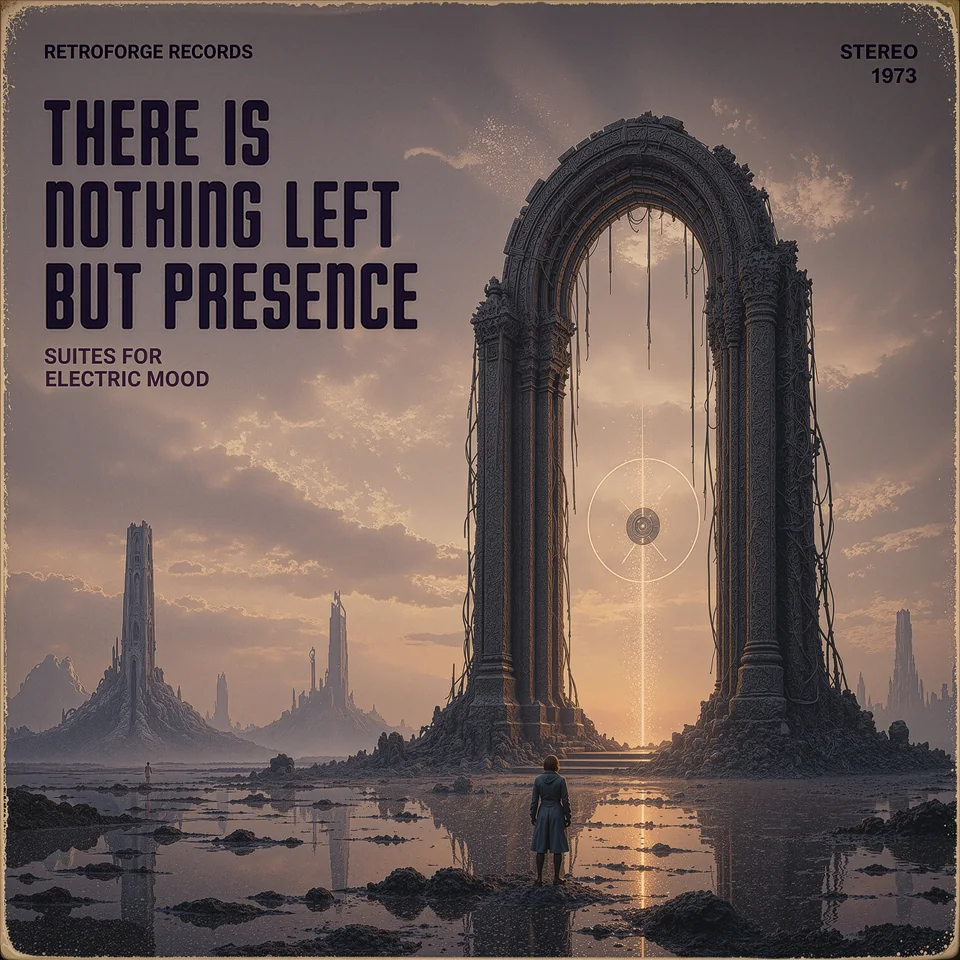
1973 · Dark Progressive Rock
There Is Nothing Left But Presence
Luminous ruins, suspended structures and a world reduced to its final remaining signal.
Open the liner notes →RetroForge Connections
Three More Routes
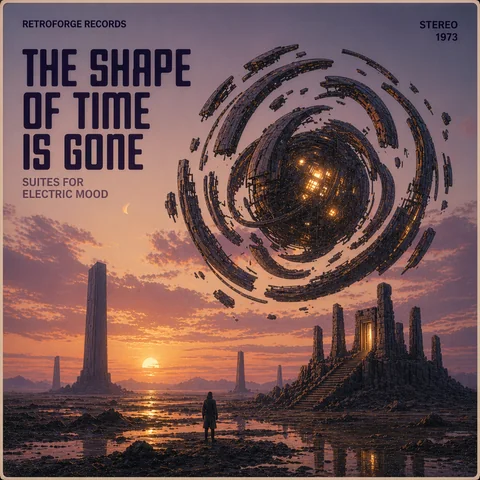
The Shape of Time Is Gone
Circular structures and unstable time rendered through analogue tension.
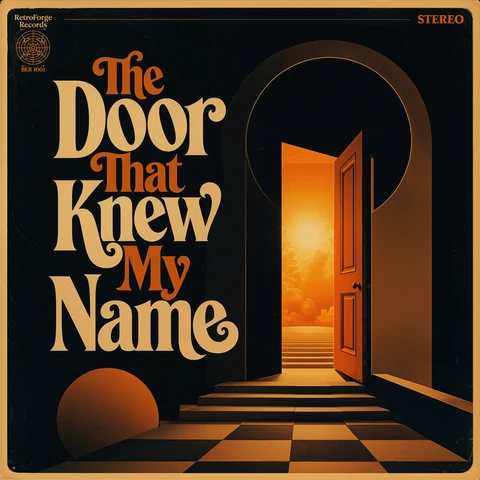
The Door That Knew My Name
Organ, corridors and recurring rooms make architecture feel psychologically alive.
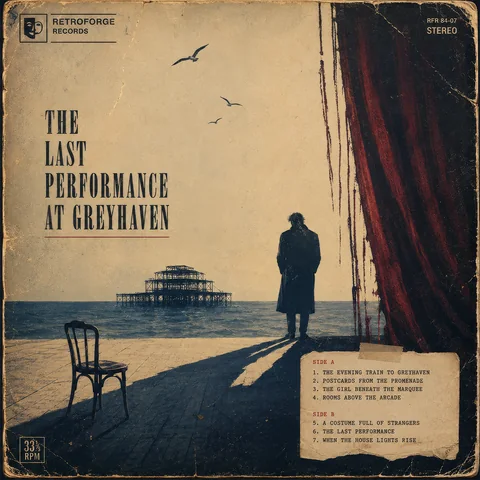
The Last Performance at Greyhaven
A final performance where theatrical form, memory and disappearance meet.
Sources and Context
Continue the Research
Keep Exploring
Related Routes
Questions Answered
Frequently Asked Questions
Is dark prog an official historical genre?
It is better understood as a listening route connecting several progressive traditions with a shared emotional and structural darkness.
Is all heavy prog dark prog?
No. Weight can be energetic or triumphant; dark prog requires unease to shape the composition itself.
Can dark prog be quiet?
Yes. Silence, acoustic detail and restrained repetition can create more tension than constant heaviness.
Which RetroForge album is the clearest example?
There Is Nothing Left But Presence is the strongest starting point, followed by The Shape of Time Is Gone.
Research Trail
Sources and Further Reading
Deeper Discovery
Continue Through the Archive
Start with The River Beneath the World as a RetroForge companion, then return through Progressive Rock to place it inside the wider family.
More RetroForge Records
Classic Album Comparisons
Continue through the RetroForge knowledge graph
Curated paths into the people, records, events and ideas that give this subject its wider musical context.