

Edition timeline
A workshop becomes a festival
Nancy Carlen and Joan Baez gather artists for an Esalen weekend devoted to new folk music.
The performer community grows
Folk revival, singer-songwriter and folk-rock networks share a deliberately intimate setting.
Celebration at Big Sur is filmed
The edited documentary preserves unusual evidence of proximity, performance and landscape.
The event moves to Monterey County Fairgrounds
Audience pressure produces a larger, less intimate physical model.
The final Carlen edition returns to Esalen
Invitations and minimal publicity reassert the small-scale ideal before the series ends.
Why this event matters
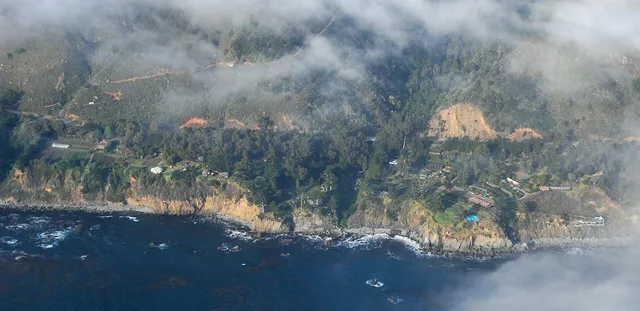
Festival history is not only a story of increasing size. Big Sur gained historical force by defending a human scale while much of the festival world moved towards six-figure crowds. The documented anchor for this section is Historical sources trace the first gathering to 1964, founded by Nancy Carlen in connection with Esalen Institute and Joan Baez. That fact is kept separate from later legend, because programmes, press reports, film and participant memory answer different questions. Esalen’s intellectual and countercultural environment, Nancy Carlen’s relationship with Joan Baez and the original workshop concept shaped the festival from the beginning. The documented anchor for this section is Esalen’s own historical material gives the Big Sur Folk Festival a clear 1964–1971 span and credits Joan Baez and former Esalen staff member Nancy Jane Carlen with initiating the concept. That institutional chronology provides the baseline. That fact is kept separate from later legend, because programmes, press reports, film and participant memory answer different questions. The landscape is not decoration. It constrained audience size and helped create the festival’s identity. The documented anchor for this section is Joan Baez was central across the series. That fact is kept separate from later legend, because programmes, press reports, film and participant memory answer different questions. The programme moved from folk-revival roots into singer-songwriter music, country rock and the more electric late-1960s scene without turning Big Sur into a conventional rock festival. The documented anchor for this section is The event grew out of a workshop/seminar atmosphere rather than a commercial mega-festival concept. That fact is kept separate from later legend, because programmes, press reports, film and participant memory answer different questions.
.jpg)
What the audience experienced
Proximity mattered in a way it could not at a speedway festival. Small-scale listening reduced the anonymity associated with the era’s giant crowds. The documented anchor for this section is Important participants across the years included Richard and Mimi Fariña, Judy Collins, Joni Mitchell, Crosby Stills Nash & Young, Kris Kristofferson, Arlo Guthrie, Taj Mahal and others. That fact is kept separate from later legend, because programmes, press reports, film and participant memory answer different questions. This is a useful counterpoint to Goose Lake and Cal Jam. Technical simplicity and limited audience size were features, not necessarily failures. The documented anchor for this section is The 1969 edition became the basis for the film Celebration at Big Sur. That fact is kept separate from later legend, because programmes, press reports, film and participant memory answer different questions. Success threatened the intimacy that defined the event. The move to Monterey County Fairgrounds in 1970 and return to Esalen in 1971 made that tension physically visible. The documented anchor for this section is The series eventually moved some activity away from Esalen as attendance pressure grew. That fact is kept separate from later legend, because programmes, press reports, film and participant memory answer different questions. The formal series ended in 1971, but its cultural memory survived strongly through film and recordings. The documented anchor for this section is Final Nancy Carlen-produced edition was in 1971. That fact is kept separate from later legend, because programmes, press reports, film and participant memory answer different questions.

Films, recordings and surviving documents
Celebration at Big Sur is the key film source. Live albums and poster material also survive. The documented anchor for this section is Historical sources trace the first gathering to 1964, founded by Nancy Carlen in connection with Esalen Institute and Joan Baez. That fact is kept separate from later legend, because programmes, press reports, film and participant memory answer different questions. Big Sur was an anti-mega-festival: cultural authority came from landscape, proximity and deliberate limits rather than maximum attendance. The documented anchor for this section is Esalen’s own historical material gives the Big Sur Folk Festival a clear 1964–1971 span and credits Joan Baez and former Esalen staff member Nancy Jane Carlen with initiating the concept. That institutional chronology provides the baseline. That fact is kept separate from later legend, because programmes, press reports, film and participant memory answer different questions. Big Sur offers the archive a counter-model to giant rock festivals: cultural importance did not require hundreds of thousands of people. Its small scale, artist proximity and spectacular setting created a different kind of festival authority. The documented anchor for this section is Joan Baez was central across the series. That fact is kept separate from later legend, because programmes, press reports, film and participant memory answer different questions. Big Sur offers a parallel lineage for later boutique and artist-centered festivals, even though direct influence should not be claimed without evidence. The documented anchor for this section is The event grew out of a workshop/seminar atmosphere rather than a commercial mega-festival concept. That fact is kept separate from later legend, because programmes, press reports, film and participant memory answer different questions.


Follow the festival beyond the field
Timeline
Related genres
More routes will be connected as the archive grows.
Related band guides
More routes will be connected as the archive grows.
Explore by sound
More routes will be connected as the archive grows.
Essential listening
Sources and further reading
- Music at EsalenEsalen Institute · accessed 23 July 2026
- Celebration at Big SurAFI Catalog · accessed 23 July 2026
- A Gathering at Sur, 1968Joni Mitchell Library / Los Angeles Free Press · accessed 23 July 2026
- Big Sur Folk Festival 1964–1971Mimi & Richard Fariña archive · accessed 23 July 2026
- Esalen and Big Sur image sourcesWikimedia Commons · accessed 23 July 2026
Image credits5 licensed images
A later aerial view of Esalen Institute, showing the narrow cliffside geography that helped keep the early Big Sur Folk Festival physically intimate. It does not show a festival edition — John Wiley User:Jw4nvc - Santa Barbara, California — Wikimedia Commons — CC BY-SA 3.0 · source record · CC BY-SA 3.0
Converted to WebP and resized; no generative or compositional alterations.
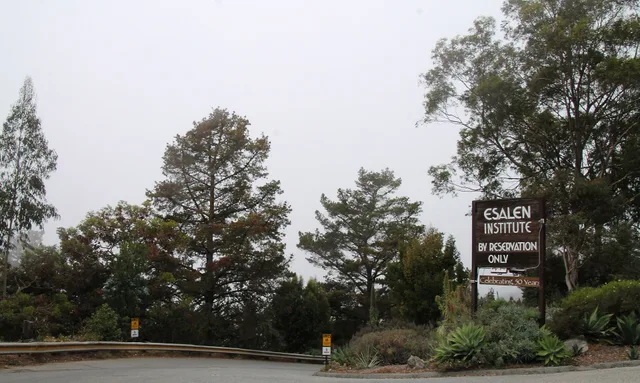
Esalen Institute on the Big Sur cliffs in a later photograph. The image documents the setting and its limited space, not the temporary stage or audience of the 1960s — Akos Kokai — Wikimedia Commons — CC BY 2.0 · source record · CC BY 2.0
Converted to WebP and resized; no generative or compositional alterations.
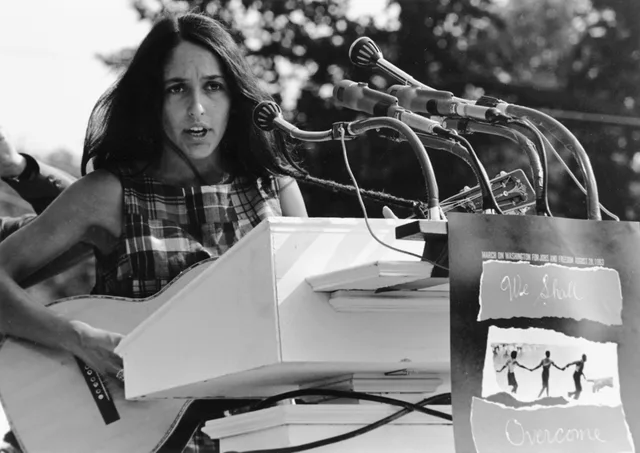
Joan Baez singing at the March on Washington in 1963. The photograph provides period context for the artist whose relationship with Nancy Carlen and Esalen was central to Big Sur's origins — Scherman, Rowland, U.S. Information Agency. Press and Publications Service. (ca. 1953 - ca. 1978) — Wikimedia Commons — Public domain · source record · Public domain
Converted to WebP and resized; no generative or compositional alterations.
A later view across Esalen Institute toward the Pacific. Its terraces and coastline help explain why landscape and proximity were structural parts of the festival experience — Sarah Stierch — Wikimedia Commons — CC BY 4.0 · source record · CC BY 4.0
Converted to WebP and resized; no generative or compositional alterations.
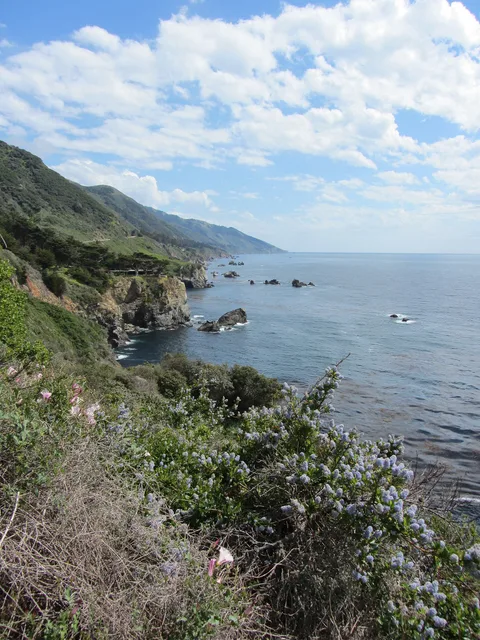
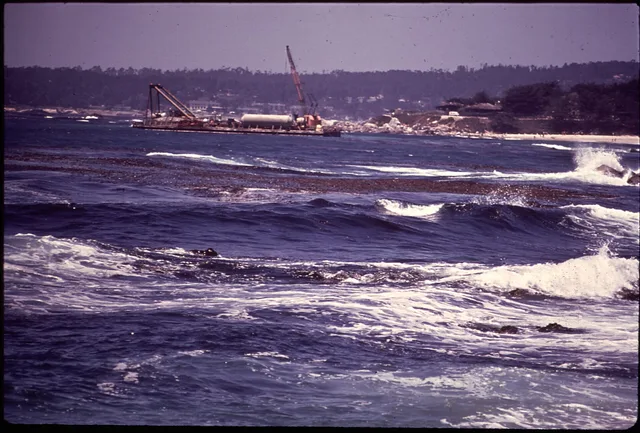
The Big Sur coastline in a National Archives photograph. This regional landscape context is not a view of Esalen or a festival performance — Dick Rowan — Wikimedia Commons — Public domain · source record · Public domain
Converted to WebP and resized; no generative or compositional alterations.