
.jpg)
Edition timeline
The stadium weekend opens
Feyline begins a three-day programme inside Denver’s major football stadium.
Professional production
Contemporary publicity names Bill Hanley for sound and Chip Monck for lighting.
Conflict at the boundary
Police use tear gas during a struggle around free access outside the ticketed stadium.
The original Experience ends
Hendrix, Noel Redding and Mitch Mitchell play together for the final time.
Why this event matters
Denver joined professional concert infrastructure to an unresolved argument about whether counterculture music should be ticketed at all. Its headline historical fact is exact and consequential: the original Jimi Hendrix Experience closed the festival on 29 June, then ceased to exist as a working trio when Noel Redding left. Yet the event also matters beyond biography. It shows a large American festival already using experienced sound and lighting specialists while its social boundary remained dangerously unstable. Barry Fey had rapidly made Denver a serious touring market after arriving from Chicago in 1967. Contemporary Colorado newspaper coverage advertised daily tickets at six dollars and a three-day ticket at fifteen, along with what promoters described as a quarter-million dollars’ worth of talent. Those advertisements are valuable evidence of scale and intention, but names on an advance bill are not automatically confirmed performers. The finished programme must be reconstructed from artist archives, reviews and surviving audio. Mile High Stadium offered seating, transport links, defined entrances and utilities that a remote farm would have needed to improvise. It also made the economic border exceptionally visible. Inside stood a ticketed professional production; outside, people demanded free admission and tested the perimeter. The stadium solved several logistical problems while concentrating another one at its walls. Denver’s urban setting is therefore central to the event, not an interchangeable backdrop for a rock bill. Confirmed appearances place The Mothers of Invention, Iron Butterfly, Creedence Clearwater Revival, Johnny Winter, Tim Buckley, Joe Cocker, Poco, Big Mama Thornton, AUM, Zephyr and the Jimi Hendrix Experience within a notably varied programme. Blues elders, local Colorado musicians, folk-rooted writers, hit-making American groups and experimental rock occupied the same stadium. Zephyr, with Tommy Bolin, gave the international weekend a local musical route that later superstar lists can easily obscure.

What the audience experienced
For ticket holders, Denver was a dense sequence of major touring acts presented in a familiar sports architecture. At the edge, the experience was defined by an ideological dispute over access. People outside should not all be collapsed into one category of violent gatecrashers, just as police action should not be described without the pressure officers faced. Tear gas drifted into the stadium, connecting the conflict outside directly with the audience and performers inside. A contemporary report named Bill Hanley as sound provider and Chip Monck as lighting designer, linking Denver to technicians associated with Monterey and other major festival productions. The stadium allowed broad sound coverage and night lighting to be planned more systematically than at many improvised fields. Publicity also described evening operating hours and an unusually expensive talent bill. These advance details describe professional intent; they do not prove that every technical promise was delivered without difficulty. The official Hendrix archive describes a serious disturbance around the closing performance, police use of tear gas and a difficult escape after the set. Some gas affected people inside the venue. As Hendrix’s vehicle moved away, people climbed onto it, adding physical danger to an already confused exit. The episode belongs in festival history because a highly organised stage production could not contain the political and economic conflict concentrated around its ticket boundary. No stable annual Denver Pop Festival followed. The immediate musical consequence was the departure of Noel Redding, who returned to England after the final show. Hendrix’s next phase would lead toward Woodstock, the Band of Gypsys and new studio work, while Feyline continued building Denver into a major concert market. The weekend therefore ended one famous group but did not end the city’s or promoter’s role in large-scale rock presentation.

Films, recordings and surviving documents
The most reliable surviving spine combines the official Hendrix archive, audio associated with the closing performance, advance newspaper coverage and histories of Barry Fey and Colorado music. A complete canonical festival film has not displaced those fragments in public memory. Period Hendrix and Zappa photographs used here are contextual, not pictures of Mile High; captions state that limitation so that visual atmosphere cannot silently become false event evidence. Denver demonstrates that better equipment could not solve every festival problem. Hanley sound, Monck lighting, a city stadium and an established promoter represented a maturing live industry. The free-music challenge represented a different definition of collective ownership. Both existed at once, and neither can be dismissed as a side story. The event’s central contradiction was not technical incompetence but the collision between professional production and an audience culture suspicious of commercial borders. Denver belongs beside the two Miami festivals, Atlanta, Texas, Atlantic City, Newport and Woodstock, yet its stadium form makes comparison especially useful. It also connects to the history of Hendrix, Frank Zappa, heavy blues and Colorado’s own Zephyr. Following those routes shows that the festival boom did not spread as one standard model: each city combined touring networks with a different landscape, promoter culture and local response. The weekend is remembered most often as the final original Experience performance and the tear-gas confrontation. Both are justified, but neither should eclipse Denver’s evidence of a sophisticated festival business emerging before Woodstock. The event documented professional sound and lighting, an ambitious mixed bill and a growing interior-American market. Its failure to repeat also warns that technical capacity and famous artists did not guarantee a sustainable relationship between promoter, public authority and counterculture audience.

.jpg)
Follow the festival beyond the field
Timeline
Related genres
Related band guides
More routes will be connected as the archive grows.
Explore by sound
More routes will be connected as the archive grows.
Essential listening
Sources and further reading
- Denver Pop Festival entryThe Official Jimi Hendrix Site · accessed 23 July 2026
- Live at the Denver Pop FestivalThe Official Jimi Hendrix Site · accessed 23 July 2026
- Pop Festival Set in DenverColorado Springs Gazette Telegraph · accessed 23 July 2026
- Barry FeyColorado Music Hall of Fame · accessed 23 July 2026
- About Barry FeyOfficial Barry Fey · accessed 23 July 2026
Image credits5 licensed images
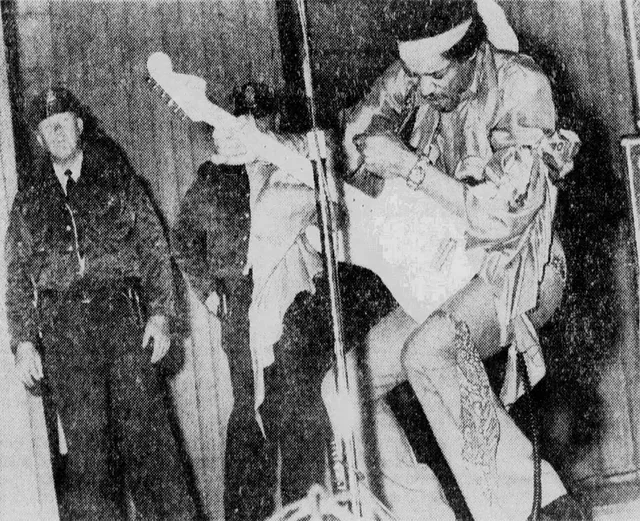
Jimi Hendrix in 1969. This period image documents the artist whose Denver set became the Experience’s final concert, not the Mile High Stadium performance itself — James Shearin — Wikimedia Commons — Public domain · source record · Public domain
Converted to WebP and resized; no generative or compositional alterations.
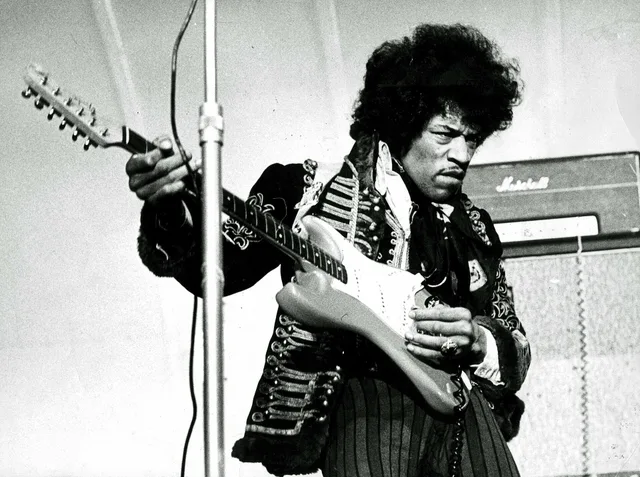
A public-domain Hendrix publicity photograph, used as artist context rather than as an image of the Denver festival — Original photographer unknown — Wikimedia Commons — Public domain · source record · Public domain
Converted to WebP and resized; no generative or compositional alterations.
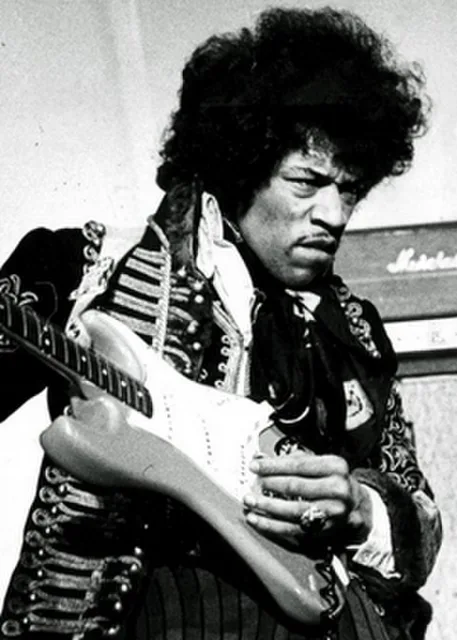
Hendrix in 1967, illustrating the rapidly rising performer who would headline Denver two years later — Unknown photographer — Wikimedia Commons — Public domain · source record · Public domain
Converted to WebP and resized; no generative or compositional alterations.
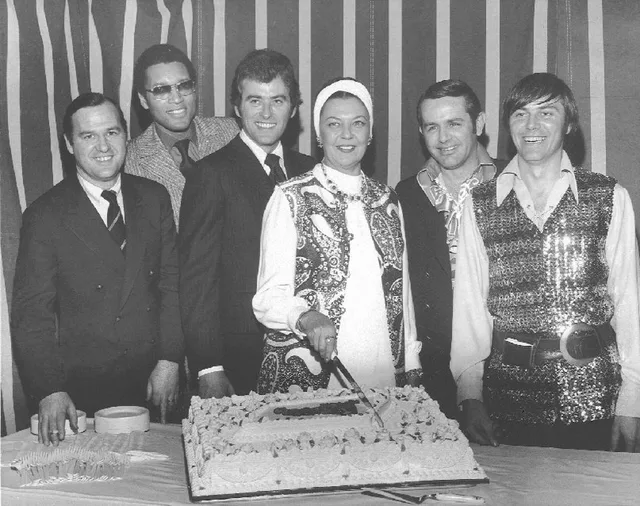
Frank Zappa in 1969. The photograph provides period context for a Denver bill participant and was not taken at the festival — ChStone — Wikimedia Commons — CC BY-SA 3.0 · source record · CC BY-SA 3.0
Converted to WebP and resized; no generative or compositional alterations.
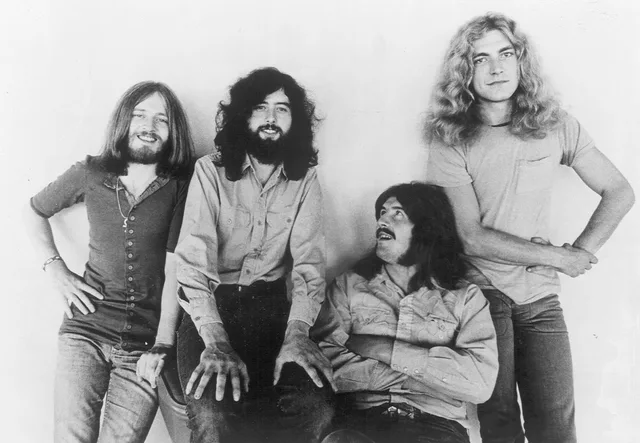
Led Zeppelin in a later promotional image. It is used as artist context for the Denver programme, not as evidence of the festival setting — Atlantic Records — Wikimedia Commons — Public domain · source record · Public domain
Converted to WebP and resized; no generative or compositional alterations.