

Why these two events belong together
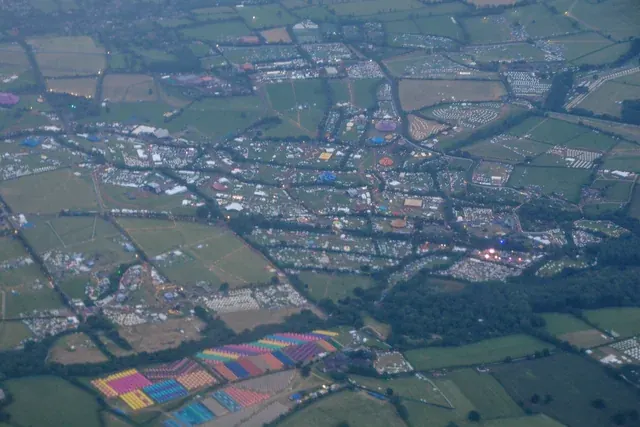
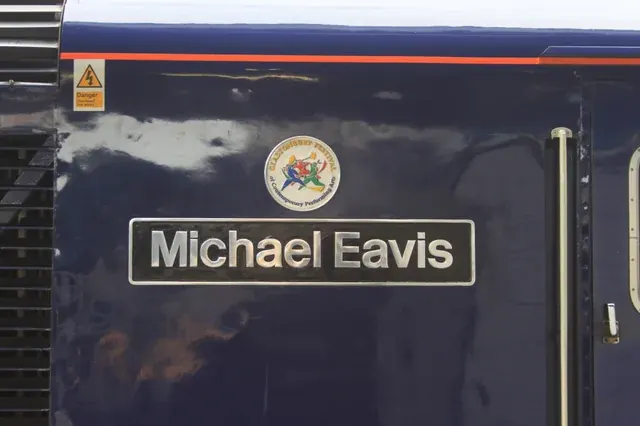
Modern Glastonbury can make its beginnings look like a miniature version of the present. That is the wrong perspective. The 1970 Pop, Blues & Folk Festival was a small paid concert organised by dairy farmer Michael Eavis after he had attended the Bath Festival. The 1971 Glastonbury Fayre was a free, solstice gathering developed with different organisers, wider countercultural ambitions and the first Pyramid Stage. They shared Worthy Farm, but their structures and intentions were not identical.
Reading them together shows an institution before it knew what it would become. The first event tested whether a farm could host contemporary music. The second tried to build a temporary alternative society around performance, spirituality, craft and communal labour. Neither possessed the recurring professional organisation, multiple specialised areas or global audience associated with later decades.

The 1970 Pop, Blues & Folk Festival
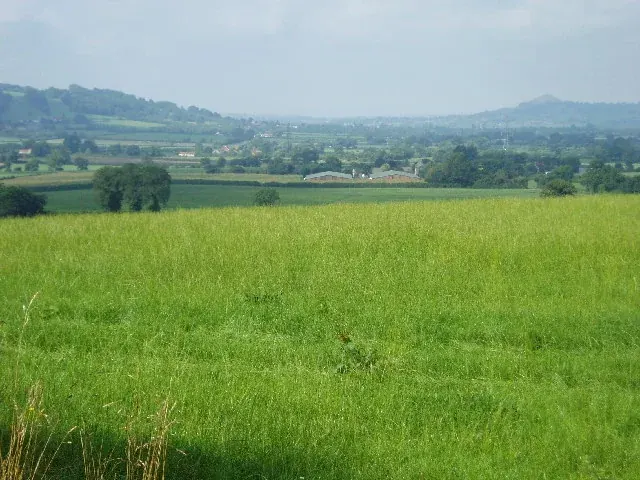
The official festival history dates the first event to 19 September 1970, the day after Jimi Hendrix died, and gives an attendance of roughly 1,500. Tickets cost one pound and included free milk from the farm. Stackridge played the opening set; T. Rex, then at the point where Marc Bolan's electric transformation was reaching a mass audience, became the central attraction after the Kinks withdrew. Al Stewart and other performers completed a modest bill.
The scale matters. Fifteen hundred people can feel substantial on working farmland, but it is not the population of a modern festival city. Basic production, parking and audience movement could remain relatively direct. Later memory sometimes treats every detail as the seed of a planned dynasty. Eavis was testing an idea inspired by an event he had seen, not unveiling a finished blueprint for the next half-century.
From paid concert to free Fayre
The 1971 event moved to the summer solstice and changed its name to Glastonbury Fayre. Andrew Kerr and Arabella Churchill were important organisers, working with others around Worthy Farm. Admission was free. The programme expanded beyond rock performance into poetry, theatre, dance, craft and spiritual practice. That breadth placed the Fayre within the British free-festival and alternative-living culture of the early seventies rather than merely inside the commercial concert calendar.
Free admission did not mean the event required no resources. Materials, food, transport, sound, sanitation and stage construction still had to be found and coordinated. Countercultural histories often celebrate the absence of a ticket barrier while overlooking who absorbed the cost and labour. Glastonbury's later durability would depend on learning how ideals, fundraising, licensing and professional production could coexist without becoming identical.

The first Pyramid Stage
Bill Harkin designed the 1971 Pyramid Stage, constructed from scaffolding and expanded metal with plastic sheeting. The official and V&A histories describe its relation to ideas about sacred geometry and the Glastonbury landscape. It was a temporary structure, not the permanent technological landmark familiar today. Its power came from the precision of its shape against a field and from the meanings participants attached to that shape.
The stage has been rebuilt in radically different forms over later decades. Calling every version the same building would erase the engineering history. The first Pyramid was a handmade experiment. Its descendants became load-bearing production systems for immense lighting, video and sound equipment. The continuity is symbolic and geographic rather than material.
The musical programme
The 1971 bill included Traffic, Hawkwind, Fairport Convention, Gong, Melanie and other artists, while David Bowie's appearance later became one of the best-known early Glastonbury stories. Surviving schedules and memories are incomplete, and performers did not necessarily appear at the times or in the form later lists imply. A cautious history names documented participants without inventing a perfectly ordered running sheet.
Musically, the Fayre joined several routes that would matter to the wider archive. Fairport Convention connected electrified folk tradition to festival community. Hawkwind brought repetition, volume and science-fiction imagery into a free-festival setting that became important to their identity. Gong carried a playful European psychedelic experimentalism. Traffic's extended musicianship occupied the border between rock song, jazz improvisation and studio craft.

What the audience experienced
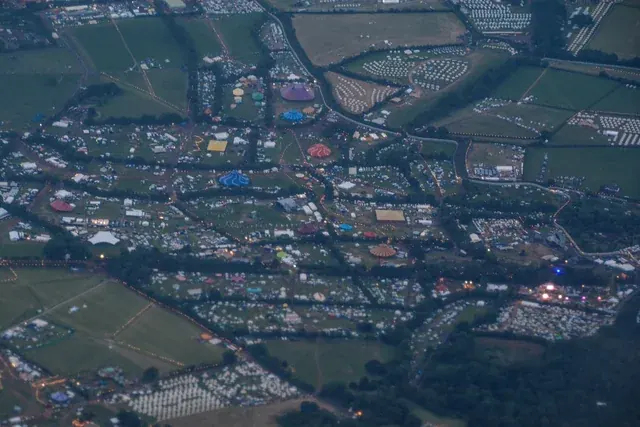
At early Glastonbury, the distinction between audience and participant was more permeable than at a modern fenced event. People camped, contributed, watched, traded, talked and moved between formal and informal activity. That does not mean every attendee shared one politics or lived in permanent harmony. Free gatherings still contained disagreement, intoxication, practical shortage and unequal responsibility.
The landscape contributed a strong sense of place. Worthy Farm was not a neutral field rented for a touring package; it was a working farm near a town already carrying layers of religious, legendary and alternative association. Organisers and audiences interpreted those associations actively. The archive should report that belief without presenting ley lines or mystical energy as measurable historical fact.
Film, album and enduring imagery
Nicolas Roeg and Peter Neal's Glastonbury Fayre film assembled performance, landscape and countercultural observation into a document released in 1972. A triple album associated with the event also circulated music and visual art beyond the farm. Neither is a complete register. Film creates rhythm and character through selection; the album isolates recordable performances from a much wider social environment.
These documents helped make 1971 visually available even while much ordinary labour remained unseen. The Pyramid, performers and expressive audience details dominate memory more easily than electrical supply, waste, food preparation or negotiations with neighbours. Later Glastonbury inherited both sides: the image of spontaneous possibility and the permanent requirement to maintain a temporary city.

The gap before an institution
There was no 1972 repeat under a stable annual structure. The next event at Worthy Farm came in 1978, and the festival's recognisable charitable and organisational identity developed through later editions. This discontinuity is important. Glastonbury was not simply held every year and enlarged by a predictable percentage. It was repeatedly reinvented in response to people, politics, finance and regulation.
The modern festival's size can obscure how contingent its survival was. Many early British gatherings disappeared after one or two editions. Worthy Farm offered a continuing place and an organiser capable of learning across interruptions. Continuity was achieved, not guaranteed.
Legacy
The 1970 and 1971 events established no single finished formula. Between them they introduced a farm location, a willingness to mix musical routes, a relationship with alternative culture and an architectural symbol that later organisers could reinterpret. Their differences are more instructive than a smooth origin myth.
Early Glastonbury should therefore be remembered at its own scale. It was not today's megafestival with cheaper tickets and fewer stages. It was a pair of vulnerable experiments: one a small paid concert, the other a free solstice Fayre. The institution came later, built through gaps, disputes, rebuilding and the slow conversion of temporary knowledge into recurring practice.
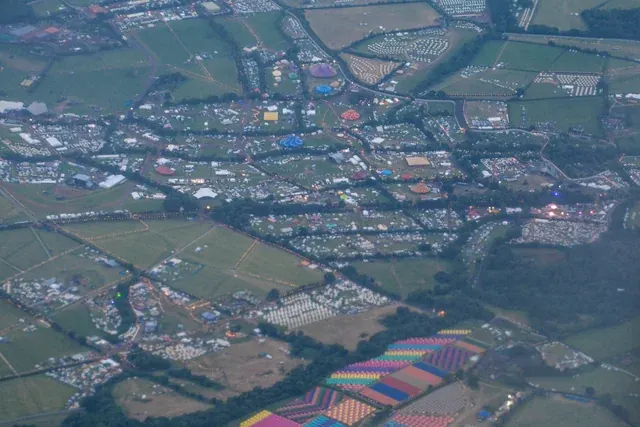
That distinction matters when modern scale is projected backward. The earliest photographs do not show an incomplete version of the current event; they show people testing a different relationship between farm, audience, performance and counterculture. Later organisers inherited a location and a memory, but every field layout, licence, stage and public promise still had to be rebuilt for its own moment.
The gaps in the early chronology are part of the meaning. Glastonbury did not advance through an automatic annual cycle; it paused, returned under different conditions and repeatedly renegotiated what the farm could support. That stop-start development separates a durable place from a continuously operating organisation. The legend became continuous only after later memory joined experiments that the participants themselves could not know would form one institution.
Follow the festival beyond the field
Timeline
Related genres
Related band guides
Explore by sound
Essential listening
RetroForge Echo
Hear a Fictional Archive Response
These modern RetroForge releases echo part of the festival’s musical vocabulary; they are not historical festival recordings.
Sources and further reading
- History: 1970Glastonbury Festival · accessed 23 July 2026
- History: 1971Glastonbury Festival · accessed 23 July 2026
- The Glastonbury Festival ArchiveVictoria and Albert Museum · accessed 23 July 2026
- Glastonbury Fair 1971 – Pyramid StageVictoria and Albert Museum · accessed 23 July 2026
- The story of the first Glastonbury FestivalNME · accessed 23 July 2026
Image credits5 licensed images
The festival site near Pilton in 2022 — Lewis Clarke — Wikimedia Commons — CC BY-SA 2.0 · source record · CC BY-SA 2.0
Converted to WebP and resized; no generative or compositional alterations.
The fields at Worthy Farm in a later photograph — Nigel Freeman — Wikimedia Commons — CC BY-SA 2.0 · source record · CC BY-SA 2.0
Converted to WebP and resized; no generative or compositional alterations.
Michael Eavis in 2010 — Geof Sheppard — Wikimedia Commons — CC BY-SA 3.0 · source record · CC BY-SA 3.0
Converted to WebP and resized; no generative or compositional alterations.
A later view across the Glastonbury site — Lewis Clarke — Wikimedia Commons — CC BY-SA 2.0 · source record · CC BY-SA 2.0
Converted to WebP and resized; no generative or compositional alterations.
Modern infrastructure at Worthy Farm — Lewis Clarke — Wikimedia Commons — CC BY-SA 2.0 · source record · CC BY-SA 2.0
Converted to WebP and resized; no generative or compositional alterations.