

Edition timeline
The inaugural festival establishes Sunbury
An Australia Day gathering centred on domestic acts gives Australian hard rock a national outdoor stage.
The local identity consolidates
The mostly Australian programme is documented on the first album released by Mushroom Records.
International ambition grows
Queen’s difficult appearance becomes the most discussed sign of friction between the local scene and imported prestige.
Finance and weather end the series
Lower attendance, rain, expensive bookings and payment disputes combine in a final edition that cannot be repeated.
Why this event matters
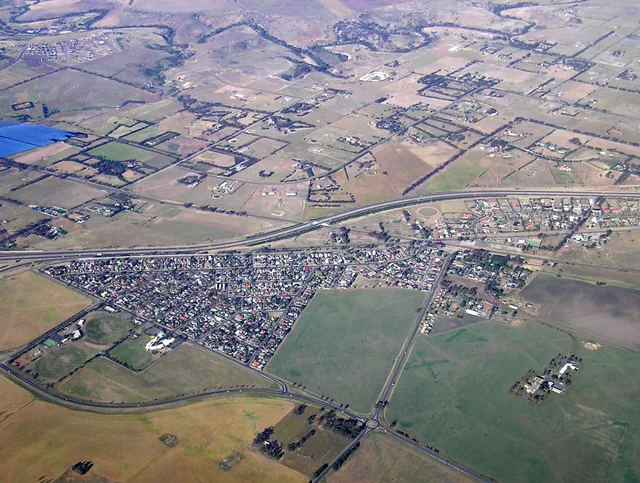
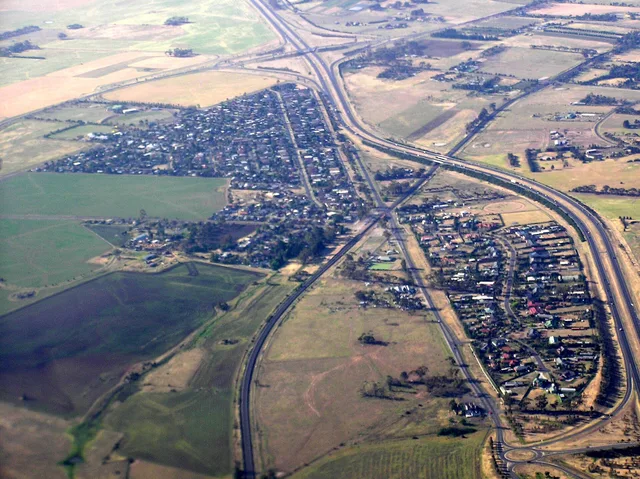
Sunbury should not be reduced to “Australia’s Woodstock.” Its historical value lies in what happened after the borrowed festival image reached Victoria: Australian musicians, audiences, promoters and recording companies made the format serve a local rock culture. Billy Thorpe and the Aztecs became its emblem, but the wider story includes blues-based hard rock, singer-songwriters, progressive groups and the emerging pub circuit. Four editions make change visible in a way that a single legendary weekend cannot. Ourimbah and other early Australian gatherings had already shown that a domestic audience would travel for outdoor rock. Odessa Promotions brought television and entertainment experience to a more sustained project on private farmland outside Melbourne. John Fowler and his colleagues were not simply copying an American field spectacle; they were combining local booking networks, media knowledge and improving outdoor production. The Australia Day timing gave the experiment a recurring national frame from its first edition in January 1972. The farm between Sunbury and Diggers Rest became a destination reached by train, car, motorcycle and on foot. NFSA film records arrival and preparation as historical evidence: roads, temporary services, lighting towers, sound equipment and camps all had to be assembled around a rural site. The modern locality photographs on this page provide geographical context only. Holding the event over the Australia Day long weekend also helped turn a private property into a symbolic stage for arguments about Australian culture. Each edition played a different role. The 1972 breakthrough foregrounded the force of Billy Thorpe and the Aztecs and a broad domestic scene. In 1973 the Australian identity consolidated, with Spirit as a notable overseas exception. International ambition became more visible in 1974 and 1975 through Queen and Deep Purple, while Chain, Spectrum, Madder Lake, AC/DC and many others kept the local circuit central. This progression matters more than treating four programmes as one enormous list.

What the audience experienced
Sunbury ’72 shows more than performers. Its cameras record people approaching the farm, establishing camps, moving through crowds and responding to announcements and amplified music. Clothing, weather, dust, food and the distance between camp and stage are part of the archive rather than generic festival decoration. Later editions changed those conditions as expectations grew. The final rainy year demonstrates how strongly weather and attendance could affect a temporary economy built around several days of outdoor occupation. Large Australian outdoor crowds became practical only as PA design, power distribution and stage systems improved at the end of the 1960s. Sunbury’s surviving footage makes that development visible through loudspeaker arrays, lighting towers, microphones, crew movement and emergency provision. The production was not static across four years: experience accumulated while bills and audience expectations expanded. Its importance is therefore technical as well as musical, linking the improvised early festival circuit to the louder, more durable infrastructure of pub and arena rock. Queen’s 1974 reception and the Deep Purple disputes of 1975 are often compressed into colourful folklore. They are more useful when placed inside Sunbury’s changing economics. Overseas bookings promised status and broader attention, but they also introduced higher fees, contractual hierarchies and backstage expectations into a festival identified with Australian acts. The reported AC/DC–Deep Purple confrontation belongs to that tense final year, yet no single quarrel explains the series. The underlying transition was from a local showcase toward a riskier international business. By 1975 Sunbury faced lower attendance, poor weather, heavy costs and conflicts over payment. NFSA contextual material describes a crowd substantially reduced from earlier years. The expensive Deep Purple booking increased exposure, while rain damaged the on-site economy and wider confidence in the model had weakened. Those pressures worked together; choosing one dramatic backstage incident as the sole cause would replace history with anecdote. The festival ended because the financial and organisational structure could no longer support its ambitions.


Films, recordings and surviving documents
Sunbury is exceptionally well documented. John Dixon and Ray Wagstaff’s feature documentary Sunbury ’72 preserves performance and site operation; television material survives from 1973; live recordings include Aztecs Live! at Sunbury. The Great Australian Rock Festival – Sunbury ’73 became Mushroom Records’ inaugural album release and joined festival memory to the growth of an Australian label. NFSA collections, posters and oral histories let researchers compare contemporary images with later interpretation rather than relying on legend alone. The most revealing change is linguistic as well as musical. Calling Sunbury an Australian Woodstock initially offered a familiar model, but by 1973 the festival could present domestic rock as a source of pride rather than a substitute for imported culture. Loud blues, hard rock and progressive experimentation acquired their own audiences, recordings and industry institutions. Sunbury did not erase overseas influence; it showed that influence being selected, amplified and reorganised by musicians whose careers were rooted in Australian venues and media. Ourimbah provides the pioneering all-Australian predecessor, while Myponga and later Aquarius gatherings reveal different regional and countercultural routes. Sunbury’s four-year development points forward to the pub-rock network and to Mushroom Records’ role in recording and promoting domestic music. It also connects to international mega-festivals through Queen and Deep Purple, but from a distinctly Australian centre. Following these routes keeps the story tied to people, labels, venues and production systems rather than a single national slogan. Sunbury’s strongest legacy is the confidence with which Australian rock heard and represented itself. Live albums turned temporary performances into durable national documents, Mushroom Records linked the festival to a new recording infrastructure and the Aztecs helped define the volume and physicality of pub rock. The series ended, but the culture it concentrated did not. Its four editions chart a transition from open-field counterculture toward a harder professional circuit whose musicians, audiences and institutions were increasingly Australian in voice and ownership.


Follow the festival beyond the field
Timeline
Related genres
More routes will be connected as the archive grows.
Related band guides
More routes will be connected as the archive grows.
Explore by sound
More routes will be connected as the archive grows.
Essential listening
Sources and further reading
- Early 1970s music festivalsNational Film and Sound Archive of Australia · accessed 23 July 2026
- Sunbury Pop Festival ’72 – Billy ThorpeNational Film and Sound Archive of Australia · accessed 23 July 2026
- The Great Australian Rock Festival – Sunbury ’73National Film and Sound Archive of Australia · accessed 23 July 2026
- Sunbury collection tagNational Film and Sound Archive of Australia · accessed 23 July 2026
- Rights-cleared locality and artist imagesWikimedia Commons · accessed 23 July 2026
Image credits5 licensed images
Diggers Rest in a later aerial photograph. The image documents the rural edge of Melbourne in which the Sunbury festivals occupied a private farm; it is not a view of the festival itself — Graeme Bartlett — Wikimedia Commons — CC BY-SA 3.0 · source record · CC BY-SA 3.0
Converted to WebP and resized; no generative or compositional alterations.
Diggers Rest viewed from the southeast in a later photograph. The surviving open landscape helps locate the festival story without claiming that the pictured ground was the stage site — Graeme Bartlett — Wikimedia Commons — CC BY-SA 3.0 · source record · CC BY-SA 3.0
Converted to WebP and resized; no generative or compositional alterations.
Billy Thorpe performing in Sydney in 2000. This later photograph provides artist context for the Aztecs frontman whose Sunbury appearances became central to the festival's mythology — Sport the library — Wikimedia Commons — CC BY-SA 3.0 · source record · CC BY-SA 3.0
Converted to WebP and resized; no generative or compositional alterations.
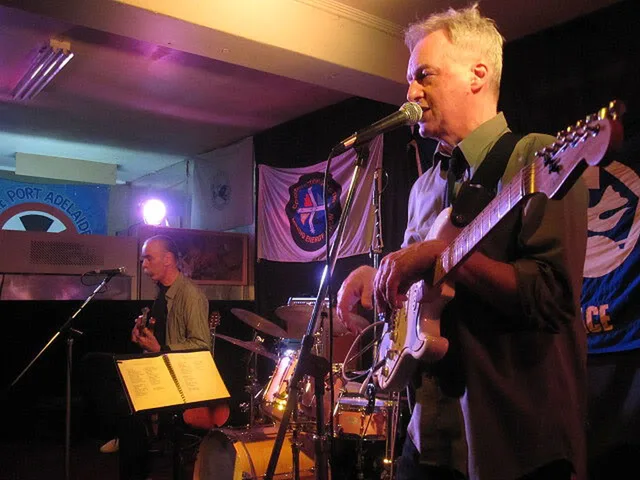
Spectrum performing in Adelaide in 2009. The later image documents a key Australian group associated with the formative Sunbury era and is not presented as a 1970s festival photograph — Michael Hunter fstix — Wikimedia Commons — CC BY-SA 3.0 · source record · CC BY-SA 3.0
Converted to WebP and resized; no generative or compositional alterations.
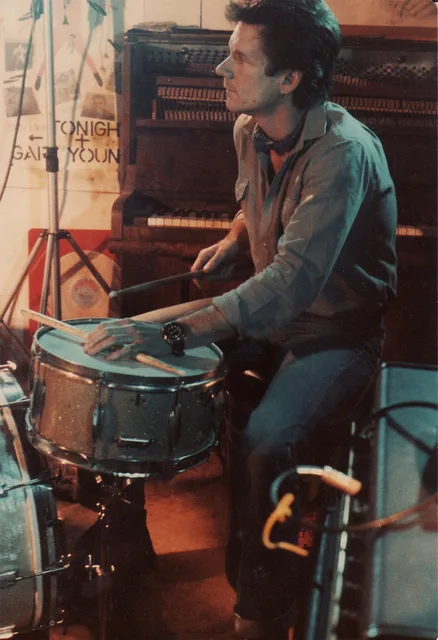
Daddy Cool drummer Gary Young in a later portrait. Daddy Cool's presence helps place Sunbury within the emerging Australian rock circuit rather than as a copy of an overseas bill — Teana Amor — Wikimedia Commons — CC BY-SA 3.0 · source record · CC BY-SA 3.0
Converted to WebP and resized; no generative or compositional alterations.