

Edition timeline
An all-Australian festival is planned
Organisers translate the new international festival idea into a programme built from the domestic scene.
A Lennon and Ono rumour circulates
The false appearance story generates publicity but never becomes a booking or performance.
Roughly 10,000 gather at Ourimbah
Nutwood Rug Band opens a bill spanning psychedelic, blues, soul and progressive Australian music.
Film and audio preserve the experiment
Once Around the Sun and NFSA recordings turn the one-off event into a foundational archive.
Why this event matters
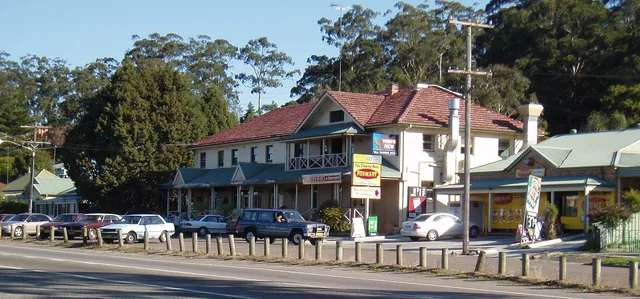
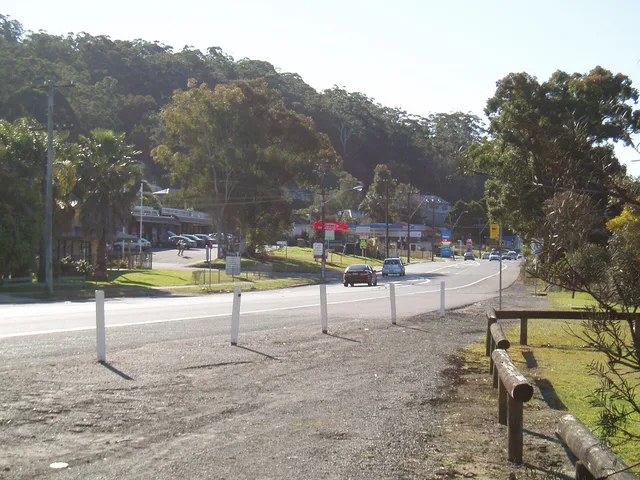
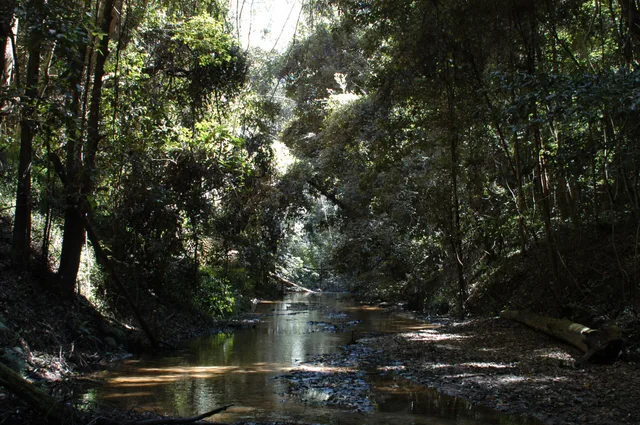
The National Film and Sound Archive describes Pilgrimage for Pop as Australia’s first rock music festival. That institutional wording supports an unusually strong “first,” but it is best retained with attribution rather than treated as a universal law. The event matters because roughly 10,000 people heard an all-Australian programme outdoors in January 1970. It proved that the domestic scene could carry the format before imported headliners became the normal route to festival prestige. Woodstock accelerated promoter interest around the world, but Ourimbah was not merely a distant copy. Its organisers chose Australian performers and used a Central Coast site whose scale and production demands were new locally. Members of the Nutwood Rug Band also helped organise and then opened the event. Rumours that John Lennon and Yoko Ono might appear continued almost until the festival; NFSA records that they were false but useful publicity, evidence of how quickly festival promotion learned to trade in possibility. Ourimbah was a small settlement in a wooded Central Coast landscape rather than an established concert precinct. Later and historical photographs on this page document the town, creek and streetscape, not the festival field. NFSA’s collected memories supply the event texture: amplified sound, a crowd moving across dusty ground, incense and campfire smoke. Those details locate the experience without turning it into generic hippie imagery and show how strongly terrain, dryness and informal camping shaped the gathering. Nutwood Rug Band, Tamam Shud, Tully, Doug Parkinson In Focus, Billy Thorpe and the Aztecs, Jeff St John and Copperwine, and Wendy Saddington with Company Caine reveal a scene already moving between psychedelia, blues, soul and progressive forms. The lineup’s significance is collective. It was not an Australian support bill awaiting an overseas star; it was the cultural proposition of the festival itself. That makes Ourimbah an early public map of domestic routes that would expand through the 1970s.

What the audience experienced
A crowd estimated around 10,000 was large enough to create a temporary settlement but still far from the engineered megafestivals that followed. NFSA audiovisual material and recollections show listening, movement, dust, fires and social life rather than a single crisis narrative. No catastrophe is required to make the weekend important. Its novelty lay in people learning how to inhabit an Australian outdoor rock event while organisers and performers learned what conventional halls had previously concealed. Outdoor amplification posed a new problem for a scene accustomed to clubs, dance halls and theatres. The high-powered microphone remembered in contemporary reporting belongs to a wider system of stage power, loudspeakers, instruments and improvised service provision. Ourimbah should not be judged by the standards of a later stadium show. Its production value lies in the experiment itself: making an all-day Australian rock programme audible and sequenced outside, before specialist festival infrastructure became routine. The surviving institutional record does not support importing every familiar Woodstock crisis into Ourimbah. Dust, camping, access and basic services mattered, but the article does not need invented disaster to create drama. A more useful limit is archival: not every set, production decision or attendance movement survives equally. By identifying what film, audio and recollection actually prove, Ourimbah can remain pioneering without being romanticised as perfect or sensationalised as chaotic. Ourimbah was followed rapidly by Myponga, Sunbury, Aquarius-related gatherings and other Australian experiments. Those events did not simply repeat one formula: some pursued international bookings, others countercultural participation or a stronger domestic rock identity. Ourimbah’s contribution was to make the first decisive test. Artists who appeared there continued into pub, progressive and festival circuits, while promoters learned that outdoor rock could mobilise a substantial local public without an imported bill.

Films, recordings and surviving documents
Once Around the Sun is an experimental film rather than neutral surveillance, but it preserves rare performance and audience evidence. NFSA holds Wendy Saddington footage from the film as well as live audio by Jeff St John and Copperwine and other collection material. Access to those recordings does not imply free reuse; their value here is evidential. Together they allow sound, image and curated historical context to correct the thin poster-and-anecdote archive surrounding many early festivals. The festival form arrived carrying American imagery, commercial expectations and rumours of international celebrity. Ourimbah changed its meaning by placing Australian music at the centre. Even the false Lennon and Ono story clarifies the contrast: imported fame attracted attention, but domestic performers made the event. The resulting programme did not express a single style. It demonstrated that a local scene with blues, soul, psychedelia and progressive ambitions was already complex enough to sustain its own outdoor public. Ourimbah leads directly toward Sunbury, where four editions converted the outdoor experiment into a recurring national platform. Its all-Australian logic also connects to Myponga and to later countercultural gatherings such as Nimbin, while Billy Thorpe’s appearance bridges the first festival to the louder pub-rock identity that followed. These links show development through performers, sound systems, organisers and film culture rather than through a simple sequence of bigger crowds. Ourimbah’s legacy is a starting point with unusually strong archival support. NFSA’s “first rock music festival” description, the all-Australian bill, a crowd around 10,000 and surviving live media together establish more than a footnote before Sunbury. The event showed that Australian outdoor rock could exist as its own cultural system. Its successors would become larger, more international and more professional, but they inherited the basic confidence that local musicians and audiences had already tested on the Central Coast.

.jpg)
Follow the festival beyond the field
Timeline
Related genres
More routes will be connected as the archive grows.
Related band guides
More routes will be connected as the archive grows.
Explore by sound
More routes will be connected as the archive grows.
Essential listening
Sources and further reading
- Pilgrimage for Pop – Jeff St John and CopperwineNational Film and Sound Archive of Australia · accessed 23 July 2026
- Pilgrimage for Pop – Wendy SaddingtonNational Film and Sound Archive of Australia · accessed 23 July 2026
- Protest and Play at 1970s Music FestivalsNational Film and Sound Archive of Australia · accessed 23 July 2026
- Early 1970s music festivalsNational Film and Sound Archive of Australia · accessed 23 July 2026
- Ourimbah locality imagesWikimedia Commons · accessed 23 July 2026
Image credits5 licensed images
The Ourimbah pub in a later photograph. It records the small town surrounding the January 1970 gathering and is not presented as a festival building — darkliight — Wikimedia Commons — Public domain · source record · Public domain
Converted to WebP and resized; no generative or compositional alterations.
The roadside shops at Ourimbah in a later photograph, providing a sense of the local scale against which roughly ten thousand visitors arrived — darkliight — Wikimedia Commons — Public domain · source record · Public domain
Converted to WebP and resized; no generative or compositional alterations.
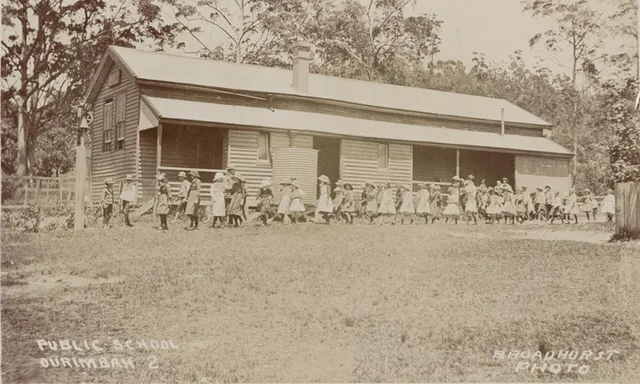
An early twentieth-century postcard of Ourimbah Public School. The public-domain image supplies historical place context for the settlement that hosted Australia's first rock festival — Broadhurst, William Henry, 1855-1927 — Wikimedia Commons — Public domain · source record · Public domain
Converted to WebP and resized; no generative or compositional alterations.
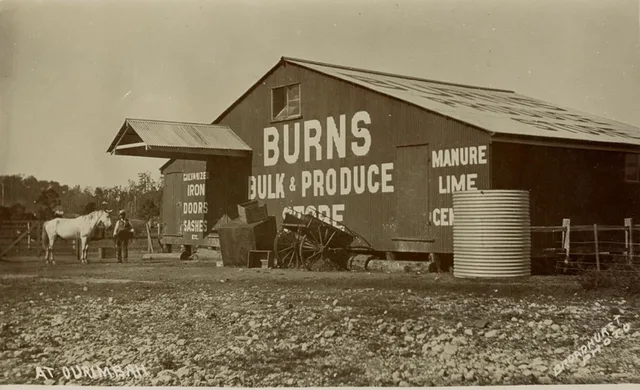
Burns Store at Ourimbah in an early twentieth-century postcard. It documents the town's pre-festival streetscape and is used as location context — Broadhurst, William Henry, 1855-1927 — Wikimedia Commons — Public domain · source record · Public domain
Converted to WebP and resized; no generative or compositional alterations.
Ourimbah Creek in a later photograph. The wooded landscape helps explain the setting remembered in accounts and in the documentary Once Around the Sun — Doug Beckers from Avoca Beach, Australia — Wikimedia Commons — CC BY-SA 2.0 · source record · CC BY-SA 2.0
Converted to WebP and resized; no generative or compositional alterations.