Indian Classical Music Before Raga Rock
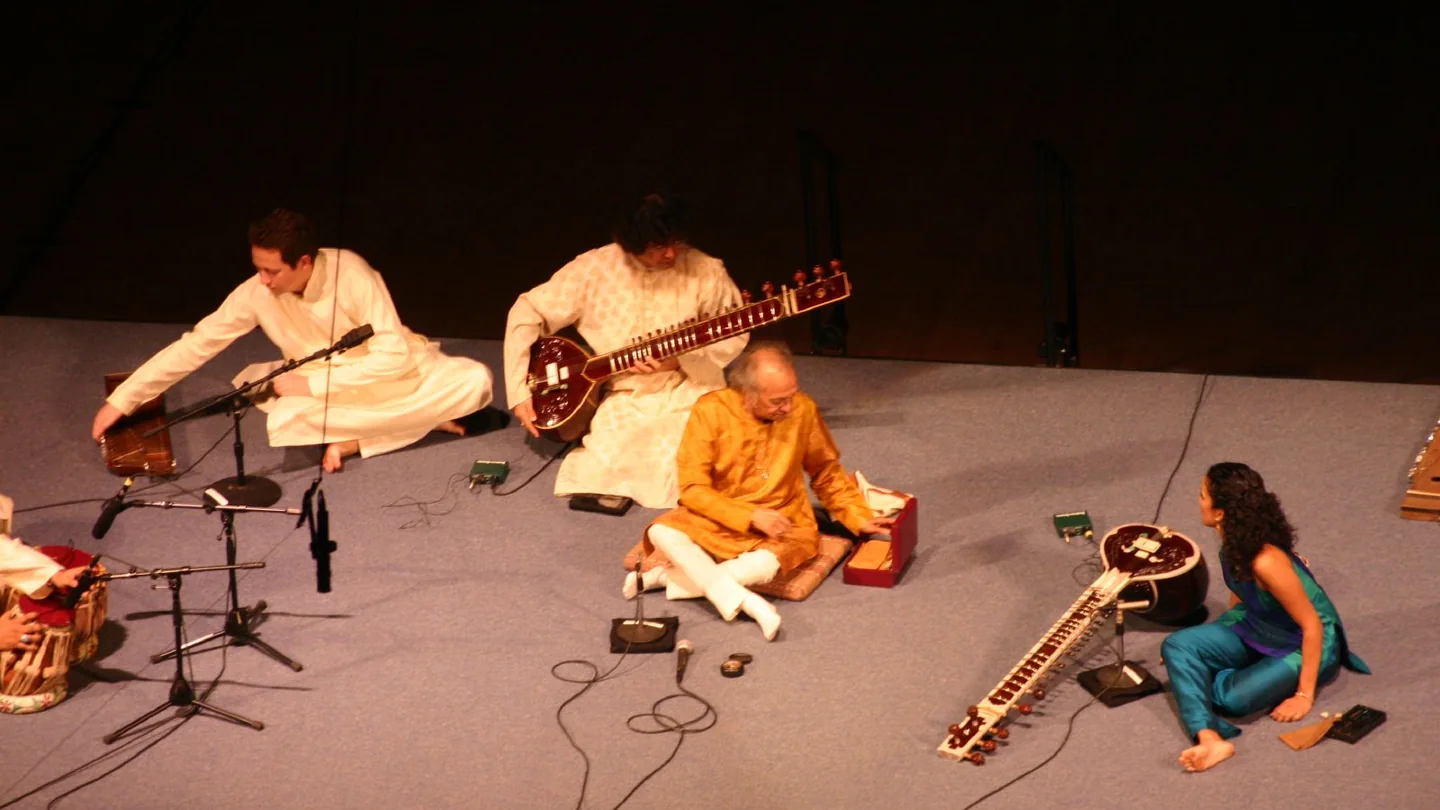
Ravi Shankar was already a leading classical musician in India and an international performer before his association with the Beatles became famous. His concerts, recordings and teaching presented the sitar as part of a living Hindustani tradition, not as a sound invented for Western psychedelia. Tabla virtuoso Alla Rakha, who performed with Shankar for decades, was equally important to the musical dialogue heard by international audiences.
That chronology changes the usual rock-centred story. Indian musicians did not enter history when British bands noticed them; rock musicians entered an existing field of repertory, pedagogy and performance. George Harrison’s later work with Shankar belongs to that larger history of exchange.
Raga, Tala and Drone Are Not Interchangeable
The Metropolitan Museum of Art describes ragas as sets of pitches and small melodic motives from which musicians shape individual performances, while tala organises rhythm through patterns of stressed and unstressed beats. Hindustani and Karnatak classical traditions both use raga and tala, although their repertories, instruments and practices are not identical.
A sustained drone can establish a tonal reference, but a drone by itself is not a raga. Nor does adding sitar automatically import the melodic development, rhythmic knowledge or performance discipline of Indian classical music. “Raga rock” is therefore most useful when it identifies a documented method rather than serving as a synonym for anything vaguely Eastern-sounding.
1965: Three Routes into Rock
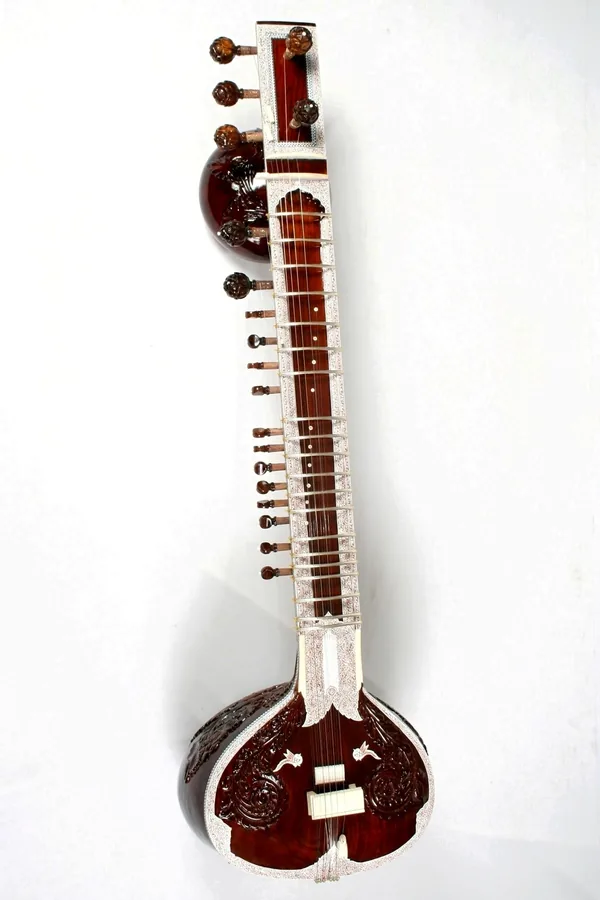
Several approaches appeared in quick succession. The Kinks’ “See My Friends” created an Indian-style drone on twelve-string guitar. For the Yardbirds’ “Heart Full of Soul,” Jeff Beck made an electric guitar imitate a sitar. George Harrison then played an actual sitar on the Beatles’ “Norwegian Wood (This Bird Has Flown).” The records sound related, but their materials and procedures are different.
This distinction prevents the instrument from swallowing the music around it. Guitar imitation, drone-based songwriting and a sitar overdub are three separate production choices. Later musicians could also evoke raga-informed continuity without using a sitar at all.
Study, Translation and Novelty
Harrison studied with Shankar in India in 1966, and “Love You To” moved beyond the earlier sitar colour toward a rock composition that approximated aspects of raga form. The Byrds’ “Eight Miles High” used twelve-string guitar rather than sitar and drew on both Shankar and John Coltrane. The Paul Butterfield Blues Band’s “East-West” pursued a long-form, drone-based electric improvisation from yet another direction.
These examples do not create a simple scale from authentic to false. The academic history of raga rock instead reveals different motives: sustained study, musical expansion, commercial fashion and novelty could coexist. The responsible question is what a record actually borrowed, how it transformed that material and whether it acknowledged the musicians behind it.
The Psychedelic Association and Its Limits
Indian sounds became entangled with psychedelic imagery, spiritual marketing and drug culture in the Western counterculture. That association increased attention but also encouraged Orientalist stereotypes that treated distinct South Asian traditions as one timeless, mystical “East.” Shankar publicly objected to the drug association and to careless commercialization of the music.
The exchange still produced consequential music and genuine relationships. Acknowledging unequal credit and stereotype does not erase collaboration; it makes the history more precise. Indian classical practice should remain audible as a tradition with its own agents, while raga rock is understood as a varied Western response to it.
A Listening Route Through Different Methods
Begin with a substantial Ravi Shankar performance and listen for melodic development within a raga and rhythmic interaction with tabla. Then compare the guitar drone of the Kinks’ “See My Friends,” the more direct Indian instrumentation of the Beatles’ “Love You To,” the Shankar- and Coltrane-informed guitar of the Byrds’ “Eight Miles High,” and the extended electric improvisation of “East-West.”
Do not listen only for the sitar. Ask whether the tonal centre remains fixed, how melodic phrases return and vary, whether rhythm follows a recurring cycle or a rock backbeat, and how long-form development differs from a repeated studio effect. Those questions reveal more than the label alone.
The RetroForge Route
The Purple Sun Is Watching uses sustained colour and circular movement as part of a late-1960s psychedelic vocabulary. Eyes Behind My Eyes follows repetition, memory and unstable perception through a broader acid-rock sequence.
These are psychedelic records, not Indian classical performances and not claims of cultural continuity. Their place here is narrower: both use repetition and slowly altered texture to reshape the listener’s sense of duration.
Sources and Further Reading
This article uses the sources below for Indian musical terminology, instrument history, Shankar’s career and the documented routes through which Indian influence entered 1960s rock. Interpretive listening descriptions are identified as such in the text.
- Metropolitan Museum of Art — instruments, raga and tala in the Indian subcontinent
- British Museum — Ravi Shankar’s sitar
- British Museum — Ravi Shankar’s sitar and its international history
- British Museum — Alla Rakha’s tabla
- University of South Wales — Ian Inglis, “Raga Rock: Popular Music and the Turn to the East in the 1960s”
- Recording Academy — Ravi Shankar’s career and international collaborations